
To maximize space in a small Singapore HDB flat, the best wall mirror styles are frameless, ultra-thin framed, or arched designs, typically sized to cover two-thirds of the width of adjacent furniture or scaled to leave at least 15 to 30 cm of breathing room from walls and ceilings. Selecting the right wall mirror is a highly strategic design decision that leverages reflection to visually double tight square footage, amplify natural light, and soften the rigid, boxy architecture typical of modern BTO (Build-To-Order) and resale flats.
Assessing Your Space: The Unique Layout of Small HDB Flats
Modern HDB flats, particularly newer 2-room Flexi, 3-room, and 4-room BTO layouts, present distinct spatial challenges. Lower ceiling heights, which typically hover around 2.6 meters, can make rooms feel slightly compressed. Narrow entryways, compact dining nooks, and household shelters with prominent steel doors often restrict furniture placement and absorb light. Furthermore, deep floor plans or single-aspect window configurations can leave interior zones, such as hallways and dining spaces, feeling dim and isolated from natural daylight.
Using a strategically placed wall mirror addresses these physical limitations through basic optical principles. When light hits a reflective glass surface, it bounces back into the room, effectively doubling the perceived brightness of the space. More importantly, a mirror creates a virtual window, tricking the brain into perceiving depth where a solid, opaque wall actually stands. By reflecting an opposite view, a mirror breaks the visual boundary of a small room, making narrow corridors feel wider and low ceilings appear loftier. To achieve this effect without creating visual chaos, you must carefully coordinate the mirror’s dimensions and frame style with your flat’s specific structural layout.
Products mentioned in this guide
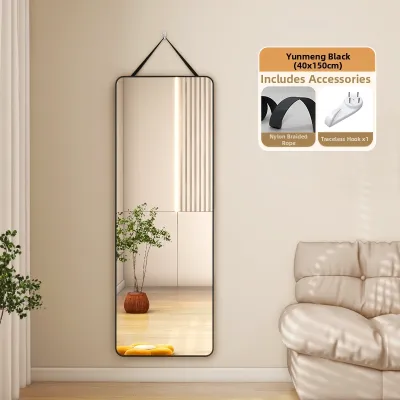
![[SG Seller] READY STOCK Nordic simple full-body mirror wall mirror high-definition explosion-proof mirror](https://img.lazcdn.com/g/p/766233425aef5573fd81153079ececdf.jpg_400x400q80.jpg_.webp)
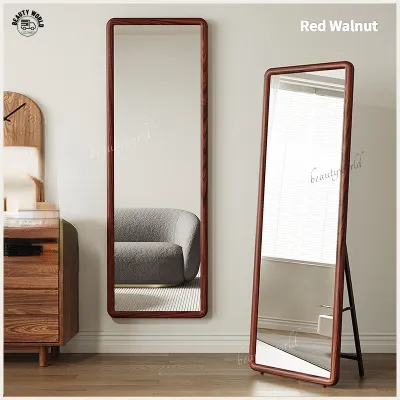
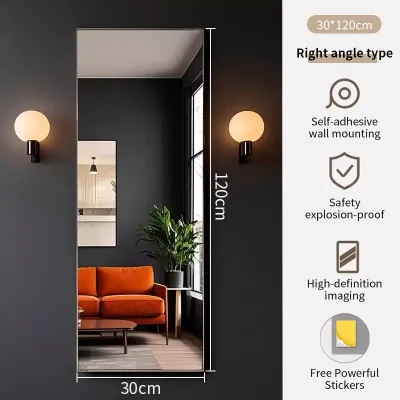
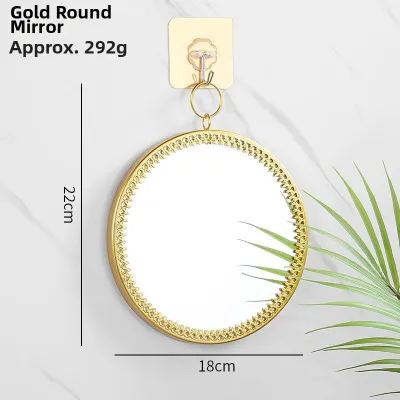
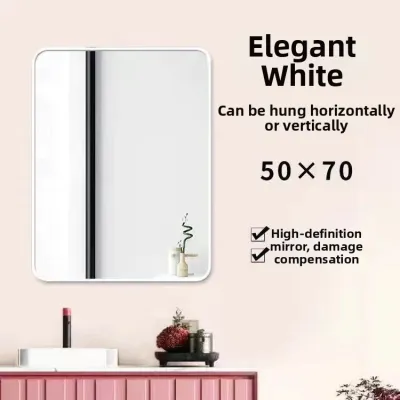
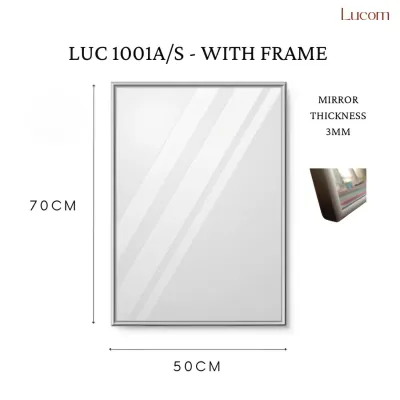
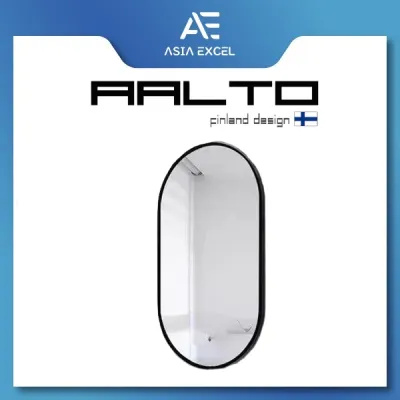
Prices are valid at publication and may change. Please refer to the product page for the latest price.
Sizing Guidelines: Matching Mirror Dimensions to Your Wall
Achieving the perfect spatial illusion requires precise mathematical proportions rather than guesswork. A mirror that is disproportionate to its surroundings will either fail to make an impact or completely overwhelm the room.

Proportions and Clearances
When hanging a wall mirror above a piece of furniture, such as an entryway console table, a living room sofa, or a dining sideboard, apply the “two-thirds rule.” The width of the mirror should ideally measure approximately two-thirds (60% to 70%) of the total width of the furniture piece underneath it. For example, if you have a 120 cm wide console table in your foyer, look for a wall mirror that is roughly 80 cm wide. This ratio ensures that the mirror feels anchored by the furniture rather than appearing top-heavy or floating awkwardly in isolation.
Equally important is leaving sufficient clearance around the mirror to maintain visual breathing room. Always maintain a minimum of 15 to 30 cm of clear wall space between the outer edges of the mirror and adjacent architectural boundaries, such as the ceiling, wall corners, light switches, or door frames. In tight HDB entryways, failing to leave these clearances creates a cramped, squeezed appearance that highlights the room’s small size instead of hiding it. Before purchasing a mirror, measure the exact height and width of your target wall area, taking note of any protruding baseboards or light switches that might obstruct a flat mount.
Common Sizing Mistakes to Avoid
One of the most frequent errors in small HDB flats is choosing a mirror that is too small for a large, blank wall. A tiny decorative mirror on an expansive dining room wall looks lost, fails to bounce significant light, and actually draws attention to the vast emptiness around it. In this scenario, the mirror acts as a visual punctuation mark that emphasizes the wall’s limits rather than expanding them.
Conversely, installing an oversized mirror in an exceptionally narrow corridor or a tight walkway can create a claustrophobic effect. If a mirror is too large, it can interfere with door swing paths, catch reflections of passing household members at awkward, jarring angles, or make the narrow passage feel like a funhouse mirror maze. Furthermore, ignoring the scale of surrounding decor—such as placing a massive, heavy-framed mirror next to delicate, minimalist Scandinavian furniture—creates a severe visual imbalance that disrupts the harmony of the room.
Design Styles: Choosing Frames and Shapes to Expand Visual Space
The physical frame and shape of a wall mirror dictate how much visual weight it adds to a room. In compact HDB flats, the goal is to choose designs that blend seamlessly into the walls or draw the eye upward.
Frameless and Minimalist Designs
Frameless mirrors are highly effective tools for small-space design because they eliminate visual boundaries entirely. Without a solid border to stop the eye, the reflected image appears to flow continuously from the surrounding wall, maximizing the illusion of extended space. This seamless transition is particularly beneficial in modern, Scandinavian, Japandi, or minimalist HDB interiors, where clean lines and uncluttered surfaces are paramount.
If you prefer a framed look, opt for ultra-thin metal frames—such as slim profiles in matte black, brushed brass, or satin nickel—that measure less than 1.5 cm in width. These delicate frames provide a clean, contemporary outline that anchors the mirror without adding unnecessary visual bulk. The lack of a heavy, ornate frame ensures that the reflection itself remains the focal point, allowing light to disperse freely across the room.
Geometric and Arched Shapes
While standard rectangular mirrors are functional, curved shapes are highly effective at altering the perceived architecture of a flat. Arched, semi-circle, and pill-shaped mirrors are excellent choices for standard HDB rooms because their curved tops draw the eye upward. This vertical movement creates a strong upward line that distracts from low ceilings, making the entire room feel taller and more spacious.
Additionally, curved and circular mirrors help soften the rigid, boxy lines that dominate typical HDB layouts. Most apartments are filled with sharp angles from rectangular walls, doors, built-ins, and modular kitchen cabinets. Introducing a round or arched wall mirror breaks up this geometric monotony, introducing a softer, organic flow that makes the living environment feel more relaxed and open.
Grid and Panel Mirrors
Grid mirrors, which resemble multi-paned French windows, are popular for industrial, rustic, or vintage-themed homes. These mirrors consist of several small mirrored panels separated by thin metal or wooden grids. While they can serve as beautiful focal points, they must be used with caution in small HDB flats.
The primary drawback of grid mirrors in compact rooms is that the intersecting lines fragment the reflection. Instead of a smooth, continuous vista that expands the room, the eye is presented with multiple broken images, which can add visual clutter and make a small space feel busier. If you choose a grid mirror, place it in a well-lit area—such as opposite a dining table or near a balcony sliding door—where the reflection is simple and orderly, rather than in a tight hallway where it will reflect a chaotic mix of doors and clutter.
Strategic Placement: Bouncing Light and Creating Depth
Where you hang a wall mirror is just as critical as its size and style. Proper placement maximizes the mirror’s functional benefits, while poor placement can introduce glare and visual discomfort.
To boost natural light, place your wall mirror directly opposite or adjacent to a primary light source, such as a living room balcony door or a bedroom window. This position allows the mirror to capture incoming daylight and throw it deep into the darker corners of the flat, such as the dining alcove or the central hallway. If your layout does not allow for direct window placement, positioning a mirror to reflect a stylish pendant light or a warm wall sconce can achieve a similar, albeit artificial, brightening effect.
Another highly effective strategy is placing a large mirror at the far end of a narrow corridor or along the main wall of a compact dining nook. This setup visually doubles the length of the hallway or the depth of the dining area, creating a sense of openness that makes the flat feel less restrictive.
However, you must avoid placements that reflect cluttered areas, such as open kitchen counters, laundry racks, or the entrance to a household shelter. Reflecting clutter simply doubles the visual mess, defeating the purpose of creating an open, serene space. Additionally, avoid hanging mirrors directly opposite high-power television screens or harsh, unshielded light bulbs, as this can create distracting reflections and intense glare that cause eye strain during daily activities.
Safe Installation: Navigating HDB Wall Types and Load Limits
Hanging a wall mirror in an HDB flat requires careful attention to structural safety. Unlike landed properties or some private condominiums, HDB apartments feature specific wall compositions that dictate how much weight they can safely support.
Checking Wall Types and Load Limits
Before mounting any mirror, you must identify the type of wall you are working with. HDB flats generally consist of two main wall types:
- Structural Walls: These are made of solid, reinforced concrete. They are extremely dense, load-bearing, and require a high-powered rotary hammer drill with masonry bits to penetrate. These walls can support heavy, oversized mirrors easily, provided you use the correct wall plugs.
- Partition Walls: These are typically non-load-bearing drywalls or lightweight concrete panels used to divide bedrooms or study areas. They are hollow or soft inside and have much lower load-bearing capacities than structural concrete.
Before drilling, always refer to your flat’s original floor plan to identify structural walls, and consult the latest HDB renovation guidelines regarding wall modifications and load limits. It is also vital to use a reliable stud finder with a wire detection feature to locate and avoid hidden electrical conduits, internet fiber lines, or water pipes buried within the wall. Accidentally drilling into an active utility line can lead to costly repairs, power outages, or water damage.
Safe Installation Practices
To ensure a secure mount, always match your installation hardware to the specific wall material:
- For concrete structural walls, use heavy-duty plastic or metal expansion wall plugs paired with high-tensile screws.
- For drywall partitions, never use standard plastic plugs. Instead, utilize specialized toggle bolts, hollow wall anchors, or self-drilling drywall anchors that expand behind the plasterboard to distribute weight evenly.
Always check the weight rating of both the mirror and the mounting hardware before starting. If your chosen wall mirror is exceptionally heavy, oversized, or if the mounting process requires working at height or complex alignment, do not attempt a DIY installation. Stop immediately and consult a qualified handyman or professional installer who has the tools and experience to secure the mirror safely, preventing potential property damage or serious personal injury.
Frequently Asked Questions (FAQ)
Can I hang a heavy mirror on an HDB partition wall?
You should avoid hanging exceptionally heavy glass or solid-wood framed mirrors directly on lightweight HDB partition walls without proper reinforcement. Standard drywalls cannot support concentrated heavy loads, and attempting to do so can cause the anchors to pull through the plasterboard, resulting in the mirror falling and shattering. If you must place a mirror on a partition wall, opt for lightweight acrylic mirrors, or ensure you anchor the mounting screws directly into the internal metal or timber studs behind the drywall. For heavy mirrors, always consult a professional installer to assess the wall’s specific load capacity first.
How high should a wall mirror be hung?
The general rule of thumb is to hang a wall mirror so that its center point is at average eye level, which is approximately 140 to 150 cm from the finished floor. If you are mounting the mirror above a piece of furniture, such as an entryway console or a living room sideboard, the bottom edge of the mirror should sit roughly 15 to 20 cm above the top surface of the furniture. This spacing creates a cohesive visual connection between the two pieces, preventing the mirror from looking like it is floating disconnectedly on the wall while ensuring a clear reflection for household members.
Community discussion
Share your experience or ask a question. Comments are reviewed before publication.