
When selecting a solar led light clip for your garden, patio, or outdoor pathways, waterproof protection is the single most critical factor determining its operational lifespan. In tropical climates like Singapore, where sudden monsoons, intense downpours, and high humidity are year-round realities, a standard “weather-resistant” label is simply not enough to guarantee long-term durability. To ensure your outdoor lighting survives these demanding conditions, you must look for fixtures with verified Ingress Protection (IP) ratings from reputable garden lighting brands.
Choosing a high-quality solar led light clip allows you to illuminate dark garden corners, highlight foliage, or secure pathways without the hassle of complex electrical wiring. Because these fixtures rely entirely on solar energy and integrated batteries, they are highly convenient and safe to install. However, exposure to constant moisture and UV radiation means that poor engineering will quickly lead to internal corrosion, battery failure, or electrical shorts. By understanding how to evaluate waterproof standards and mechanical build quality, you can make an informed investment that keeps your garden beautifully lit through every season.
Decoding IP Ratings for Tropical Climates and Heavy Rain
An Ingress Protection (IP) rating is an international standardized metric that defines how effectively an electrical enclosure seals against solids and liquids. This rating consists of the letters “IP” followed by two digits. The first digit, ranging from 0 to 6, indicates protection against solid objects like dust, dirt, and accidental contact. The second digit, ranging from 0 to 9, measures protection against moisture ingress under various pressure and immersion conditions. When evaluating outdoor lighting, you should ignore vague marketing terms like “waterproof” and look exclusively for these certified numbers.
Products mentioned in this guide
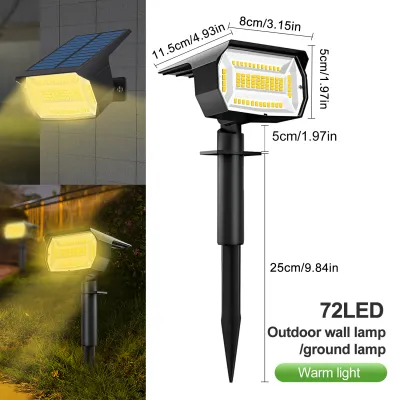
Prices are valid at publication and may change. Please refer to the product page for the latest price.
For outdoor garden fixtures, the minimum acceptable standard is IP65. The first digit, 6, means the fixture is completely dust-tight, preventing fine soil particles or insects from entering the housing. The second digit, 5, indicates protection against water jets projected by a nozzle from any direction. An IP65-rated solar led light clip is perfectly suited for general garden use, such as mounting on fence posts, gutters, or tree branches where rain falls vertically or at moderate angles.
In contrast, an IP67 rating offers a significantly higher level of protection that is highly recommended for more exposed or low-lying areas. An IP67-rated fixture is completely dust-tight and can withstand temporary immersion in water up to 1 meter deep for up to 30 minutes. If your garden has areas prone to localized pooling, low-hanging branches that collect heavy water droplets, or if you plan to mount lights near water features where splashing is common, IP67 provides an essential safety margin.
Singapore’s tropical climate presents unique environmental challenges that make high IP ratings indispensable. During the monsoon seasons, sudden and intense downpours can drop large volumes of water in a short period, creating a high-pressure washing effect on exposed fixtures. Furthermore, high ambient humidity can cause moisture to seep into poorly sealed joints as the air inside the fixture heats up during the day and cools rapidly at night, creating a vacuum that draws in damp air. Selecting a fixture with a verified IP65 or IP67 rating ensures the internal circuitry remains dry and functional under these extreme atmospheric shifts.
Key Selection Criteria Beyond Water Resistance
While water resistance is paramount, a solar led light clip must also excel in mechanical durability, charging efficiency, and lighting performance to provide genuine value. Evaluating these additional criteria ensures you choose a model that is both practical and long-lasting.

Solar Panel Efficiency
The solar panel is the engine of your light, converting sunlight into electrical energy stored in the battery. Outdoor solar lights generally use either monocrystalline or polycrystalline solar panels, which differ significantly in performance:
- Monocrystalline Panels: These panels are made from a single, high-purity silicon crystal structure, giving them a uniform dark appearance. They offer the highest efficiency ratings, typically converting 15% to 22% of sunlight into usable energy. Monocrystalline panels perform exceptionally well in partially shaded areas, under sparse tree canopies, or during consistently overcast days, making them the superior choice for tropical climates.
- Polycrystalline Panels: Constructed from multiple silicon crystals melted together, these panels have a speckled blue appearance. They are more cost-effective to produce but offer lower efficiency, usually between 13% and 16%. Polycrystalline panels require direct, unobstructed sunlight to charge effectively and may struggle to fully charge the battery during rainy seasons.
Battery Chemistry and Electrical Safety
The battery storage system determines how long your light will run at night and how many years the fixture will last before requiring replacement. Most modern solar clip lights utilize one of two battery types:
- Lithium-ion (Li-ion) or Lithium Iron Phosphate (LiFePO4): These batteries represent the gold standard for outdoor solar lighting. They offer high energy density, superior heat resistance, and a long operational life, often lasting between 1,000 and 2,000 charge cycles. LiFePO4 batteries are particularly well-suited for warm tropical climates because they remain highly stable under elevated temperatures and do not suffer from memory effects.
- Nickel-Metal Hydride (NiMH): Often found in budget-friendly fixtures, NiMH batteries are less expensive but have a lower energy density and a shorter lifespan, typically degrading after 300 to 500 charge cycles. They are also more sensitive to high ambient heat, which can accelerate their capacity loss over time.
Because solar lights operate on low-voltage direct current (typically 3.2V to 3.7V), they are inherently safer than mains-voltage outdoor lighting. However, you should still verify that the battery compartment is securely sealed and that the battery itself features built-in overcharge and over-discharge protection circuitry to prevent thermal runaway or premature failure.
Clip Mechanics and Materials
A solar led light clip is only as useful as its mounting mechanism. If the clip degrades, warps, or snaps, the fixture becomes unusable regardless of how well the internal electronics are waterproofed. Pay close attention to the following physical components:
- Housing and Clip Plastics: Look for heavy-duty, UV-stabilized plastics such as Acrylonitrile Butadiene Styrene (ABS) or Polycarbonate (PC). Standard plastics will quickly degrade, yellow, and become brittle when exposed to intense tropical sunlight. UV-stabilized polymers retain their flexibility and structural integrity over years of sun exposure.
- Tension Springs: The internal spring that provides the clipping force must be made of rust-proof metal, preferably 304 or 316-grade stainless steel. Standard carbon steel springs will quickly rust in humid environments, seizing the mechanism and causing the clip to fail.
- Grip Pads: High-quality clips feature textured rubber or silicone grip pads inside the jaws. These pads prevent the light from slipping or rotating on smooth surfaces, such as metal poles or vinyl fences, while protecting the mounting surface from scratches.
Lighting Performance and Adjustability
To match the light to your specific garden zones, evaluate the lumen output, color temperature, and physical adjustability of the fixture:
- Lumen Output: Lumens measure the total amount of visible light emitted by the source. For soft accent or decorative lighting, 50 to 100 lumens is sufficient. For path safety, security, or task lighting, look for fixtures that deliver 200 lumens or more.
- Color Temperature: Expressed in Kelvin (K), color temperature dictates the visual warmth of the light. Warm white (2700K to 3000K) creates a cozy, inviting, and relaxing atmosphere suitable for patios and garden seating areas. Cool white (5000K to 6500K) provides high-contrast, crisp illumination that is ideal for security, steps, and pathways.
- Adjustable Beam Angles: Opt for models that feature a swiveling light head or an adjustable solar panel. This design allows you to angle the solar panel toward the sun for maximum charging efficiency while directing the light beam precisely where it is needed on your plants or pathways.
How to Verify Waterproof Claims from Garden Brands
With many generic products flooding online marketplaces, verifying the authenticity of waterproof claims is essential to avoid purchasing substandard equipment. Following a systematic verification process will help you identify reliable products from established brands.
First, locate the explicit IP rating in the official product documentation. Reputable garden lighting brands will clearly publish their certified IP rating on the product packaging, user manual, or official website. Be highly skeptical of product listings that use vague terms like “highly waterproof,” “rainproof,” or “outdoor-ready” without providing a specific IP65 or IP67 certification number. If a manufacturer cannot or will not provide a verified IP code, it is best to assume the product has not undergone standardized environmental testing.
Next, perform a physical inspection of the build quality when you receive the product. Look closely at the construction of the housing seams. High-quality waterproof engineering relies on precise manufacturing tolerances and robust sealing mechanisms:
- Integrated Rubber Gaskets: Inspect the seams where the plastic housing pieces join. Premium lights feature a visible, continuous rubber or silicone gasket compressed tightly between the plastic components to block water entry.
- Sealed Charging Ports and Switches: If the light features a manual on/off switch or an auxiliary USB charging port, these elements must be protected by thick, tight-fitting silicone covers. The covers should sit flush with the housing and require a firm press to seal.
- O-Rings in the Battery Compartment: Open the battery compartment if it is accessible. The compartment door should have a dedicated rubber O-ring running along its perimeter and should be secured with metal screws rather than a simple plastic snap-latch, which can easily warp or fail under tension.
Additionally, review the manufacturer’s warranty terms. Reliable brands stand behind their waterproof claims by offering a clear warranty period, typically ranging from one to three years. Carefully read the warranty exclusions to ensure that water ingress or environmental damage is covered under normal operating conditions. If the warranty explicitly excludes damage caused by rain or outdoor exposure, it suggests the manufacturer lacks confidence in the product’s sealing capability.
Finally, check for recognized electrical safety and environmental certifications relevant to your region, such as CE, RoHS, or FCC marks. These certifications indicate that the product has been manufactured in compliance with strict safety and environmental standards, which often include testing for moisture resistance and electrical insulation.
Before mounting your new solar led light clip outdoors, perform a quick pre-installation inspection:
- Check Fasteners: Ensure all housing screws are tight and flush with the casing.
- Inspect Seals: Verify that all rubber gaskets and silicone port covers are properly seated without any twists, gaps, or protruding edges.
- Dry-Run Test: Turn the light on in a dark room to confirm the battery, light sensor, and LED array are fully functional before exposing the unit to the elements.
Installation and Maintenance to Preserve Waterproof Seals
Even the highest-quality waterproof solar clip lights require proper installation and routine maintenance to preserve their seals and ensure optimal performance over time. Implementing these best practices will protect your investment from premature wear.
Strategic Placement
When mounting your solar led light clip, select locations that maximize solar exposure while minimizing unnecessary environmental stress. Position the lights where the solar panel receives at least six hours of direct sunlight daily, avoiding dense tree canopies or deep building shadows.
Avoid clipping the lights directly under roof valleys, gutter downspouts, or areas where heavy roof runoff cascades down. The concentrated force of falling water from a roof can exceed the pressure limits of an IP65 or even an IP67 seal, leading to water forced past the gaskets. Additionally, do not mount the lights in low-lying garden depressions that are prone to standing water or prolonged flooding unless the fixture is explicitly rated IP68.
Routine Cleaning
Dust, pollen, bird droppings, and tropical algae can quickly accumulate on the solar panel’s surface, blocking sunlight and reducing charging efficiency. Regular cleaning ensures the battery receives a full charge, which is vital for maintaining battery health. Clean the fixture using the following safe method:
- Wipe Gently: Use a soft, clean microfiber cloth lightly dampened with plain water or a highly diluted, mild dish soap solution to wipe away debris from the solar panel and plastic housing.
- Dry the Surface: Wipe the surface dry with a clean cloth to prevent mineral spots from forming on the panel.
- Avoid High Pressure: Never use a high-pressure garden hose, pressure washer, or direct water spray to clean the lights. The high pressure can easily force water past the rubber seals.
- No Abrasives or Chemicals: Avoid using abrasive scrubbing pads, steel wool, or harsh chemical solvents such as bleach, ammonia, or glass cleaners. These substances can scratch the solar panel's protective coating, degrade the UV-resistant plastics, and dry out the rubber gaskets, causing them to crack and leak.
Periodic Inspections
Conduct a quick visual inspection of your outdoor lights every three to four months to identify potential issues before they cause fixture failure. Look for the following warning signs:
- Micro-Cracks: Check the plastic housing for fine cracks caused by thermal expansion or intense UV exposure.
- Brittle Seals: Feel the silicone port covers and gaskets to ensure they remain soft and pliable. If they feel hard, brittle, or show signs of cracking, they may no longer provide an effective seal.
- Corrosion: Inspect the clip's metal spring for any signs of rust or oxidation. If rust is present, apply a tiny drop of silicone-based lubricant to protect the metal, ensuring no lubricant contacts the solar panel or plastic housing.
- Internal Moisture: Look closely at the light lens. If you notice persistent condensation or water droplets inside the housing, the waterproof seal has been compromised.
Battery Care and Storage
If you need to store your solar clip lights indoors during extended periods of non-use, proper storage is essential to preserve the battery’s lifespan. Turn the physical power switch to the “off” position to prevent the battery from slowly discharging to zero, which can permanently damage its chemistry. Store the fixtures in a cool, dry, and well-ventilated indoor environment away from direct sunlight and extreme temperatures.
Frequently Asked Questions (FAQ)
Can I leave solar clip lights outside during heavy monsoon rains?
Yes, solar clip lights with a verified IP65 or IP67 rating are engineered to withstand heavy tropical rains and high humidity. However, if your area is expecting severe weather, localized flooding, or extreme windstorms, it is highly recommended to temporarily bring the lights indoors. This precaution protects the fixtures from being dislodged by falling debris, subjected to prolonged submersion beyond their rated limits, or damaged by physical impacts.
How do I clean the solar panel without damaging the waterproof seal?
To clean the solar panel safely, wipe the surface with a soft microfiber cloth lightly dampened with clean water or a highly diluted, mild dish soap. Gently wipe away dirt, dust, and organic buildup, then dry the panel with a clean cloth. Never use high-pressure garden hoses, pressure washers, abrasive sponges, or harsh chemical cleaners, as these can degrade the protective UV coatings, scratch the panel, and compromise the integrity of the surrounding rubber seals.
What should I do if moisture gets inside the light housing?
If you detect condensation or water inside the lens, act immediately to prevent permanent damage. Turn off the light, remove the battery if the compartment is designed to be user-accessible, and bring the fixture indoors to a dry environment. Carefully open the housing or battery door and allow all components to air-dry completely for 24 to 48 hours. Inspect the rubber gaskets and O-rings for dirt, debris, or misalignment, clean them gently, and reassemble the unit securely. If moisture continues to accumulate after reassembly, the seal has permanently failed, and the fixture will likely need to be replaced.
Community discussion
Share your experience or ask a question. Comments are reviewed before publication.