
How Window Mirrors Create the Illusion of Space in Compact Layouts
Singapore’s urban landscape is dominated by high-rise apartments, where maximizing square footage is an art form. In compact Housing & Development Board (HDB) flats and modern condominiums, limited floor plans often make rooms feel restrictive. A window hanging mirror offers an elegant, dual-purpose solution to this common spatial challenge. By positioning a mirror directly adjacent to or suspended within a window frame, you can dramatically alter the visual boundaries of your home, turning a cramped room into an airy, light-filled sanctuary.
The primary mechanism behind this transformation is the manipulation of natural light. When natural sunlight streams through a window, it typically illuminates only the immediate area, leaving the deeper corners of a room in shadow. Placing a mirror near or on a window captures this incoming light and bounces it deep into the apartment’s interior. This simple redirection of light reduces the reliance on artificial overhead lighting during the day, creating a softer, more organic ambiance. The brighter a room is, the larger it naturally feels, as shadows that visually contract a space are effectively eliminated.
Beyond light amplification, window mirrors leverage the concept of visual extension. When you look at a mirror placed near a window, your eye does not stop at the physical wall. Instead, it registers the reflection of the outdoor scenery, sky, or an adjacent bright wall. This tricks the brain into perceiving a continuous pathway or an additional window, effectively doubling the visual depth of the room. By reflecting the external environment, the mirror dissolves the rigid boundary between the indoors and outdoors, making the living area feel as though it extends far past its actual concrete limits.
Products mentioned in this guide
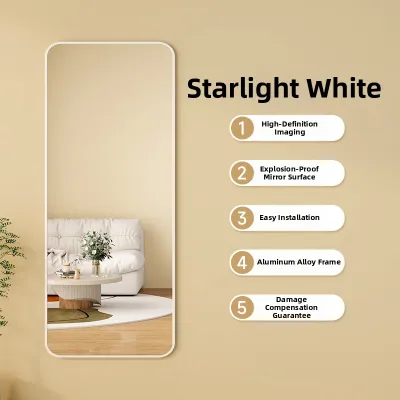
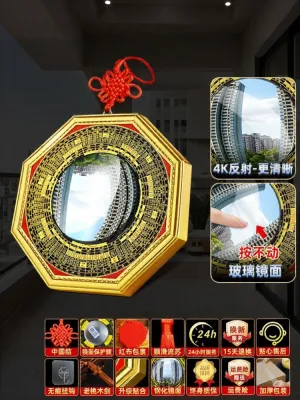
Prices are valid at publication and may change. Please refer to the product page for the latest price.
This spatial illusion is particularly beneficial for addressing specific layout challenges in Singaporean homes. For instance, narrow entrance corridors and long, windowless hallways often feel like tight tunnels. Suspending a mirror at the end of these passages or near a nearby window source draws light inward and breaks the monotony of solid walls. Similarly, compact living rooms or bedrooms with limited window frontage can feel isolated and dark. A strategically placed window mirror acts as a secondary light source, opening up the room’s footprint and creating a more balanced, inviting layout.
Key Selection Criteria for High-Rise Window Mirrors
Selecting a mirror to hang near or on a window in a high-rise building requires careful consideration of both aesthetics and practical safety. Unlike standard wall mirrors, window-adjacent mirrors are exposed to unique environmental conditions, including intense sunlight, temperature shifts, and physical movement from drafts. Understanding these factors ensures your mirror remains a safe, durable, and effective addition to your home.

Weight and material composition are the most critical factors when choosing a mirror for window-adjacent mounting. In high-rise apartments, heavy glass mirrors pose a significant safety risk if they are not anchored securely. For mirrors intended to hang from curtain rods, tension bars, or lightweight wall hooks, you should prioritize lightweight frames. Materials such as thin-profile aluminum, powder-coated steel, or high-grade engineered polymers offer structural rigidity without adding unnecessary bulk. Opting for lightweight materials minimizes the stress placed on your mounting hardware and prevents damage to your window frames or walls.
Reflection quality and glare management are equally important, especially in Singapore’s tropical climate where sunshine is abundant. High-quality silvering on the back of the glass is essential to prevent distorted reflections, which can cause eye strain and ruin the illusion of depth. However, in west-facing rooms that receive harsh afternoon sun, direct reflections can become uncomfortably bright. In these scenarios, you may want to consider mirrors with slight tints, such as bronze or smoky grey, or position the mirror at an angle where it catches ambient light rather than direct, blinding sunbeams.
Frame durability is another essential consideration due to the environmental exposure near windows. Window areas experience significant temperature fluctuations and high levels of ultraviolet (UV) radiation. Untreated natural wood frames are highly susceptible to warping, cracking, or fading when exposed to constant sunlight and humidity. To ensure longevity, look for frames made of powder-coated metals, UV-resistant plastics, or treated hardwoods that have been sealed against moisture and sun damage. These materials will maintain their color and structural integrity over years of exposure.
Finally, you must consider the physical proportions of the mirror relative to your window setup. A mirror that is too small will fail to bounce enough light to make a noticeable difference, while an oversized mirror can overwhelm the window frame and block valuable natural views. A reliable rule of thumb is to choose a mirror that covers between 50% and 75% of the window’s width or height, depending on your mounting style. This proportion maintains a harmonious visual balance, ensuring the mirror enhances the window rather than competing with it.
Top Window Hanging Mirror Designs for Space Enhancement
Different mirror designs offer distinct aesthetic and functional benefits. Depending on your apartment’s interior styling and your specific spatial goals, certain shapes and frame designs will perform better than others.
Arched and Pill-Shaped Mirrors for Soft Light Diffusion
Arched and pill-shaped mirrors have become staples in modern, minimalist Singaporean interiors. The defining characteristic of these designs is their curved upper edge, which serves a vital visual purpose in compact spaces. Most HDB flats and apartments are defined by rigid, boxy layouts with sharp vertical and horizontal lines. Introducing a curved mirror breaks up this architectural rigidity, softening the overall feel of the room and diffusing reflected light more gently across the walls.
The vertical orientation of arched and pill-shaped mirrors is particularly effective at altering spatial perception. By drawing the eye upward along their elongated frames, these mirrors emphasize vertical space. This vertical pull is incredibly useful in standard HDB apartments, where ceiling heights typically hover around 2.6 meters. By directing the gaze upward, the mirror creates the illusion of higher ceilings, making the entire room feel loftier and less confined.
However, these curved designs do come with a minor trade-off. Because of their narrow, vertical profiles, arched and pill-shaped mirrors do not capture as wide a horizontal field of view as traditional rectangular mirrors. While they excel at adding height and diffusing light, they may not be the best choice if your primary goal is to visually widen a narrow room. They are best suited for placement alongside vertical window panes or on narrow wall pillars between windows.
Sunburst and Geometric Frames for Visual Focal Points
For rooms that lack a clear architectural feature, a window hanging mirror with a sunburst or geometric frame can serve as an excellent design anchor. These mirrors feature decorative, outward-radiating frames made of metal, rattan, or wood. The primary benefit of a statement frame is its ability to act as a visual focal point. In a small room, drawing the eye to a beautifully crafted object distracts from the limited physical square footage, making the space feel curated rather than cramped.
The intricate patterns of sunburst or geometric frames also help blend the mirror into the room’s decor. Instead of looking like a purely functional utility, the mirror functions as a piece of dimensional wall art. The frame breaks up the transition between the solid wall and the reflective glass, making the reflection feel more integrated into the room’s design. This artistic quality adds layers of texture and depth to the wall, which visually expands the room’s boundaries.
When incorporating a bold, geometric mirror near a window, it is crucial to keep the surrounding decor minimal. Too many decorative elements around a window can quickly lead to visual clutter, which has the opposite effect of making a room feel smaller. Pair these statement mirrors with clean, simple window treatments, such as sheer white curtains or minimalist roller blinds, to allow the mirror’s design to stand out without overwhelming the space.
Shatterproof Acrylic Mirrors for Lightweight Hanging
If you are renting an apartment, have young children or pets, or are concerned about mounting heavy objects in high-rise environments, shatterproof acrylic mirrors are an outstanding alternative to traditional glass. Made from high-quality acrylic or polycarbonate sheets, these mirrors offer exceptional durability and safety. They are virtually unbreakable, eliminating the risk of dangerous glass shards if the mirror is accidentally knocked or blown by a strong gust of wind.
The most significant advantage of acrylic mirrors is their incredibly low weight. An acrylic mirror typically weighs a fraction of a glass mirror of the same size. This lightweight profile makes them incredibly easy to install using non-destructive mounting methods. You can safely hang them from lightweight tension rods, thin curtain tracks, or high-strength adhesive hooks without worrying about structural failure. This makes them a favorite choice for tenants who want to maximize their space without risking their security deposit.
Despite these benefits, acrylic mirrors require careful handling due to material trade-offs. Acrylic is a softer material than glass, making it far more susceptible to micro-scratches from dust and abrasive cleaning cloths. Over time, these tiny scratches can dull the mirror’s surface and reduce reflection clarity. To maintain their pristine appearance, you must clean them using specialized, non-abrasive microfiber cloths and mild, ammonia-free cleaning solutions, avoiding any rough scrubbing or harsh chemical sprays.
Quick Comparison: Matching Mirror Styles to Your Window Setup
To help you determine which mirror style best suits your specific living space and window configuration, the table below outlines the ideal pairings and their primary spatial benefits.
| Mirror Style | Best Window Type | Primary Spatial Benefit | Mounting Recommendation |
|---|---|---|---|
| Arched & Pill-Shaped | Narrow casement windows, vertical panels | Creates height illusion, softens sharp room corners | Wall-mounted adjacent to window frame with heavy-duty anchors |
| Sunburst & Geometric | Small square windows, fixed transom windows | Acts as an artistic focal point, adds texture | Centered above or directly beside the window frame |
| Shatterproof Acrylic | Sliding windows, breeze-prone openings | Lightweight safety, versatile placement options | Hanging from curtain rods or secured with adhesive strips |
Safe Installation Methods for High-Rise Apartments
Hanging any decorative item near a window in a high-rise building requires a strict commitment to safety. Strong drafts, vibrations from nearby traffic, and temperature-induced material expansion can all affect the stability of your mounting hardware. Taking the time to install your mirror correctly prevents costly damage and ensures peace of mind.
First and foremost, you should never use suction-cup mounts to hang a mirror directly on window glass in a high-rise apartment. While suction cups are often marketed as convenient, drill-free solutions, they are highly unreliable when exposed to environmental stress. Direct sunlight heats the window glass, causing the air inside the suction cup to expand and lose its seal. Additionally, high-altitude wind vibrations and daily temperature fluctuations will inevitably cause suction cups to fail, resulting in a falling hazard. Always rely on mechanical fasteners or high-strength, temperature-rated adhesives instead.
If you choose to hang a lightweight mirror from an existing curtain rod, you must verify the rod’s weight capacity and stability first. Use sturdy, metal S-hooks or specialized C-clips to suspend the mirror, ensuring the weight is distributed evenly across the rod’s brackets. Make sure the suspended mirror does not obstruct the operation of your windows, especially outward-opening casement windows. If a window is opened, a sudden gust of wind can swing the mirror, potentially cracking the window pane or damaging the frame.
For wall-mounted installations beside or above your windows, you must use mounting hardware appropriate for your wall type. In Singapore, most HDB walls are constructed of solid concrete or precast panels, which require a hammer drill and plastic wall plugs (such as Fischer plugs) to secure screws safely. If you are mounting on a drywall partition, ensure you use specialized toggle bolts or hollow-wall anchors. When installing any mounting hardware or adhesives, always check the product’s label and the mirror manufacturer’s instructions first. If the instructions conflict or the wall material is unidentified, consult a qualified professional before proceeding.
Finally, you should always take steps to secure the bottom of your hanging mirror to prevent it from swinging in the breeze. Singapore’s high-rise apartments often benefit from excellent cross-ventilation, but strong drafts can cause hanging mirrors to clatter against the wall or window glass. To prevent this, apply a small piece of museum putty, heavy-duty mounting putty, or double-sided hook-and-loop tape to the bottom corners of the mirror frame. This anchors the mirror flat against the wall or frame, absorbing vibrations and keeping it silent and secure even when your windows are wide open.
Where to Shop for Space-Enhancing Mirrors in Singapore
Finding the perfect mirror for your apartment involves exploring a mix of local showrooms, international retailers, and online platforms. Depending on your budget, style preferences, and installation requirements, different shopping avenues offer distinct advantages.
For those seeking affordable, minimalist, and highly functional designs, large global home furnishing retailers like IKEA are an excellent starting point. They offer a wide selection of lightweight arched and geometric mirrors that are easy to transport and install. These designs are highly standardized, making it simple to find matching hardware and accessories for a clean, cohesive look. Their showrooms also provide practical inspiration for styling mirrors in compact, realistic room layouts.
If you are looking for a statement piece, local boutique furniture and lighting showrooms are well worth a visit. Areas such as Tanjong Pagar, Outram, and Millenia Walk host specialized decor stores and brands like Castlery and Commune. These showrooms feature high-quality mirrors with robust metal frames, unique finishes, and superior glass silvering that minimizes distortion. Shopping locally also allows you to inspect the weight and build quality of the mirrors in person before making a purchase, and many boutiques offer reliable delivery and professional installation services.
For specialized items like shatterproof acrylic mirrors or highly specific geometric designs, online marketplaces and e-commerce platforms offer an extensive selection. When shopping online, it is vital to read customer reviews carefully, paying close attention to comments regarding reflection clarity and shipping packaging. Always measure your intended space twice to ensure the dimensions match the online description, and verify the seller’s return policy for fragile items in case the mirror arrives damaged or does not meet your quality expectations.
Frequently Asked Questions (FAQ)
How do I clean a mirror hanging near a window without leaving streaks?
To prevent streaks, always clean your window hanging mirror during the cooler parts of the day, such as early morning or late evening. Direct sunlight heats the glass, causing your cleaning solution to evaporate too quickly, which leaves unsightly mineral streaks behind. Spray a gentle, ammonia-free glass cleaner directly onto a clean, high-quality microfiber cloth rather than the mirror itself to avoid liquid seeping into the frame. Wipe the mirror in a consistent S-pattern from top to bottom, and use a second dry microfiber cloth to buff the surface to a crystal-clear shine.
Is it safe to hang a heavy glass mirror on a standard curtain rod?
No, standard decorative curtain rods are not designed to support the dead weight of heavy glass mirrors. Hanging a heavy mirror on a standard rod can cause the rod to bow, pull away from its wall brackets, or collapse entirely, posing a severe safety hazard. If you wish to hang a mirror from a rod, ensure the mirror is made of lightweight acrylic or has a very thin, lightweight frame, and verify that the rod and its mounting brackets are rated for the combined weight. For heavier glass mirrors, always use dedicated, ceiling-mounted tracks or secure wall brackets anchored directly into the concrete wall.
Can window hanging mirrors cause glare or heat issues in west-facing rooms?
While window hanging mirrors reflect light, they do not concentrate or amplify heat unless they have a concave, magnifying shape, which standard decorative mirrors do not possess. However, in west-facing rooms, direct afternoon sunlight hitting a flat mirror can create intense, uncomfortable glare for the room’s occupants. To manage this, you can position the mirror at a slight angle to redirect the reflection away from seating areas, or install sheer curtains or adjustable blinds. These window treatments will diffuse the harsh afternoon sun while still allowing the mirror to bounce soft, ambient light throughout your apartment.
Community discussion
Share your experience or ask a question. Comments are reviewed before publication.