
A bladeless fan light can generally fit in a standard 2.6m HDB bedroom, but the final decision depends on the specific model’s drop length and the height of your furniture. Because these fixtures combine lighting and air circulation, ensuring adequate head clearance and structural support is essential to avoid a cramped feeling or safety hazards. This guide will help you calculate the usable space, compare design profiles, and verify installation requirements before making a purchase.
Understanding Ceiling Clearance Requirements for Your Bedroom
A standard Housing & Development Board (HDB) flat in Singapore typically features a floor-to-ceiling height of approximately 2.6 metres. This vertical limitation restricts the maximum allowable drop length of any suspended ceiling fixture, especially those containing moving parts like fans. To maintain a safe living environment, you must ensure that the lowest point of the fixture remains well out of reach of daily activities.
To determine if a specific model is suitable, apply a simple clearance calculation formula: subtract the manufacturer’s stated drop length (the distance from the ceiling to the lowest point of the fan light) from your total ceiling height of 2.6 metres. The resulting figure represents your actual floor clearance. For example, if a fixture has a drop length of 35 centimetres (0.35 metres), the remaining clearance to the floor will be 2.25 metres.
Products mentioned in this guide
![[SG Stock]Ceiling Fan With Light (Bladeless Fan) New Style Ceiling Fan φ58cm LED Light Chandelier](https://img.lazcdn.com/g/p/06d2bf4b14705ef5ce13c22c524fe703.png_400x400q80.png_.webp)
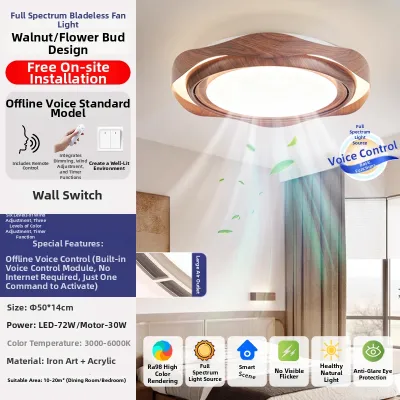
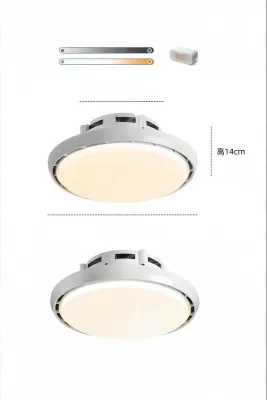
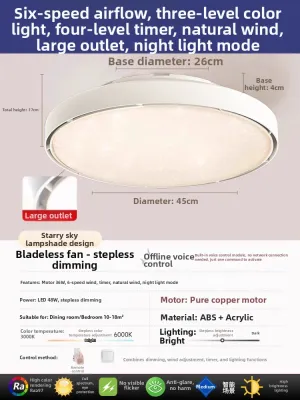
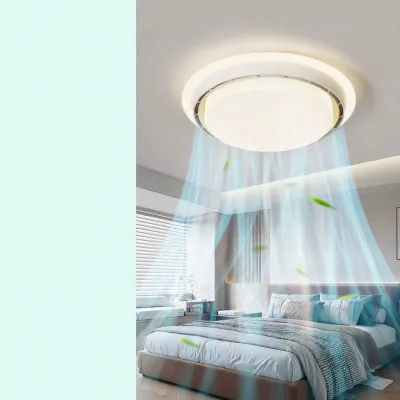
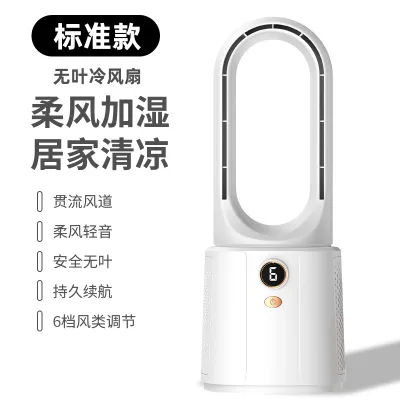
Prices are valid at publication and may change. Please refer to the product page for the latest price.
Generally, a safe clearance distance of at least 2.1 to 2.3 metres from the floor to the lowest part of the fan is recommended for standard walking paths. However, if the fixture is positioned directly over a bed, you must calculate the clearance from the top of the mattress to the bottom of the fan light instead. This prevents accidental contact when sitting up, changing sheets, or making the bed.
Always consult the manufacturer’s official specification sheet for the exact minimum safe installation height and drop dimensions. Do not rely on generic product category descriptions, as actual profiles vary significantly between brands. Local building guidelines and safety standards should also be reviewed to ensure your installation complies with all regional residential requirements.
Comparing Bladeless Profiles with Traditional Ceiling Fans
Traditional ceiling fans rely on long, exposed blades that sweep across a wide radius. In a compact HDB bedroom with a 2.6-metre ceiling, these spinning blades can create a strobing light effect if positioned near a light source, and they often make the room feel visually crowded and oppressive. Bladeless fan lights, by contrast, typically house their air-delivery mechanisms within a compact, enclosed casing, eliminating the wide, sweeping blades.

This structural difference significantly reduces visual bulk. Because the moving parts are contained within a central drum or ring, the fixture presents a cleaner, more streamlined aesthetic that mimics a standard flush-mount ceiling light. This design can make a small bedroom feel more open and less psychologically cramped, as there are no visible spinning blades slicing through the air close to your head.
However, you must not assume that all bladeless fan lights are inherently ultra-slim or low-profile. Some models feature bulky enclosed motors, decorative outer cages, or integrated light diffusers that actually increase their overall vertical drop. Some units are designed to be suspended from downrods, which can lower the fixture too far into a 2.6-metre room.
When comparing options, verify whether the model is a true flush-mount design or if it requires a downrod. A flush-mount or hugger-style bladeless fan light is generally the most appropriate choice for low ceilings, as it mounts directly against the concrete slab, maximizing the available vertical space. Always compare the physical depth of the unit rather than relying on the “bladeless” label as a guarantee of a slim profile.
What to Measure and Check Before Buying
Before purchasing a bladeless fan light, conducting precise physical measurements of your bedroom is essential to avoid installation conflicts. Begin by measuring the vertical distance from the ceiling to the highest points of your furniture. This includes the top of your mattress, the headboard, and especially the top of any tall wardrobes or walk-in closet doors. If you have a wardrobe with swing-out doors, ensure the door’s top edge will not strike the fixture when opened.
Next, verify the structural weight capacity of your ceiling’s existing junction box or mounting point. A combined fan and light fixture is significantly heavier than a standard, lightweight LED ceiling light. The constant rotational force and vibration of the motor, even in a bladeless design, place continuous dynamic stress on the mounting bracket. You must ensure that the concrete ceiling slab and the installed mounting hardware are rated to support the specific weight of the fan light.
Additionally, map out potential spatial obstructions within the room. Check the proximity of the proposed installation site to air conditioning indoor units, curtain tracks, and wall-mounted shelving. The airflow path of a bladeless fan light relies on drawing air from the surrounding space and projecting it downward; placing it too close to a wall or an air conditioning vent can disrupt the airflow pattern or cause localized drafts. Ensure there is adequate horizontal clearance around the entire perimeter of the fixture.
Installation Safety and Professional Boundaries
Installing a ceiling fixture that combines electrical lighting with a motorized fan requires strict adherence to safety protocols. Before performing any inspection, removing an old light fixture, or attempting to install a new unit, you must completely isolate the electrical power. Turn off the corresponding circuit breaker at your home’s main distribution board, and verify that the power is off using a reliable voltage tester at the ceiling wires.
You must also verify that the product’s voltage rating matches Singapore’s standard residential electrical supply (typically 230V, 50Hz). Ensure the fixture carries recognized electrical safety certifications, such as the Enterprise Singapore Safety Mark, which indicates the appliance has been tested and approved for safe local use. Using uncertified fixtures imported from online marketplaces without proper voltage compatibility checks poses a severe risk of electrical short circuits or fire.
While some basic preparation can be done independently, you must recognize clear boundaries where professional intervention is required. If the installation requires drilling new mounting holes into the concrete ceiling slab, upgrading an existing junction box to support a heavier load, or running new fixed wiring, you must halt and hire a licensed electrician.
A professional installer ensures that the mounting bracket is securely anchored to the concrete slab using appropriate expansion bolts, preventing any risk of the fixture loosening over time due to motor vibrations. If the existing wiring is outdated or lacks a proper grounding connection, a qualified electrician can safely rectify these issues to ensure your home remains compliant with local electrical safety regulations.
Frequently Asked Questions (FAQ)
Is it safe to install a fan light directly above a bed?
Installing a heavy, motorized fixture directly over a sleeping area requires careful consideration of both physical safety and psychological comfort. While it is physically safe if anchored securely to the concrete ceiling slab by a professional, some individuals find sleeping directly beneath a suspended fixture unsettling. To ensure safety, the mounting must be robust enough to withstand long-term motor vibrations without loosening. Additionally, consider the lighting design: ensure the integrated light diffuser is designed to minimize direct glare, as looking straight up into an unshielded light source while lying in bed can cause eye strain and discomfort.
Will a bladeless fan light provide sufficient airflow for an HDB bedroom?
A bladeless fan light can provide comfortable air circulation for a standard HDB bedroom, but its performance depends on the motor power and the internal air-delivery design rather than the size of visible blades. These units typically draw air in and accelerate it through an internal ring or diffuser, creating a focused downward breeze. Because they do not have wide, sweeping blades, the airflow is often more concentrated directly beneath the unit rather than dispersed widely across the entire room. To ensure it meets your cooling needs, check the manufacturer’s specified air delivery rate (often measured in cubic metres per minute) and compare it to your bedroom’s dimensions before purchasing.

Community discussion
Share your experience or ask a question. Comments are reviewed before publication.