
Finding the correct light bulb for your home often comes down to identifying one crucial component: the bulb socket. If you purchase a bulb with the wrong base, it will either fail to fit into your fixture or, worse, create an electrical hazard. To find the right match, you must identify the physical design of the base—whether it screws in, twists and locks, or pushes straight in—and note its specific millimeter measurements.
In Singapore, residential light fixtures rely on a few standard socket types, such as the E27 screw base, the E14 small screw base, and the GU10 twist-and-lock spotlight base. Matching these physical dimensions to your existing fixture ensures a safe, secure fit and reliable electrical performance.
How to Quickly Identify the Right Bulb Socket
The fastest way to determine which bulb socket type you need is to safely remove the existing bulb from your fixture and inspect its base. Manufacturers almost always print an alphanumeric code directly on the metal casing, plastic collar, or glass surface of the bulb. This code represents the socket type and size, allowing you to find an exact replacement without guessing.
Products mentioned in this guide
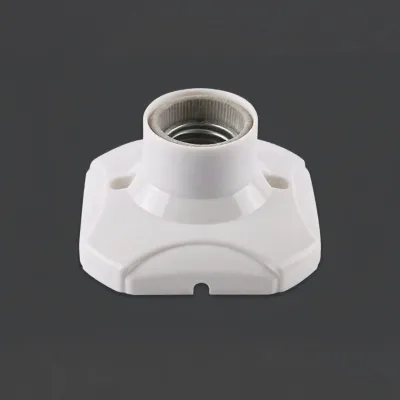
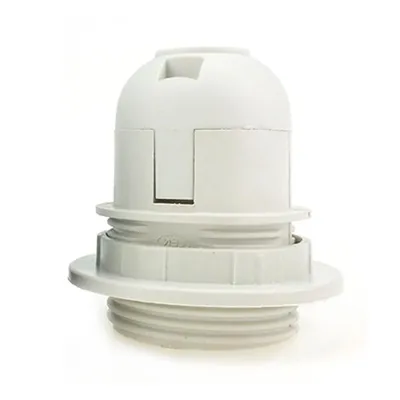
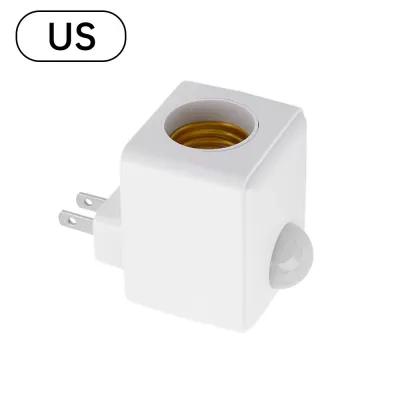
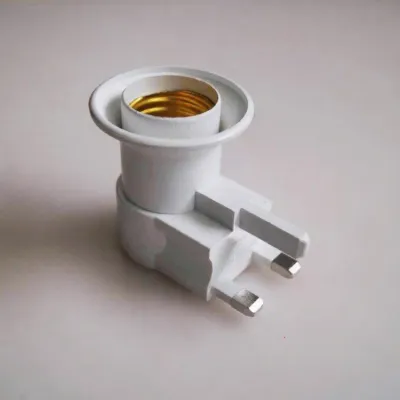
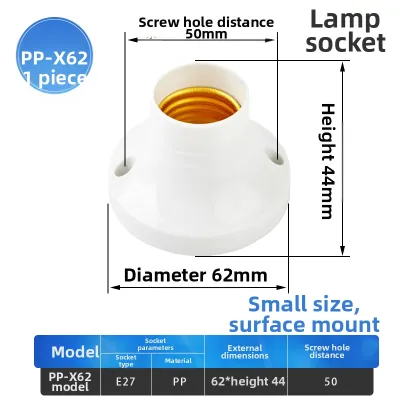
![[SG FREE ] 1Pc LED Light Bulb E27 Socket Lamp Base Holder Adapter Converter With Switch EU UK Plug Energy Saving Lamp F](https://img.lazcdn.com/g/p/65c09ebe9d4306801b9cfad1c99d86a0.jpg_400x400q80.jpg_.webp)
![[SG FREE ] 1Pc LED Light Bulb E27 Socket Lamp Base Holder Adapter Converter With Switch EU UK Plug Energy Saving Lamp F](https://img.lazcdn.com/g/p/b5bd2697fbbdbae80a04cf62cbc9482a.jpg_400x400q80.jpg_.webp)
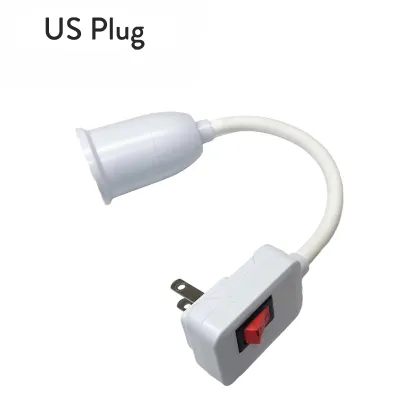
Prices are valid at publication and may change. Please refer to the product page for the latest price.
If the bulb itself does not have a visible code, look closely at the light fixture. Many lamps, downlights, and pendant fixtures feature a small safety sticker inside or near the socket opening that specifies the required bulb base, such as E27 or GU10, along with the maximum allowable wattage.
When you are dealing with a missing bulb or faded print, a quick visual inspection of the socket’s physical mechanism will point you in the right direction. A threaded interior indicates a screw base, two small opposite slots indicate a bayonet mount, and small round holes indicate a pin or bi-pin setup.
Common Bulb Socket Types in Singapore Decoded
Light bulb sockets follow a standardized international naming convention where letters represent the shape of the base and numbers indicate the diameter or distance between pins in millimeters. Understanding this simple code system allows you to translate technical labels into visual shapes and purchase your lighting accessories with confidence.

Edison Screw (E-Series)
Named after Thomas Edison, the E-series utilizes a threaded metal base that screws directly into the socket with a simple clockwise turn. This design is highly secure and provides a broad surface area for electrical contact.
E27 (Standard Screw): Featuring a 27mm base diameter, this is the most common bulb socket found in Singaporean homes. It is the standard choice for main ceiling lights, hanging pendant fixtures, and sturdy table lamps.
E14 (Small Screw): This smaller variant has a 14mm base diameter. It is commonly referred to as a SES (Small Edison Screw) and is typically found in decorative chandeliers, multi-bulb ceiling fans, bedside lamps, and compact appliances like refrigerators.
Bayonet Mount (B-Series)
The B-series uses a push-and-twist mechanism to secure the bulb. It features small radial pins on the side of the metal base that slide into matching L-shaped slots inside the socket, locking into place with a short clockwise turn.
B22 (Standard Bayonet): Measuring 22mm in diameter, this base has two protruding side pins. While less common in brand-new developments, B22 sockets are widely present in older HDB flats, traditional wall brackets, and heritage-style home fixtures.
B15 (Small Bayonet): This compact 15mm bayonet socket is reserved for low-profile decorative lamps, specific sewing machines, and specialized small appliance bulbs where space is highly limited.
Pin and Bi-Pin (G-Series)
The G-series utilizes straight metal pins projecting from the bottom of the bulb. These are designed primarily for directional spotlights, track lighting, and compact accent fixtures.
GU10 (Twist-and-Lock): This base features two thick, blunt pins spaced 10mm apart. You push the bulb into the socket and twist it slightly to lock it in place, making it the standard choice for modern recessed downlights and adjustable track spotlights.
G9 / G4 (Push-in Pins): The G9 base features two flat metal loops spaced 9mm apart, while the G4 features two thin needle-like pins spaced 4mm apart. Both are push-in capsule bulbs commonly used in under-cabinet lighting, display cabinets, and modern decorative crystal fixtures.
How to Inspect Your Fixture and Measure the Socket
If you are dealing with a bare socket or a missing bulb, taking a few physical measurements will help you identify the correct replacement size. Working systematically prevents purchasing errors and ensures your new bulb fits perfectly on the first try.
Before touching, cleaning, or inspecting any bare light socket, always turn off the power supply at the wall switch and switch off the corresponding circuit breaker at your main distribution board. Never insert metal tools or your fingers into a live socket, as this poses a severe risk of electric shock.
Once safety is assured, perform a visual inspection of the socket interior to determine its mechanism. Look for spiral threads (Edison), twin side-slots (Bayonet), or small pinholes (Bi-pin) to narrow down the category.
To confirm the exact code, use a ruler or caliper to measure the inner diameter of a screw or bayonet socket opening, or measure the distance between the center points of the pinholes. A measurement of approximately 27mm indicates an E27 socket, while a distance of exactly 10mm between pinholes points directly to a GU10 fixture.
If the physical socket is difficult to reach or measure, refer to the original product manual, specification sheet, or the manufacturer’s website for your specific light fixture to confirm the compatible bulb type.
Crucial Electrical Specs Beyond the Socket Shape
Finding a bulb that physically fits into your socket is only the first step; it must also match the electrical specifications of your home to operate safely. Always check the manufacturer’s instructions on both the light fixture and the bulb packaging before completing your purchase.
Singapore operates on a standard mains voltage of 230V at 50Hz, meaning standard bulbs designed for this voltage can connect directly to your mains-powered sockets. However, some fixtures, particularly low-voltage spotlight systems (like MR16 bulbs with GU5.3 bases), operate on 12V and require a compatible step-down transformer to function safely without burning out.
You must also verify the maximum wattage limit of your fixture, which is typically printed on a small warning sticker near the socket. Exceeding this rated wattage limit creates excessive heat and poses a serious fire hazard, though upgrading to modern LED bulbs mitigates this risk since they draw far less actual wattage while delivering equivalent brightness.
If you plan to use a dimming switch, verify that the bulb is explicitly labeled as “dimmable” and confirm its compatibility with your existing LED dimmer unit to prevent flickering or humming. For those integrating smart bulbs, remember that these devices require continuous electrical power to maintain their wireless connection, meaning the physical wall switch must remain turned on at all times.
Frequently Asked Questions (FAQ)
Can I use a socket adapter to change my bulb type?
Yes, socket adapters—such as E14-to-E27 or B22-to-E27 converters—are widely available and generally safe to use with modern, low-wattage LED bulbs. However, these adapters add physical length to the assembly, which can cause the bulb to protrude awkwardly from glass shades or enclosed fixtures. Avoid using adapters with high-heat halogen bulbs or heavy, high-wattage lamps, as the extra weight and heat can stress the mechanical connections and damage the socket.
Do smart bulbs come in all socket types?
While smart bulbs are highly popular in standard E27 and B22 formats, they are much harder to find in niche or compact sizes like E14, GU10, or G9. If your home features fixtures with smaller or less common sockets, hunting for specialized smart bulbs can be difficult and expensive. In these scenarios, installing a compatible smart wall switch is often a more reliable and cost-effective solution, allowing you to control any standard bulb smart-style.
Community discussion
Share your experience or ask a question. Comments are reviewed before publication.