
Selecting the right ceiling fan light for a Housing & Development Board (HDB) flat with a standard 2.6-metre ceiling height requires balancing safety, airflow efficiency, and lighting performance. Because standard apartments in Singapore feature relatively low ceilings, installing a bulky or deeply suspended fixture can create safety hazards and make living spaces feel cramped. To maintain a safe environment, the distance between the fan blades and the floor must be carefully managed, making low-profile, flush-mount, or hugger ceiling fan designs the most practical choice. By focusing on compact dimensions and integrated lighting, homeowners can enjoy comfortable air circulation and ample illumination without compromising valuable vertical space.
Understanding Clearance Requirements for 2.6m Ceilings
When planning a ceiling fan installation in a standard HDB flat, safety regulations and physical clearance must be your primary considerations. In Singapore, safety guidelines established by regulatory bodies recommend a minimum clearance of 2.3 metres between the lowest point of the ceiling fan blades and the floor. This safety margin is designed to prevent accidental contact with spinning blades when residents raise their arms, stretch, or carry items through the room.
To determine the maximum allowable height for your ceiling fan light, you can perform a simple calculation. Subtract the minimum required clearance of 2.3 metres from your flat’s ceiling height of 2.6 metres. This leaves a maximum allowable drop of 0.3 metres, or 30 centimetres, from the concrete ceiling slab to the lowest edge of the fan blades. Any fixture that extends further down than 30 centimetres violates safety recommendations and increases the risk of injury or damage.
Products mentioned in this guide
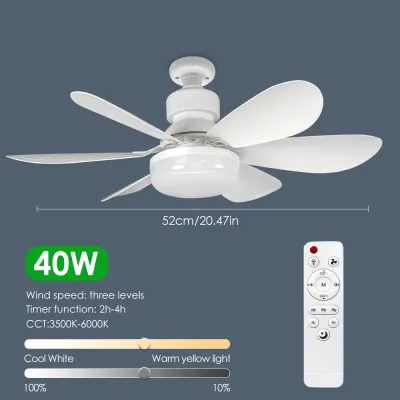
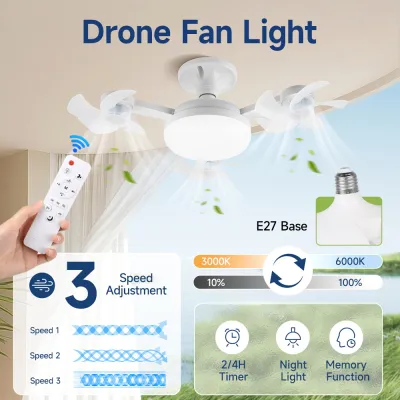
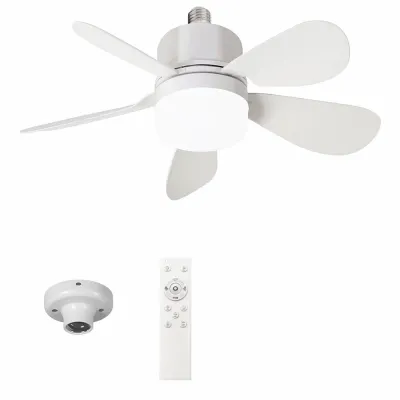
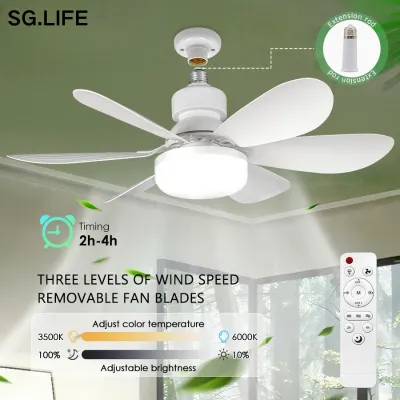
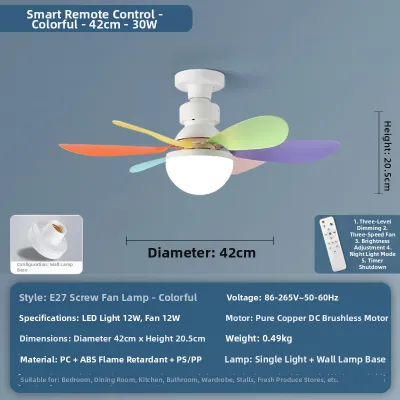
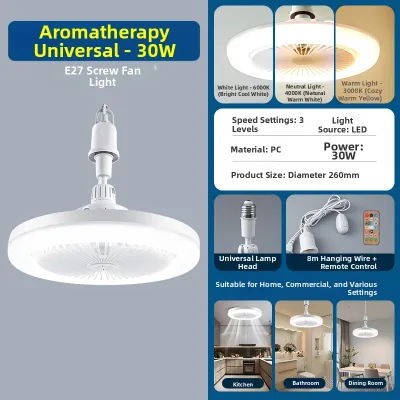
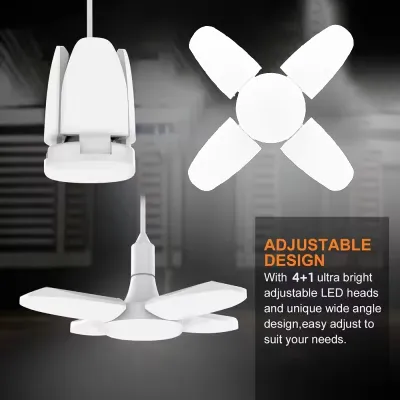
Prices are valid at publication and may change. Please refer to the product page for the latest price.
This tight vertical limit makes flush-mount or hugger designs structurally necessary for standard HDB bedrooms and compact living rooms. Traditional ceiling fans often utilize long downrods that suspend the motor and blades far below the ceiling, which is highly unsuitable for a 2.6-metre clearance. A hugger fan, which mounts directly against the ceiling concrete, minimizes this drop and ensures the blades remain safely elevated.
Beyond physical safety, maintaining adequate clearance is visually essential. A fan that hangs too low dominates the room visually, casting harsh shadows and creating a claustrophobic atmosphere. By keeping the fixture close to the ceiling, you preserve the open feel of the room while allowing the integrated light kit to distribute illumination more evenly across the living space.
Essential Specifications for Ceiling Fans and Integrated Lights
Evaluating the technical specifications of a ceiling fan light ensures that the fixture operates efficiently, quietly, and safely within your home’s electrical framework. The first critical component to consider is the motor type, where you must choose between Direct Current (DC) and Alternating Current (AC) motors. DC motors are highly recommended for HDB flats because they consume significantly less energy, run cooler, and operate with minimal noise, making them ideal for quiet bedroom environments. Additionally, DC motors typically offer a wider range of speed settings, allowing you to fine-tune the airflow to your comfort level.

Lighting integration is another vital specification that impacts both daily use and long-term maintenance. Many modern low-profile fans feature integrated, sealed LED modules that offer multi-tone lighting, allowing you to switch between warm white, cool white, and daylight settings via a remote control. While these modules are highly energy-efficient and sleek, they can be difficult to replace individually if the driver or LED board fails. Alternatively, some fixtures utilize a standard light bulb with fan configuration, allowing you to screw in standard LED bulbs. This setup simplifies maintenance, as you can easily replace a burnt-out bulb without needing specialized parts or professional assistance, though it may result in a slightly thicker profile.
The physical dimensions of the fan, including blade span and pitch, must match the specific room size to optimize airflow. For standard HDB bedrooms, which typically measure around 9 to 12 square metres, a compact blade span of 36 to 46 inches is generally sufficient to circulate air without overwhelming the space. For larger living rooms, a span of 48 to 56 inches may be appropriate, provided the fan’s overall drop remains within the 30-centimetre limit. The pitch of the blades—the angle at which they are set—determines how effectively they move air; a steeper pitch moves more air but requires a stronger motor, while a flatter pitch operates more quietly but with less air movement.
Control mechanisms and electrical compatibility must also be verified before purchase. Most modern DC ceiling fans rely on wireless remote controls or smart home applications, which simplify the wiring process because they do not require separate physical wall switches for the fan and the light. However, you must verify your home’s existing wiring configuration. Some smart fan models require a continuous power supply and may benefit from a neutral wire at the switch box, which is not always present in older HDB flats. Always check the manufacturer’s specifications regarding voltage compatibility (typically 220V–240V for Singapore) and electrical certifications, such as the Safety Mark, to ensure compliance with local safety standards.
Low-Profile Fan Light Designs Suitable for HDB Flats
To accommodate the strict 30-centimetre drop limit of a 2.6-metre ceiling, several specialized fan light designs are available, each offering distinct advantages depending on the room’s layout and your personal preferences. Understanding these design categories helps you select a model that balances aesthetic appeal with practical performance.
Flush-mount and hugger fans represent the most effective solution for maximizing vertical clearance. These models are engineered to sit flush against the ceiling, completely eliminating the need for a downrod. By positioning the motor housing directly against the concrete slab, hugger fans keep the blades as high as possible, often resulting in a total drop of just 20 to 25 centimetres. This design is highly recommended for HDB bedrooms, where beds elevate occupants closer to the ceiling, making maximum clearance a safety priority. The primary trade-off is that because the blades are close to the ceiling, air intake can be slightly restricted, resulting in a gentler breeze compared to suspended models.
For living rooms where a slightly higher airflow volume is desired, low-profile fans with very short downrods (typically 50mm to 100mm) offer a viable alternative. These models allow a small gap between the ceiling and the fan motor, which improves air circulation by allowing air to flow more freely behind the blades. As long as the total drop of the fan, including the light kit, does not exceed the 30-centimetre limit, these models can be safely installed. This configuration is ideal for dining areas or living rooms where residents are primarily seated and the risk of accidental contact is lower.
Enclosed or bladeless fan lights represent a modern, highly compact design category. These fixtures feature a central spinning disc or small, enclosed blades hidden behind a protective grille or casing, often resembling a standard flush-mount ceiling light. Because the moving parts are entirely contained within the housing, these units are exceptionally safe, making them excellent choices for children’s bedrooms, study rooms, or walk-in wardrobes. They are also much easier to clean and maintain than traditional open-blade fans. However, because the blade span is small, the airflow is highly concentrated directly beneath the unit, making them less suitable for cooling large living areas.
When evaluating these designs, consider the primary function of the room. If consistent, wide-area cooling is your main goal, a hugger fan with a wider blade span is preferable. If safety and low maintenance are your top priorities, an enclosed fan light offers peace of mind. Always measure the exact dimensions of the room, including clearance from wardrobe doors and wall-mounted air conditioners, to ensure the fan blades will not obstruct other fixtures.
Installation, Wiring, and Safety Boundaries
Installing a ceiling fan light in an HDB flat involves structural and electrical considerations that directly impact the safety of your household. Before purchasing any fixture, you must verify the load-bearing capacity of your ceiling. Standard HDB ceilings are constructed of solid concrete slabs, which are highly stable and capable of supporting the weight and rotational torque of a ceiling fan. However, if your flat features a false ceiling—often installed to conceal wiring or create recessed lighting—you cannot mount a fan directly to the plasterboard. False ceilings lack the structural strength to support a vibrating, heavy appliance, and attempting to mount a fan directly to them can lead to catastrophic structural failure.
Electrical wiring verification is another critical step. You must ensure that the existing electrical points are capable of handling the power requirements of both the fan motor and the integrated light. Traditional ceiling points are often wired to a single switch, meaning that turning on the switch powers both the fan and the light simultaneously. If you want independent control over the fan speed and the light brightness without relying on a remote control, you may need to run additional wiring. Furthermore, you must verify that the circuit is properly grounded to prevent electrical shocks.
Because ceiling fan installation involves fixed electrical wiring, working at heights, and securing suspended loads, it is a strict safety boundary. In Singapore, all fixed electrical wiring and installation work must be carried out by a licensed electrical worker (LEW) or a qualified professional installer. Attempting to install a ceiling fan as a DIY project without the proper training and licensing is highly discouraged, as improper mounting can cause the fan to wobble, loosen over time, or fall, while incorrect wiring poses severe fire and shock hazards.
There are several clear stop conditions where you must halt the installation process and consult a qualified professional or refer to HDB guidelines. If you discover cracks or signs of spalling concrete in the ceiling slab during preparation, do not proceed with mounting. Similarly, if you find outdated, brittle, or ungrounded wiring, or if the physical measurements of the purchased fan result in a floor clearance of less than 2.3 metres, stop immediately. Addressing these structural and electrical issues beforehand ensures a safe, compliant, and long-lasting installation.
Frequently Asked Questions (FAQ)
Can I install a ceiling fan light on an HDB false ceiling?
Yes, but you cannot mount the fan directly to the false ceiling panels, such as gypsum or calcium silicate boards, as they cannot support the weight and vibration of an operating fan. Instead, the installer must mount the fan directly to the concrete slab above the false ceiling. This is typically achieved by using extended threaded rods or a specialized support bracket that bypasses the false ceiling entirely, ensuring the load is safely transferred to the structural concrete. Always engage a professional installer to assess the ceiling structure and perform this reinforced installation.
How do I clean and maintain a flush-mount fan light?
Before performing any maintenance or cleaning, you must isolate the power supply by turning off the main switch at your home’s distribution board (DB box) to eliminate the risk of electrical shock. Once the power is safely isolated, use a sturdy step ladder to reach the fixture safely. Wipe the fan blades and light cover gently using a dry or slightly damp microfiber cloth to remove dust and prevent motor strain. Avoid using harsh chemical solvents or excessive water, especially on ABS acrylic or wooden blades, as moisture can damage the motor housing or warp the blades.

Community discussion
Share your experience or ask a question. Comments are reviewed before publication.