
Selecting the right hanging light ceiling fixture for a standard Singapore Housing & Development Board (HDB) flat requires a careful balance of aesthetics, scale, and spatial awareness. With a typical ceiling height of 2.6 meters, homeowners face unique design constraints that do not apply to high-ceilinged landed properties or commercial spaces. A fixture that hangs too low can disrupt the flow of movement, create visual clutter, and make an otherwise open room feel cramped and restrictive.
To successfully integrate hanging lights into a 2.6m HDB flat, you must focus on adjustable drop lengths, proportional scaling, and strategic placement. By understanding how physical clearance and visual weight interact, you can enjoy the dramatic styling of pendant lights without sacrificing headroom or spatial comfort. This guide outlines the essential design features, evaluation criteria, and safety protocols needed to make an informed lighting decision for your home.
Understanding the 2.6m Ceiling Constraint in HDB Flats
The standard 2.6-meter ceiling height in modern HDB flats, particularly Build-To-Order (BTO) units, establishes a strict boundary for any suspended fixture. When you introduce a hanging light, you are directly subtracting from this vertical clearance. For example, a fixture with a total drop of 60 centimeters leaves only 2 meters of clearance from the floor. For taller family members or guests, this height can feel uncomfortably close, creating a subconscious instinct to duck when walking underneath the light.
Products mentioned in this guide
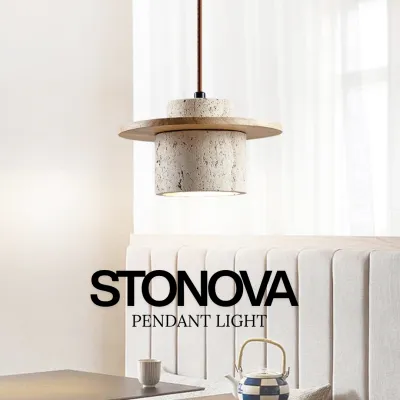
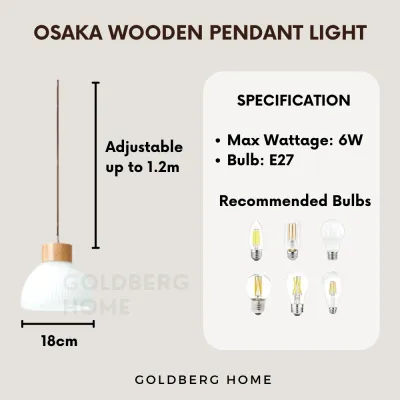
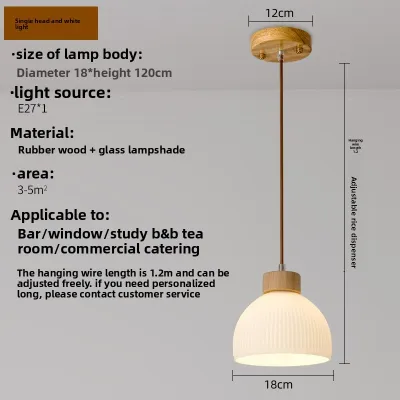
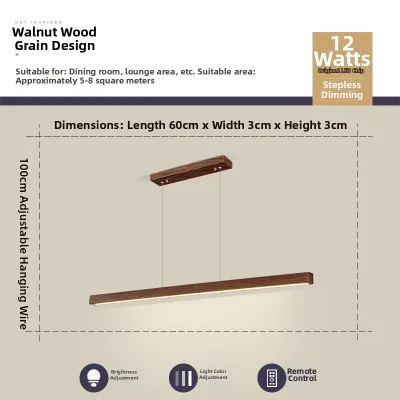
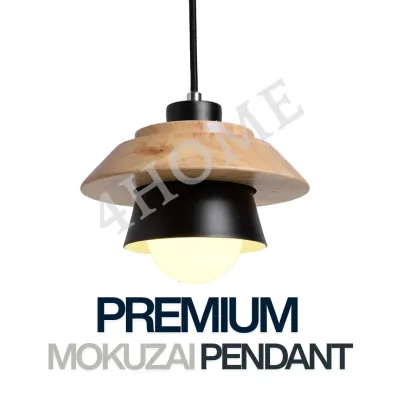
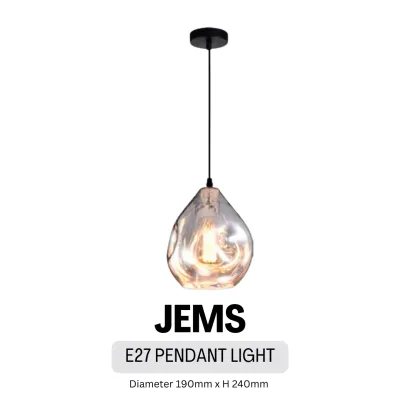
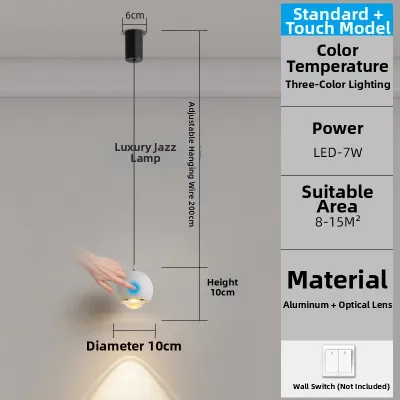
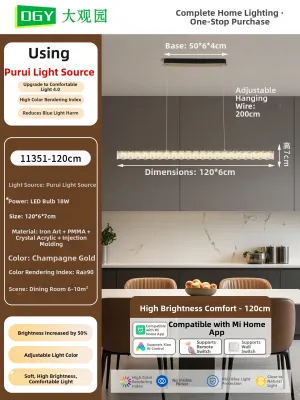
Prices are valid at publication and may change. Please refer to the product page for the latest price.
Beyond physical clearance, the visual weight of a fixture plays a critical role in how spacious a room feels. Visual weight refers to how heavy or dominant an object appears to the eye. A large, opaque metal dome or a dark, solid drum shade has high visual weight; it draws the eye downward and creates a strong horizontal boundary that visually lowers the ceiling. On the other hand, fixtures made of clear glass, open wireframes, or light-colored materials have low visual weight, allowing the eye to travel through the fixture and maintain a sense of vertical openness.
Another critical consideration is the prevention of glare and the preservation of clear sightlines across the room. In a compact HDB layout, a hanging light that sits directly in the center of a high-traffic pathway can cause uncomfortable glare if the bulb is exposed at eye level. To maintain a comfortable living environment, the light source must be positioned or shielded so that it illuminates the target area—such as a dining table or kitchen island—without shining directly into the eyes of people standing or walking nearby.
Finally, you must identify and avoid potential conflicts with other ceiling-mounted fixtures and built-in carpentry. In Singapore’s tropical climate, ceiling fans are a common addition to living rooms and bedrooms. Installing a hanging light too close to a ceiling fan can create a highly disruptive strobing effect when the fan blades spin beneath or across the light path. Additionally, you must ensure that the drop length of any pendant light does not interfere with the swing paths of tall built-in wardrobe doors, kitchen cabinet doors, or wall-mounted air conditioning units.
Key Design Features for Hanging Lights in Low-Clearance Rooms
To overcome the limitations of a 2.6m ceiling, look for hanging lights that feature adjustable cord, chain, or rod mechanisms. Many imported fixtures are packaged with standard 1.5-meter cords designed for taller ceilings, which are impractical for HDB flats. Prioritize designs that allow the installer to shorten the suspension cable to a minimal length—sometimes as short as 15 to 20 centimeters—without compromising the electrical integrity or the aesthetic balance of the fixture.

If a traditional pendant hangs too low, semi-flush or low-drop profiles offer an excellent alternative. These fixtures bridge the gap between flush-mount ceiling lights and fully suspended pendants. A semi-flush mount typically features a short metal stem that suspends the light source 15 to 30 centimeters below the ceiling canopy. This design provides the dimensional interest and shadow play of a hanging light while preserving maximum headroom, making it highly suitable for living rooms and main walkways.
The design of the shade itself also influences how light is distributed and how the room is perceived. Open-cage designs, translucent glass globes, and woven rattan shades are highly effective in low-clearance rooms because they allow light to disperse in all directions, including upward toward the ceiling. This upward light distribution, or uplighting, bounces off the white ceiling surface, softening shadows and creating an optical illusion of greater height. Conversely, highly directional downlights should be used selectively, as they can leave the ceiling in shadow, making the room feel shorter.
Proportional scaling is the final design pillar for compact HDB spaces. A hanging light must match the scale of the furniture beneath it and the overall dimensions of the room. In a typical HDB dining or living area, a fixture that is too wide can overwhelm the space, while one that is too small will look lost. A practical guideline is to ensure the diameter of the hanging light is at least 30 centimeters narrower than the width of the dining table or kitchen counter over which it hangs, preventing the space from feeling crowded.
Evaluating Lighting Brands for HDB Compatibility
When shopping for hanging lights in Singapore, you must evaluate brands based on technical specifications rather than aesthetic appeal alone. Begin by verifying the minimum drop length specified in the brand’s product catalog. Some brands use rigid, non-adjustable metal rods that cannot be shortened past a certain point, such as a minimum drop of 50 centimeters. For a 2.6m ceiling, these rigid fixtures are rarely suitable unless they are positioned directly over a permanent piece of furniture like a dining table.
Electrical safety is a non-negotiable factor when selecting lighting brands. In Singapore, all mains-powered electrical fixtures and components, including LED drivers and transformers, should comply with local safety standards. When evaluating brands, check for the Enterprise Singapore Safety Mark on the electrical components. This certification indicates that the product has undergone rigorous testing to ensure it can safely handle the local 230V, 50Hz electrical supply without posing a risk of short circuits, electrical fires, or premature component failure.
Local warranty terms and after-sales support are equally important, especially for fixtures with integrated LED modules. Unlike traditional fixtures where you can easily replace a blown bulb, integrated LED hanging lights rely on built-in light engines and drivers. If these components fail and the brand does not offer local replacement parts or a reliable warranty, you may have to replace the entire fixture. Choose brands that maintain a physical presence, showroom, or authorized distributor in Singapore to ensure you can easily access replacement parts and technical support.
Additionally, consider how the materials used by a brand will perform in Singapore’s warm, humid climate. High humidity can accelerate the tarnishing of low-quality metals, cause cheap electroplated finishes to peel, and lead to mold growth on untreated organic materials. Prioritize brands that utilize durable, corrosion-resistant materials such as powder-coated aluminum, solid brass, stainless steel, or sealed hardwoods. These materials maintain their appearance and structural integrity over years of exposure to tropical air.
Room-by-Room Placement Strategy for HDB Layouts
Implementing a strategic room-by-room placement plan allows you to use hanging lights effectively without compromising the functionality of your HDB flat. In the dining area, a hanging light is highly effective. Because the dining table is a permanent, stationary piece of furniture, there is no risk of anyone walking directly beneath the light. Centering a single pendant or a linear cluster over the table anchors the dining zone within an open-concept floor plan, creating an intimate, welcoming focal point for meals.
In the bedroom, hanging lights can be used creatively to maximize floor and surface space. Instead of a central hanging fixture that might conflict with wardrobe doors or the foot of the bed, consider installing low-hanging bedside pendants. Suspended on either side of the bed, these fixtures replace traditional table lamps, freeing up valuable space on your nightstands. Bedside pendants should be hung relatively low, with the bottom of the shade positioned roughly 50 to 60 centimeters above the nightstand surface to provide focused, glare-free reading light.
For HDB living rooms, a central low-hanging fixture is generally not recommended, especially if you plan to install a ceiling fan for ventilation. A central pendant can restrict movement and create visual clutter in the main seating area. Instead, opt for flush-mount fixtures or track lighting for general illumination, and use perimeter lighting to add warmth. If you highly prefer a hanging light in the living room, position it directly over a coffee table or in a corner reading nook where foot traffic is non-existent, ensuring it does not obstruct the main walking paths.
Corridors, foyers, and entryways are high-traffic transition zones where headroom clearance must be strictly maintained. In these areas, any suspended fixture must leave a minimum clearance of 2.1 meters from the floor to the bottom of the light to prevent accidental bumps when carrying items or welcoming guests. Given the standard 2.6m ceiling height, this leaves a maximum allowable drop of only 50 centimeters, including the canopy and the fixture itself. In most cases, flush-mount or recessed downlights are safer and more practical choices for HDB corridors.
Installation Boundaries and Electrical Safety Checks
Installing a hanging light in an HDB flat involves working with reinforced concrete ceilings, which present specific structural boundaries. Standard HDB ceiling roses are designed to support lightweight fixtures. If you plan to install a heavier hanging light, such as a multi-light metal pendant or a glass chandelier, you must verify the weight limits of the existing mounting point. Heavy fixtures cannot rely on standard plastic hooks or simple plastic wall plugs; they require specialized metal expansion bolts (sleeve anchors) drilled directly into the concrete ceiling slab to ensure secure attachment.
Before any drilling begins, it is vital to avoid structural hazards hidden within the concrete. HDB ceilings contain concealed steel reinforcement bars (rebar) and embedded electrical conduits that carry wiring to other parts of the flat. Drilling into a structural rebar can weaken the building’s structure, while striking an electrical conduit can cause severe electrical shocks or short circuits. Installers should use a digital wall scanner to locate these hidden elements before drilling mounting holes, and drilling should never proceed if there is any doubt about what lies beneath the surface.
For all fixed wiring installations, alterations to switch loops, or the creation of new lighting points, you must hire an Energy Market Authority (EMA) Licensed Electrical Worker (LEW). Attempting to perform complex electrical wiring as a DIY project is highly hazardous and can lead to electrical fires, voided home insurance policies, or violations of local housing regulations. Before any installation, maintenance, or cleaning of a ceiling fixture, always isolate the mains power at the distribution board (DB box) by switching off the corresponding circuit breaker.
Finally, verify the electrical compatibility of your chosen fixture before completing your purchase. Ensure the voltage rating matches Singapore’s standard 230V supply. If you plan to use dimmable LED hanging lights, you must verify that the LED driver supplied with the fixture is fully compatible with the specific type of dimmer switch installed on your wall (such as trailing-edge or leading-edge dimmers). Incompatible pairings can result in persistent flickering, audible buzzing, or premature failure of the LED driver.
Frequently Asked Questions (FAQ)
Can I install a heavy chandelier on a standard HDB ceiling?
Standard HDB ceiling roses and plastic mounting hooks are typically rated only for lightweight fixtures under 3 to 5 kilograms. Installing a heavy chandelier on these standard fittings poses a significant safety risk, as the weight can cause the fixture to pull free from the ceiling over time. For any hanging light that exceeds 5 kilograms, you must bypass the standard plastic fittings and mount the fixture’s ceiling plate directly to the concrete slab using heavy-duty metal expansion anchors or sleeve bolts.
If you are considering an exceptionally heavy fixture, such as a solid brass or crystal chandelier weighing more than 15 kilograms, you must stop and consult a qualified structural engineer or a licensed contractor. They can assess the load-bearing capacity of the ceiling plate and ensure the installation complies with local safety standards. Additionally, ensure that the concrete ceiling is in good condition, free of spalling or cracks, before attempting to mount any heavy suspended load.
What is the ideal hanging height for a pendant light over an HDB dining table?
The standard recommendation for hanging a pendant light over an HDB dining table is to maintain a clearance of 75 to 90 centimeters between the tabletop and the bottom of the fixture. This height range ensures that the light is low enough to create an intimate, focused atmosphere for dining while remaining high enough to prevent blocking the sightlines of people seated across from each other. It also minimizes the risk of anyone accidentally bumping their head when leaning forward or standing up.
You should adjust this height slightly based on the seated eye level of your family members and the design of the fixture. If the hanging light has an open bottom with an exposed bulb, hanging it slightly higher or choosing a diffused bulb can help prevent direct glare. For longer or extendable dining tables, a single central pendant may not provide sufficient light coverage. In such cases, consider installing a linear pendant fixture or a cluster of two or three smaller pendants spaced evenly along the length of the table to distribute light uniformly.

Community discussion
Share your experience or ask a question. Comments are reviewed before publication.