
Quick Answer: Selecting a Nitecore Headlamp for HDB Emergencies
To prepare an HDB flat for unexpected power outages or emergency evacuations, a reliable headlamp must balance runtime, weight, and beam versatility. While Nitecore offers a diverse lineup of portable lighting, the ideal choice for a Singapore household depends on your specific family size, storage habits, and evacuation plans. Residents should prioritize models that offer a mix of wide floodlighting for indoor navigation and sufficient runtime to last through extended blackouts. Always verify the latest specifications, battery capacities, and weight profiles on the manufacturer’s official documentation to ensure the selected model matches your household’s emergency readiness plan.
Why a Headlamp Outperforms Flashlights in HDB Evacuations
High-rise living means that during a major power outage, elevators may become inoperable, requiring residents to navigate dark concrete stairwells. Descending multiple flights of stairs while carrying emergency supplies, guiding young children, or assisting elderly family members requires full use of both hands. A headlamp secures directly to the forehead, keeping hands completely free to hold handrails, carry grab-to-go bags, or open heavy fire doors.

Contrast this with a traditional handheld flashlight, which occupies one hand and limits physical stability. In a high-stress evacuation scenario, dropping a flashlight down a stairwell can leave a family in complete darkness. A headlamp remains securely attached to the wearer, directing light precisely where they look, which significantly reduces the risk of trips and falls on uneven steps.
Products mentioned in this guide
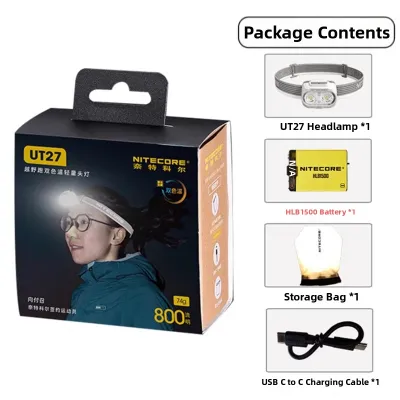
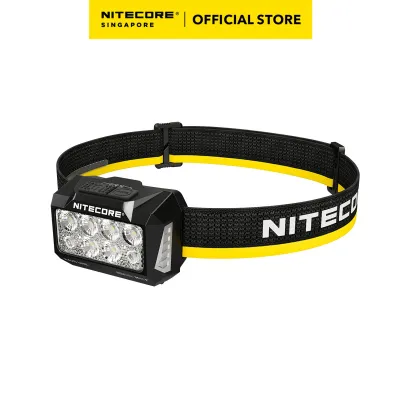
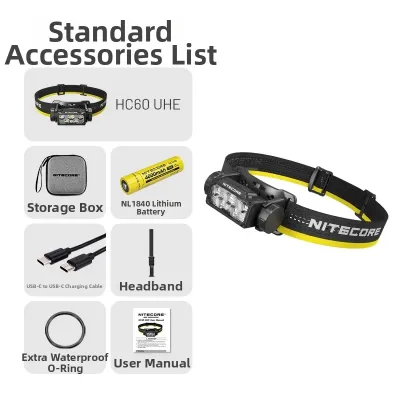
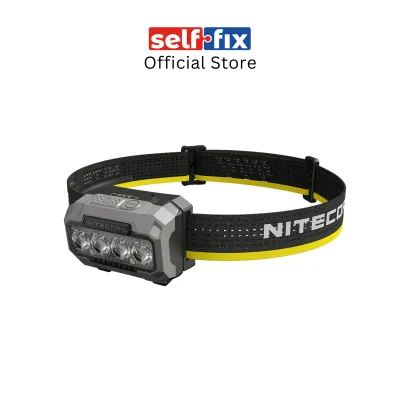
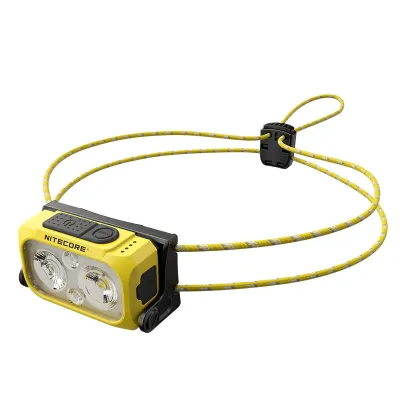
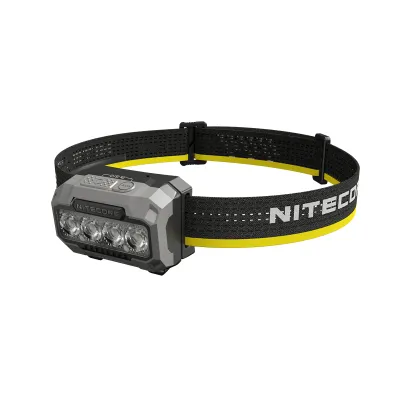
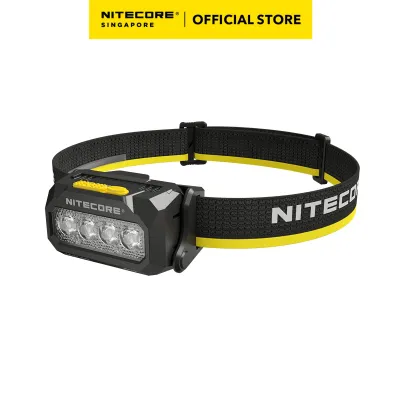
Prices are valid at publication and may change. Please refer to the product page for the latest price.
Furthermore, indoor tasks such as inspecting the household shelter, checking the main distribution board, or reading emergency notices require focused, stable illumination. A headlamp provides an even beam distribution directly in the user’s line of sight, preventing the awkward angles and shadows associated with propping up a handheld flashlight or mobile phone.
There is also a profound psychological benefit to hands-free lighting, particularly for vulnerable household members. Children and elderly residents often feel more secure when they can see their immediate surroundings clearly without having to actively manage a device. Equipping each family member with their own lightweight headlamp fosters a sense of individual control and safety, reducing panic during stressful situations.
Core Specifications to Evaluate in the Nitecore Lineup
Brightness and Beam Type
When evaluating a Nitecore headlamp, understanding the distinction between flood and spot beams is crucial. A wide flood beam is highly effective for indoor HDB environments, as it disperses light evenly across a room or narrow corridor, minimizing harsh shadows and glare. Conversely, a focused spot beam throws light over longer distances, which is valuable for scanning long corridors or outdoor pathways during an evacuation. Look for models that offer a dual-beam configuration or adjustable output levels, allowing you to switch between a low-lumen flood for close-up tasks and a higher-intensity beam for distance viewing.
Battery Type and Runtime
Emergency preparedness requires careful consideration of power sources. Nitecore headlamps generally utilize built-in rechargeable lithium-ion batteries, removable rechargeable cells, or standard disposable batteries. Built-in rechargeable batteries are highly convenient for regular maintenance and offer excellent power density, but they require access to a working USB power bank or solar charger during prolonged grid failures. Disposable batteries (such as AAA alkaline or lithium cells) provide the advantage of instant replacement without waiting for a charge, making them excellent backups. Evaluate your household’s backup power capacity and choose a power source that aligns with your long-term storage strategy.
Weight and Comfort
An emergency headlamp may need to be worn for several hours during a prolonged blackout or evacuation. Therefore, headband ergonomics and overall weight are critical factors. Lightweight models constructed from durable polycarbonate materials reduce neck strain and are comfortable enough for children to wear without complaint. Look for headbands featuring moisture-wicking materials and secure adjustment buckles to ensure the unit remains stable on the head during physical movement.
Water and Dust Resistance
While HDB emergencies are primarily indoor events, evacuation routes may expose residents to tropical downpours or dusty environments. Checking the Ingress Protection (IP) rating of a headlamp is essential. For basic indoor shelter-in-place scenarios, a moderate water-resistance rating (such as IPX4, which protects against splashing water) is typically sufficient. However, if your emergency plan involves navigating outdoor areas during Singapore’s monsoon seasons, verifying a higher rating (such as IP66 or IP68) ensures the device remains fully functional despite heavy rain and dust exposure.
Matching Nitecore Product Categories to Household Scenarios
Ultralight and Compact Series
For individual grab-and-go bags, compact and ultralight headlamps are highly practical. These models occupy minimal space in an emergency kit and are light enough to be worn comfortably by children or elderly family members. Because they prioritize low weight, they are ideal for quick evacuations where heavy gear would be a hindrance. When selecting an ultralight model, verify that the maximum runtime on lower brightness settings is sufficient to cover at least one full night of use.
High-Performance and Multi-Output Series
The primary household responder—the person responsible for checking the main distribution board, securing windows, or leading the family down dark stairwells—requires a more robust lighting tool. High-performance series often feature multiple output modes, including high-intensity spot beams and wide-angle floodlights. These models provide the necessary illumination to assess structural issues or navigate complex outdoor paths. Ensure the primary responder’s headlamp has intuitive button controls that can be operated easily, even when wearing gloves or under high stress.
Hybrid Power Options
For maximum versatility, hybrid headlamps that accept both rechargeable lithium-ion packs and standard disposable batteries offer the best of both worlds. During a brief power outage, you can rely on the cost-effective and environmentally friendly rechargeable battery. If the blackout extends over several days and charging options are exhausted, you can quickly swap in standard disposable batteries stored in your emergency kit. This dual-source capability ensures you are never left without light due to an empty battery.
Verification Warning
Because product lineups and technical specifications frequently change, residents must verify current model availability, exact lumen outputs, runtimes, and battery compatibility on Nitecore’s official brand website or through authorized local retailers before making a purchase. Avoid relying on outdated forum posts or unverified third-party listings for critical safety specifications.
Safe Storage, Maintenance, and Battery Care
Battery Leakage Risks
Proper storage is the key to ensuring your emergency headlamp functions when you need it most. If you choose a model that utilizes disposable alkaline batteries, never store the headlamp with the batteries installed. Over time, alkaline batteries can leak corrosive chemicals, permanently damaging the headlamp’s internal circuitry and rendering it useless. Store spare disposable batteries in their original packaging or a dedicated battery organizer alongside the headlamp.
Lithium-Ion Storage Guidelines
For headlamps with integrated or removable lithium-ion batteries, long-term storage requires a different approach. Lithium-ion batteries naturally self-discharge over time and can degrade if left completely flat or fully charged for extended periods. To maintain battery health, store the headlamp in a cool, dry place away from direct sunlight, such as an internal utility cabinet or household shelter. Avoid storing electronics in high-humidity areas of the home, as moisture can degrade seals and corrode contacts.
Bi-Annual Testing Routine
Establish a strict bi-annual testing routine to verify the readiness of your emergency lighting. A practical way to remember this is to align the checks with local public holiday reminders or the start of the monsoon seasons. During each test, insert the batteries (or check the charge level), cycle through all brightness modes, and inspect the physical condition of the headlamp. Check the headband elasticity to ensure it has not stretched out or degraded in Singapore’s humid climate, and inspect any rubber O-rings or charging port covers to ensure they remain intact and sealed.
Purchasing Authentic Nitecore Gear in Singapore
To guarantee the reliability of your emergency equipment, always purchase Nitecore headlamps from authorized local distributors, official brand stores, or reputable online marketplaces. Counterfeit lighting products are common in the market and often fail to meet safety standards, presenting risks of battery failure or overheating.
When purchasing, look for official authenticity markers, such as scratch-off verification codes on the packaging that can be checked on the manufacturer’s website. Additionally, verify that the product comes with a valid local warranty, which ensures access to support and replacements if a defect is found. While Singapore does not always require specific safety marks for low-voltage battery-operated headlamps, buying from reputable sources ensures the internal charging circuits and batteries comply with international safety standards.
Be highly skeptical of listings offering Nitecore products at prices significantly lower than the manufacturer’s suggested retail price. These are often counterfeit goods or grey-market imports that lack warranty coverage and quality control. Investing in authentic gear from verified sellers ensures your primary emergency light will perform reliably when your household’s safety depends on it.
Frequently Asked Questions (FAQ)
Can I use a Nitecore headlamp as a primary room light during a blackout?
While a headlamp is designed primarily for directional, hands-free mobility, it can be adapted for temporary ambient room lighting. Directing a focused headlamp beam at a white ceiling or wall can bounce the light, creating a soft, diffused glow that illuminates a small room without causing harsh glare. However, headlamps are not ideal primary room lights because their focused beams can cause discomfort if shined directly into family members’ eyes. For stationary, long-term room illumination, it is highly recommended to pair your headlamp with a dedicated area lantern or a diffuser accessory designed to scatter the light evenly.
How often should I test the headlamp in my emergency kit?
You should test your emergency headlamp at least twice a year. A simple way to maintain this schedule is to perform the check during major seasonal transitions or alongside regular household chores, such as cleaning out the utility closet. During the test, verify that the battery holds a charge, the buttons respond correctly, and the headband remains elastic. If your headlamp uses disposable batteries, check them for any signs of swelling or leakage, and replace them if they are near their expiration date.
Are red light modes necessary for HDB power outages?
A red light mode is not strictly mandatory for HDB emergencies, but it is a highly useful feature. Red light preserves your eyes’ natural night adaptation, allowing you to navigate dark rooms without shocking your vision with bright white light. In a dense residential environment like an HDB block, using a low-intensity red light in shared corridors or stairwells also helps you remain visible to others without casting blinding glare at your neighbors. It is a valuable secondary feature to look for when comparing different models.
Community discussion
Share your experience or ask a question. Comments are reviewed before publication.