
When a sudden power outage hits a high-density Housing & Development Board (HDB) estate in Singapore, the immediate environment transitions from highly illuminated urban living to complete darkness. Navigating a typical flat under these conditions requires a reliable, high-performance light source that outclasses standard consumer novelties. Convoy flashlights, highly regarded for their robust aluminum construction, modular driver options, and exceptional value, serve as outstanding emergency standby lights. By selecting the right form factor, battery configuration, and emitter type, HDB residents can establish a dependable emergency lighting system tailored to their specific flat layouts.
Assessing Emergency Lighting Needs in an HDB Flat
HDB flats present unique architectural configurations that dictate your emergency lighting requirements. Modern layouts often feature long, narrow corridors connecting bedrooms to the living area, windowless household shelters (commonly used as storerooms), and internal bathrooms that receive zero natural light. During a nighttime power failure, these spaces become pitch-black, creating immediate navigation hazards for young children and elderly residents alike. A wide, diffuse beam is essential to safely illuminate these tight corridors and small rooms without casting harsh, disorienting shadows.
While many homeowners rely on everyday carry (EDC) pocket lights or keychain lights, these are rarely optimized for prolonged household emergencies. An EDC light is designed for brief, opportunistic use and often prioritizes extreme compactness over sustained thermal performance or long runtime. In contrast, a dedicated home emergency light must be easily locatable in the dark, capable of standing upright on its tail (tail-standing) to bounce light off the ceiling, and equipped with a high-capacity battery that can run continuously for several hours.
Products mentioned in this guide
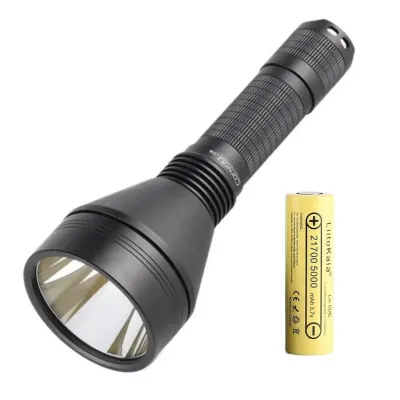
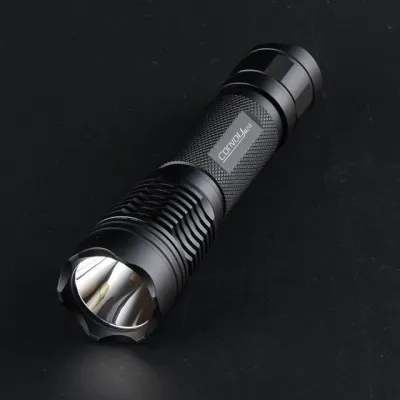
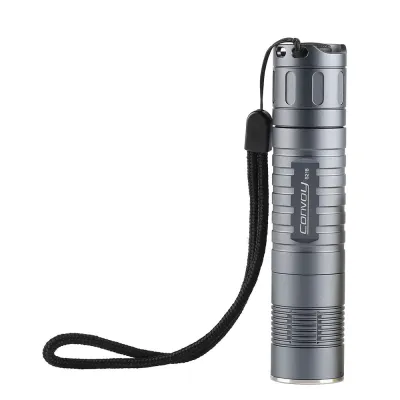
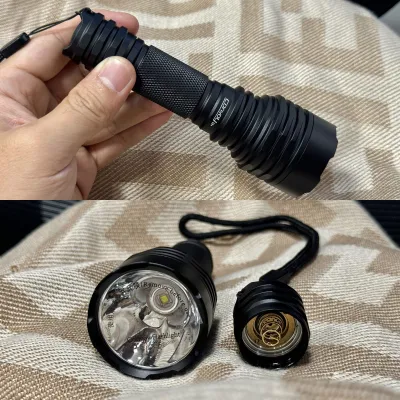
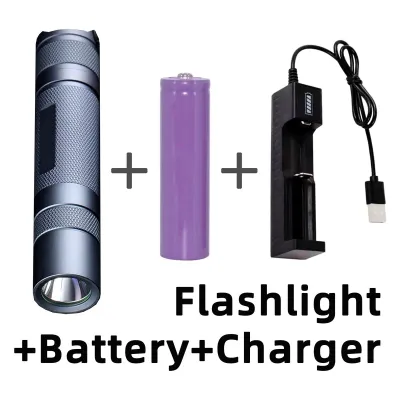
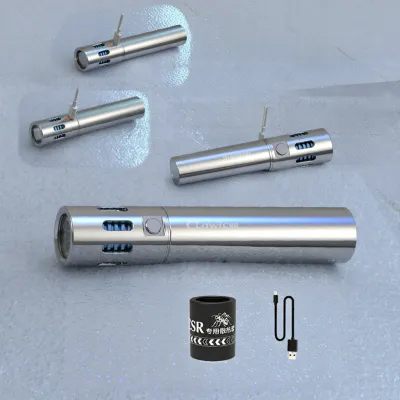
Prices are valid at publication and may change. Please refer to the product page for the latest price.
Relying on smartphone flashlights or municipal emergency exit lights is an impractical strategy for extended outages. Smartphone LEDs produce a highly inefficient, low-intensity flood that quickly drains the phone’s primary battery, leaving you without a vital communication tool during a crisis. Additionally, municipal emergency lights located in HDB common corridors do not penetrate deep into individual units, leaving your living room, kitchen, and bedrooms completely dark. A dedicated Convoy flashlight ensures you preserve your phone’s battery while enjoying vastly superior, controllable illumination.
Furthermore, the reinforced concrete walls typical of HDB construction, especially around the household shelter, act as complete barriers to external light. If a blackout occurs while a family member is inside the shelter or a windowless bathroom, the transition to total darkness is instantaneous and absolute. Having a designated, high-visibility flashlight placed near these high-risk zones is a fundamental safety measure that prevents panic and physical injury.
Key Features to Evaluate in Convoy Flashlights
Selecting the ideal Convoy flashlight for emergency use requires balancing brightness, beam shape, battery performance, and ease of use.

Brightness and Beam Profile
For indoor emergency lighting, a flood-oriented beam profile is vastly superior to a throw-oriented beam. A thrower projects a tight, intense hotspot over long distances, which is useful outdoors but creates blinding reflections when bounced off typical white HDB walls or plaster ceilings. A flood beam, achieved through shallow reflectors, orange-peel (textured) reflectors, or bead-surface TIR lenses, distributes light evenly across a wide angle. This soft, diffuse illumination mimics natural room lighting and reduces eye strain. When choosing an emitter, high Color Rendering Index (CRI) LEDs, such as the Nichia 519A, are highly recommended; they render colors accurately, making it easier to locate medical supplies, read labels, or distinguish wire colors in a utility box.
Battery Life and Capacity
Extended power outages require flashlights with high battery capacity and efficient driver electronics. Convoy flashlights typically utilize standard, non-proprietary lithium-ion cells, such as 18650 or 21700 batteries. Unlike proprietary internal battery packs found in generic emergency lights, these standard cells can be easily swapped out in seconds if you keep spares on hand. For maximum runtime, look for models equipped with high-efficiency constant-current drivers (such as buck or boost drivers) rather than basic linear drivers. Efficient drivers generate less heat and extract more runtime from the battery, ensuring your light remains operational at moderate levels (e.g., 100 to 300 lumens) for six to twelve hours or more.
User Interface
In a stressful power outage, simplicity is paramount. Convoy flashlights are available with different user interfaces, including the highly customizable “12-group” firmware (Biscotti-based) and electronic side-switch interfaces. For emergency standby, it is highly recommended to configure the flashlight to a simple mode group (such as Group 8: 0.1%, 1%, 10%, 50%) that starts on the lowest level. This prevents accidentally blinding yourself or family members when turning the light on in total darkness. Mechanical tail switches (forward or reverse clicky) are highly reliable and easy to operate by feel, whereas electronic side switches often feature a low-intensity locator beacon or shortcut to ultra-low modes, which is incredibly useful for locating the light on a bedside table.
Matching Convoy Form Factors to Different HDB Rooms
Convoy offers a diverse range of physical form factors. Matching these sizes to specific areas of your HDB flat ensures optimal utility and comfort for all household members.
Compact and Single-Cell Sizes
Compact models utilizing AA/14500 batteries (like the Convoy T3) or slim single-18650 tubes (like the classic Convoy S2+) are ideal for bedrooms, bedside tables, and windowless common bathrooms. These lightweight form factors are highly portable and comfortable for children or elderly family members to hold. A compact 18650 flashlight placed on a bedside table provides an immediate, high-capacity light source that can be easily slipped into a pocket. The S2+ with an orange-peel reflector and a warm-to-neutral emitter (around 4000K to 5000K) produces a gentle, non-glaring beam that is perfect for navigating tight spaces.
Medium and 21700 Setups
For larger communal spaces like the living room, kitchen, and dining area, medium-sized flashlights utilizing 21700 batteries (such as the Convoy S21A, S21B, or S21E) are the preferred choice. The 21700 battery format offers roughly 50% more energy capacity than a standard 18650 cell, translating directly into extended runtimes at higher brightness levels. These models feature slightly larger bodies that dissipate heat more effectively, allowing them to sustain a stable 300 to 500 lumens without overheating. Placed on a kitchen counter or dining table, a 21700 flashlight can easily illuminate an entire room when pointed at the ceiling.
Large and High-Output Models
Large, multi-battery or high-output models (such as the Convoy 3X21 series or large-headed throwers like the L21B) are generally overkill for typical HDB interiors. While they offer massive runtimes and extreme brightness, their physical weight makes them fatiguing to carry, and their intense heat generation poses safety risks if left unattended. However, a high-output model can be highly valuable for multi-generation households or flats with deep, dark corridors, serving as a powerful stationary “beacon” light when set to a low or medium mode.
Verification Guidance
Because Convoy flashlights are highly customizable, specifications such as lumen output, candela (beam intensity), physical dimensions, and driver types can vary significantly depending on the specific configuration you purchase. Before finalizing a purchase, always verify the exact emitter, driver, and battery specifications on the manufacturer’s official storefront or through reputable, authorized local retailers to ensure the model meets your emergency lighting criteria.
Battery Management and Charging for Singapore Homes
Maintaining lithium-ion batteries in Singapore’s hot, humid tropical climate requires careful attention to safety and battery health.
Cell Types and Compatibility
When purchasing batteries for your Convoy flashlights, you must choose between protected and unprotected cells. Protected cells include an integrated electronic circuit that prevents over-charging, over-discharging, and short circuits, adding an extra layer of safety. However, protected cells are physically longer and wider than unprotected cells. A standard unprotected 18650 cell measures 18mm by 65mm, whereas a protected version can measure up to 69mm or more. You must verify that the battery tube length and contact springs of your chosen Convoy model can accommodate protected cells without compressing the springs excessively, which can damage the driver or the battery wrapper.
Charging Solutions
Some modern Convoy models (like the S21E) feature built-in USB-C charging ports, allowing you to charge the battery directly inside the flashlight using a standard phone charger. This is highly convenient but requires ensuring the rubber port cover is securely sealed to protect against moisture. For long-term standby maintenance, a dedicated external multi-bay charger (such as those from reputable brands like Xtar or LiitoKala) is highly recommended. External chargers provide precise voltage readouts, allow you to monitor battery health (internal resistance), and are generally safer for charging multiple spare cells simultaneously.
Storage and Maintenance
Lithium-ion batteries self-discharge over time, a process accelerated by Singapore’s high ambient temperatures. To prevent complete battery drain during long periods of standby, always store your flashlights and spare batteries in a cool, dry place away from direct sunlight, such as a dedicated storage cabinet or utility drawer. To completely eliminate parasitic drain (the tiny electrical current some electronic side-switches draw even when turned off), slightly unscrew the flashlight’s tailcap by a quarter-turn. This mechanical lockout physically breaks the electrical circuit, ensuring the battery remains fully charged and ready for an unexpected blackout.
Safe Placement and Hands-Free Mounting Options
During a power outage, you often need both hands free to tend to family members, prepare food, or locate emergency supplies. Utilizing the physical features of your Convoy flashlights can greatly enhance their utility.
Magnetic Tail Caps
Many Convoy models can be equipped with optional magnetic tail caps. These powerful magnets allow you to securely mount the flashlight to any flat ferromagnetic surface. In an HDB flat, ideal mounting locations include the metal door of your distribution board (DB) box, the side of your refrigerator, metal window grilles, or steel shelving units. A magnet-mounted flashlight pointing downward or toward a wall provides stable, hands-free area illumination.
Lanyards and Clips
Always install the included lanyard or a high-quality pocket clip on your emergency flashlights. A lanyard allows you to hang the flashlight from door handles, wall hooks, or ceiling fixtures to create an impromptu overhead light. Pocket clips are invaluable for securing the flashlight to your clothing or belt while moving through the flat, preventing accidental drops on hard tiled floors.
Heat and Safety
High-power LEDs generate significant thermal energy. If a flashlight is accidentally activated on its highest setting (Turbo mode) while resting face-down on a flammable surface like a bed, sofa, or fabric chair, it can generate enough heat to melt plastic or ignite materials. Ensure your emergency flashlights are stored in designated, non-flammable locations. Choose models with reliable thermal regulation features that automatically step down the brightness if the internal temperature exceeds safe limits.
Charger Safety
When using external chargers in Singapore, ensure they are compatible with the local 230V/50Hz electrical supply. Always connect chargers to high-quality wall adapters that carry the Enterprise Singapore Safety Mark. Avoid using cheap, uncertified USB adapters or leaving batteries charging unattended overnight to minimize the risk of electrical faults or fire hazards.
Frequently Asked Questions (FAQ)
Can I use a Convoy flashlight with a diffuser as a room lantern?
Yes. Convoy flashlights are highly compatible with silicone or plastic diffuser caps, which slip over the bezel of the light. A diffuser scatters the directional beam in a 360-degree pattern, instantly converting your flashlight into an ambient room lantern. Alternatively, if you do not have a diffuser, you can stand the flashlight vertically on its flat tailcap (tail-standing) on a table or shelf, pointing the beam directly at a white ceiling. The ceiling acts as a massive reflector, bouncing soft, even light throughout the entire room.
How often should I check the batteries in my emergency flashlight?
To guarantee your lights are ready when a blackout occurs, establish a routine maintenance schedule. Check the battery voltage of your standby flashlights every three to six months. If you have a dedicated external charger with a voltage display, ensure the cells read between 3.7V and 4.2V. If a battery drops below 3.6V, recharge it to full capacity. Additionally, inspect the physical condition of the battery wrappers and the flashlight’s O-rings during these checks, applying silicone grease to the threads and O-rings to maintain water resistance.
Are Convoy flashlights waterproof enough for HDB bathrooms?
Most Convoy flashlights feature high-quality silicone O-rings and threaded joints, typically providing an IPX7 or IPX8 water-resistance rating. This means they are fully capable of handling high humidity, heavy steam, and accidental splashes in windowless HDB bathrooms. However, to maintain this level of protection, you must regularly inspect the rubber seals for cracks or dry rot and ensure the tailcap and bezel are screwed down tightly. Never submerge the flashlight in hot water, and always dry the exterior thoroughly after use in damp environments.
Community discussion
Share your experience or ask a question. Comments are reviewed before publication.