
Selecting the right crystal ceiling lights for a Housing & Development Board (HDB) flat with a standard 2.6-metre ceiling height requires balancing elegance with spatial safety. While grand, cascading chandeliers are designed for high-ceilinged estates, compact urban apartments demand fixtures that deliver the same brilliant light refraction without making the living space feel cramped or posing a physical hazard. The ideal solution lies in choosing low-profile flush-mount or semi-flush-mount crystal fixtures that limit their vertical drop to 30 centimetres or less, preserving essential headroom while maximizing the reflective beauty of the crystals.
Understanding Space Constraints and Proportion Rules for 2.6m Ceilings
In Singapore, standard HDB flats built in recent decades typically feature a floor-to-ceiling height of approximately 2.6 metres. This vertical limitation directly impacts how light is distributed and how people move through the room. To ensure safe passage for residents and guests, the bottom of any hanging light fixture should sit at least 2.1 to 2.3 metres above the finished floor. This leaves a maximum allowable drop of 30 to 50 centimetres for the entire fixture, including its mounting bracket, canopy, and crystal droplets.
A fixture that is too deep visually lowers the ceiling, creating a claustrophobic effect. A practical proportion guideline is that the vertical height of the light fixture should not exceed 10% to 12% of the total ceiling height. For a 2.6m ceiling, this translates to a maximum fixture height of 26cm to 31cm. Adhering to this limit ensures the room retains an open, airy feel while still accommodating the decorative elements of the light.
Products mentioned in this guide
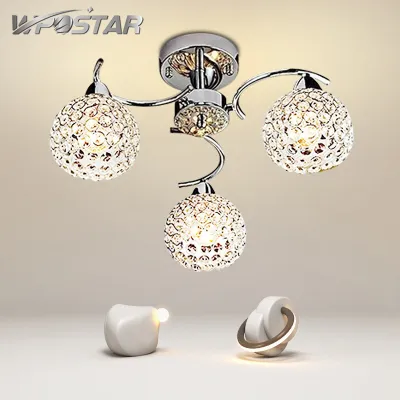
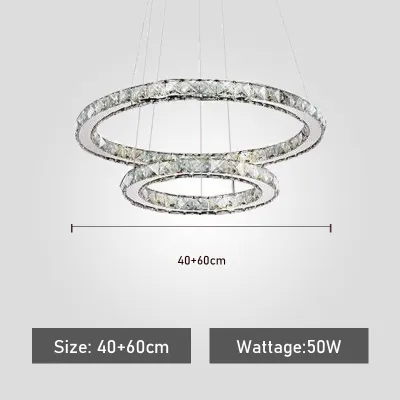
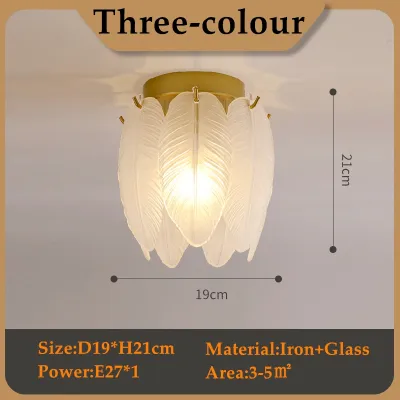
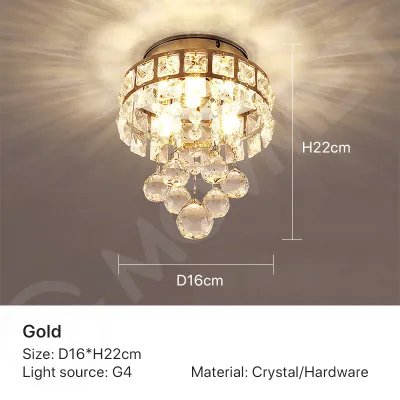
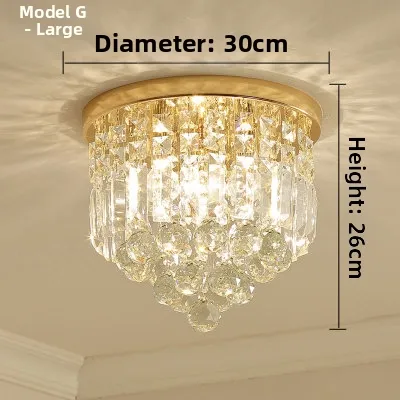
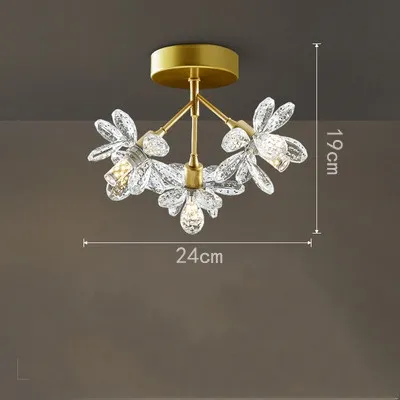
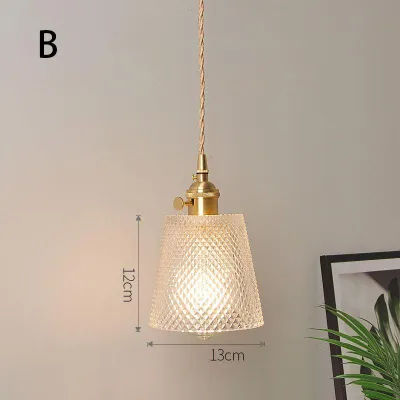
Prices are valid at publication and may change. Please refer to the product page for the latest price.
Living rooms and dining areas are the premier locations for crystal fixtures. In the dining room, because the fixture is positioned directly over a dining table, you can occasionally afford a slightly longer drop since no one will walk directly beneath it. Conversely, high-traffic zones like narrow corridors, entryways, and low-clearance utility spaces should avoid crystal fixtures entirely, as they are prone to accidental contact and can make tight spaces feel even more restricted.
Choosing the Right Mounting Type for Low Ceilings
Flush-mount crystal lights sit directly against the ceiling surface, leaving no gap between the fixture body and the concrete slab. They are highly recommended for bedrooms and low-ceiling living rooms because they maximize vertical clearance. Modern flush-mount designs use flat, wide metal plates adorned with closely set crystal beads or faceted glass prisms. This configuration allows the light to diffuse outward and downward, creating a sparkling pattern across the ceiling and walls without protruding into the room’s physical walking space.

Semi-flush-mount crystal lights feature a small stem or collar that suspends the main body of the light a few centimetres below the ceiling. This gap, typically 5cm to 15cm, is highly beneficial for crystal lighting because it allows light to escape upward, reflecting off the ceiling surface before bouncing back down. This indirect illumination makes the ceiling appear higher and enhances the natural shimmer of the crystals. For a 2.6m HDB living room, a semi-flush fixture with a total drop of 25cm offers an excellent compromise between aesthetic depth and headroom preservation.
Low-drop crystal chandeliers with long chains are generally unsuitable for walking areas in HDB flats. However, they can be safely integrated if they are installed directly over a permanent piece of furniture, such as a dining table or a bed. In these specific zones, the risk of head collision is eliminated. When installing a low-drop chandelier over a dining table, ensure the bottom of the fixture hangs approximately 75cm to 85cm above the tabletop, keeping the crystals within the visual field of seated diners while keeping the pathway around the table clear.
Sizing and Visual Weight: Matching the Fixture to Your Room
To prevent a crystal light from overwhelming a compact HDB room, you must calculate the appropriate diameter. A reliable metric formula for sizing involves measuring the room’s length and width in metres. Add these two numbers together, and then multiply the sum by 10 to find the recommended fixture diameter in centimetres. For example, if your HDB living room measures 4 metres long by 3.5 metres wide, the calculation is (4 + 3.5) x 10 = 75 centimetres. Therefore, a fixture with a diameter of approximately 70cm to 75cm will look balanced in the space.
Beyond physical dimensions, the visual weight of a fixture determines how large it feels. Crystal density, frame materials, and light transmission play massive roles. A fixture with a heavy, dark brass frame and densely packed, opaque crystals will feel much heavier and more intrusive than a fixture with a polished chrome frame and clear, high-transmission K9 crystals. In a 2.6m ceiling environment, prioritize open, airy designs that allow light to pass through easily, which visually expands the room.
Multi-tier crystal designs stack layers of crystals vertically, which naturally increases the fixture’s drop height. For HDB flats, single-tier or shallow, horizontally oriented multi-tier designs are far superior. They distribute the crystals across a wider horizontal plane rather than a vertical one, providing the desired luxury aesthetic without encroaching on the limited vertical clearance.
Installation Checks and Ceiling Safety Requirements
Crystal fixtures are significantly heavier than standard plastic or slim LED panel lights due to the weight of the glass or lead crystal elements and the metal chassis. Before purchasing, you must verify the weight capacity of your HDB ceiling. Standard concrete ceiling slabs in HDB flats can support substantial loads, but the mounting hardware and junction boxes must be rated for the specific weight of the fixture.
If your chosen crystal light weighs more than 5 kilograms, standard plastic wall plugs and simple screws are insufficient. You must use specialized metal expansion anchors drilled directly into the concrete slab. If you have installed a false ceiling to conceal wiring or air conditioning ducts, you cannot mount a heavy crystal fixture directly to the plasterboard. The fixture must be anchored through the false ceiling into the original concrete slab above using threaded rods or specialized suspension brackets. Always hire a qualified professional for any installation involving heavy suspended loads or work at height.
Singapore operates on a 220V-240V electrical system at 50Hz. Ensure that any imported or locally purchased crystal fixture is compatible with this voltage and carries appropriate electrical certifications, such as the Enterprise Singapore Safety Mark for its internal drivers or electronic components. Before beginning any installation, isolate the power supply at the main distribution board by switching off the relevant circuit breaker. Never rely solely on the wall switch to cut power. If your HDB flat has older wiring, or if you are unsure about the load capacity of your lighting circuits, consult a licensed electrical worker to inspect the wiring and complete the connection safely.
Frequently Asked Questions (FAQ)
How do I clean crystal ceiling lights without taking them down?
Cleaning crystal lights on a 2.6m ceiling is relatively straightforward because of the accessible height, but safety must come first. Always turn off the power at the mains before cleaning. Use a sturdy step ladder to reach the fixture comfortably; do not stretch or stand on unstable furniture. For regular maintenance, use a microfiber duster or a specialized static duster to remove loose dust. For deeper spot-cleaning, prepare a solution of one part isopropyl alcohol to three parts distilled water in a spray bottle. Spray a small amount onto a lint-free microfiber glove or cloth, and gently wipe each crystal element. Avoid spraying the solution directly onto the fixture, as moisture can penetrate the electrical sockets or corrode the metal frame. Never use harsh chemical cleaners or abrasive pads, which can strip the protective coatings off the crystals and metal plating.
Can I use a dimmer switch with crystal ceiling lights?
Yes, you can use a dimmer switch with crystal ceiling lights, but compatibility must be verified across all components. First, check the specifications of the fixture itself to ensure it supports dimming. Second, verify that the light bulbs you install—typically LED candle bulbs or G9/E14 LED bulbs—are explicitly labeled as dimmable. Standard non-dimmable LED bulbs will flicker, buzz, or fail prematurely if connected to a dimmer circuit. Finally, ensure your wall dimmer switch is compatible with LED loads; trailing-edge dimmers are generally preferred for modern LEDs. Because upgrading wall switches and matching electrical loads can be complex, it is highly recommended to consult a qualified electrician to install the correct dimmer switch and ensure safe, flicker-free operation.

Community discussion
Share your experience or ask a question. Comments are reviewed before publication.