
Selecting the right downlights for a Housing & Development Board (HDB) flat requires a careful balance of spatial planning, electrical safety, and optical performance. Because standard HDB flats feature a ceiling height of approximately 2.6 meters, the physical distance between the light source and your eyes is significantly shorter than in private properties with double-volume ceilings. This lower clearance means that generic lighting choices can easily lead to uncomfortable glare, harsh shadows, or overheating issues within shallow ceiling voids.
To find the most suitable downlights for your home, you must look beyond brand popularity and focus on how specific fixtures interact with a 2.6-meter ceiling. By evaluating physical dimensions, heat dissipation, optical shielding, and local safety certifications, you can design a lighting setup that is both visually comfortable and structurally safe. This guide provides the technical frameworks and practical steps needed to compare downlight options and plan a successful installation.
Understanding the Lighting Challenges of 2.6m HDB Ceilings
Installing recessed lighting in a standard 2.6-meter HDB ceiling introduces distinct physical and optical constraints that do not exist in taller spaces. The most immediate challenge is visual comfort. Because the ceiling is relatively low, the light fixtures remain within your peripheral vision as you walk through a room. If a downlight lacks proper optical shielding, the exposed LED chip will cast direct, high-intensity light into your eyes, causing glare and eye strain over time.
Products mentioned in this guide
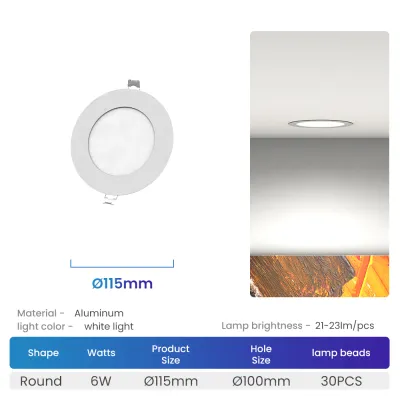
![[BUY 3 FREE 1] DFS Led SG Stock Recessed Downlight 6W 8W 15W 20W Adjustable/Tri-Tone/3000k/4000k/6000k](https://img.lazcdn.com/g/p/268a361f750c4bf47f03692c96c38976.jpg_400x400q80.jpg_.webp)
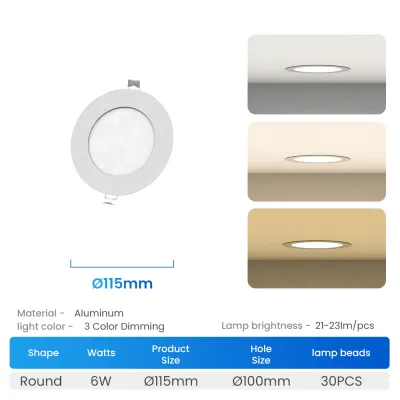
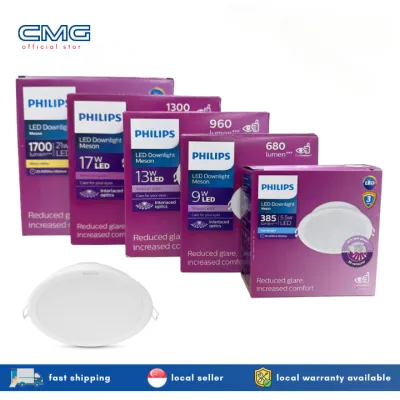
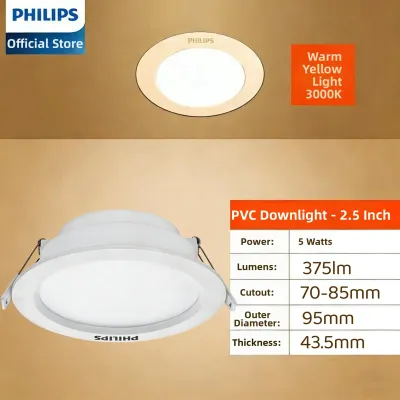
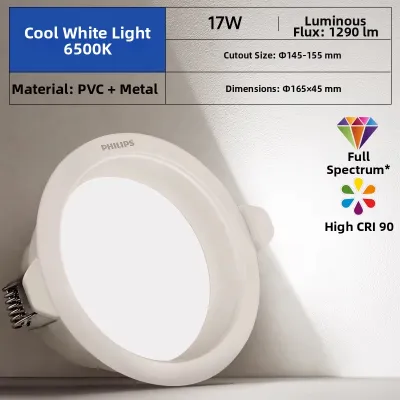
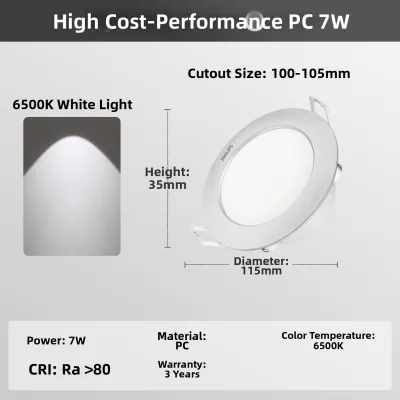
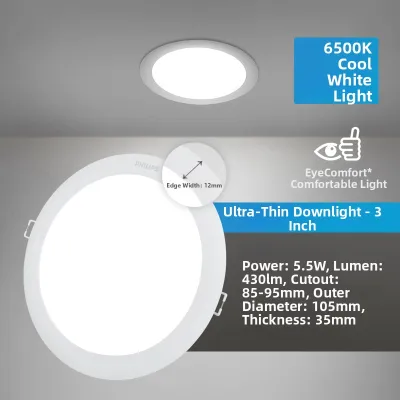
Prices are valid at publication and may change. Please refer to the product page for the latest price.
Thermal management is another critical factor in shallow HDB ceiling voids. When you install a false ceiling to house recessed downlights, you typically drop the ceiling by 75mm to 150mm to preserve as much headroom as possible. This creates a highly confined, unventilated space between the plasterboard and the concrete structural slab. Because heat naturally rises, the thermal energy generated by the LED driver and heat sink becomes trapped, which can accelerate the degradation of the LED chip if the fixture is poorly engineered.
Beam spread also behaves differently at a 2.6-meter height. A narrow beam angle of 24 or 36 degrees has less distance to spread before it hits the floor or furniture. In a low-ceiling environment, this narrow distribution creates tight, intense pools of light directly beneath the fixture, leaving the surrounding areas in deep shadow. To achieve even, comfortable ambient illumination across a room, you must select fixtures that distribute light more widely or use diffuse lenses to blend the light paths seamlessly.
Essential Downlight Specifications for Lower Ceilings
To ensure a downlight model is physically and optically compatible with a 2.6-meter ceiling, you must verify several key technical specifications before purchasing. The first specification to evaluate is the Unified Glare Rating (UGR) and the physical anti-glare design of the fixture. Look for deep-recessed downlights where the LED light source is positioned at least 15mm to 20mm inside the outer bezel. Fixtures featuring matte black internal baffles or honeycomb louvers are highly effective at absorbing stray lateral light, keeping the source hidden from normal viewing angles.

Beam angle selection directly dictates how many fixtures you will need and how comfortable the space will feel. For general ambient lighting in a standard HDB living room or bedroom, a wider beam angle between 60 and 90 degrees is highly recommended. This wide spread allows the light cones from adjacent fixtures to overlap smoothly at standing eye level, eliminating harsh contrast lines. Narrower beam angles of 36 degrees or less should be reserved strictly for accent lighting, such as highlighting a piece of art or a textured feature wall.
Physical dimensions must be cross-referenced with your available ceiling void depth. Before buying any recessed fixture, measure the distance from the underside of the plasterboard to the concrete slab. If your false ceiling drop is 100mm, your downlight’s total height—including its integrated heat sink and cable entry—should not exceed 70mm. This leaves a mandatory 30mm air gap above the fixture to facilitate passive convective cooling and prevent heat from transferring directly into the concrete.
Color temperature and Color Rendering Index (CRI) define the atmosphere and visual accuracy of your rooms. For living areas and bedrooms, a warm white color temperature of 3000K creates a relaxing environment, while a cool white temperature of 4000K is better suited for task-oriented spaces like kitchens and study rooms. Regardless of the color temperature, prioritize fixtures with a CRI of Ra 80 or higher. A high CRI ensures that food, clothing, and skin tones appear natural and vibrant under artificial light.
How to Evaluate and Compare Downlight Brands
Navigating the local lighting market involves categorizing brands into distinct tiers based on engineering quality, support, and price. International premium brands are recognized for their advanced optical engineering and high-quality electronic components. These manufacturers typically design proprietary drivers that offer smooth, flicker-free dimming and excellent compatibility with smart home systems. While these fixtures carry a higher upfront cost, they provide comprehensive technical datasheets and reliable performance over several years.
Local and regional specialist brands offer products tailored specifically to the architectural realities of Singapore apartments. Many of these brands design ultra-slim downlights with shallow heat sinks that fit perfectly into tight 75mm HDB false ceiling voids. Additionally, local specialists often operate physical showrooms where you can observe the actual beam spread, color temperature, and glare control of the fixtures in person before making a commitment.
Mass-market and unbranded e-commerce options are widely available on online marketplaces at very low price points. While these products are budget-friendly, they often compromise on driver quality, heat sink volume, and color consistency. Using low-grade drivers can lead to visible high-frequency flickering, which causes headaches, and premature component failure. If you consider these options, you must perform extra diligence to verify their build quality and safety certifications.
When comparing any downlight brand, use a strict verification checklist to protect your investment. First, confirm that the LED driver carries a valid Safety Mark issued by Enterprise Singapore, which proves the device has been tested against local electrical safety standards. Second, review the warranty terms; reputable brands should offer at least a two-year local warranty that covers both the LED chip and the external driver. Finally, ensure the seller provides clear channels for local technical support and replacement parts so you can easily source matching fixtures if a unit eventually fails.
Installation Rules and Safety Boundaries for HDB Flats
Installing recessed downlights in an HDB flat requires strict adherence to structural guidelines and electrical safety standards. It is important to understand that you cannot cut, drill, or chisel into the structural concrete ceiling slab of an HDB flat to create a recess for a light fixture. Doing so compromises the structural integrity of the building and violates local housing regulations. If you want recessed lighting, you must install a professional plasterboard false ceiling to create the necessary cavity.
For homeowners who prefer to keep their original concrete ceilings, surface-mounted downlights or track lighting systems are the correct alternatives. Surface-mounted fixtures house the LED chip, driver, and wiring within an aesthetic external canister that mounts directly to the concrete surface via small, non-structural screw plugs. This approach provides the clean, directional look of downlighting without requiring any structural modifications or reducing your overall room height.
All fixed electrical wiring, creation of new lighting points, and modifications to your distribution board must be carried out by a Licensed Electrical Worker (LEW). In Singapore, electrical installations must comply with the CP 5 code of practice to prevent fire hazards and electrical shocks. Before any installation, maintenance, or replacement of a downlight, always isolate the mains power at your home’s main circuit breaker rather than relying solely on the wall switch.
Thermal clearance must be maintained around every recessed fixture to prevent heat buildup. Ensure that no flexible electrical conduits, plastic pipes, or structural timber battens come into direct contact with the metal heat sink of the downlight. If your false ceiling contains thermal or acoustic insulation material, you must use downlights that are explicitly rated for insulation contact, or install protective loft caps to keep the insulation material at least 50mm away from the hot components of the fixture.
Your Step-by-Step Downlight Selection Checklist
To streamline your purchasing journey, follow this systematic checklist to ensure your selected downlights match your HDB flat’s physical and electrical requirements:
- Measure the ceiling void: Coordinate with your renovation contractor to determine the exact vertical clearance between the plasterboard ceiling and the concrete slab before browsing fixtures.
- Define the lighting zones: Map out your rooms into ambient zones (requiring wide 60 to 90-degree beams) and accent zones (requiring narrow 24 to 36-degree beams) to match the functional needs of each space.
- Verify electrical specifications: Ensure the downlights are rated for Singapore's standard voltage of 220V–240V and that the drivers carry the official Safety Mark.
- Check dimming compatibility: If you plan to use wall dimmers or smart switches, verify that the downlight driver is explicitly compatible with your chosen dimming protocol (such as trailing-edge or triac dimming).
- Calculate fixture spacing: Space your downlights approximately 1.0 to 1.2 meters apart at a 2.6-meter ceiling height to achieve a seamless overlap of light without over-illuminating the room.
- Confirm warranty and support: Choose brands that offer a clear, local replacement warranty of at least two years to simplify future maintenance.
Frequently Asked Questions (FAQ)
Can I install downlights without a false ceiling in an HDB flat?
You cannot install recessed downlights without a false ceiling because drilling or cutting into the structural concrete slab of an HDB flat is strictly prohibited. To achieve a similar aesthetic on a bare concrete ceiling, you should use surface-mounted downlights or track lighting systems. Surface-mounted downlights are housed in compact cylindrical or square canisters that screw directly onto the concrete surface, keeping all wiring safely enclosed without damaging the building structure.
Are smart downlights worth the investment for standard HDB ceilings?
Smart downlights are highly practical for 2.6-meter HDB ceilings because they allow you to adjust brightness and color temperature dynamically, which helps mitigate glare in a lower room. Because the light source is closer to your eyes, being able to dim the lights to 20% or 30% in the evening significantly improves visual comfort. When planning a smart setup, ensure your wiring includes a neutral wire if required by your smart switches, or verify that the smart downlights are compatible with your existing home wireless protocol.
How do I clean and maintain recessed downlights safely?
To clean recessed downlights safely, first switch off the mains power at the distribution board and allow the fixtures to cool down completely to avoid thermal shock or burns. Use a dry, clean microfiber cloth to gently wipe away dust from the outer bezel and the recessed baffle. Avoid using wet cloths, liquid spray cleaners, or harsh chemical solvents, as moisture can seep into the ceiling void and damage the electronic driver or cause an electrical short circuit.

Community discussion
Share your experience or ask a question. Comments are reviewed before publication.