
Framing old Singapore notes as multicultural wall decor offers a sophisticated way to celebrate the nation’s rich heritage, artistic evolution, and social history. By selecting specific banknote series—such as the vibrant Orchid, elegant Bird, historic Ship, or symbolic Portrait series—you can transform historical currency into compelling, conversation-starting art pieces. The best choices depend on aligning the distinct color palettes, physical dimensions, and cultural motifs of these notes with your interior design style, while employing proper preservation techniques to protect these delicate paper artifacts.
Whether you are looking to create a nostalgic focal point in a living room or add a touch of historical gravity to a study, old banknotes serve as miniature galleries of national identity. Understanding how to match these series to your decor, select the right denominations, and preserve the paper ensures your display remains visually striking and structurally sound for years to come.
Matching Banknote Series to Your Decor Theme
Aligning the visual motifs of historical Singapore banknote series with your interior design style is key to creating a cohesive aesthetic. Each discontinued or older currency series features distinct artistic themes, ranging from botanical illustrations and local wildlife to maritime heritage and cultural portraits. These themes carry unique visual weights and historical narratives that can either blend seamlessly with your existing decor or serve as a bold contrast.
Products mentioned in this guide
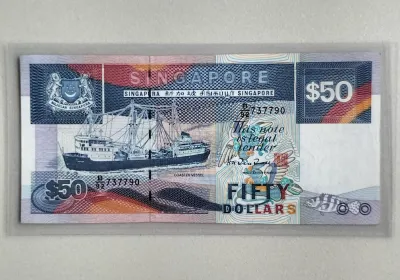
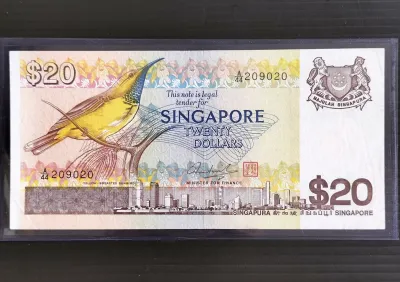
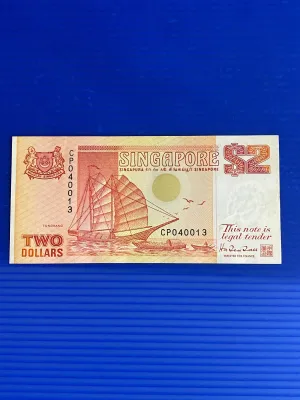
Prices are valid at publication and may change. Please refer to the product page for the latest price.
Color palettes and engraving styles play a significant role in how these notes interact with different room aesthetics and lighting conditions. For instance, older series utilize intricate, hand-engraved lines that create a soft, textured appearance under warm, directional gallery lighting. In contrast, modern series feature sharper lines and highly reflective security elements that may require specialized anti-reflective glass to prevent distracting glare in brightly lit rooms.
When planning your decor, it is important to remain flexible. Because these banknotes are no longer in active circulation, their availability and physical condition in the secondary market vary. You may need to adjust your design layout or color schemes based on the specific notes you are able to source from reputable collectors or specialty dealers.
Exploring Key Old Singapore Note Series for Framing
Singapore’s currency history is a visual timeline of its rapid development and multicultural identity. From the early post-independence years to the modern era, each series reflects the nation’s changing priorities, moving from natural flora and fauna to industrial achievements and civic values. Evaluating these series requires looking closely at their visual appeal, cultural significance, and physical condition.

The Orchid Series (1967–1972)
As the first currency series issued by an independent Singapore, the Orchid series holds immense historical and narrative value. Each denomination features a prominent, beautifully detailed illustration of a native orchid species on the front, symbolizing the young nation’s growth, resilience, and natural beauty. The reverse sides depict scenes of Singapore’s early infrastructure, such as housing estates, public utilities, and bustling harbor views, offering a nostalgic glimpse into the past.
The vibrant color contrasts of the Orchid series—ranging from the deep purples of the S$1 note to the striking blues and greens of higher denominations—create an eye-catching focal point when framed. The hand-engraved botanical illustrations provide an organic, vintage feel that pairs exceptionally well with mid-century modern, retro, or eclectic interior styles.
When sourcing Orchid series notes for framing, pay close attention to paper preservation. Due to their age, these notes are highly susceptible to paper brittleness, edge wear, and foxing, which appears as brown spots caused by fungal growth or chemical oxidation. Inspecting the edges and overall crispness is essential before committing to a framing layout, as fragile paper can degrade rapidly if not handled with extreme care.
The Bird Series (1976–1984)
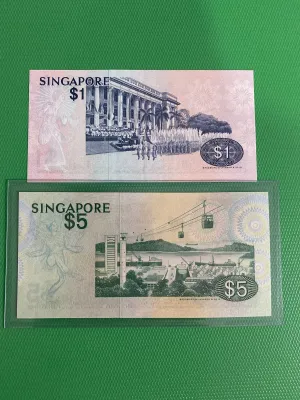
The Bird series is celebrated for its exquisite artistic detail, featuring native and migratory birds on the front of each note. These illustrations represent strength, adaptability, and aspiration, rendered in fine, hand-engraved lines against clean, uncluttered backgrounds. The reverse sides showcase scenes of national development, community life, and cultural landmarks, reinforcing the theme of a progressive, multicultural society.
This clean, naturalistic aesthetic makes the Bird series exceptionally well-suited for nature-inspired, biophilic, or minimalist interior themes. The soft, pastel-like background hues allow the detailed avian engravings to stand out without overwhelming a room’s decor. Framed as a set, these notes bring a sense of calm and organic texture to a space.
During this era, Singapore transitioned its paper manufacturing processes and introduced enhanced security features, such as metallic security threads. While these notes are generally more resilient than the Orchid series, you must still check for paper thinning along fold lines. Ensure the paper has not become overly fragile, which could cause it to sag or warp inside a frame over time.
The Ship Series (1984–1999)
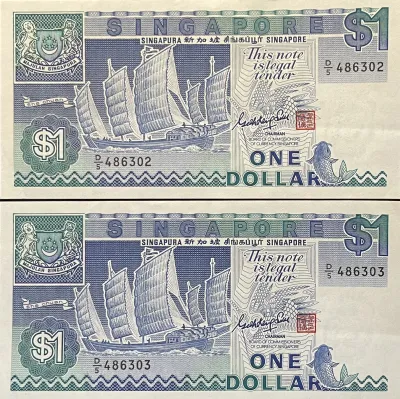
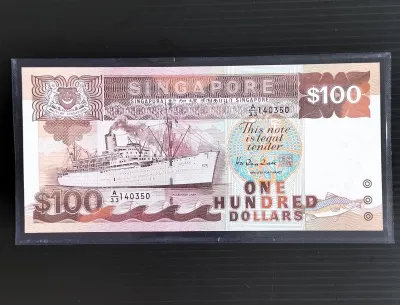
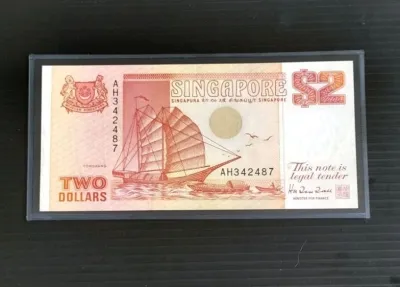
The Ship series pays tribute to Singapore’s maritime heritage and its rapid rise as a global trading hub. The front of each note depicts a historical or modern vessel, tracing a visual progression from traditional merchant sailing ships, such as the Chinese junk or the palari, on lower denominations to massive modern container ships on higher ones. The reverse sides feature detailed vignettes of national achievements, including the Changi Airport terminal, satellite earth stations, and national day parades.
This industrial and historical focus makes the Ship series an excellent choice for executive offices, home libraries, or nautical-themed rooms. The bold, rich color palettes—including deep reds, blues, and oranges—convey a sense of strength, progress, and sophistication that complements classic or transitional office furniture.
A key advantage of the Ship series for framing is the physical size of the notes. Higher denominations in this series are significantly larger than modern banknotes, offering a grander canvas with complex, multi-layered vignettes. These larger dimensions allow the intricate details of the maritime engravings to be fully appreciated when displayed on a wall.
The Portrait Series (1999–Present)
The Portrait series features the portrait of Singapore’s first President, Yusof bin Ishak, on the front, symbolizing national unity and leadership. However, for multicultural wall decor, the true highlight lies on the reverse side of these notes. The reverse designs showcase intricate vignettes depicting various facets of Singaporean society, including education, sports, the arts, and community harmony, beautifully capturing the multicultural fabric of the nation.
While many denominations in this series remain in active circulation, older paper prints or discontinued denominations offer distinct visual textures and historical appeal. The highly detailed, modern engraving style and sophisticated security features, such as holographic patches, fit perfectly within contemporary, modern, or industrial spaces.
When selecting Portrait series notes for framing, verify the specific issue year and signature variations. Older runs feature different signatures from monetary officials, adding a layer of historical specificity to your display. Choosing the paper-based versions of these notes, rather than the newer polymer versions, often provides a more classic, matte appearance under frame glass.
Selecting Denominations for Visual and Spatial Impact
The physical dimensions and visual complexity of banknotes vary significantly by denomination. Higher denominations, such as the S$50, S$100, or the discontinued S$500 and S$1,000 notes, generally feature larger physical canvases. This extra space allows for more intricate engraving details, larger vignettes, and richer color gradients, making them ideal as standalone statement pieces.
When planning your wall layout, consider the visual balance between framing a single large note versus curating a grid set of smaller denominations. A single, large-denomination note framed with a generous mat board creates a sophisticated, gallery-like focal point. Conversely, a horizontal or vertical grid of smaller notes, such as a sequence of S$1, S$5, and S$10 notes from the same series, tells a cohesive historical story and works well in hallways or above low furniture.
To ensure the display enhances the room without overwhelming it, measure your wall space carefully. Use a generous mat board margin—typically at least 5 to 8 centimeters of border around the note—to give the artifact breathing room. The mat board color should complement the dominant undertones of the banknote while contrasting slightly with your wall color to draw the eye inward.
Sourcing, Authentication, and Condition Checks
Acquiring historical banknotes requires diligence to ensure you are purchasing authentic pieces in a condition suitable for display. When inspecting potential notes, perform basic visual and tactile checks. Authentic paper notes from older series feature distinct intaglio printing, which creates a slightly raised texture on the main lettering and portraits. Hold the note up to a light source to verify the watermark, which should be embedded within the paper fibers rather than printed on the surface.
For framing purposes, the physical condition of the note is paramount. While numismatic collectors use highly specific grading scales, decorators should focus on structural integrity. Avoid notes with severe tears, heavy staining, foxing, or tape repairs, as these flaws will be magnified under glass and can worsen over time. Look for “Uncirculated” or “About Uncirculated” grades, which retain their original paper crispness and vibrant colors.
If you are unsure about the authenticity or fair market value of a rare note, consult a professional numismatist or purchase from reputable specialty dealers. Avoid buying from unverified sellers on general online marketplaces where counterfeits or heavily restored notes may be misrepresented.
Framing and Preservation Guidelines for Paper Artifacts
Proper framing is essential to protect delicate paper currency from environmental degradation. Standard glass allows ultraviolet (UV) light to pass through, which will cause the vibrant inks of older notes to fade and the paper to yellow over time. Always specify UV-filtering glass or acrylic, blocking at least 99% of UV rays, when commissioning your frame.
The materials that come into direct contact with the banknote must be completely acid-free. Standard cardboard or cheap mat boards release acids that cause chemical burns and yellowing. Use 100% cotton rag mat boards and acid-free backing boards. Crucially, never use adhesives, tapes, or permanent mounting techniques on the notes. Instead, secure the banknotes using archival polyester corner pockets or sleeves. This method holds the note securely in place through friction and static without applying any chemical adhesives to the paper, preserving both its physical integrity and collectible value.
When hanging your framed display, select the location carefully. Avoid placing the frame on walls that receive direct sunlight, and keep it away from areas with high humidity or temperature fluctuations, such as kitchens, bathrooms, or walls directly adjacent to air conditioning vents. For heavy frames or installations at height, ensure you use appropriate wall anchors and secure hanging hardware to prevent accidental falls.
Frequently Asked Questions (FAQ)
Can I frame polymer notes alongside older paper notes?
Yes, you can combine polymer and paper notes in a single display, but you must account for their different physical properties. Polymer notes have a highly reflective surface and a different thickness compared to traditional paper. They also tend to retain a slight curl if they have been folded. To accommodate these differences, use a frame with sufficient depth and incorporate physical spacers between the glass and the mat board. This prevents the polymer note from pressing directly against the glass, which can cause rainbow-like interference patterns and trap moisture.
Is it legal to display and alter old Singapore currency for decor?
It is entirely legal to frame and display genuine, intact Singapore banknotes as decorative art. However, you must not deface, cut, draw on, or otherwise alter the physical currency, as defacing legal tender, even older, discontinued series that remain redeemable, is an offense under local monetary regulations. If you plan to use reproductions or digital prints of Singapore currency for your decor, you must comply with the strict guidelines set by the Monetary Authority of Singapore. These guidelines typically require reproductions to be significantly larger or smaller than actual notes, and to feature prominent markings to prevent any risk of confusion with genuine currency.
Community discussion
Share your experience or ask a question. Comments are reviewed before publication.