
In compact Singapore apartments, where every square meter of floor space is carefully budgeted, traditional floor-standing mirrors can feel like an expensive luxury. A door mirror offers an elegant, zero-footprint alternative that instantly alters the perception of a room. By utilizing the vertical plane of an existing door, these mirrors bounce natural light deep into dark corners, create the illusion of extended sightlines, and provide a full-length viewing surface without occupying valuable floor area. Selecting the right mirror, however, requires balancing aesthetic goals with structural realities to ensure safety and functionality.
Quick Guide to Choosing Over-the-Door Mirrors for Small Spaces
To achieve a true full-body view in a tight space, the physical dimensions of the mirror must align with your available viewing distance. In narrow hallways or compact bedrooms where you can only stand one to two meters away from the glass, a mirror must be taller than standard decorative wall mirrors. A practical approach is to select a mirror that is at least 120 centimeters in height; this ensures that most adults can view themselves from head to toe without needing to step back into a wall. The width should ideally span between 30 and 40 centimeters to provide a comfortable field of view without overwhelming the door panel.
Frame depth is another critical factor that directly impacts how well your door functions. In many Singapore homes, interior doors are fitted with tight tolerances to minimize noise and light transfer. A mirror with a thick, bulky frame can prevent the door from opening fully against an adjacent wall, or scrape against the door frame when closed. Opting for a low-profile frame with a depth of 1.5 centimeters or less ensures that the door retains its full range of motion.
Products mentioned in this guide
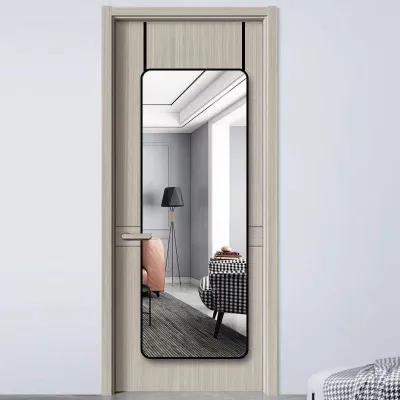
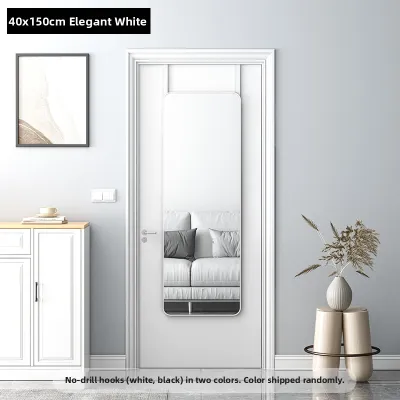
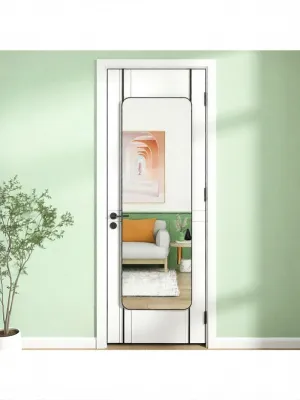
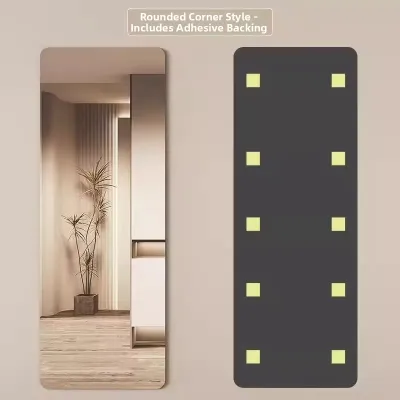
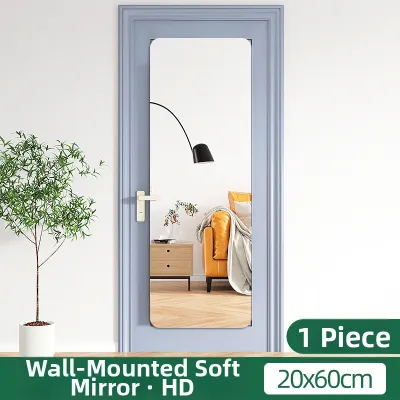
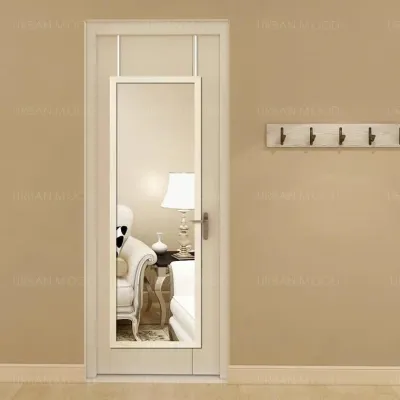
Prices are valid at publication and may change. Please refer to the product page for the latest price.
Before hanging any mirror, you must evaluate the structural integrity of the door itself. Standard interior doors in modern developments are frequently hollow-core doors, which consist of a cellular cardboard interior sandwiched between thin sheets of plywood or fiberboard. These doors have limited load-bearing capacity and are susceptible to warping or hinge strain if subjected to excessive weight. For hollow-core doors, it is safest to limit the mirror weight to under 5 kilograms. Solid-core doors, typically used for main entrances or older timber installations, are much more robust and can safely support heavier mirrors up to 10 kilograms, provided the hinges are in good condition and securely screwed into the frame.
Design and Glass Features That Amplify Space
The visual impact of a door mirror depends heavily on its frame design and glass characteristics. Frameless mirrors are highly effective at reducing visual clutter in narrow spaces. Because they lack a distinct border, they blend seamlessly into the door surface, making the mirror appear like an architectural opening or an extension of the room rather than an added accessory. This seamless transition is particularly beneficial in tight entryways or compact walk-in wardrobes where a heavy frame would feel visually oppressive.

If you prefer a framed look, thin-frame designs made of lightweight aluminum or slim engineered wood offer a clean, modern aesthetic. These frames provide structural protection for the glass edges while keeping the overall profile minimal. To further enhance the spatial effect, consider mirrors with beveled edges. The angled perimeter of a beveled mirror acts as a prism, catching and refracting light from different angles, which softens the transition between the glass and the door and adds a subtle touch of elegance.
Light distribution is a key mechanism through which mirrors make spaces feel larger. In rooms with bright overhead lighting or direct sunlight, glare can become an issue. An anti-glare coating can help diffuse intense light sources, preventing harsh reflections while still allowing the mirror to brighten the room. Conversely, in windowless areas such as household shelters, utility closets, or deep corridors, maximizing light bounce is the primary goal. In these dark zones, avoid tinted or vintage glass options, such as bronze or grey-tinted mirrors. While tinted glass offers a moody, decorative appeal, it absorbs a significant portion of light, which can make a small, dark room feel even more enclosed. Instead, opt for high-transmission, clear silver glass to maximize brightness and clarity.
If you select a mirror with integrated LED lighting to brighten dark corners, always verify the voltage compatibility, wattage limits, and electrical certifications suitable for Singapore’s power grid. Ensure the power cord does not interfere with the door’s movement, and keep the installation away from damp areas unless the product is explicitly certified for wet environments.
Door Compatibility and Installation Checks
Before purchasing a door mirror, conducting a thorough compatibility check is essential to prevent damage to your home and ensure a secure installation. Begin by measuring the gap between the top of the door and the door frame when the door is fully closed. This clearance is crucial because the mounting hooks must sit in this gap. A simple way to test this is to place a S$1 coin (which is approximately 2.5 millimeters thick) on top of the door and close it. If the door closes smoothly without catching or scraping the coin, there is sufficient clearance for standard over-the-door brackets. If the coin jams, you will need to explore alternative mounting methods.
Next, measure the thickness of the door itself. Most standard interior doors in Singapore are between 35 and 40 millimeters thick, while main entrance doors can be 45 millimeters or thicker. Ensure the hooks included with the mirror match this measurement; hooks that are too wide will cause the mirror to tilt forward and rattle, while hooks that are too narrow will not fit over the door at all.
You must also evaluate the door’s swing path and the surrounding environment. Ensure that when the door is opened fully, the mirror will not strike adjacent furniture, light switches, or walls. If the door swings open against a wall, install a soft door stop on the floor or wall to prevent the mirror from impacting the hard surface, which could shatter the glass.
If your door clearance is insufficient for over-the-door hooks, or if you are dealing with a material that cannot support hooks, alternative mounting solutions are necessary. Heavy-duty, damage-free adhesive strips can be used for lightweight mirrors, provided the door surface is flat, clean, and non-porous. For heavier mirrors, screw-mounted brackets offer the most secure connection, but this requires drilling into the door. If you are renting, always check your tenancy agreement before drilling, as this may result in a deduction from your security deposit.
Hanging a mirror is a suspended-load installation, which carries inherent safety risks. If you are dealing with an exceptionally heavy mirror, a non-standard door material (such as glass-paneled or metal doors), or if you feel unsure about the structural integrity of your door, stop and consult a qualified professional. A professional installer can assess the load-bearing capacity of your hinges and ensure the mirror is mounted safely, preventing potential injuries or property damage.
Building Your Shortlist: Verification Steps Before Purchase
When browsing online marketplaces or visiting local home decor showrooms, having a structured verification process will help you select a high-quality door mirror that fits your specific needs. Start by carefully reviewing the product specifications. Look for listings that provide exact measurements for the hook depth and check if the brackets are adjustable. Adjustable brackets are highly desirable as they allow you to customize the fit to your exact door thickness, eliminating any play or wobble.
Another critical feature to verify is the inclusion of anti-swing stabilizers. When a door is opened or closed, the momentum can cause the bottom of the mirror to swing outward and slam back against the door panel. This constant impact can damage both the door paint and the mirror backing. High-quality door mirrors often come with double-sided foam pads, felt bumpers, or adhesive hook-and-loop strips designed to secure the bottom of the mirror to the door. If the product you are considering does not include these, plan to purchase adhesive foam bumpers separately to protect your door.
Because glass is inherently fragile, pay close attention to the retailer’s shipping policies and warranty terms. Verify that the seller offers a comprehensive transit-damage guarantee. In Singapore’s high-rise living environments, delivery often involves navigating lifts, corridors, and multiple handling stages. Ensure the retailer has a clear policy for replacing items damaged during transit, and take photos of the packaging immediately upon delivery before opening it.
Additionally, compare the shipping weights and dimensions of the packaged product. A package that is too bulky or heavy may require special delivery arrangements, especially if your building has lift access restrictions or narrow stairwells. Checking these details beforehand ensures a smooth delivery process and avoids unexpected handling fees.
Safe Usage and Maintenance in Compact Layouts
Maintaining a door mirror in a busy, compact household requires regular care to ensure both its aesthetic appeal and structural safety. Cleaning the mirror correctly is vital to preserving its reflective quality. Avoid using harsh, ammonia-based chemical cleaners or abrasive scrubs, as these can seep behind the edges of the glass and degrade the silver reflective backing over time, leading to unsightly black spots or peeling. Instead, use a clean, lint-free microfiber cloth slightly dampened with water or a specialized, alcohol-free glass cleaner. Wipe in gentle circular motions, and dry the surface immediately with a separate dry microfiber cloth to prevent streaks.
Because doors are high-traffic zones subject to frequent movement and occasional slamming, securing the mirror against vibrations is paramount. If your home is located near active construction zones, transit lines, or if the door is adjacent to vibrating household appliances like a washing machine in a service yard, the mirror will be subjected to constant micro-vibrations. Over time, these vibrations can loosen mounting screws or cause the hanging hooks to slide along the top of the door.
To mitigate this, perform routine safety checks every few months. Inspect the top brackets to ensure they remain centered and have not slipped. Check that any protective felt or rubber sleeves on the hooks are still intact and have not worn through, which could expose bare metal to your door’s paintwork. Gently press on the bottom of the mirror to verify that the anti-swing pads are still securely adhered and holding the mirror flat against the door. Finally, inspect the edges of the glass for any minor chips or cracks, especially if the mirror is frameless, as small chips can compromise the structural integrity of the glass and lead to sudden shattering under stress.
Frequently Asked Questions (FAQ)
Can over-the-door mirrors be used on sliding or folding doors?
Standard over-the-door mirrors are generally not compatible with sliding or folding doors due to structural and clearance limitations. Sliding doors operate on tracks with very tight tolerances; hanging a mirror over the top edge of a sliding door will obstruct the track mechanism, preventing the door from sliding open or closed. Folding or bi-fold doors, commonly used for bathrooms or utility closets in Singapore, rely on balanced panels that fold inward. Adding a heavy mirror to one of these panels disrupts the weight distribution, causing the door to sag, misalign, or jump off its tracks.
If you wish to place a mirror on a sliding or folding door, alternative mounting solutions must be used. For sliding doors, lightweight acrylic mirrors can sometimes be mounted directly to the door face using high-strength, low-profile adhesive tracks, provided there is enough clearance between the sliding panels. For folding doors, a wall-leaning mirror placed adjacent to the door or a wall-mounted mirror on an adjacent solid wall is a much safer and more functional choice.
How do I prevent the mirror from scratching a rented apartment door?
Protecting the surfaces of a rented apartment is crucial to securing the return of your security deposit. Standard metal over-the-door hooks can easily scratch or chip the paint on the top and face of a door as the mirror moves. To prevent this, apply protective barriers to all contact points. You can wrap the inside of the metal hooks with heavy-duty felt tape, silicone tape, or slide rubber sleeves over them. This cushions the contact points and prevents metal-on-wood friction.
Additionally, use removable adhesive foam pads or hook-and-loop strips at the bottom corners of the mirror. These pads keep the mirror from rattling against the door face while remaining easy to peel off when you move out. Before applying any adhesives, check your tenancy agreement regarding minor surface modifications. When it is time to hand back the property, use a hairdryer to gently warm the adhesive pads before peeling them off; this softens the glue and prevents it from pulling the paint off the door.
Community discussion
Share your experience or ask a question. Comments are reviewed before publication.