
Selecting the right Philips ceiling lights for a standard 2.6m HDB flat requires prioritizing ultra-slim profiles and wide light distribution. Because a 2.6m ceiling height limits vertical clearance, bulky or low-hanging fixtures can make rooms feel cramped and create harsh glare. Opting for low-profile LED flush mounts ensures adequate headroom while maintaining a spacious, modern aesthetic. By understanding how fixture dimensions, diffuser materials, and light output interact with standard Singaporean housing layouts, you can achieve a bright, comfortable home environment without sacrificing valuable vertical space.
Key Selection Criteria for 2.6m HDB Ceilings
The physical constraints of standard Housing & Development Board (HDB) flats in Singapore present unique lighting challenges. With a typical floor-to-ceiling height of 2.6 meters, every centimeter of vertical space is highly valuable. Installing a fixture that protrudes too far downward not only disrupts the visual flow of the room but also poses practical hazards for taller occupants or when performing everyday tasks like changing bedsheets or raising arms. Therefore, the primary filter when browsing the Philips lighting catalog must be the physical depth of the fixture.
To maintain a comfortable living environment, homeowners must distinguish between flush mount and semi-flush mount designs. Flush mount ceiling lights sit entirely flat against the concrete slab, leaving no gap between the fixture housing and the ceiling. This design is highly recommended for 2.6m ceilings because it maximizes headroom and allows light to disperse from the highest possible point. Semi-flush mounts, which hang from a short stem or bracket, can occasionally be used but require a rigorous evaluation of their total drop length. Any semi-flush fixture selected must keep its lowest point well above head height, typically requiring a total drop of less than 20 centimeters.
Products mentioned in this guide
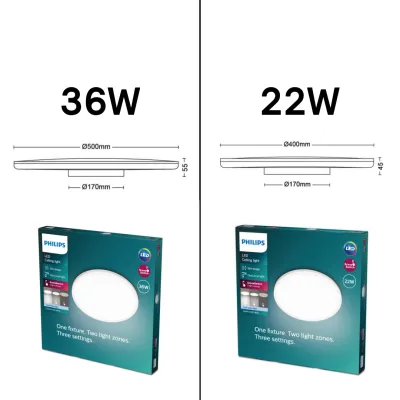
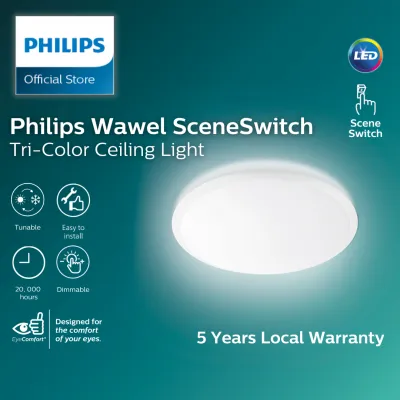
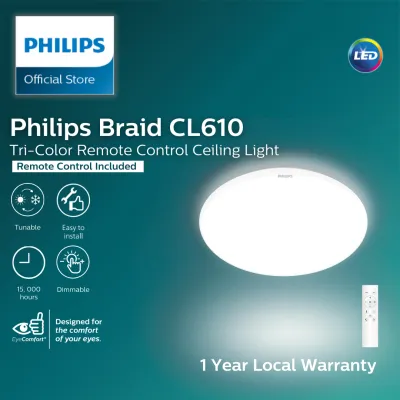
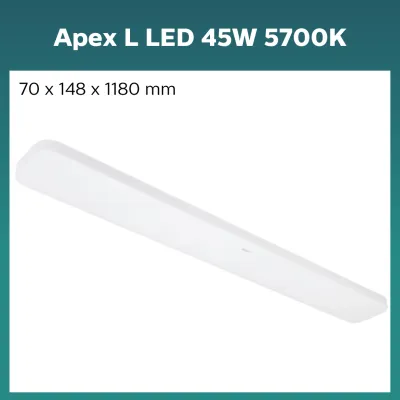
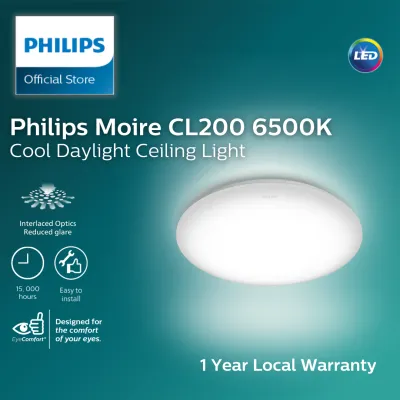
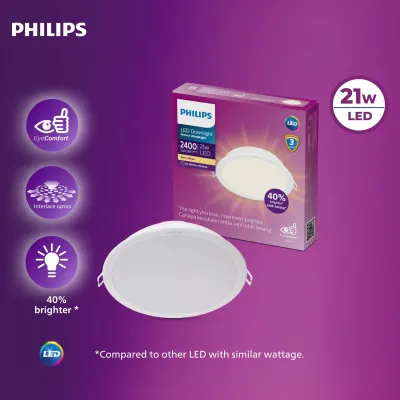
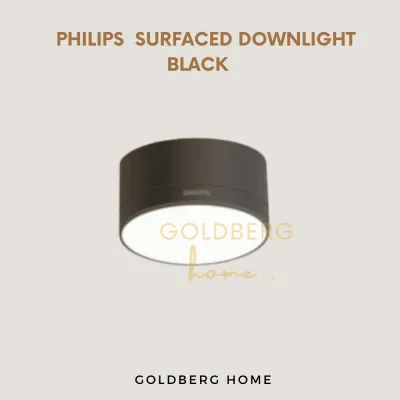
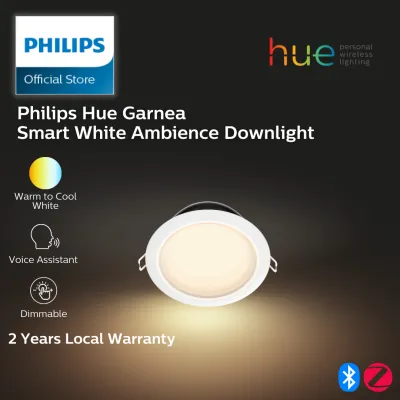
Prices are valid at publication and may change. Please refer to the product page for the latest price.
Beyond vertical clearance, the horizontal proportions of your ceiling lights play a critical role in how spacious a room feels. A fixture with an excessively large diameter can visually overwhelm a small room, making the ceiling appear lower than it actually is. Conversely, a tiny light fixture in a large living room will look disproportionate and fail to provide even illumination. To find the right balance, compare the fixture’s diameter to the room’s overall footprint. For a standard HDB bedroom measuring roughly 3 meters by 3 meters, a fixture diameter between 30 and 40 centimeters is generally ideal. For larger living areas, you can scale up to 50 or 60 centimeters, provided the fixture maintains an ultra-slim profile.
Low-profile design elements are essential for preserving the illusion of height in standard flats. Modern LED technology has enabled manufacturers like Philips to design ceiling lights that are incredibly thin, often measuring between 2.5 and 5 centimeters in thickness. These ultra-slim profiles blend seamlessly into the ceiling plane, reducing visual clutter. When a light fixture is nearly flush with the ceiling, the eye perceives less obstruction, which naturally makes the room feel more open, airy, and less confined.
Evaluating Philips Lighting Features for Low Ceilings
When evaluating the range of Philips lighting products, focusing on slim-profile and recessed-style surface mounts is the most effective starting point. Philips offers a variety of integrated LED ceiling lights designed specifically for modern, low-ceiling residential spaces. Because these fixtures integrate the LED light source and driver into a single, compact housing, they eliminate the need for bulky bulb sockets and deep enclosures. When shopping, always verify the product dimensions on the packaging or specification sheet to ensure the total thickness aligns with your clearance goals.

Another critical factor to consider is the quality of the diffuser and its glare-reduction capabilities. Because a 2.6m ceiling places the light source closer to your eye level than a taller ceiling would, direct exposure to unshielded light can cause significant eye strain and discomfort. Philips addresses this by utilizing advanced synthetic diffusers and optical technologies, such as micro-prism arrays or specialized frosted covers. These components work by scattering the light emitted from individual LED chips, creating a uniform glow across the entire surface of the fixture. This eliminates harsh hot spots and ensures that the light remains comfortable to look at, even when you are sitting or lying directly beneath it.
The ability to adjust color temperature and dimming levels is another powerful tool for altering the perceived height and atmosphere of an HDB flat. Many Philips ceiling lights feature adjustable white technology, allowing you to transition from a crisp, cool daylight (around 6500K) to a soft, warm white (around 2700K). During the day, bright, cool light can mimic natural sunlight, making the room feel larger and more energetic. In the evening, dimming the lights and switching to a warmer tone lowers the visual boundary of the room, creating a cozy, intimate environment. Before purchasing, verify whether the fixture supports step-dimming via your existing wall switch, requires a dedicated remote, or integrates with smart home systems for wireless control.
Room-by-Room Illumination and Proportion Guide
In HDB living areas, which serve as the central hub for relaxation, entertainment, and socializing, achieving even light distribution is paramount. Relying on a single, highly concentrated light source in the center of a low ceiling can create harsh shadows in the corners of the room, making the space feel smaller. To combat this, consider installing a large, ultra-slim central Philips flush mount with a wide beam angle to provide broad ambient light. Alternatively, you can distribute the lighting load by combining a medium-sized central fixture with perimeter lighting, such as surface-mounted downlights or track lighting. This distributed approach fills the entire volume of the room with light, softening shadows and visually expanding the boundaries of your living space.
Bedrooms require a different approach, as the primary activities involve resting and sleeping. Because you will frequently look directly at the ceiling while lying in bed, minimizing glare is the top priority. For standard HDB bedrooms, select compact Philips flush mounts with a diameter of 30 to 40 centimeters. Look for models that feature heavily diffused covers or indirect lighting designs, where a portion of the light is directed upward or outward to bounce off the ceiling surface. This indirect illumination creates a soft, glare-free ambiance that is gentle on the eyes during early mornings and late nights.
Kitchens and utility spaces demand highly functional, bright task lighting to ensure safety during food preparation and household chores. These areas are also subject to higher levels of humidity, steam, and airborne grease. When selecting Philips ceiling lights for these zones, prioritize compact, high-lumen flush mounts that are easy to clean. It is also wise to check the Ingress Protection (IP) rating of the fixture; while standard dry-rated lights are suitable for most areas, an IP44-rated fixture offers enhanced protection against moisture and dust, ensuring long-term reliability in damp kitchen environments. Opt for a cool white or daylight color temperature to maximize visibility and maintain a clean, sterile aesthetic.
Pre-Purchase Checklist and Installation Boundaries
Before finalizing your purchase of a Philips ceiling light, it is essential to perform a thorough pre-purchase checklist to ensure electrical and structural compatibility. Begin by inspecting your existing ceiling junction box. Standard HDB concrete ceilings contain embedded metal or plastic conduit boxes. You must verify that the mounting bracket of the new Philips fixture is compatible with the screw spacing of your junction box. Additionally, check the weight specifications of the light fixture; while most modern plastic and aluminum LED flush mounts are lightweight, any heavier glass or metal models must be securely anchored to the concrete slab using appropriate rawlplugs and screws to prevent structural failure.
Dimmer switch compatibility is another critical technical aspect that requires verification. If you select a Philips ceiling light with dimming or color-changing capabilities, you must check how these features are controlled. Traditional analog wall dimmers (such as leading-edge or trailing-edge dimmers) are often incompatible with integrated LED drivers unless specifically stated by the manufacturer. If you install a smart Philips fixture, it must be connected to a standard, non-dimming switch circuit to receive a constant, stable voltage. Controlling the brightness of smart lights should be done exclusively through compatible wireless remotes, smart switches, or mobile applications to avoid damaging the internal electronics.
Finally, establish clear safety boundaries when it comes to the actual installation process. Working with residential electrical wiring carries severe risks of electrical shock, short circuits, and fire. Before touching any wiring, always isolate the power supply at your flat’s main distribution board (DB box) by switching off the corresponding circuit breaker. Drilling into HDB concrete ceilings to secure mounting brackets requires extreme caution, as you must avoid damaging embedded electrical conduits or structural steel rebar. If you encounter complex wiring configurations, lack the necessary tools for working at heights, or need to run new electrical lines, stop immediately and engage a licensed electrical worker (LEW) certified by the Energy Market Authority (EMA) of Singapore to complete the installation safely and in compliance with local regulations.
Frequently Asked Questions (FAQ)
Can I use a semi-flush mount Philips light in a 2.6m HDB bedroom?
Yes, you can use a semi-flush mount Philips light in a 2.6m HDB bedroom, but only under specific spatial conditions. The total drop length of the fixture—measured from the ceiling to the lowest point of the light—should not exceed 15 to 20 centimeters to maintain safe headroom. To minimize the risk of accidental contact, place the semi-flush light directly over a permanent piece of furniture, such as the center of the bed or a study desk, where foot traffic does not occur. Avoid installing semi-flush fixtures in main walking paths, near wardrobe doors that swing outward, or in rooms where tall occupants reside.
How do I calculate the right lumen output for my HDB living room?
To estimate the required lumen output, you can use a standard formula based on the room’s area and the recommended lux levels for residential spaces. First, calculate the area of your living room in square meters (length multiplied by width). For general ambient lighting in a living room, a target of 150 to 200 lux (lumens per square meter) is typically recommended. For example, a living room measuring 15 square meters would require a total light output of approximately 2,250 to 3,000 lumens. Because a 2.6m ceiling is relatively low, the light has less vertical distance to spread out; therefore, choosing Philips fixtures with wide beam angles of 110 degrees or more is highly beneficial to ensure the light disperses evenly across the floor plan rather than creating a concentrated pool of light directly beneath the fixture.

Community discussion
Share your experience or ask a question. Comments are reviewed before publication.