
Selecting the right Philips ceiling lights for a Japandi-style HDB living room requires balancing the minimalist, warm aesthetic of Japanese-Scandinavian fusion with the physical constraints of Singapore’s public housing. To achieve this, you must choose a fixture diameter that is proportional to your room’s dimensions, select low-profile flush or semi-flush mounts that preserve headroom under typical 2.6-meter ceilings, and opt for warm, dimmable LED light sources that mimic natural daylight. By focusing on clean geometric shapes, soft diffusers, and adjustable color temperatures, you can create a serene, clutter-free environment that enhances the natural wood tones and neutral palettes characteristic of Japandi design.
Understanding Japandi Aesthetics and HDB Spatial Constraints
Japandi design is a harmonious blend of Japanese minimalism and Scandinavian warmth. This aesthetic prioritizes clean lines, functional spaces, organic textures, and a calm, uncluttered atmosphere. Lighting plays a pivotal role in this style; rather than serving as a harsh, clinical light source, it should provide a soft, diffused glow that highlights natural materials like wood, linen, and stone. Achieving this look in a standard Singapore HDB flat requires careful planning due to the unique architectural characteristics of these homes.
Most HDB living rooms feature a standard ceiling height of approximately 2.6 meters. This relatively low clearance limits your choice of light fixtures, as oversized or low-hanging lights can make the space feel cramped and disrupt walkways. Additionally, many HDB flats are designed with open-plan living and dining areas, meaning your ceiling light must harmonize with other light sources in the adjacent spaces.
Products mentioned in this guide
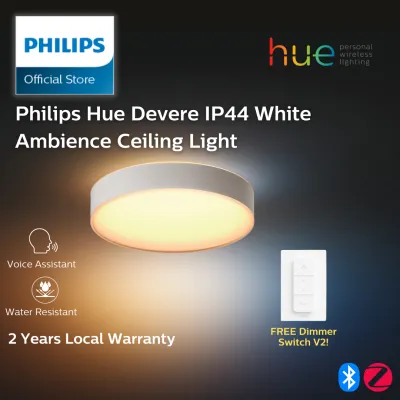
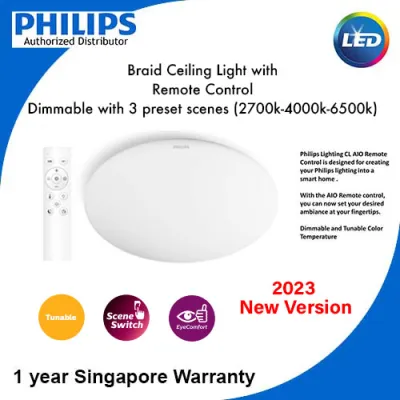
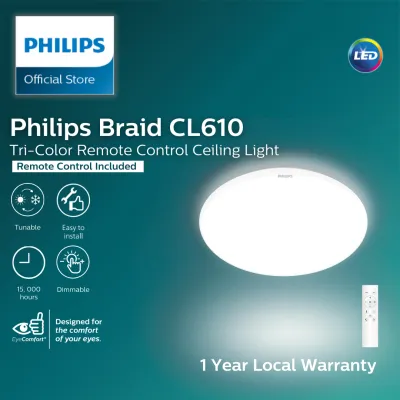
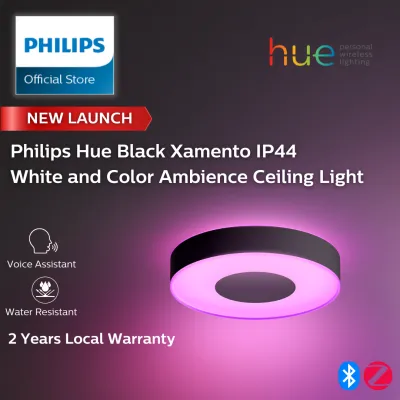
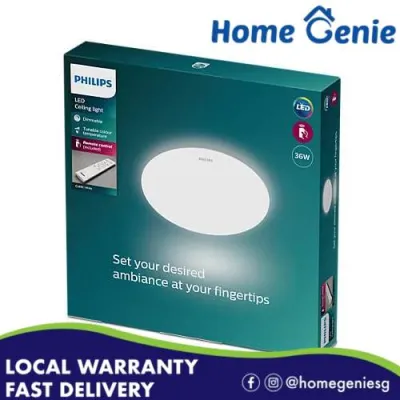
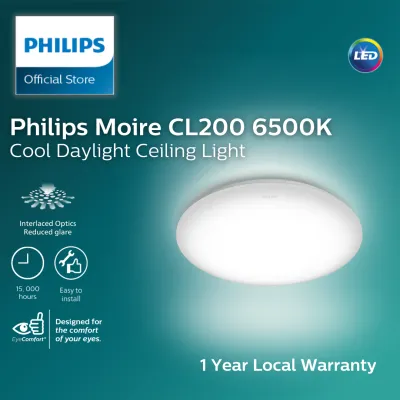
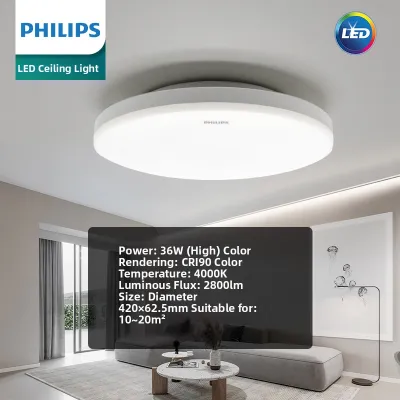
![[3 Year Warranty] Philips LED Ceiling light 17W 20W CL200](https://img.lazcdn.com/g/p/a7513e4a2b3c8a590df1beecd4b3709e.png_400x400q80.png_.webp)
Prices are valid at publication and may change. Please refer to the product page for the latest price.
Before purchasing any ceiling light, measure your living room’s exact floor-to-ceiling height and floor area. Take note of the existing electrical points. HDB flats typically come with a single central ceiling point in the living room. If you plan to add multiple fixtures, install track lighting, or create a false ceiling for recessed downlights, keep in mind that these modifications will alter the vertical clearance and require professional electrical work.
Calculating the Ideal Fixture Size and Light Output
Choosing a ceiling light that is too small can make your living room look unfinished, while a fixture that is too large can overwhelm the space. To find the right balance, you can use a simple sizing method based on your room’s dimensions. Measure the length and width of your living area in meters, add these two numbers together, and then multiply the sum by 10. The resulting number provides a reliable baseline diameter for your main ceiling fixture in centimeters. For example, if your living area measures 4 meters by 3.5 meters, the sum is 7.5, suggesting a fixture diameter of approximately 75 centimeters.

In addition to physical size, you must calculate the appropriate light output, which is measured in lumens. For a relaxing Japandi living room, a general guideline is to aim for approximately 150 to 200 lumens per square meter. If your living room floor area is 15 square meters, you will need a total light output of roughly 2,250 to 3,000 lumens. This total can be achieved through a single high-output ceiling fixture or a combination of a central light and secondary sources like floor lamps.
Your choice of interior finishes also affects how much light you need. Japandi interiors typically feature light-colored walls, pale wood furniture, and matte textures, which reflect light softly and help distribute it evenly. However, if your living room has darker accent walls, heavy window drapes, or limited natural daylight, you may need to select a fixture with a higher lumen output to maintain a bright, airy feel during the day.
Choosing the Right Philips Ceiling Light Type and Shape
Given the 2.6-meter ceiling height of most HDB flats, flush mount ceiling lights are generally the most practical and visually appropriate choice. These fixtures sit flat against the ceiling, preserving maximum headroom and maintaining the clean, unobstructed overhead planes that define minimalist design. A large, slim circular flush mount can act as a subtle, elegant centerpiece without drawing attention away from your furniture and decor.
Semi-flush mount lights are another excellent option, particularly if you want to create a sense of depth. These fixtures hang slightly below the ceiling, allowing a portion of the light to cast upward and reflect off the ceiling surface. This upward glow can make a low ceiling feel higher and more spacious. However, ensure that the total drop of a semi-flush fixture does not exceed 30 centimeters to prevent it from interfering with daily movement.
When selecting the shape of your Philips ceiling lights, look for simple, organic geometries. Perfect circles, soft squares with rounded corners, and clean linear profiles fit seamlessly into a Japandi aesthetic. Avoid highly ornate, industrial, or overly angular fixtures. The diffuser material is equally important; opt for frosted glass, matte synthetics, or fabric-look finishes that soften the light and eliminate harsh glare, creating a gentle, even wash of light across the room.
Matching Color Temperature and Smart Features
Color temperature, measured in Kelvin (K), is crucial for establishing the cozy, inviting atmosphere central to Japandi design. For living spaces, warm white light between 2700K and 3000K is highly recommended. This temperature range enhances the natural warmth of wooden furniture, paper screens, and neutral textiles. Avoid cool white or daylight temperatures (4000K to 6500K) for general relaxation, as they can make the minimalist decor feel cold, sterile, and clinical.
To maximize the functionality of your living room, consider dimmable ceiling lights or smart lighting systems. A dimmable fixture allows you to adjust the light levels to suit different times of day and activities—providing bright, clear light for cleaning or working, and a soft, low-level glow for winding down in the evening. Many modern LED ceiling lights feature integrated step-dimming or continuous dimming capabilities controlled via standard wall switches or remote controls.
If you opt for a smart lighting ecosystem, verify the compatibility of all components before installation. Smart ceiling lights often require a stable wireless connection and may not be compatible with traditional wall-mounted dimmer switches. Using a smart light with an incompatible physical dimmer can lead to flickering, buzzing, or premature driver failure. Instead, pair smart fixtures with compatible wireless dimmers or smart home hubs as specified by the manufacturer.
Installation Safety and Professional Boundaries
Installing a new ceiling light requires strict adherence to electrical safety protocols. Before attempting any installation or replacement, always isolate the power supply at your home’s main distribution board (DB box). Use a reliable voltage tester to confirm that the circuit is completely dead before touching any wires.
Verify that your ceiling can support the weight of your chosen fixture. While standard HDB concrete ceilings are highly durable and can support heavy loads, you must use the correct masonry wall plugs and screws to secure the mounting bracket. If you are installing a fixture onto a false ceiling, ensure it is anchored directly to the underlying metal framework or secured using heavy-duty hollow-wall anchors designed for the specific weight of the light.
Be mindful of concealed utilities. Before drilling any holes into the ceiling, use a digital detector to scan for hidden electrical conduits or water pipes. Always follow the manufacturer’s instructions regarding wiring connections, grounding, and maximum wattage limits. If your installation involves complex fixed wiring, running new conduits, working at height, or if you feel unsure about any part of the process, stop immediately and engage a licensed electrical worker (LEW) or a qualified professional to complete the work safely.
Frequently Asked Questions (FAQ)
Can I install a large pendant light in an HDB living room with low ceilings?
Yes, but you must be strategic with its placement. To prevent safety hazards and avoid making the room feel cramped, do not hang a large pendant light in central walkways where people might walk under it. Instead, position the pendant light directly over a fixed piece of furniture, such as a dining table or a coffee table. This placement ensures the fixture is out of the main traffic path while creating a beautiful visual focal point. Ensure the bottom of the pendant hangs at least 75 to 90 centimeters above the tabletop.
Do Philips ceiling lights require special dimmer switches?
Yes, compatibility is essential for proper operation. Standard wall dimmers designed for older incandescent bulbs are generally incompatible with modern LED ceiling lights and can cause flickering, buzzing, or permanent damage to the light’s internal driver. Always check the product specifications to confirm if the fixture is dimmable. If it is, use an LED-compatible phase-cut dimmer or utilize the manufacturer’s dedicated smart control accessories and mobile applications to adjust the brightness safely.
How do I clean and maintain fabric or paper-style Japandi light shades?
To clean delicate fabric, paper, or textured diffusers, use a soft, dry microfiber cloth or a feather duster to gently sweep away surface dust. Avoid using water, damp cloths, or liquid chemical cleaners, as moisture can easily stain, warp, or tear these delicate materials. For stubborn dust, a low-powered handheld vacuum with a soft brush attachment can be used with extreme care. Always consult the manufacturer’s specific care instructions before attempting any deep cleaning.
Community discussion
Share your experience or ask a question. Comments are reviewed before publication.