
To install a smart ceiling light in a standard 2.6m HDB flat without making the space feel cramped, you must focus on low-profile flush-mount fixtures with a depth of less than 10 centimeters. This leaves ample headroom for daily activities while maintaining a clean, open aesthetic. Evaluating the physical dimensions, visual weight, and light distribution of the fixture ensures a comfortable living environment.
Quick Guide to Ceiling Clearance and Light Profiles
Standard HDB flats in Singapore typically feature a ceiling height of approximately 2.6 meters. To maintain a safe and comfortable living environment, general clearance guidelines suggest keeping at least 2.1 to 2.3 meters of open space between the floor and the bottom of any light fixture. This ensures that tall occupants and guests can move freely without the risk of bumping into overhead obstructions.
When selecting a hue ceiling light, understanding the distinction between flush-mount and semi-flush-mount designs is critical. Flush-mount fixtures sit directly against the ceiling surface, minimizing the vertical space they occupy. Semi-flush-mount fixtures feature a small stem or gap that drops the main body of the light slightly below the ceiling, which can create a floating effect but also reduces precious headroom in low-ceiling environments.
Products mentioned in this guide
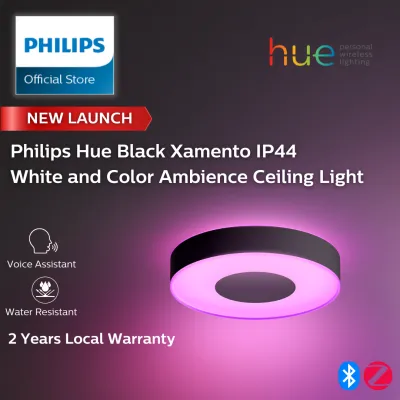
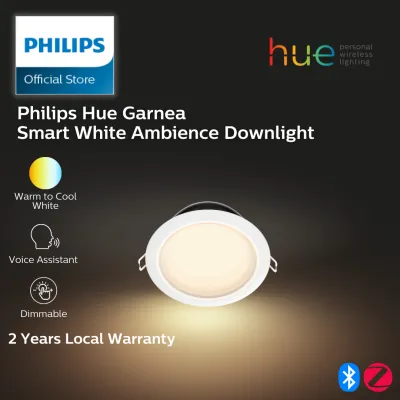
Prices are valid at publication and may change. Please refer to the product page for the latest price.
Beyond physical measurements, the visual weight of a fixture plays a significant role in how spacious a room feels. A thick, dark, or highly detailed fixture can draw the eyes downward, making the ceiling feel lower than it actually is. Conversely, a slim profile with a clean, minimalist border blends seamlessly into the ceiling plane, helping to maintain an airy and open atmosphere.
How to Evaluate Philips Hue Models for Low Ceilings
To ensure a successful installation, always verify the exact height or profile depth on the official product specification sheet before making a purchase. Do not rely solely on marketing category names like “slim” or “compact,” as these terms are subjective and can vary significantly between different product lines. Measuring the physical space and comparing it to the manufacturer’s listed dimensions is the most reliable way to prevent clearance issues.

The diameter of the fixture must also scale appropriately with the square footage of your room. An oversized ceiling light in a compact HDB bedroom or study can visually dominate the ceiling plane, creating an oppressive feeling. As a general guideline, smaller rooms benefit from more compact diameters, whereas larger living areas can accommodate wider fixtures without sacrificing the perception of height.
For general ambient lighting in a 2.6m HDB flat, it is highly advisable to avoid pendant-style, chandelier, or multi-tier smart fixtures. These designs are engineered for higher ceilings and will inevitably hang too low, disrupting traffic paths and creating safety hazards. Restricting your search to dedicated low-profile and flush-mount options ensures that the fixture remains safely out of the way of daily household activities.
Additionally, consider the dimming mechanism of your chosen smart light. Smart ceiling lights require a constant power supply to maintain their smart functionality and are dimmed digitally via an app, smart switch, or voice commands. Connecting them to traditional wall-mounted analog dimmers can cause flickering or damage the internal electronics, so verifying your existing wall switch setup is an essential step in the evaluation process.
Lighting Adjustments to Maximize Perceived Height
Smart lighting offers unique opportunities to alter the spatial perception of a room through color temperature adjustments. Using cooler white light during the day can make a space feel more open, expansive, and energetic, which helps counteract the cozy feel of a low ceiling. Warmer white tones, while excellent for creating a relaxing evening atmosphere, tend to make a room feel more intimate and enclosed, a conditional preference that you can adjust based on the time of day.
Managing brightness levels and light distribution is equally important for avoiding harsh, concentrated shadows. When a ceiling light is too bright for a small room, it can create intense glare and sharp shadows in the corners, which visually shrinks the boundaries of the space. Adjusting the lumen output to match the room’s dimensions ensures a balanced, even glow that softens transitions between walls and ceilings.
You can also utilize strategic lighting techniques to draw the eye outward rather than upward. Implementing wall-washing effects with smart lightstrips or accent lamps directs attention to the perimeter of the room, making the walls feel wider. Combining a low-profile central ceiling light with indirect accent lighting along the edges of the room creates layers of light that distract from the physical limitations of a 2.6m ceiling.
HDB Installation and Electrical Compatibility Checks
Before mounting any new smart ceiling light, you must inspect the existing ceiling junction box to verify its weight capacity and structural integrity. HDB ceilings are typically made of concrete, which provides a solid foundation, but the junction box or mounting bracket must be securely anchored to support the weight of the new fixture safely over time. Never mount a heavy fixture to loose plaster or compromised electrical boxes.
Electrical safety is paramount when working with fixed wiring. Ensure that the chosen smart fixture is fully compatible with Singapore’s standard electrical supply of 230V at 50Hz. Using fixtures designed for different voltage standards can lead to immediate product failure, electrical shorts, or fire hazards. Always check for local safety certifications and compliance labels on the product packaging or manual.
Always isolate the power supply at the main circuit breaker before attempting any installation or maintenance work. If you encounter complex wiring configurations, find that your junction box lacks a neutral wire, or need to install new wiring routes, stop your DIY efforts immediately. In these scenarios, or when working at heights, it is essential to consult a licensed electrician to ensure the installation complies with local electrical codes and safety standards.
Frequently Asked Questions (FAQ)
Do I need a neutral wire for Philips Hue ceiling lights?
Most high-wattage smart ceiling lights require a neutral wire to power their internal wireless receivers and smart controllers continuously, even when the light is turned off. While some smart switches can operate without a neutral wire, integrated smart fixtures generally depend on a complete circuit with both live and neutral connections. You should check the specific model’s installation manual and consult a qualified professional to inspect your HDB flat’s existing wiring before purchasing.
Can I use a Hue pendant light in an HDB dining area with a 2.6m ceiling?
Yes, pendant lights can work exceptionally well in a 2.6m HDB dining area, provided they are positioned strategically over a fixed piece of furniture like a dining table. Because people do not walk directly under a dining table, you can hang the pendant lower to provide focused task lighting. Ensure the bottom of the fixture sits high enough to avoid blocking cross-table views while maintaining adequate clearance for seated and standing users.

Community discussion
Share your experience or ask a question. Comments are reviewed before publication.