
To secure a torch light powerful enough for a Singapore HDB flat during an unexpected power outage, you must look beyond raw brightness numbers. A reliable emergency light balances high lumen output with sustained runtime, safe battery chemistry, and robust build quality. Brands like Fenix, Nitecore, Olight, and Ledlenser are widely recognized for high-performance portable lighting, while household names like Philips and Energizer offer dependable, everyday emergency options. Selecting the right torch light involves understanding your flat’s layout, matching the beam pattern to specific rooms, and verifying local electrical safety compliance.
Assessing Your HDB Layout and Emergency Lighting Needs
Singapore’s Housing & Development Board (HDB) flats are designed with efficiency in mind, but their concrete-walled layouts significantly affect how light travels during a blackout. Typical 3-room, 4-room, and 5-room flats feature a central living area connected to bedrooms via a narrow corridor. Because these corridors often lack external windows, they become pitch-black when the main power fails. This structural reality means a single stationary light source in the living room cannot safely illuminate the entire flat, making portable torch lights essential for safe navigation.
When planning your emergency lighting setup, it is helpful to differentiate between navigation lighting and area illumination. For navigating tight spaces like corridors, bedrooms, and household shelters (bomb shelters), a lower light output of 15 to 100 lumens is actually preferable. High-intensity beams reflecting off close, light-colored concrete walls can cause severe glare, temporarily blinding you and disrupting your eyes’ natural adaptation to the dark. Conversely, broad area illumination for the living and dining room requires a higher output of 300 to 1,000 lumens to scatter light across the wider space so your family can gather safely.
Products mentioned in this guide
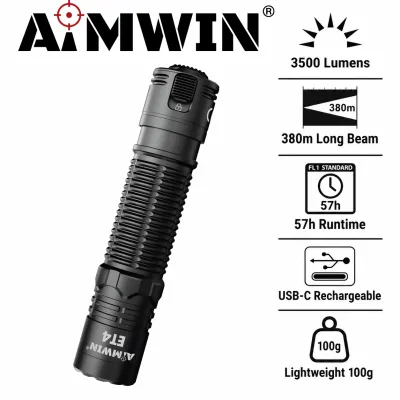
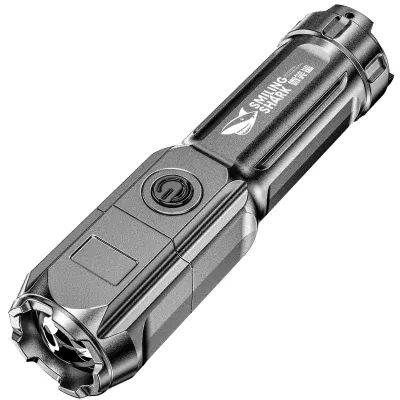
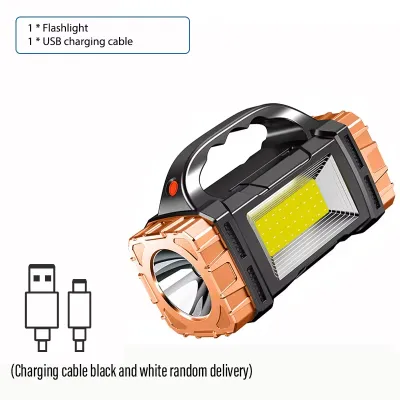
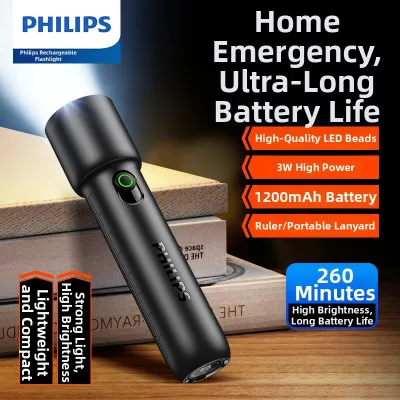
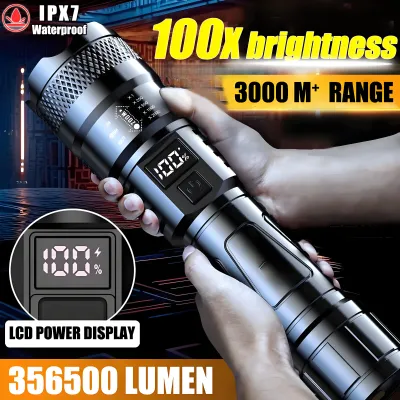
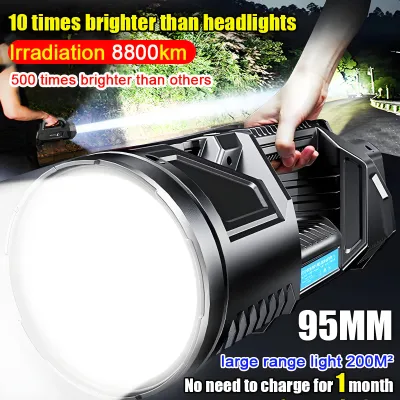
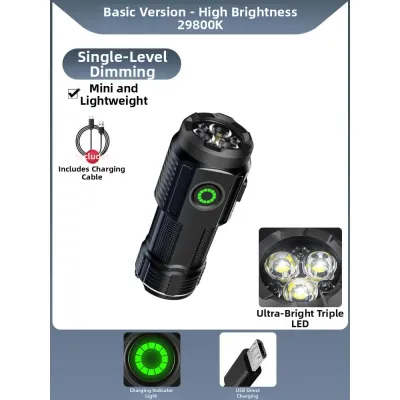
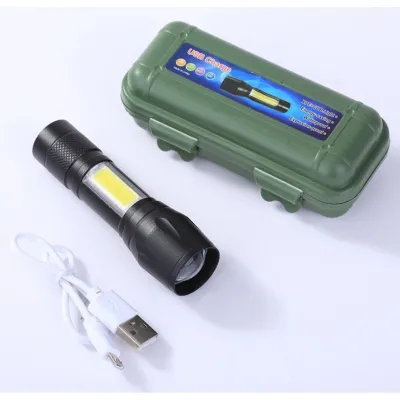
Prices are valid at publication and may change. Please refer to the product page for the latest price.
Power disruptions in Singapore are generally rare and localized, thanks to the high reliability of the national grid managed by SP Group. Most blackouts resulting from localized substation faults or internal distribution board (DB) trips are resolved within one to three hours. Therefore, you do not need a heavy-duty searchlight designed for multi-day wilderness survival. Instead, focus on finding a torch light that can reliably hold its charge over months of idle storage and provide at least four to six hours of continuous, regulated runtime on a medium setting.
Core Specifications for a Torch Light Powerful Enough for Emergencies
Understanding technical lighting terms is crucial to avoiding low-quality products that fail when you need them most. The most common pitfall is confusing lumens with candela. Lumens measure the total volume of light emitted by the torch in all directions, while candela measures the peak beam intensity in a single direction. For indoor HDB use, a torch with high lumens and lower candela (a “floody” beam) is far more useful than a tight, high-candela spotlight. A spotlight creates a blindingly bright pinpoint on the wall while leaving the rest of the room in shadow, whereas a flood-style beam distributes light evenly across a room.

Battery chemistry is another critical decision point that dictates how your torch performs after months of sitting in a drawer. Modern high-performance torches typically use rechargeable lithium-ion batteries (such as 18650 or 21700 cells). These batteries offer high energy density, a flat discharge curve that maintains consistent brightness as the battery drains, and the convenience of USB recharging. However, standard alkaline batteries (AA or AAA) remain popular for budget emergency lights. While alkaline cells are cheap and easy to replace, they are highly prone to leaking corrosive potassium hydroxide over time, which can permanently ruin the internal contacts of your torch during long-term storage in Singapore’s humid climate.
| Battery Type | Pros | Cons | Best Use Case |
|---|---|---|---|
| Lithium-ion (Rechargeable) | High output, consistent brightness, USB rechargeable, no leakage | Higher upfront cost, requires periodic top-ups to prevent deep discharge | Primary high-output torches for active use |
| Nickel-Metal Hydride (NiMH) | Rechargeable, highly resistant to leaking, stable shelf life | Lower voltage than lithium-ion, requires a dedicated charger | Secondary backup torches stored long-term |
| Alkaline (Disposable) | Cheap, widely available, long shelf life when stored separately | Extremely prone to leakage, voltage drops quickly during use | Budget backup lights (batteries must be stored outside the device) |
| Lithium Disposable (CR123A) | 10-year shelf life, leak-proof, works in extreme temperatures | Expensive, less common in local retail shops | Dedicated emergency-only kits |
For charging convenience, prioritize torches that feature a built-in USB-C port. This allows you to recharge the light using the same cables and wall chargers you use for your smartphone or tablet. While hand-crank and solar-powered emergency lights exist, they are often built with cheap, low-capacity internal batteries that degrade quickly. They should generally be avoided unless they come from a highly reputable specialty brand. Additionally, ensure the torch has a minimum durability rating of IPX4 for splash resistance and a certified drop resistance of at least 1 meter to survive accidental falls onto hard ceramic or vinyl tiles.
How to Identify Trusted Emergency Light Brands
Online marketplaces are flooded with unverified listings claiming impossible specifications, such as pocket-sized torches delivering “999,000 lumens” for under S$10. These claims violate the laws of physics and often indicate dangerous, unregulated battery cells that pose a fire hazard. To identify genuine, high-quality brands, look for those that test their products according to the ANSI/PLATO FL 1 Standard. This voluntary standard ensures that specifications for lumen output, runtime, beam distance, and impact resistance are verified through consistent, scientific testing methods.
When buying rechargeable torches or any accompanying charging docks, pay close attention to electrical safety certifications. In Singapore, any power adapter or charger that plugs directly into a wall outlet must carry the Enterprise Singapore Safety Mark. This mark certifies that the device has been tested and approved for local voltage standards (230V, 50Hz) and will not cause short circuits or electrical fires. For the torch itself, look for international certifications such as CE, RoHS, and FCC, which indicate compliance with strict manufacturing and environmental safety standards.
Reputable lighting brands also distinguish themselves through transparent warranty policies and the availability of replacement parts. A trusted brand will typically offer a warranty of two to five years on the torch body and at least one year on the rechargeable battery. They will also sell replacement O-rings, lens covers, and individual battery cells, allowing you to maintain the light over many years rather than throwing it away when a single component fails. When researching user reviews on local retail sites, filter specifically for feedback mentioning “battery life after six months” or “parasitic drain” to see how the light holds up under real-world conditions.
Matching Torch Light Types to HDB Scenarios
Compact Torches for Bedrooms and Corridors
For immediate access during a sudden blackout, keep a compact pocket torch or a high-quality keychain light on your bedside table or mounted next to your bedroom door. These lights should be small enough to operate easily with one hand while you guide family members or locate your main breaker box.
Look for models that feature a dedicated “moonlight” or “firefly” mode, which emits a very low output of 0.5 to 5 lumens. This ultra-low setting is highly beneficial because it allows you to navigate safely without blinding yourself or waking up sleeping children, while also extending the battery runtime to dozens of hours. A simple, intuitive user interface that lets you turn the light on instantly without cycling through disorienting strobe modes is highly recommended for stressful emergency situations.
High-Output Torches for Living and Dining Areas
To illuminate larger communal spaces where your family will gather, you need a larger, high-output torch capable of producing between 500 and 1,500 lumens. These torches should feature a wide, floody beam pattern to cover as much floor area as possible, rather than a narrow spotlight that leaves corners in pitch darkness.
An excellent technique for lighting up an entire room is “tail-standing.” Many high-output torches are designed with flat tail caps that allow them to stand vertically on a table or shelf like a candle. By pointing the high-intensity beam directly up at a white HDB plaster ceiling, the light is diffused and reflected back down, creating soft, shadowless, and highly comfortable ambient illumination that mimics a standard ceiling light. Ensure the torch has thermal regulation to prevent it from overheating while running on high modes in this stationary position.
Hybrid Lantern-Torches for Kitchens and Bathrooms
Kitchens and bathrooms present unique hazards during a power outage, including sharp knives, hot surfaces, wet floors, and slippery fixtures. Navigating these areas safely requires hands-free lighting so you can wash dishes, cook, or attend to personal hygiene without holding a torch in one hand.
A hybrid lantern-torch is the ideal solution for these spaces. These devices feature a built-in diffuser that transforms a focused torch beam into a soft, 360-degree ambient glow. Look for models equipped with strong magnetic bases, which allow you to snap the light securely onto the side of a refrigerator, microwave, or metal shelving unit. Built-in hanging hooks are also incredibly useful for suspending the light from a bathroom towel rack or shower rod. Because these areas are prone to high humidity and water splashes, ensure any light used here carries an ingress protection rating of at least IPX4.
Safe Storage and Battery Maintenance in Singapore
Singapore’s tropical climate, characterized by high relative humidity (often exceeding 80%) and ambient temperatures ranging from 26°C to 32°C, is exceptionally harsh on batteries. High temperatures accelerate the chemical degradation inside lithium-ion cells, causing them to lose capacity permanently over time. To protect your investment, never store your emergency torches in hot, unventilated spaces such as utility closets next to air conditioning compressors, or in direct sunlight near windows. Instead, choose a cool, dry, and easily accessible location like a living room drawer or a dedicated emergency cabinet.
To keep rechargeable lithium-ion torches in peak condition, avoid storing them completely empty or permanently plugged into a charger. Most lithium-ion cells degrade fastest when held at 100% charge or allowed to drop to 0% for extended periods. The optimal storage charge level is around 40% to 60%, but for emergency readiness, keeping them at 80% is a practical compromise. Set a recurring reminder on your phone to check and top up your emergency torches every three to six months. If your torch features a mechanical tail switch, click it off, or slightly unscrew the tail cap by a quarter turn to physically break the electrical circuit; this prevents “parasitic drain” from slowly emptying the battery over months of non-use.
If you rely on torches that use disposable alkaline batteries, never store the batteries inside the torch. Over time, the chemical reaction inside alkaline cells can cause the outer casing to rupture, releasing highly corrosive potassium hydroxide paste that will destroy the torch’s internal circuitry. Store your fresh alkaline batteries in their original packaging or a dedicated plastic storage box right next to the torch, and only insert them when a blackout occurs. Alternatively, consider upgrading to high-quality Nickel-Metal Hydride (NiMH) rechargeable batteries, which are virtually leak-proof and hold their charge exceptionally well during long-term storage.
Frequently Asked Questions (FAQ)
How many lumens do I need to light up a 4-room HDB living room?
For comfortable, safe ambient lighting in a typical 4-room HDB living room, a light source delivering 300 to 500 lumens of diffused light is highly effective. You do not need a massive searchlight; instead, use a hybrid lantern or tail-stand a powerful torch to bounce the light off a white ceiling. This level of brightness is sufficient for reading, playing board games, or navigating the room without causing eye strain or draining your battery too quickly.
Are solar-powered torch lights effective inside an HDB flat?
Solar-powered torches are generally impractical for indoor HDB use. The small solar panels integrated into these lights require direct, unblocked sunlight for many hours to achieve a full charge. Because HDB windows often feature UV-filtering films, insect screens, or face away from direct sunlight, charging them indoors is incredibly slow and inefficient. It is far more reliable to use USB-C charging connected to a wall outlet or a portable power bank.
Can I use my everyday powerful flashlight as an emergency light?
While you can use an everyday carry (EDC) flashlight, it is highly recommended to maintain a dedicated emergency light. Everyday flashlights are easily misplaced, left in bags, or stored with partially drained batteries. A dedicated emergency light should remain in a fixed, known location, be kept fully charged, and feature high-visibility elements (such as glow-in-the-dark strips) so you can locate it instantly in total darkness.
Community discussion
Share your experience or ask a question. Comments are reviewed before publication.