
When a sudden power outage hits a high-rise housing estate in Singapore, immediate safety and comfort depend on having a dependable light source ready. While modern HDB estates rarely experience prolonged blackouts, localized electrical trips at the distribution board (DB box) or wider grid maintenance can plunge an entire flat into darkness. Selecting a high-quality battery torch light is a critical first step in emergency preparedness, ensuring you can navigate narrow corridors, locate safety equipment, and inspect electrical panels without panic. Rather than relying on cheap novelty keychains or fragile plastic lights, investing in a robust, well-engineered tool guarantees that your primary light source will function perfectly when you need it most.
Defining Reliability for HDB Power Outages
HDB apartments feature specific architectural characteristics that dictate your emergency lighting requirements. Unlike open outdoor fields or sprawling suburban backyards, the interior of a typical three-to-five-room HDB flat consists of compact, interconnected spaces—such as living rooms, bedrooms, household shelters (bomb shelters), and narrow kitchen walkways. In these environments, a torch light with a highly concentrated, long-distance beam (known as a “thrower”) is highly impractical. A tight beam will bounce off light-colored, painted walls, creating intense, blinding glare that causes eye strain and limits your peripheral vision. Instead, HDB emergency preparedness demands a wide-beam “flood” light. A floodlight disperses illumination evenly across a wide angle, allowing you to see an entire room at once, which is essential for locating family members, avoiding trip hazards, or finding first-aid kits.
Duration and brightness regulation are equally critical factors that separate professional-grade brands from budget alternatives. Many low-cost torches utilize direct-drive circuits, meaning the light output is directly tied to the battery’s remaining voltage. As the battery drains, the light slowly and continuously dims, leaving you with a useless, faint glow during an extended blackout. Conversely, reliable brands build their products with regulated driver circuits. These advanced microchips maintain a consistent, flat level of brightness throughout the battery’s runtime, only shutting off or stepping down to a low-power mode when the battery is almost completely exhausted. This ensures you have predictable, usable light from the moment you turn the device on until the emergency is resolved.
Products mentioned in this guide
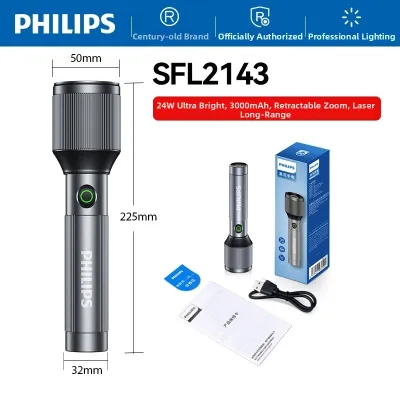
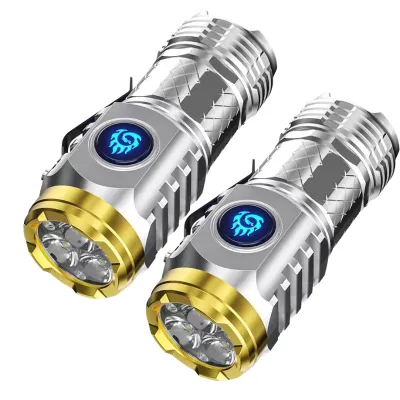
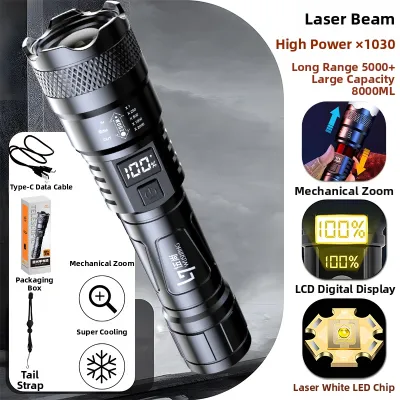
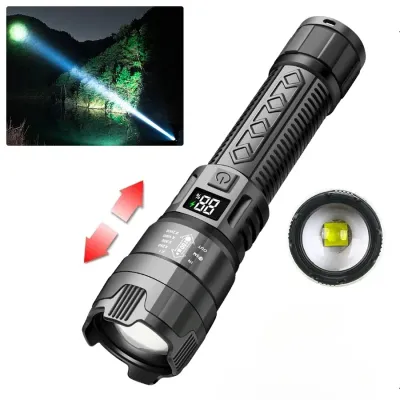
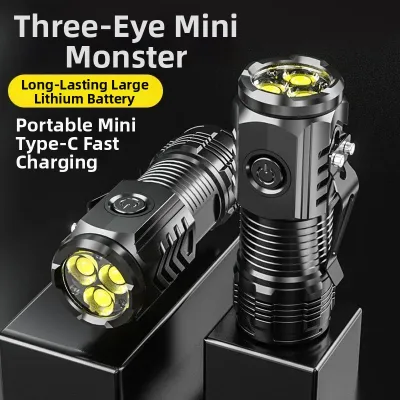
Prices are valid at publication and may change. Please refer to the product page for the latest price.
Build quality must also withstand the realities of home storage and accidental drops. Most HDB flats feature hard flooring materials, such as ceramic, homogeneous, or vinyl tiles. A cheap plastic torch dropped from a counter or table onto a tiled floor is highly likely to crack, shatter its lens, or break the internal solder joints, rendering it useless in seconds. Reliable emergency torches are constructed from rugged materials, such as aerospace-grade anodized aluminum (typically Type III hard-anodized) or impact-resistant engineering polymers. These materials absorb the shock of drops from typical table heights, ensuring the internal electronics and battery connections remain intact.
Finally, understanding safety boundaries is paramount during any home power failure. A reliable torch is designed solely to provide safe illumination. If your flat’s blackout is caused by a tripped miniature circuit breaker (MCB) or residual current circuit breaker (RCCB) inside your household shelter’s DB box, your torch should only be used to visually inspect the switches. Always isolate the main power source before touching any electrical panels, and refer strictly to your DB box manufacturer instructions. If you notice any signs of burning, electrical arcing, or water damage, do not attempt a DIY repair. Stop immediately and contact a licensed electrical worker or your town council’s emergency maintenance service, as unauthorized electrical work poses severe risks of fire and electrocution.
Key Features to Prioritize in an Emergency Battery Torch Light
To make an informed purchase, you must look past basic marketing claims and evaluate specific physical features that directly impact usability during a crisis. The first of these is the beam profile. A torch utilizing a textured “orange peel” reflector or a Total Internal Reflection (TIR) lens is ideal for indoor use. These optical designs soften the transition between the central hotspot and the surrounding spill, creating a smooth, uniform wall of light. This reduces harsh shadows and prevents the disorienting tunnel-vision effect often caused by smooth, deep reflectors designed for long-range outdoor search operations. Note that color temperature is a matter of conditional preference rather than performance: cool white light (around 6000K) offers high perceived brightness, while warm white light (around 3000K to 4000K) reduces glare and provides more natural color rendering indoors.

Hands-free capabilities are another indispensable feature for home emergency kits. During a power outage, you may need to cook, administer first aid, or comfort children, all of which require both hands. Look for torches equipped with a strong magnetic tail cap, which allows you to securely attach the light to any ferrous metal surface, such as the side of a refrigerator, a metal shelf, or the steel door of your DB box. Additionally, a flat tail cap enables “tail-standing”—the ability of the torch to stand upright on its base like a candle. By pointing a tail-standing torch at a white ceiling, the light bounces and diffuses throughout the entire room, providing comfortable, indirect ambient lighting for everyone.
Power source flexibility is a major decision point that involves distinct trade-offs. Modern rechargeable torches utilize high-capacity lithium-ion batteries (such as 18650 or 21700 cells), which offer exceptional runtimes and high brightness. Many of these feature built-in USB-C charging ports, allowing you to recharge them using standard phone chargers or portable power banks. When charging rechargeable models, always verify the input voltage requirements and use a certified charger; in Singapore, look for chargers with the Safety Mark to ensure electrical safety and compatibility. However, if a blackout lasts for several days, recharging might become difficult. This is where “dual-fuel” torches excel. These versatile models can run on both a rechargeable lithium-ion battery and standard, easily replaceable AA or AAA alkaline batteries (or CR123A lithium primaries). Keeping a dual-fuel torch alongside a fresh pack of standard batteries ensures you will never be left in the dark, regardless of how long the power grid is down.
Lastly, the user interface (UI) must be simple and intuitive to operate in complete darkness. When you are suddenly plunged into pitch-black conditions, your adrenaline spikes, and fine motor skills degrade. Torches with overly complex digital menus—requiring specific sequences of multiple clicks, long presses, or double-clicks to access basic modes—are incredibly frustrating and dangerous. Prioritize brands that feature physical, tactile tail-cap clicky switches or straightforward side switches with mode memory. A reliable emergency light should turn on instantly to a predictable, medium brightness setting with a single, firm press, without forcing you to cycle through disorienting strobe or SOS modes.
How to Evaluate Brand Reliability and Build Quality
Navigating the crowded lighting market requires a systematic approach to identifying genuine quality. One of the most reliable indicators of a brand’s engineering standards is its warranty policy and after-sales support. Reputable manufacturers typically back their products with a comprehensive five-year warranty, or even a limited lifetime warranty. This long-term commitment demonstrates that the brand uses high-grade components, robust soldering, and durable seals that are built to last. In contrast, cheap, unbranded lights often come with a basic 7-day return window or no warranty at all, signaling that they are treated as disposable items.
You should also learn to read and verify standardized certifications listed on product packaging. The industry standard is the ANSI/PLATO FL1 standard, which provides uniform ratings for light output (lumens), peak beam intensity (candela), beam distance, runtimes, impact resistance, and water resistance. Pay close attention to the IP (Ingress Protection) rating. For home emergency use, an IPX4 rating provides basic splash protection, but an IPX8 rating is superior, indicating that the torch can withstand complete submersion in water (usually up to two meters) for a specified duration. A high IP rating ensures that even if you drop the torch into a filled sink or use it in heavy rain along an open HDB corridor, the internal circuitry remains completely sealed and dry.
High-quality brands also distinguish themselves through advanced thermal management and electronic protection circuits. High-power LEDs generate significant heat during operation. If left unchecked, this heat can permanently degrade the LED emitter and damage the lithium-ion battery, posing a safety hazard. Reliable brands incorporate active thermal regulation (often called Advanced Temperature Regulation or ATR), which uses internal sensors to monitor heat levels and automatically step down the brightness when the torch gets too hot. They also include reverse-polarity protection (which prevents damage if you insert the batteries backward) and over-charge/over-discharge protection for rechargeable models.
Finally, look at who uses the brand. Manufacturers that supply tactical gear to first responders, search-and-rescue teams, military personnel, and industrial workers must adhere to strict quality control standards. Brands like Fenix, Streamlight, Ledlenser, and Nitecore have built global reputations by engineering tools that survive extreme conditions. When you choose a brand trusted by professionals, you are purchasing a product that has undergone rigorous real-world testing, ensuring it will perform flawlessly during a standard household emergency.
Practical Torch Light Categories for HDB Emergency Kits
Wide-Beam EDC (Everyday Carry) Flashlights
Everyday Carry (EDC) flashlights are compact, lightweight, and designed to be kept within arm’s reach. Storing a small EDC torch in your bedside drawer, on your study desk, or in a shoe cabinet near the front door ensures you can instantly locate a light source the moment a blackout occurs. These compact lights typically range from 8 to 12 centimeters in length, making them easy for any family member to handle, including children and the elderly.
When selecting an EDC torch, focus on brands that specialize in compact, high-output designs. Look for models that utilize a single AA battery or a small rechargeable lithium-ion cell (such as a 14500 or 16340 battery). The primary trade-off with EDC lights is battery capacity. Because of their small physical size, they cannot house massive batteries, meaning their runtime on maximum brightness settings is relatively limited. However, when operated on low or medium modes (typically between 15 and 50 lumens), a quality EDC torch can easily provide continuous, eye-safe illumination for 10 to 20 hours, which is more than sufficient for most localized HDB power outages.
Multi-Functional Emergency Lanterns and Headlamps
While a standard flashlight is excellent for directional viewing, extended power outages require hands-free area illumination. This is where multi-functional lanterns and headlamps become invaluable. Brands that specialize in outdoor camping and mountaineering gear excel in this category, offering highly durable lanterns that emit a warm, diffused 360-degree light. Placing a lantern on your dining table or kitchen counter creates a comfortable, communal environment, allowing your family to gather, eat, or play board games without the harsh, directional glare of a standard flashlight.
Headlamps are another crucial component of a comprehensive HDB emergency kit. If a major power failure affects your entire estate, the lifts will cease to operate, forcing you to use the emergency stairwells to evacuate or carry essential supplies. Navigating dark, concrete HDB stairwells requires absolute focus and balance. A reliable headlamp keeps your hands completely free to hold the handrails, guide elderly relatives, or carry young children safely. When purchasing a headlamp, pay close attention to the quality of the elastic headband and the battery compartment seal. Cheap headlamps often use low-grade elastic that loses its stretch over time, or flimsy plastic latches that snap when you try to replace the batteries. Opt for reputable outdoor brands that use durable, sweat-resistant bands and secure, gasket-sealed battery doors.
Heavy-Duty Utility Torches
For a centralized home emergency kit, a heavy-duty utility torch provides unmatched power, runtime, and physical robustness. These larger torches, often powered by high-capacity 21700 lithium-ion batteries or multiple D-cell batteries, are designed for prolonged use and demanding tasks. A heavy-duty torch is highly useful when you need to inspect high ceilings, look down long, unlit exterior corridors, or provide high-intensity bounce lighting to illuminate a large living-dining area.
The primary advantage of a heavy-duty torch is its massive battery capacity, which translates to incredibly long runtimes. On low or eco modes, these lights can run continuously for several days, making them the ultimate backup for extended grid failures. However, there are clear trade-offs to consider. These torches are significantly heavier and bulkier, making them less practical for quick, everyday use or for smaller hands. When evaluating utility torches, look for models with ergonomic grip textures, deep knurling to prevent slipping, and robust bezel rings that protect the lens from impact. A well-balanced utility torch should feel solid and secure in your hand, offering a reassuring sense of reliability when the rest of the world is dark.
Battery Maintenance and Storage for Singapore's Climate
Singapore’s tropical climate—characterized by high relative humidity (often exceeding 80%) and consistently warm temperatures—presents unique challenges for battery maintenance. The most common point of failure for emergency torches is not the LED or the circuitry, but battery corrosion. Standard alkaline batteries (AA, AAA, C, or D cells) contain an acidic potassium hydroxide electrolyte. In warm, humid environments, these batteries are highly prone to off-gassing and leaking. The leaked corrosive chemicals will quickly eat through the metal contacts, spring terminals, and delicate electronics of your torch, permanently ruining your investment. To prevent this, never store standard alkaline batteries inside your emergency torches for long-term standby. Instead, store the batteries in their original, sealed packaging alongside the torch, or switch to low-self-discharge NiMH rechargeable batteries (such as Panasonic Eneloop) or lithium primary batteries (such as Energizer Ultimate Lithium), which are chemically engineered to resist leakage even under harsh tropical conditions.
For torches utilizing rechargeable lithium-ion batteries, proper storage chemistry is essential to preserve battery health. Lithium-ion batteries degrade rapidly if they are stored completely empty or fully charged to 100% for years on end. For long-term storage, the ideal charge state is between 40% and 60%. This range minimizes chemical stress on the battery cells. Set a recurring reminder to top up your rechargeable torches every three to six months. Letting a lithium-ion battery sit completely discharged for an extended period can cause the internal voltage to drop below a safe threshold, triggering the battery’s protection circuit to permanently lock the cell, rendering it incapable of holding a charge again.
The physical location where you store your emergency kit within your HDB flat also plays a critical role in battery longevity. High temperatures accelerate chemical degradation and increase the risk of thermal runaway in lithium batteries. Avoid storing your torches in hot, unventilated areas, such as kitchen cabinets directly above or adjacent to the stove, inside utility yards next to clothes dryers, or on window sills exposed to direct afternoon sunlight. Instead, choose a cool, dry, and easily accessible location. A dedicated drawer in your living room console, a shelf inside your household shelter, or a bedside table drawer are excellent choices. Ensure all family members know exactly where the emergency kit is located so it can be retrieved in seconds during a sudden blackout.
Finally, establish a simple, routine maintenance schedule to ensure your equipment is always ready for action. A bi-annual check—perhaps scheduled during major local public holidays or seasonal transitions—is highly effective. During this routine check, turn on each torch and cycle through the modes to verify proper circuit function. Remove the tail caps and inspect the rubber O-rings; if they appear dry or cracked, apply a tiny dab of silicone grease to maintain their water-tight seal. Clean the battery contacts with a dry microfiber cloth to remove any dust or minor oxidation. By spending just ten minutes twice a year on basic maintenance, you can have absolute confidence that your battery torch light will perform flawlessly when a real emergency strikes.
Frequently Asked Questions (FAQ)
How many lumens do I need for an HDB living room during a blackout?
For safe navigation and comfortable movement in a standard HDB living room (which typically ranges from 20 to 30 square meters), a torch emitting between 200 and 400 lumens of wide-beam light is ideal. This level of brightness is sufficient to illuminate the entire space when bounced off a light-colored ceiling, without draining the battery too quickly. Avoid using ultra-high-output settings (such as 1,000 lumens or more) indoors for extended periods. Excessive brightness will bounce off white walls and polished tile floors, creating intense, blinding glare that causes eye strain. It also generates significant heat, forcing the torch to step down its brightness rapidly while draining your battery in under an hour.
Can I use my phone flashlight instead of a dedicated battery torch?
While a smartphone flashlight is an excellent tool for immediate, short-term use—such as finding your way to your emergency kit—it is not a viable primary light source for prolonged power outages. Smartphone LEDs are designed for close-up photography and have very poor heat dissipation, which can cause the phone to overheat if left on for long periods. More importantly, using your phone as a flashlight drains its battery rapidly. During a major power outage, preserving your phone’s battery is critical for communication, receiving emergency updates from SP Group or government agencies, and contacting family members. Furthermore, smartphones lack hands-free mounting options, are difficult to tail-stand, and are highly fragile; dropping an expensive phone onto a hard HDB tiled floor in the dark can result in a shattered screen, leaving you without both light and communication.
Are crank-powered or solar-powered torches reliable for HDB emergencies?
While crank-powered and solar-powered torches seem appealing because they do not rely on the electrical grid or replaceable batteries, they are generally unreliable for urban HDB emergency preparedness. Crank-powered torches rely on cheap, internal plastic gears and small generators. To generate just a few minutes of low-intensity light, you must crank the handle vigorously, which is physically exhausting and noisy. These internal mechanical components are highly prone to breaking over time. Solar-powered torches are also impractical in an HDB context. To charge effectively, solar panels require direct, intense sunlight. Most HDB flats have limited areas of direct sunlight, and placing a torch on a shaded common corridor window sill or an internal airwell ledge will not provide sufficient energy to charge the battery. Standard battery-powered or USB-rechargeable torches, backed by a portable power bank, remain the most reliable, practical, and efficient choice for urban emergency kits.
Community discussion
Share your experience or ask a question. Comments are reviewed before publication.