
Outfitting an entire residential property in Singapore with LED downlights is a significant investment that directly impacts your home’s daily ambiance, energy efficiency, and safety. Whether you are renovating a newly keys-collected HDB flat, upgrading a condominium unit, or designing a multi-story landed property, selecting the right lighting brand requires looking far beyond the initial purchase price. A whole-home installation often involves dozens of fixtures embedded into false ceilings, making premature failures highly disruptive and costly to rectify.
To secure a reliable setup, homeowners must navigate a complex market filled with global lighting conglomerates, regional specialists, and unbranded imports. The key to long-term satisfaction lies in verifying local electrical safety certifications, understanding the engineering of thermal management, and matching the physical constraints of your ceiling voids with compatible driver technologies. By establishing a rigorous evaluation framework, you can avoid common pitfalls such as premature driver failure, color temperature drift, and destructive flickering.
Key Criteria for Evaluating LED Downlight Reliability
In Singapore, electrical safety is paramount. The Consumer Protection (Safety Requirements) Registration Scheme, managed by Enterprise Singapore, mandates that controlled goods—including LED drivers and integrated luminaires—must carry a valid SAFETY Mark. This certification indicates that the product has undergone rigorous testing against local electrical standards, such as compatibility with Singapore’s 230V, 50Hz grid, to prevent hazards like short circuits, electrical shocks, and localized fires. When evaluating any brand, always request the safety certificate registration number and verify it on the official government portal before committing to a bulk purchase.
Products mentioned in this guide
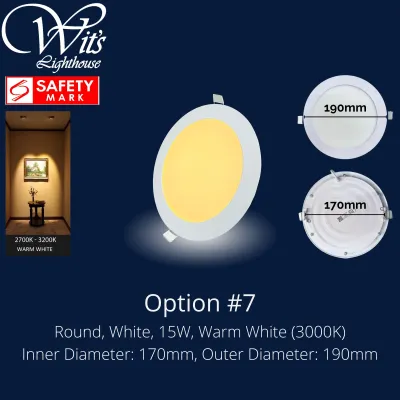
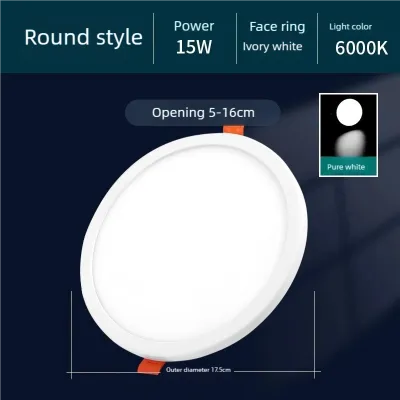
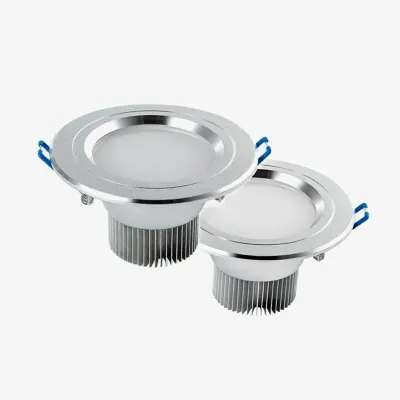
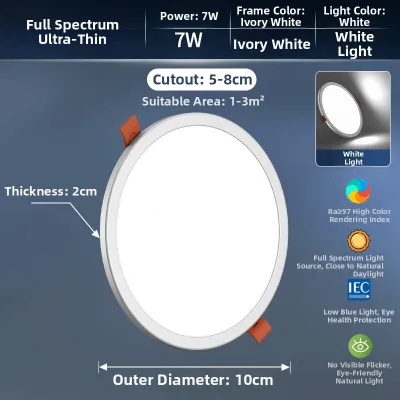
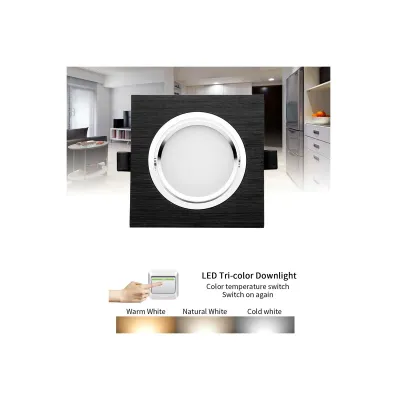
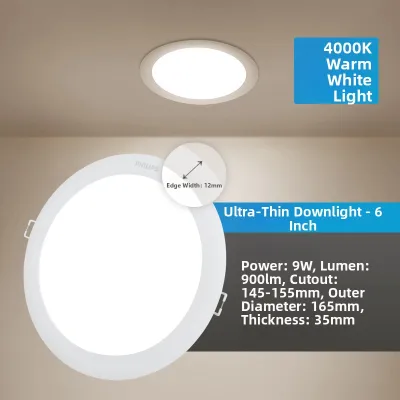
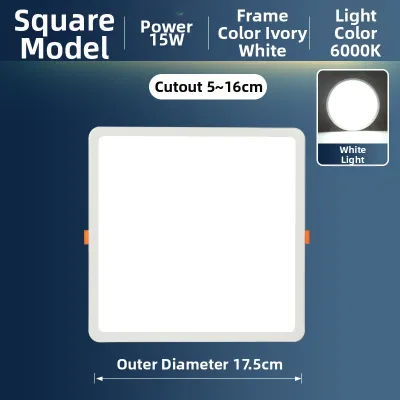
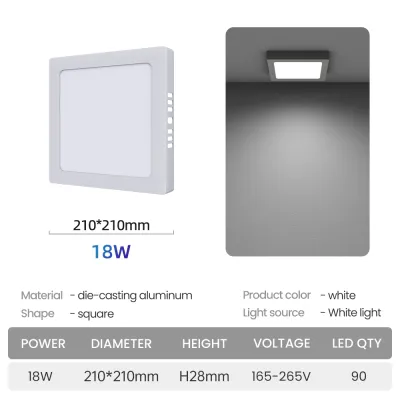
Prices are valid at publication and may change. Please refer to the product page for the latest price.
Reliable brands provide transparent, third-party tested photometric data. Look for high luminous efficacy, which measures how efficiently a fixture converts electrical power into visible light, expressed in lumens per watt (lm/W). A reliable residential downlight typically delivers between 80 lm/W and 120 lm/W. Additionally, pay close attention to the Color Rendering Index (CRI or Ra). For living areas, kitchens, and vanity spaces, a CRI of Ra 90 or higher is recommended to ensure colors appear natural and vibrant, whereas utility spaces can suffice with Ra 80.
The lifespan of an LED downlight is heavily dictated by how effectively it dissipates heat. Singapore’s tropical climate, characterized by high ambient temperatures and humidity, places extra thermal stress on ceiling-mounted electronics. High-quality brands utilize robust die-cast aluminum heatsinks that draw heat away from the delicate LED chips. In contrast, cheaper alternatives often rely on thin plastic-clad housings that trap heat, leading to rapid lumen depreciation and premature color shifting. Furthermore, inspect the transparency of the brand’s component sourcing; reliable manufacturers openly state the origin of their LED chips and internal driver capacitors.
Strategizing Brand Selection for Different Home Zones
When planning a whole-home installation, you will encounter two main categories of reliable brands. Global lighting conglomerates offer extensive research and development, highly standardized quality control, and globally recognized warranties. On the other hand, established regional specialists often design fixtures specifically tailored to Asian residential architectures, offering shallower recess depths that fit perfectly into the tight ceiling clearances common in Singapore’s HDB flats and condominiums. Both categories have their merits, and a successful lighting strategy often involves utilizing both.

You do not need to install the most expensive, high-specification downlights in every corner of your home. A smart way to balance your budget is to allocate premium, high-CRI, and dimmable fixtures to high-visibility social zones such as the living room, dining area, and open kitchen. These areas benefit most from superior color rendering and adjustable light levels. For utility zones like the bomb shelter, store room, service yard, and hallways, you can opt for standard, non-dimmable fixtures from reliable, mid-tier brands. This hybrid approach ensures optimal visual comfort where it matters most while keeping overall project costs manageable.
Relying on a single niche brand or a highly specific model for your entire home carries inherent risks. If a particular model runs out of stock mid-renovation, your installation schedule could face severe delays. Global brands and major regional distributors generally maintain healthier stock levels in local warehouses, but it is still essential to coordinate with your interior designer or electrical contractor to secure the required quantities well in advance. Always ask your supplier about lead times and verify if they have sufficient backup stock of the exact batch to cover potential replacements during the installation phase.
Essential Specifications to Verify Before Bulk Purchasing
Before purchasing dozens of downlights, you must verify the physical dimensions of your ceiling voids. False ceilings in Singapore homes are often built to conceal structural beams, air-conditioning copper pipes, and electrical conduits, leaving very limited vertical clearance. Measure the available recess depth carefully; some downlights require up to 100mm of clearance, while ultra-slim models can fit into spaces as shallow as 30mm to 50mm. Additionally, ensure the cut-out diameter (typically 75mm, 90mm, or 125mm) matches the holes your carpenter or plasterer plans to cut, as modifying finished plasterboard is messy and expensive.
Have you ever noticed a room where some downlights look slightly yellow while others look stark white, despite all being labeled as warm white? This visual inconsistency is caused by poor color binning during manufacturing. To avoid this, check the brand’s specification sheet for the MacAdam ellipse rating, also known as Standard Deviation of Color Matching (SDCM). A rating of 3 SDCM or lower means the color variation between individual fixtures is virtually imperceptible to the human eye. For a cohesive whole-home aesthetic, ensure all fixtures in a single sightline share the same SDCM rating and CCT (Correlated Color Temperature, such as 3000K for warm white or 4000K for cool white). Note that perceived color temperature is a subjective preference; choose what suits your lifestyle, but keep it consistent within the same space.
If you plan to install dimmable downlights or integrate them into a smart home system, driver compatibility is critical. LED downlights do not dim like traditional incandescent bulbs; they require specialized dimmable drivers that interpret signals from your wall switches or smart hubs. Common protocols include phase-cut dimming (leading-edge or trailing-edge), 1-10V, and DALI (Digital Addressable Lighting Interface). Mismatched drivers and dimmers can cause annoying issues like high-frequency buzzing, visible strobing, or a limited dimming range. Always consult the manufacturer’s compatibility list to verify that your chosen downlight brand works seamlessly with your specific dimmer switches or smart home ecosystem.
Important Safety Notice: Any installation involving fixed electrical wiring, working at heights, or mounting fixtures in damp environments (such as bathrooms or service yards) carries inherent risks. Always isolate the mains power supply at the distribution board (DB box) before attempting any electrical work. For your safety and compliance with Singapore’s electrical regulations (SS 638), all fixed wiring and installation tasks must be performed by a Licensed Electrical Worker (LEW) or a qualified professional.
Navigating Warranties and Local After-Sales Support
A long warranty period is a strong indicator of brand confidence, but you must read the fine print to understand what is actually covered. In an LED downlight, the light-emitting diode itself rarely fails; instead, the external or internal LED driver is almost always the first component to break down due to voltage fluctuations or heat stress. Verify whether the brand offers a comprehensive warranty that covers both the luminaire housing and the driver, or if they are treated as separate components with different coverage durations. A reliable brand should offer at least a two- to three-year warranty on the entire assembly.
When a downlight fails, you do not want to wait weeks for a replacement to be shipped from overseas. Choosing brands with an established local distributor or dedicated service center in Singapore ensures that you can obtain immediate assistance. Local support means you can walk into a showroom or service center to exchange a faulty unit on the spot, keeping your home fully illuminated. Before buying, ask the retailer about their specific warranty claim process: do they require you to mail the product back, or can you do an over-the-counter exchange in Singapore?
During a whole-home installation, it is common to encounter a small percentage of Dead on Arrival (DOA) units or to find yourself with leftover fixtures due to last-minute layout changes. Clarify the distributor’s return and exchange policies before signing the purchase agreement. Reliable local distributors often provide a grace period (typically 7 to 14 days) to exchange DOA units free of charge. Some may also allow you to return unopened, excess fixtures in exchange for store credit, which can be highly useful for purchasing replacement bulbs or other lighting accessories later on.
Frequently Asked Questions (FAQ)
How many LED downlights are typically needed for a standard HDB or condo layout?
There is no single fixed number of downlights that fits every home, as the ideal quantity depends on room dimensions, ceiling height, and the intended function of the space. Instead of placing fixtures in a uniform, sterile grid, a professional lighting plan divides the home into functional zones. For general ambient lighting in a standard living room with a 2.6-meter ceiling, downlights with a wide beam angle (around 100 to 120 degrees) spaced approximately 1.2 to 1.5 meters apart are common. For task-oriented areas like kitchen countertops or study desks, you may want to supplement these with narrower beam angles (24 to 36 degrees) to focus light precisely where it is needed. Always calculate your layout based on target lux levels—typically 150 lux for general living areas and up to 300 lux for task areas.
Can I mix different LED downlight brands in the same room?
Mixing different downlight brands within the same room or open-concept space is highly discouraged due to significant visual and technical risks. Even if two different brands label their products as warm white, their actual color rendering properties and spectral outputs can vary noticeably, creating an inconsistent and uncoordinated look across your ceiling. Furthermore, different brands utilize distinct driver designs with unique electrical characteristics. If you attempt to connect different brands of dimmable downlights to the same electrical circuit or dimmer switch, you are highly likely to experience uneven dimming rates, flickering, or driver overload. To maintain visual harmony and electrical safety, always use identical models from the same brand on any single circuit.
What should I do if a specific downlight model is discontinued mid-project?
If a downlight model is discontinued during your renovation, your first step should be to contact authorized local distributors in Singapore to check if they have remaining warehouse stock or can source the item from regional partners. If exact matches are completely unavailable, you can adapt your lighting layout to isolate the discontinued fixtures. For example, move all remaining units of the discontinued model to a self-contained room, such as a bedroom or study, where they won’t be seen alongside different fixtures. For the main living areas, install a new, matching set of downlights. To safeguard against this scenario, it is highly recommended to purchase a 10% to 15% buffer of extra fixtures upfront during your initial bulk order to serve as identical replacements in the future.
Community discussion
Share your experience or ask a question. Comments are reviewed before publication.