
To maximize vertical space in a standard Singapore Housing & Development Board (HDB) flat with a 2.6-meter ceiling height, selecting a low-profile rectangular LED ceiling light is an excellent design choice. Because a 2.6-meter ceiling leaves little room for suspended fixtures, a flush-mount or ultra-slim rectangular LED light keeps the overhead space clear while providing even, wide-angle illumination. When evaluating brands available in Singapore, the key is not just looking at aesthetic appeal, but verifying specific technical markers: a valid Safety Mark certified by Enterprise Singapore, robust thermal management, and a reliable LED driver. This guide outlines how to navigate these specifications, verify brand reliability, and plan your installation to ensure a bright, spacious-feeling home.
Understanding Spatial Limits in 2.6m HDB Flats
Standard HDB flats built in recent decades typically feature a floor-to-ceiling height of approximately 2.6 meters. While this height is perfectly functional, it imposes strict limits on the vertical profile of your light fixtures. A standard door frame stands at about 2.1 meters, leaving only 50 centimeters of clearance above it. Installing a thick, protruding dome light or a semi-flush fixture can visually lower the ceiling, making the room feel cramped and drawing unnecessary attention to the physical boundaries of the space.
Slim, rectangular LED ceiling lights address this spatial constraint by minimizing their physical drop. A fixture that sits flush against the concrete slab and measures under 5 centimeters in thickness virtually blends into the ceiling plane. This design choice reduces the “visual weight” overhead, allowing the eye to travel across the room uninterrupted. By keeping the ceiling plane clean and flat, you create an optical illusion of greater height and openness.
Products mentioned in this guide
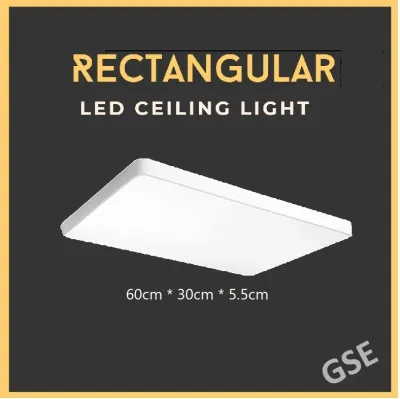
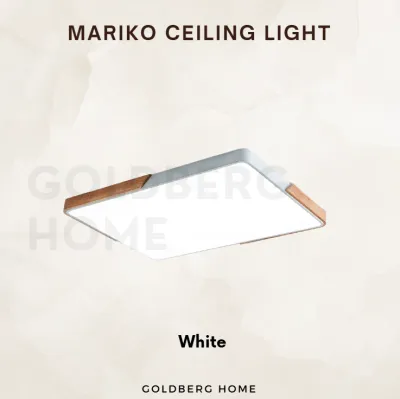
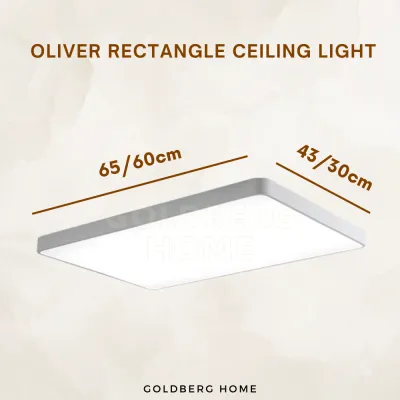
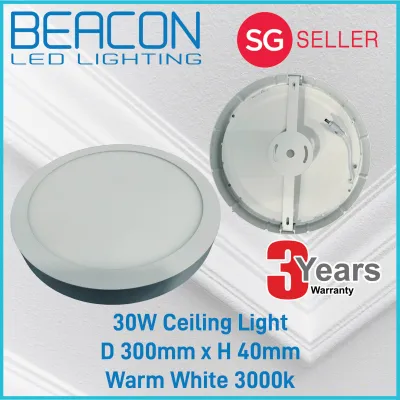
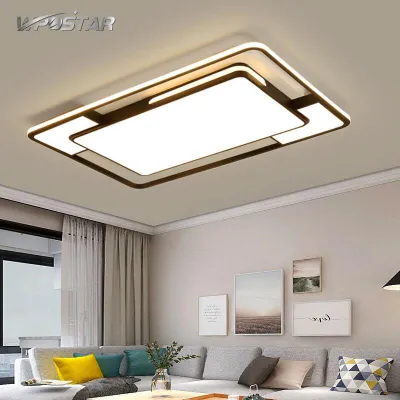
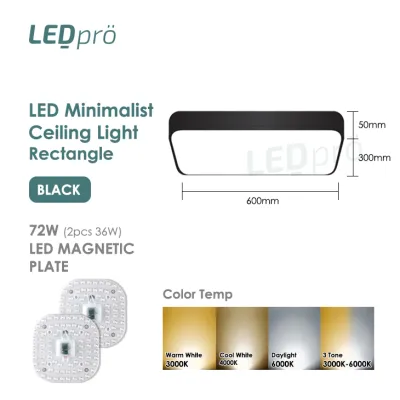
Prices are valid at publication and may change. Please refer to the product page for the latest price.
Furthermore, rectangular shapes align exceptionally well with the typical layout of HDB rooms. Most living rooms, dining areas, and corridors in these flats are configured in linear or rectangular geometries. An elongated rectangular light fixture complements these architectural lines, drawing the eye along the length of the room rather than cutting it short. This geometric alignment helps define functional zones within an open-plan layout without the need for physical partitions.
To maintain comfortable head clearance and ensure safety, you must calculate the maximum acceptable fixture drop. As a general rule of thumb, the bottom of any ceiling-mounted fixture should remain at least 2.4 meters above the floor. On a 2.6-meter ceiling, this limits your total fixture thickness—including the mounting bracket—to a maximum of 20 centimeters. However, to preserve a truly spacious feel and avoid accidental contact when changing clothes or moving furniture, aiming for an ultra-slim profile of 3 to 5 centimeters is highly recommended.
Technical Specifications for Rectangular LED Ceiling Lights
When comparing different rectangular LED ceiling lights, relying solely on wattage to determine brightness is a common mistake. Wattage measures electrical power consumption, not the actual light output. Instead, you must evaluate the lumen output (lm) of the fixture. For a standard HDB living room, a total illumination of 3,000 to 5,000 lumens is generally sufficient, whereas smaller bedrooms or kitchens may only require 1,500 to 3,000 lumens. To find the right balance, check the manufacturer’s specifications for the lumen-to-wattage ratio; highly efficient LEDs deliver more lumens per watt, reducing your monthly energy bills.

Color temperature, measured in Kelvin (K), is another critical specification that shapes the atmosphere of your home. Because color temperature preference is highly subjective, many modern rectangular fixtures offer Correlated Color Temperature (CCT) tuning. This feature allows you to switch between warm white (2700K to 3000K) for a cozy evening ambiance, cool white (4000K) for balanced daytime activities, and daylight (6000K to 6500K) for task-oriented areas like the kitchen or study. If you prefer a single fixed color temperature, ensure it aligns with the primary function of the room.
To ensure that your furniture, wall paint, and food look natural under artificial light, check the Color Rendering Index (CRI) of the LED fixture. The CRI is a scale from 0 to 100 that measures how accurately a light source reveals the true colors of objects. For residential spaces, a CRI of 80 or higher is standard, but selecting a fixture with a CRI of 90 or above will significantly enhance the visual richness of your interior decor and prevent colors from appearing dull or gray.
Finally, verify the physical dimensions and housing thickness of the fixture. A truly slim-profile rectangular LED light should have an overall depth of 5 centimeters or less. Be sure to check whether the driver is integrated inside the slim chassis or if it requires a separate recess in the ceiling. For HDB flats without a false ceiling, an integrated driver design is essential, as the fixture must mount directly onto the flat concrete slab.
How to Verify Brand Reliability and Electrical Safety
In Singapore, electrical safety is paramount, especially for fixtures mounted directly to concrete ceilings. Before purchasing any rectangular LED ceiling light, you must verify that the product or its LED driver carries the mandatory Safety Mark issued by Enterprise Singapore. This certification indicates that the product has undergone rigorous testing to meet local safety standards, protecting your home from electrical hazards, short circuits, and potential fire risks. Avoid buying unbranded or uncertified fixtures from overseas online marketplaces, as they often lack this crucial safety guarantee.
Because LED chips and drivers are sensitive electronic components, the warranty offered by a brand serves as a reliable proxy for its build quality. Look for brands that offer a comprehensive warranty of at least two to three years. It is important to read the warranty terms carefully: some manufacturers only cover the LED diodes, while the driver—which is actually the component most prone to failure—is excluded or given a shorter warranty period. A robust warranty that covers both the driver and the LED panel indicates high manufacturer confidence.
Heat dissipation is a critical factor in the longevity of slim LED fixtures. Because low-profile housings have very little internal air volume, heat can build up quickly, leading to premature dimming or complete component failure. Inspect the product specifications to see what materials are used for the backplate and chassis. High-quality brands utilize aluminum backplates or integrated metal heat sinks, which conduct heat away from the LED chips far more effectively than cheap, entirely plastic housings.
Before making a final decision, research user reviews and community forums for real-world feedback on the brands you are considering. Pay close attention to mentions of persistent flickering, buzzing noises, or delayed startup times, which are common symptoms of low-quality LED drivers. Additionally, if you plan to integrate your ceiling lights with smart home systems or wall dimmers, check user reviews to confirm compatibility, as some LED drivers do not play well with standard dimming switches.
Pre-Installation Checks for Existing HDB Wiring
Before purchasing your new rectangular LED ceiling light, you must conduct a thorough physical and electrical assessment of your existing setup. Start by removing your old light fixture to inspect the ceiling mounting point. Standard HDB concrete ceilings feature a central electrical junction box or a J-hook. You must ensure that the mounting bracket supplied with your new rectangular fixture can be securely anchored to the concrete slab using appropriate rawlplugs and screws, and that it can safely support the weight of the new unit.
Next, evaluate your existing wall switches. If you have selected a dimmable rectangular LED light, you must verify that your current wall switches are compatible with the dimming technology used by the fixture’s driver (such as triac dimming or 0-10V dimming). Standard on/off switches cannot dim a dimmable LED driver without causing rapid flickering, which can permanently damage the electronics. If you are upgrading to a smart LED fixture, it may require a constant power supply, meaning you might need to bypass or replace your traditional switches.
It is crucial to recognize the boundary between simple DIY tasks and work that requires professional intervention. While replacing an existing light fixture on a like-for-like basis can sometimes be performed by a confident homeowner, any modification to the fixed electrical wiring, installing new wiring points, or working on complex circuits must be carried out by a Licensed Electrical Worker (LEW) registered with the Energy Market Authority (EMA). Always isolate the electrical power at the main distribution board (MCB) before touching any wires, and consult a professional if you encounter outdated or confusing wiring configurations.
Finally, plan the physical footprint and wire routing of your new rectangular fixture. Because rectangular lights have a different shape than standard round fixtures, the existing wire outlet on your ceiling may not align perfectly with the center of the new light’s chassis. Some fixtures feature flexible wire entry points, while others require you to run a short length of surface-mounted casing (casing or conduit) to reach the connection block. Additionally, be prepared to patch and paint any exposed ceiling areas that were previously covered by the old, wider fixture base.
Layout Strategies for Different HDB Rooms
| Room Type | Recommended Fixture Size | Suggested Color Temperature (CCT) | Placement Strategy |
|---|---|---|---|
| Living Room | 90cm x 60cm or 120cm x 30cm | 3000K to 4000K (CCT-tunable preferred) | Centered over the main seating area; complement with warm accent lighting. |
| Kitchen | 120cm x 15cm or 120cm x 30cm | 4000K to 6000K | Aligned parallel to the main countertop to eliminate shadows on work surfaces. |
| Corridor | 60cm x 15cm or 90cm x 15cm | 3000K to 4000K | Centered along the length of the hallway to create a continuous path of light. |
| Bedroom | 60cm x 60cm or 90cm x 30cm | 2700K to 3000K | Offset from the bed headboard to prevent direct downward glare while lying down. |
In the living room, a single, large rectangular LED ceiling light can serve as a highly effective central light source, distributing illumination evenly across the entire seating area. However, if your living room is exceptionally long or L-shaped, relying on a single fixture might leave the corners in shadow. In such cases, combining a medium-sized central rectangular light with strategically placed track lights or recessed downlights (if you have a false ceiling) allows you to create layers of light that can be adjusted depending on the time of day.
For narrow spaces like corridors and kitchens, the linear geometry of a rectangular fixture is highly advantageous. Installing a long, narrow rectangular light parallel to your kitchen countertops or along the center line of your hallway maximizes the spread of light and visually elongates the space. This layout ensures that high-traffic work areas remain bright and free of shadows, enhancing both safety and functionality during daily tasks.
In bedrooms and relaxation zones, avoiding direct downward glare is essential for visual comfort. If a rectangular fixture is mounted directly above the head of the bed, the intense light can be uncomfortable when you are lying down. To prevent this, position the fixture closer to the center or foot of the bed, and select a model equipped with a high-quality frosted acrylic diffuser. This diffuser softens the light output, spreading it gently across the room while maintaining a relaxing, glare-free environment.
Frequently Asked Questions (FAQ)
Can I mount a rectangular LED ceiling light directly onto an HDB false ceiling?
Yes, you can mount a rectangular LED ceiling light onto a false ceiling, but you must take specific structural precautions. Standard gypsum or calcium silicate boards used in HDB false ceilings are not designed to support heavy, concentrated loads. If the rectangular fixture is lightweight (typically under 2 kilograms), it can be secured directly to the false ceiling board using specialized heavy-duty toggle bolts or butterfly anchors that distribute the weight over a wider area.
For heavier fixtures, however, you must anchor the mounting bracket directly to the structural concrete slab above the false ceiling. This is achieved by using long concrete screws or threaded rods that pass through the false ceiling cavity into the solid concrete. Alternatively, you can install additional timber or metal support runners inside the false ceiling frame to support the weight. If you are unsure about the load-bearing capacity of your false ceiling, always consult a qualified contractor or professional installer before proceeding.
Do ultra-slim rectangular LED lights overheat faster than thicker models?
Ultra-slim rectangular LED lights do face greater thermal management challenges because their low-profile designs leave very little internal air space for heat dissipation. However, high-quality brands compensate for this limitation by using advanced materials and engineering. Instead of relying on air circulation, premium slim fixtures use the entire backplate of the chassis—often constructed from high-grade aluminum—as an active heat sink to draw heat away from the LED diodes and driver.
In contrast, cheaper slim models that utilize entirely plastic housings are far more prone to overheating. When heat cannot escape, the internal temperature of the LED chips rises, which accelerates the degradation of the light-emitting materials and can lead to premature dimming, color shifting, or driver failure. To prevent overheating issues, always choose fixtures with aluminum backplates, ensure there is a minimal gap for passive airflow around the sides of the fixture, and avoid installing them in tightly enclosed, unventilated ceiling recesses.

Community discussion
Share your experience or ask a question. Comments are reviewed before publication.