
To light a standard 2.6m HDB flat effectively without creating harsh glare or sacrificing vertical space, you should look for spotlights with a wide beam angle of 36 to 60 degrees for general lighting, a low fixture depth of 50mm to 70mm (or slim surface-mounted options), and a moderate brightness of 350 to 500 lumens (roughly 5W to 7W LED) per fixture. Balancing these specifications prevents the “flashlight effect” common in low-ceiling spaces while keeping your false ceiling drop to a minimum.
Understanding the 2.6m Ceiling Constraint in HDB Flats
In Singapore, Housing & Development Board (HDB) flats constructed in recent decades typically feature a standard floor-to-ceiling height of roughly 2.6 metres. Compared to private condominiums or landed properties that often boast clearances of 2.8 metres or higher, this 2.6-metre limit restricts how light spreads across a room.
When homeowners decide to install a false ceiling to hide messy wiring or accommodate recessed fixtures, they must sacrifice some of this precious vertical clearance. A typical false ceiling drop ranges from 100mm to 150mm. This reduces the actual living space height to around 2.45 to 2.5 metres, creating a very tight ceiling cavity for housing electrical components.
Products mentioned in this guide
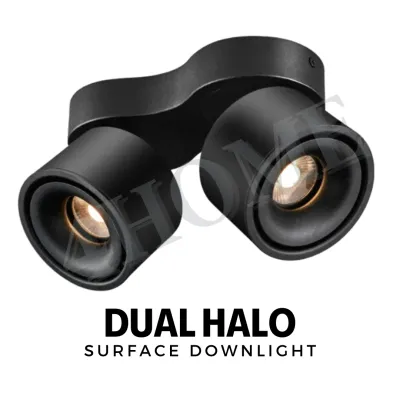
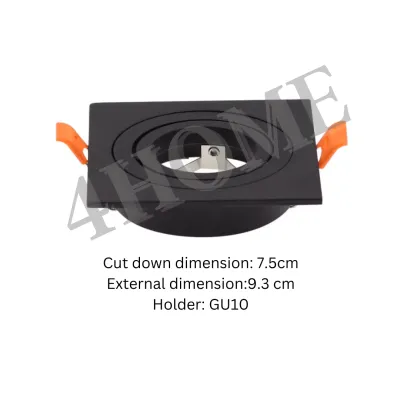
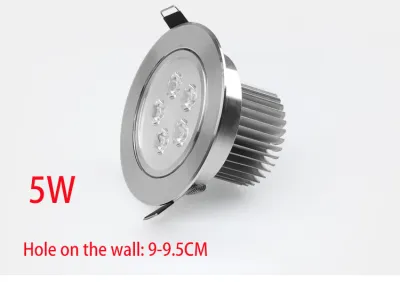
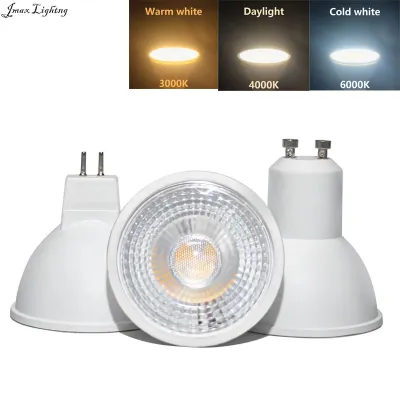
![[3 Year Warranty] [Authorized Dealer] Philips GU10 LED Spotlight Bulb Philips Essential LEDspot MV 4.7W GU10](https://img.lazcdn.com/g/p/f05426a137fb394924178754ffb22158.png_400x400q80.png_.webp)
Prices are valid at publication and may change. Please refer to the product page for the latest price.
Ignoring these physical constraints when buying lighting leads to several immediate problems. Standard high-output spotlights designed for taller commercial spaces will cast overly narrow, intense cones of light that create harsh glare at eye level. Furthermore, squeezing bulky fixtures into a shallow ceiling void restricts natural airflow, trapping heat and significantly reducing the lifespan of the LED drivers.
Achieving a comfortable, modern interior in an HDB flat requires a careful balance. You must select fixtures that fit within the physical boundaries of your ceiling while distributing light evenly across the living space.
Selecting the Right Beam Angle to Avoid Glare
The relationship between your ceiling height and the beam angle of your spotlight determines how wide the pool of light will be when it reaches your furniture or floor. With a low 2.6-metre ceiling, a narrow beam of light does not have enough vertical distance to spread out naturally, resulting in intense, localized hotspots on your floor and leaving the rest of the room in shadow.

For general ambient lighting in your living room, bedrooms, or corridors, you should prioritize wider beam angles ranging from 36 to 60 degrees. These wider angles allow the light cones from adjacent fixtures to overlap smoothly at head height, minimizing harsh shadows and creating a cohesive, well-lit environment.
Narrower beam angles, typically between 15 and 24 degrees, should be reserved strictly for accent lighting. If you want to highlight a piece of artwork, a floating shelf, or a textured feature wall, these narrow beams provide the necessary focus. However, you must position these fixtures so the light hits the target wall or object well before reaching eye level, preventing direct glare when you walk past.
To further protect your eyes from discomfort, look for spotlights equipped with specialized anti-glare features. Fixtures with deep-recessed LED chips sit further back inside the housing, hiding the light source from your direct line of sight. Black baffle reflectors or honeycomb louvres are also highly effective at absorbing stray light rays, ensuring you only see the illuminated surface rather than the glowing bulb itself.
Fixture Depth and False Ceiling Clearance Requirements
Before committing to recessed spotlights, you must coordinate with your interior designer or renovation contractor regarding the clearance depth of your false ceiling. A standard recessed spotlight housing typically requires a minimum clearance of 70mm to 100mm inside the ceiling void to accommodate the fixture body, the heat sink, and the driver.
Always check the manufacturer’s specification sheet for the exact recessed depth or housing height of the spotlight before purchasing. If your contractor only plans a shallow false ceiling drop of 50mm to 70mm to preserve as much room height as possible, standard spotlights will not fit. Squeezing a fixture against the concrete slab above blocks essential airflow, leading to rapid heat buildup and premature driver failure.
For tight spaces, look for ultra-thin or slim-profile LED downlights and spotlights. These modern fixtures often feature a depth of less than 30mm, allowing them to fit comfortably into minimal false ceiling drops. Alternatively, if you want to avoid a false ceiling altogether, surface-mounted spotlights or track lighting systems provide an excellent industrial or minimalist aesthetic without sacrificing any vertical room height.
Before cutting any installation holes in your ceiling, your contractor must map out the locations of structural concrete beams, concealed utility pipes, and existing electrical conduits. Cutting into structural elements is strictly prohibited under HDB renovation guidelines.
All fixed electrical wiring and modifications within your HDB flat must comply with local safety standards and Energy Market Authority regulations. Ensure that all lighting fixtures carry the appropriate local safety certifications, such as the Safety Mark in Singapore, and always hire a licensed electrical worker to handle the installation.
Matching Wattage and Lumens for Proper Illumination
When shopping for LED spotlights, many homeowners mistakenly rely on wattage to judge brightness. Wattage simply measures electrical power consumption, whereas lumens indicate the actual amount of visible light emitted by the fixture. Because modern LED technology is highly efficient, a low-wattage bulb can produce a surprising amount of light.
Because a 2.6-metre ceiling is relatively low, light has a much shorter distance to travel to reach your floor or work surfaces. Consequently, you do not need high-lumen commercial fixtures. For a standard HDB flat, spotlights emitting between 350 and 500 lumens—typically consuming 5 to 7 watts of power—are more than sufficient to illuminate the space comfortably.
To determine how many fixtures you need, calculate the total required lumens based on the specific function of each room. As a general guideline, functional areas like kitchens, study rooms, and bathrooms require higher illumination levels of around 200 to 300 lux, or lumens per square metre. Relaxing spaces like living rooms and bedrooms can be kept softer, requiring around 100 to 150 lux.
Instead of installing a few high-wattage, high-lumen spotlights that create intense glare and dark corners, distribute multiple lower-lumen fixtures across the ceiling. This approach ensures even, shadow-free illumination while keeping the overall energy consumption of your home low.
Color temperature also plays a critical role in how spacious your HDB flat feels. Warm white light of around 3000K creates a cozy, inviting atmosphere perfect for bedrooms and living areas, but can make a small room feel slightly more enclosed. Cool white light of around 4000K offers a clean, crisp appearance that enhances the perception of space and clarity, making it ideal for kitchens, bathrooms, and study areas.
Strategic Placement and Spacing for Low Ceilings
Proper placement is essential to prevent your HDB ceiling from looking cluttered or resembling a commercial showroom. As a general rule of thumb, space your spotlights approximately 0.8 to 1.2 metres apart. To achieve a beautiful wall-washing effect without creating harsh hot spots, position the fixtures about 30cm to 45cm away from the walls.
Avoid placing spotlights directly above primary seating areas, such as the center of your sofa, directly over pillow positions on beds, or right in front of television screens. Direct overhead light causes uncomfortable glare when you look up, while poorly positioned lights can reflect off screens, ruining your viewing experience.
In modern open-concept HDB layouts where the living room, dining area, and kitchen merge, you can use spotlight zoning to define distinct functional areas. By grouping fixtures onto separate switches or dimming zones, you can brightly illuminate the dining table while keeping the living area softly lit, creating visual boundaries without physical walls.
To combat the slightly enclosed feeling of a 2.6-metre ceiling, combine your spotlights with indirect lighting solutions. Installing cove lighting along the perimeter of the room washes the ceiling with soft, reflected light. This draws the eye upward and creates a powerful optical illusion of a much higher ceiling.
Common Spotlight Mistakes in HDB Renovations
One of the most frequent mistakes in HDB renovations is over-lighting. Homeowners often install too many high-lumen fixtures out of fear that the space will be too dark, resulting in a harsh, clinical environment that causes eye strain and fatigue.
Ignoring thermal management is another critical error. Buying cheap, unbranded fixtures with poor-quality aluminium heat sinks and stuffing them into tight, unventilated false ceilings is a recipe for disaster. Overheated LEDs will quickly dim, shift in color, or fail entirely within a few months of use.
Mismatched color temperatures can ruin an otherwise beautiful interior design. Mixing a 3000K warm white spotlight with a 4000K cool white downlight in the same visual field creates a disjointed, chaotic look. Ensure all bulbs within a single room share the exact same Kelvin rating for visual harmony.
Finally, many homeowners overlook dimmer compatibility. If you plan to install dimmer switches to adjust the mood of your living room or bedroom, you must verify that both the LED spotlight driver and the dimmer switch are explicitly rated as compatible. Using mismatched components leads to annoying flickering, buzzing noises, and potential damage to the LED circuitry.
Frequently Asked Questions (FAQ)
Can I install recessed spotlights without a false ceiling in my HDB?
Recessed spotlights require a hollow ceiling cavity to hide the fixture housing and wiring, which is not present in a standard concrete HDB ceiling slab. If you do not want to install a false ceiling due to height or budget constraints, you can opt for surface-mounted spotlights or track lighting. These systems mount directly onto the concrete ceiling, offering adjustable directional light without requiring any plasterboard construction.
What is the difference between a spotlight and a downlight?
In local renovation terminology, downlights generally provide a wide, fixed beam of light meant for broad ambient illumination across a room. Spotlights, on the other hand, feature narrower, more concentrated beams of light and often come with adjustable, swivelling heads. This allows you to direct the light toward specific focal points, though the terms are often used interchangeably by local suppliers.
Do I need a special transformer or driver for LED spotlights?
Yes, LED spotlights require a driver—which acts as a transformer—to convert standard household AC voltage to the low-voltage DC power required by LEDs. Many modern integrated LED fixtures come with built-in or pre-packaged drivers. If you use GU10 or MR16 bulb-based fixtures, verify whether they run on 230V mains voltage or require an external low-voltage transformer, ensuring any external drivers remain accessible for future maintenance.

Community discussion
Share your experience or ask a question. Comments are reviewed before publication.