
Selecting the perfect cushion insert for a standard 45x45cm cover involves balancing aesthetic preferences with daily functional needs. The ideal fill material depends entirely on how you plan to use the cushion, the environment of your home, and the specific fabric of your cover. By understanding the physical properties of down alternative, standard polyester, and memory foam, you can make an informed decision that ensures long-lasting comfort and visual appeal.
For a quick decision, down alternative is the premier choice for those seeking a plush, luxurious feel and the classic, easily styled look often found in formal living spaces. Standard polyester fiberfill offers a highly practical, budget-friendly, and low-maintenance option that is well-suited for high-traffic family rooms and children’s play areas. Memory foam provides dense, contouring, and highly supportive ergonomics, making it the ideal candidate for dedicated lumbar support, reading nooks, or home offices. Before purchasing any insert, always verify the weight of your cushion cover fabric and the strength of its closure mechanism, as these physical factors dictate how well the cover can accommodate different fill densities.
Material Breakdown: Comfort, Support, and Care
Every fill material behaves differently under pressure and requires specific maintenance to retain its shape. Evaluating these materials individually allows you to match their physical characteristics to your daily lifestyle.
Products mentioned in this guide
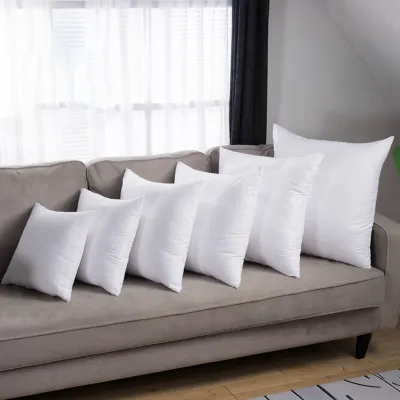
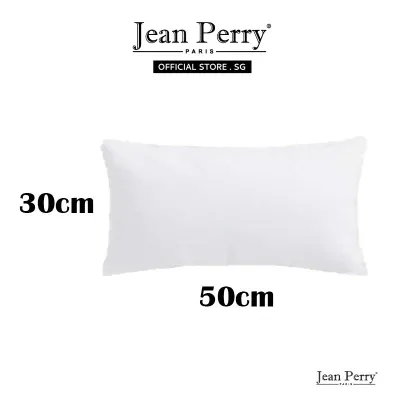
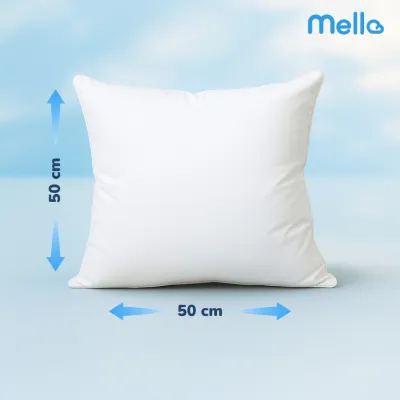
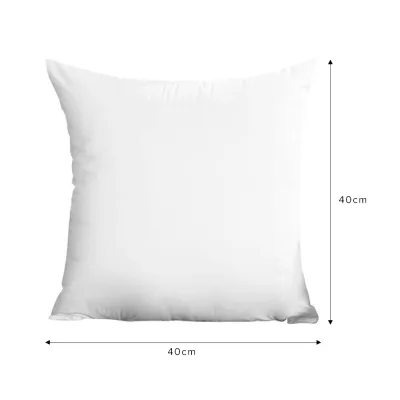
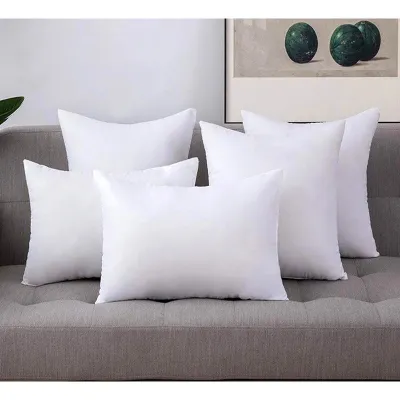
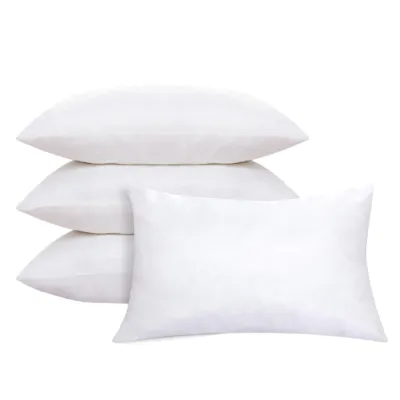
Prices are valid at publication and may change. Please refer to the product page for the latest price.
Down Alternative
Down alternative inserts are engineered to replicate the loft, softness, and insulating properties of natural down using synthetic microfibers. These ultra-fine polyester fibers slide past one another easily, creating a plush, cloud-like loft that conforms gently to the body when compressed. This material is highly favored for decorative styling because it holds a crease beautifully, allowing you to achieve the classic “karate chop” look on your sofa or bed.
To maintain this premium loft, down alternative inserts require regular manual fluffing to redistribute the microfibers and prevent them from settling. When shopping, check the product labels for baffle-box construction, which utilizes internal fabric walls to keep the fill evenly distributed across the 45x45cm dimensions. Additionally, look for hypoallergenic certifications if sensitive skin or respiratory comfort is a priority in your household.
Care routines for down alternative are relatively straightforward but require attention to detail. While many down alternative inserts are machine washable, you must verify the manufacturer’s instructions regarding water temperature and cycle speed. Thorough drying is absolutely critical; any lingering moisture inside the dense microfiber clusters can lead to internal mold or mildew, particularly in humid climates. Using clean dryer balls during a low-heat cycle can help break up clumps and restore the insert’s original fluffiness.
Standard Polyester Fiberfill
Standard polyester fiberfill, often referred to simply as poly-fill, is the most common and accessible material used in home decor. It consists of crimped synthetic fibers that create a springy, lightweight structure. This resilience allows the insert to bounce back quickly after use, maintaining a consistently plump appearance without the need for daily fluffing.
Over extended periods of heavy use, standard polyester fibers tend to compress, mat, and lose their springiness. This can result in a flat or lumpy cushion that may eventually require complete replacement or manual restuffing. To mitigate this, look for high-quality variations on the product label, such as cluster-fiber, ball-fiber, or conjugate siliconized polyester. These advanced fiber structures are designed to resist clumping and sliding, significantly extending the lifespan of the insert.
Maintenance for standard polyester is exceptionally easy, making it a favorite for busy households. Most polyester inserts can be washed on a gentle cycle and air-dried quickly due to the hydrophobic nature of the synthetic fibers. This quick-drying capability makes them highly resistant to moisture-related issues, providing a practical solution for everyday lounging spaces.
Memory Foam
Memory foam inserts represent a complete departure from traditional fiber fills, offering a dense, viscoelastic structure that responds to body heat and pressure. This material contours precisely to the shape of your body, distributing weight evenly and relieving pressure points. Because of this high density, memory foam inserts are significantly heavier and firmer than fiber-filled alternatives.
This structural rigidity means memory foam will not deliver a plush, fluffy aesthetic, nor will it hold a decorative crease. Instead, it maintains a flat, uniform block shape that is highly functional for ergonomic support. It is particularly beneficial for individuals seeking structured lumbar support on deep sofas, office chairs, or cozy reading benches where physical comfort during prolonged sitting is the primary goal.
When choosing a memory foam insert, it is vital to check the physical construction of your cushion cover. Solid memory foam blocks are rigid and do not compress easily during installation, which can put immense strain on delicate hidden zippers. Shredded memory foam inserts offer a middle ground, providing some of the contouring benefits of foam with a bit more flexibility and breathability, though they still require a sturdy cover fabric and a wide zipper opening to install safely.
Scannable Comparison: Down Alternative vs. Polyester vs. Memory Foam
To help you quickly compare these three materials, the following matrix outlines their performance across key practical dimensions. Always cross-reference these characteristics with the care labels on your specific cushion covers.

| Feature | Down Alternative | Standard Polyester | Memory Foam |
|---|---|---|---|
| Plumpness & Loft | High (plush, easily fluffed) | Medium (springy, holds shape) | Low (dense, flat profile) |
| Support Level | Soft to Medium | Medium | Firm (ergonomic contouring) |
| Maintenance & Care | Machine wash gentle; tumble dry thoroughly | Machine wash; quick air dry | Spot clean only; air dry away from heat |
| Best Use Case | Formal living rooms, decorative styling | Family rooms, high-traffic areas, kids' zones | Home offices, reading nooks, lumbar support |
| Relative Cost Tier | Mid to High | Budget-friendly | Mid to High |
| What to Verify on Label | Fiber denier, baffle-box stitching | Fiber type (cluster or hollow-fiber) | Foam density, solid vs. shredded |
Decision Framework: Choosing Based on Your Space
To select the right insert, consider how the cushion will be used and the specific room environment it will inhabit. Matching the material to the room’s primary function ensures both aesthetic satisfaction and practical durability.
Choose Down Alternative if:
- You want to style a formal living room or bedroom where a luxurious, plump, and easily customizable appearance is paramount.
- You enjoy the ritual of fluffing and styling your cushions to maintain a pristine, editorial look.
- You are pairing the insert with lightweight, high-quality cover fabrics like silk, linen, or fine cotton that drape elegantly over soft fills.
Choose Standard Polyester if:
- You are styling a high-traffic family room, playroom, or outdoor patio lounge where cushions are subject to frequent spills, rough handling, and daily wear.
- You prefer a low-maintenance setup where cushions bounce back on their own without requiring manual shaping.
- You are working within a specific budget and need to furnish multiple seating areas efficiently.
- You require inserts that can be washed and dried rapidly to maintain a clean, hygienic home environment.
Choose Memory Foam if:
- You are setting up a dedicated home office, a study desk, or a cozy window bench where physical support and posture alignment are the main priorities.
- You suffer from lower back discomfort and require consistent, firm lumbar support during long periods of sitting.
- Your cushion covers are made of heavy, structured, or rigid fabrics like thick canvas, heavy upholstery wool, or structured faux leather that require a solid internal form to prevent sagging.
Verify First If…
Before committing to any insert material, inspect the physical construction of your 45x45cm cushion cover. Delicate fabrics like vintage velvet, silk, or heavily embroidered textiles can be easily damaged by the weight and stiffness of memory foam. Conversely, lightweight polyester inserts may look swallowed or wrinkled inside heavy, structured upholstery-grade covers. Always check the zipper length; a short, hidden zipper will make inserting a rigid memory foam block extremely difficult and may result in torn seams.
Sizing and Fit: Getting the Right Look for 45x45cm Covers
Achieving a professional, plump, and tailored look on your sofa depends heavily on selecting the correct insert size. A common mistake is purchasing a 45x45cm insert for a 45x45cm cover, which often results in empty, saggy corners and a flat overall appearance.
To achieve a full, high-end look, the general design principle is to size up your insert by 5cm. For a standard 45x45cm cushion cover, pairing it with a 50x50cm down alternative or polyester insert will push the fill deep into the corners, eliminating empty fabric pockets and creating a beautifully rounded, plump silhouette. This sizing rule applies primarily to fiber fills, as they compress easily inside the cover.
However, before sizing up, you must verify the stretch and seam strength of your cushion cover. Rigid, non-stretch fabrics like heavy canvas, thick linen, or delicate antique textiles with hidden zippers cannot accommodate the extra tension of an oversized insert. For these materials, or when using dense memory foam inserts, stick to an exact 45x45cm size to prevent the seams from bursting or the zipper teeth from separating under pressure.
When installing an oversized or dense insert, use the proper technique to protect your cover:
- Fold the Insert: Fold the insert completely in half (taco style) to compress the fill and minimize its surface area.
- Insert Deeply: Slide the folded insert deep into the cover, ensuring the two front corners of the insert are firmly nested into the far corners of the cover.
- Release and Align: Gently release the fold, allowing the insert to expand inside the cover. Reach inside to manually guide the remaining corners of the insert into the corresponding corners of the cover.
- Close with Care: Gently pull the zipper closed, using your fingers to push the fill inward and away from the zipper teeth to prevent snagging or fabric tearing.
Frequently Asked Questions (FAQ)
Can I wash my cushion inserts in a standard washing machine?
Standard polyester and many down alternative inserts are designed to be machine washable, but you must always verify the specific care instructions on the product label first. Use a gentle cycle with warm or cold water and a mild detergent to protect the synthetic fibers from melting or clumping. Memory foam inserts, particularly solid blocks, should never be placed in a washing machine, as the mechanical agitation and water saturation will destroy the foam’s cellular structure. Instead, spot clean memory foam with a damp cloth and mild soap, and allow it to air dry completely in a well-ventilated area away from direct sunlight and heat sources.
Why does my new cushion insert look flat inside the cover?
If your cushion looks flat, it is likely due to shipping compression or an incorrect size match. Many inserts are vacuum-sealed for shipping efficiency and require 24 to 48 hours after opening to fully expand and regain their intended loft; manual shaking and fluffing can help speed up this recovery process. If the insert has fully expanded and still looks flat, check if you used an exact-size 45x45cm insert inside a lightweight cover, which often leaves the corners empty. Sizing up to a 50x50cm fiber insert or choosing a fill with a higher density will provide the necessary volume to fill out the cover fabric completely.
Community discussion
Share your experience or ask a question. Comments are reviewed before publication.