
Selecting the right ceiling lights for a standard Singapore Housing & Development Board (HDB) flat requires balancing spatial limitations with effective illumination. With a typical ceiling height of 2.6 meters, bulky hanging fixtures or deep-set chandeliers can make rooms feel cramped, visually lowering the ceiling and creating safety hazards for taller occupants. To maintain an open, airy atmosphere while ensuring bright, even light distribution, homeowners should prioritize ultra-slim, surface-mounted Philips LED ceiling lights. These fixtures, often measuring less than five centimeters in thickness, hug the concrete slab closely, maximizing vertical clearance. By focusing on high light efficacy, wide beam angles, and appropriate color temperatures, you can transform a low-ceiling HDB flat into a visually spacious and well-lit home.
Key Selection Criteria for 2.6m HDB Ceilings
In a 2.6-meter space, every centimeter of vertical clearance counts. Standard flush-mount fixtures that protrude ten centimeters or more break the visual plane, drawing the eye downward and making the room feel smaller. Selecting ultra-slim profiles—ideally between two and five centimeters—keeps the light source as close to the ceiling as possible. This physical clearance is not just aesthetic; it also prevents interference with tall furniture, wardrobe doors, and ceiling fans.
Low ceilings mean the light source is closer to your eyes and living surfaces. To avoid glare while maintaining brightness, look for high light efficacy, which is the ratio of lumens produced to watts consumed. High-efficacy LEDs deliver more brightness with less heat and energy. Instead of choosing a high-wattage bulb that requires a deep, heat-dissipating housing, select a slim integrated LED panel with a high lumen-per-watt rating. For a standard HDB living room, a total ambient light level of 3,000 to 4,000 lumens is often recommended, which can be achieved by combining a central slim panel with strategic accent lighting.
Products mentioned in this guide
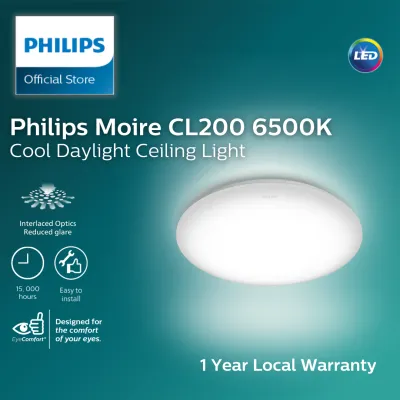
![[3 Year Warranty] Philips LED Ceiling light 17W 20W CL200](https://img.lazcdn.com/g/p/a7513e4a2b3c8a590df1beecd4b3709e.png_400x400q80.png_.webp)
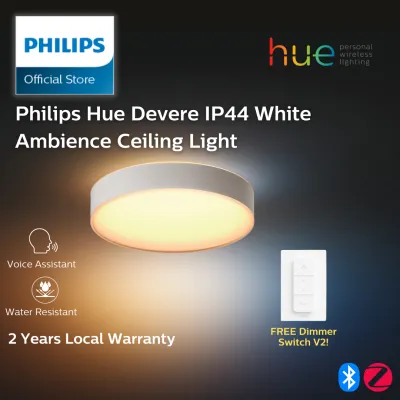
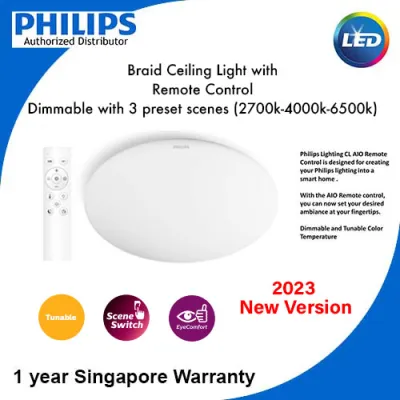
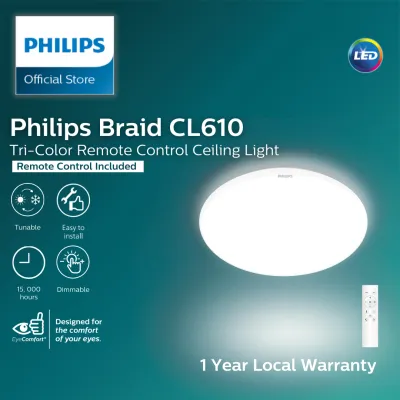
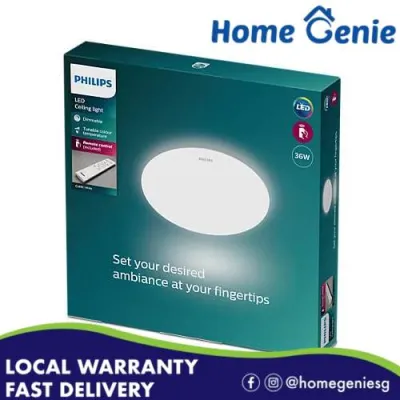
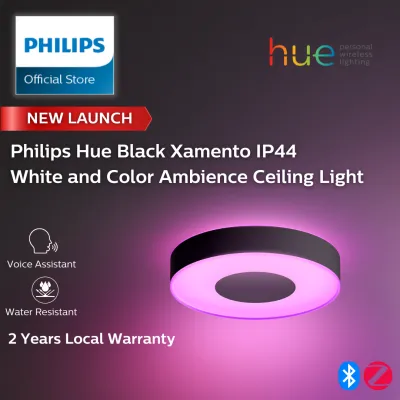
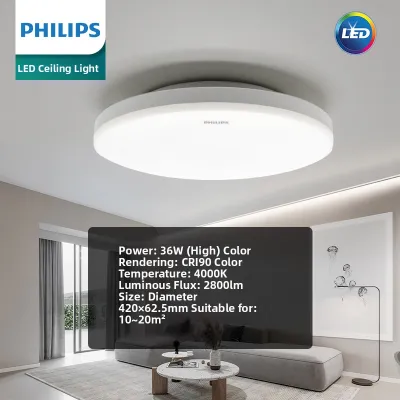
Prices are valid at publication and may change. Please refer to the product page for the latest price.
The way light is dispersed is critical in low-ceiling environments. Narrow beam angles create intense pools of light directly underneath the fixture, leaving the upper walls and corners in shadow. This high-contrast effect, known as the “cave effect,” makes a room feel confined. To counteract this, choose Philips fixtures equipped with wide beam angles and high-quality synthetic diffusers. Frosted or PMMA (polymethyl methacrylate) diffusers scatter the light evenly across the ceiling and walls, softening shadows and bouncing light around the room to create the illusion of a higher ceiling.
Identifying Suitable Philips Series for Compact Spaces
When browsing online marketplaces or visiting local lighting showrooms in Singapore, always verify the physical dimensions on the official product datasheet. Look specifically for the height or thickness parameter. Philips offers several dedicated low-profile ranges, such as their ultra-slim surface-mounted LED panels and downlights. Avoid relying solely on marketing images, which can be shot from angles that obscure the actual depth of the fixture.

Traditional flush-mount dome lights use replaceable LED bulbs, which inherently require a deeper housing to accommodate the bulb shape and socket. This design often results in a fixture thickness of eight to twelve centimeters. In contrast, integrated LED panels mount the light-emitting diodes directly onto a flat circuit board inside a sealed, ultra-thin housing. This integrated design not only reduces the profile to a fraction of a dome light’s thickness but also ensures more uniform light distribution across the diffuser surface, eliminating hot spots and dark rings.
Low ceilings place light sources closer to the normal line of sight, increasing the risk of eye strain and glare. When evaluating Philips ceiling lights, check the packaging or product specifications for visual comfort certifications. Look for indicators of low flicker, reduced glare, and high color rendering index (CRI) ratings of 80 or above. These specifications ensure that the light is gentle on the eyes during extended use and accurately represents colors in your home, which is particularly important in multi-functional HDB spaces.
Room-by-Room Lighting Strategies for HDB Flats
The living room is the hub of the HDB flat, requiring versatile lighting that can adapt to hosting, relaxing, or working. A large, slim, rectangular or circular Philips surface-mount LED panel serves as an excellent primary light source. To add depth without lowering the ceiling, pair this central fixture with slim track lights or wall-mounted uplights that cast light upward, visually lifting the ceiling. For the dining area, if a low-hanging pendant light feels too intrusive over a 2.6-meter clearance, opt for a semi-flush mount Philips fixture that offers a decorative element while keeping the drop to a minimum.
Bedrooms require a softer, more intimate lighting scheme. High-glare, overly bright central lights can disrupt sleep patterns. Choose a slim Philips ceiling light with dimming capabilities or scene-switching technology. These fixtures allow you to cycle through different light settings—such as cool white for dressing, neutral white for reading, and warm white for winding down—using your existing wall switch or a remote control. Keeping the fixture profile under four centimeters ensures that the bedroom feels cozy rather than cramped, especially when bunk beds or high wardrobes are present.
Kitchens and service yards in HDB flats are prone to high humidity, steam, and airborne grease. Standard indoor ceiling lights can suffer from moisture ingress, leading to premature driver failure or yellowing of the diffuser. When selecting slim Philips fixtures for these zones, check the Ingress Protection (IP) rating. While an IP20 rating is sufficient for dry living areas, a kitchen or utility yard benefits from a fixture rated IP44 or higher. This rating indicates resistance to splashing water and dust, ensuring the slim LED panel remains safe, clean, and functional over its lifespan.
Installation and Electrical Compatibility Checks
HDB ceilings are constructed from precast concrete slabs, which are exceptionally hard and dense. Before purchasing a new Philips ceiling light, inspect the existing mounting point. Installing a new surface-mount fixture requires drilling into the concrete to secure mounting brackets. Always use a rotary hammer drill with appropriate masonry bits, and take care not to drill too deeply to avoid hitting embedded electrical conduits. Additionally, measure the existing junction box; some slim fixtures have very compact canopies that may not fully cover a large or poorly aligned ceiling box, requiring a spacer or trim ring.
Singapore’s residential electrical system operates at 230V and 50Hz. Ensure any imported or locally purchased Philips fixture is rated for this voltage and carries the appropriate safety certifications, such as the Safety Mark. If you plan to use a dimmable Philips ceiling light, verify the dimming technology. Many LED fixtures require specific trailing-edge electronic dimmers to prevent buzzing or flickering. Standard leading-edge dimmers designed for older incandescent bulbs are often incompatible with modern slim LED drivers.
Working with electricity carries inherent risks. Before attempting to replace or install any ceiling fixture, always isolate the mains power at the main distribution board (DB box) by switching off the corresponding circuit breaker. Verify that the power is off using a reliable voltage tester. If your installation involves modifying fixed wiring, running new conduits, working at significant heights, or mounting heavy fixtures, do not attempt a DIY installation. Engage a licensed electrical worker (LEW) or a qualified professional installer in Singapore to ensure compliance with local electrical standards and safety regulations.
Frequently Asked Questions (FAQ)
Can I install a Philips smart ceiling light on a standard HDB concrete ceiling?
Yes, you can install Philips smart ceiling lights on a standard HDB concrete ceiling, but you must plan for the physical and electrical requirements of smart drivers. Smart fixtures contain integrated wireless receivers and drivers that are sometimes bulkier than standard LED drivers. Ensure the fixture’s canopy has sufficient internal clearance to house these components against a flat concrete slab. Additionally, smart lights require a continuous power supply to remain connected to your home network. This means you will control the light via an app, voice assistant, or smart switch, rather than cutting the physical power at the wall switch. Ensure your existing wiring is in good condition and can support a constant live connection safely.
How do I clean and maintain slim LED ceiling panels without damaging them?
Maintaining slim Philips LED ceiling panels is straightforward but requires care to preserve the delicate diffuser and internal electronics. Always switch off the mains power at the wall and allow the fixture to cool completely before cleaning. Use a dry, clean, microfiber cloth to gently wipe away dust and cobwebs from the diffuser surface. For stubborn spots or grease in kitchens, slightly dampen the microfiber cloth with water or a highly diluted, mild, non-abrasive dish soap. Never spray liquids directly onto the fixture, and avoid harsh chemical cleaners, alcohol, or solvents, which can degrade the synthetic diffuser material and cause yellowing or cracking. Ensure the fixture is completely dry before restoring power.
Community discussion
Share your experience or ask a question. Comments are reviewed before publication.