
A dedicated temple for home serves as a vital spiritual sanctuary, offering a quiet space for daily prayers, meditation, and reflection. In Singapore’s diverse housing landscape, which ranges from compact public housing flats to sprawling landed properties, finding the right altar requires balancing spiritual traditions, spatial constraints, and financial considerations.
Budgets for these sacred installations vary widely. Entry-level floating shelves or flat-pack units generally cost under S$250, while mid-range specialized solid-wood altars range from S$300 to S$1,200. Premium, custom-crafted masterpieces made of solid teak can easily exceed S$3,000. Navigating these options involves understanding how materials, craftsmanship, and safety features align with your household’s specific needs.
Choosing the Right Temple for Home: Styles and Materials
The choice of material is the single most important factor determining a home altar’s durability, weight, aesthetic appeal, and price. Solid wood remains the traditional gold standard. High-density hardwoods like teak are exceptionally popular in Singapore because their natural oils resist wood-boring insects and withstand the region’s high relative humidity. Other solid woods, such as rubberwood and pine, offer a sturdy alternative at a lower price point, though they must be thoroughly kiln-dried during manufacturing to prevent warping.
Products mentioned in this guide
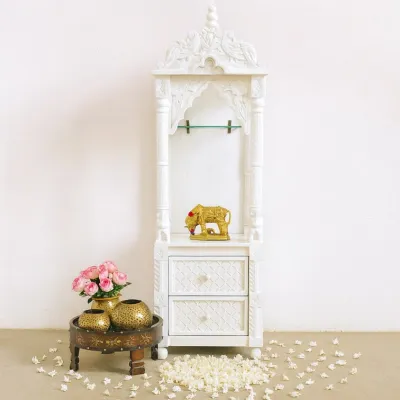
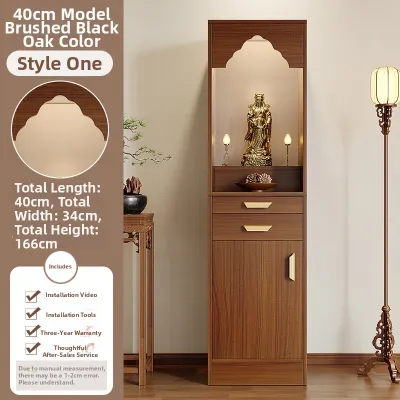
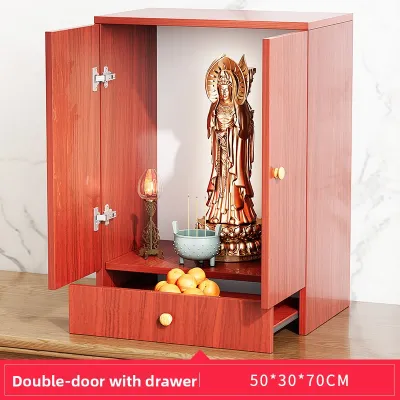
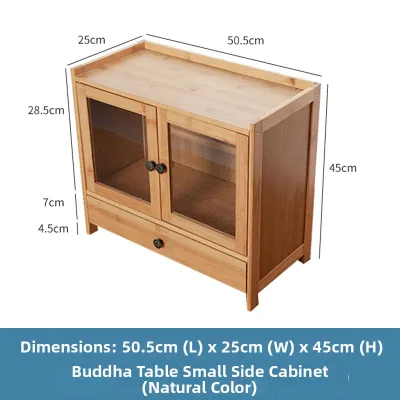
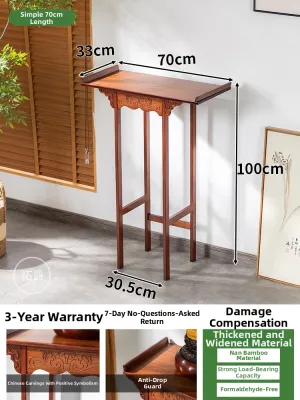
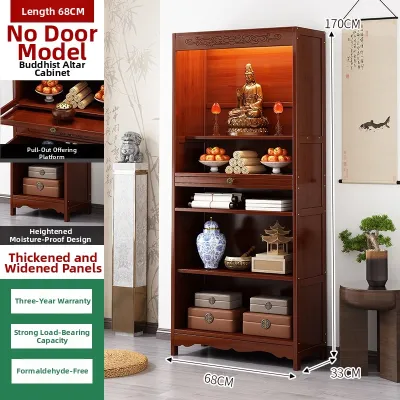
Prices are valid at publication and may change. Please refer to the product page for the latest price.
Engineered woods, such as Medium Density Fibreboard (MDF) or plywood finished with laminates, provide a highly economical and lightweight option. While engineered wood allows for perfectly smooth surfaces and modern paint finishes, it is highly susceptible to moisture damage. If water from daily offerings penetrates the protective outer veneer or laminate layer, the underlying fibers can swell, warp, and degrade over time.
Design aesthetics generally split into traditional ornate and modern minimalist styles. Traditional altars feature intricate, hand-carved motifs like dragons, phoenixes, or lotus flowers, usually finished in deep cherry, mahogany, or dark walnut stains. These designs are highly valued for their classic, majestic presence but can feel visually heavy in smaller rooms.
Conversely, modern minimalist altars are designed to blend seamlessly into contemporary interior styles like Japandi, Scandinavian, or modern industrial. These units feature clean geometric lines, light oak or white-washed wood tones, and space-saving elements like sliding glass panels or concealed storage drawers. They allow homeowners to maintain their spiritual practices without disrupting the design language of a modern apartment.
Finishing methods also dictate long-term maintenance. Polyurethane and lacquer finishes create a hard, non-porous barrier that protects the wood from water spills and makes it easy to wipe away soot and incense ash. However, these lacquers can yellow or crack if placed in direct sunlight near windows. Natural oil or wax finishes highlight the wood’s organic texture but require periodic reapplication and are highly vulnerable to permanent staining from spilled oils or hot ash.
Navigating Home Altar Brands by Budget Tiers
Understanding what each budget tier offers helps narrow down your options and sets realistic expectations regarding material quality, structural longevity, and customer service.

Entry-Level and Budget-Friendly Options
Entry-level altars, typically priced under S$250, are designed for budget-conscious homeowners or those with severe space limitations. These products are commonly constructed from engineered woods like MDF, particle board, or thin plywood veneers, often supported by basic metal brackets. They are usually compact, with widths ranging from 12 to 18 inches, making them ideal for small alcoves or narrow hallways.
These budget options are widely available through mass-market furniture retailers, neighborhood household goods shops, and general online marketplaces. They are almost always sold as flat-pack furniture, requiring self-assembly. While highly affordable, these units have a limited load-bearing capacity, often restricted to 5 to 10 kilograms. Overloading them with heavy brass incense burners, metal statues, and liquid offerings can cause the shelves to sag or pull away from the wall. The thin paper or melamine laminates used on these models also offer very low heat resistance, meaning a dropped incense stick can leave permanent burn marks or melt the surface.
Mid-Range and Specialized Brands
Mid-range altars, priced between S$300 and S$1,200, represent the sweet spot for most Singaporean households. These are typically sold by specialized religious furniture retailers and local manufacturers with dedicated showrooms in industrial estates like Defu Lane, Kaki Bukit, or Woodlands, as well as traditional shopping districts in Geylang and Balestier.
At this price point, materials upgrade to sustainable solid hardwoods like rubberwood, pine, or ash, combined with high-grade plywood backing for structural stability. Construction methods are significantly better, utilizing pocket screws, dowels, and reinforced corner blocks rather than simple plastic cam-locks. These altars often feature integrated LED lighting, pull-out offering trays, and soft-close storage drawers.
When purchasing a mid-range altar with built-in electronics, electrical safety is paramount. The integrated lighting system must operate safely on Singapore’s standard 230V, 50Hz AC power grid. Homeowners should verify that the LED driver (the transformer that steps down the voltage) carries a valid Safety Mark certified by Enterprise Singapore. Uncertified transformers can overheat within enclosed wooden cabinets, creating a serious fire hazard. Reliable mid-range brands design their cabinets with built-in ventilation channels or aluminum heat sinks to ensure safe heat dissipation.
Premium and Custom-Crafted Altars
Premium and bespoke altars start at S$1,500 and can exceed S$5,000. These high-end units are crafted from premium solid teak, mahogany, or rosewood, sourced from managed plantations. They are designed and built by bespoke carpentry firms, heritage religious goods makers, and luxury solid-wood furniture boutiques.
These brands offer a fully customized design process. Designers will visit your home to take precise measurements of your designated space. Many homeowners require the dimensions to align perfectly with the auspicious red numbers on a Feng Shui Imperial Ruler (Lu Ban Chi), ensuring the height, width, and depth correspond to positive attributes like prosperity, harmony, or health.
Traditional joinery techniques, such as mortise-and-tenon joints, are used instead of metal screws or nails. This allows the heavy timber to expand and contract naturally with seasonal humidity changes without splitting or cracking. Premium brands provide comprehensive white-glove delivery, precise leveling on uneven flooring, secure wall anchoring, and multi-year structural warranties.
How to Evaluate a Home Altar Brand's Reliability
Investing in a home altar is a long-term commitment. Evaluating a brand’s reliability before making a purchase ensures you receive a high-quality product and dependable after-sales support.
- Showroom Presence: Purchasing a sacred item solely based on online photos carries risks. A physical showroom in Singapore allows you to inspect the timber quality firsthand. You can check for rough, unsanded edges, test the smoothness of drawer slides, verify the stability of pull-out offering trays, and ensure there are no strong, toxic chemical odors from cheap lacquers.
- Clear Warranty Terms: Reliable brands stand behind their craftsmanship. Ask for written warranties covering structural integrity, wood warping, splitting, and joint separation. Because wood is a natural material that reacts to indoor air conditioning and humidity, structural defects can manifest within the first six months. Look for warranties of at least 1 to 5 years on solid wood structures, and separate warranties for any integrated LED components.
- Professional Delivery and Assembly: Solid wood altars are exceptionally heavy and difficult to handle. Ensure the brand uses its own trained, in-house delivery team rather than general third-party couriers. In-house teams are experienced in handling delicate religious furniture, navigating tight condominium corridors, and leveling the unit precisely so that liquid offerings do not spill.
- Verified Customer Reviews: Look for independent reviews on local business directories and map platforms. Pay close attention to feedback regarding delivery punctuality, the professionalism of the installation crew, and how responsively the brand handles post-delivery issues like minor scratches or misaligned cabinet doors.
Space Planning and Safety for HDBs and Condos
Integrating a temple for home into a modern Singaporean apartment requires careful spatial planning and strict adherence to safety guidelines.
- Spatial Dimensions: Measure your designated alcove or wall space carefully. Ensure there is at least 10 to 15 centimeters of clearance around the altar to allow for adequate air circulation, which prevents smoke and heat from building up. Double-check that cabinet doors and pull-out trays can extend fully without blocking walkways or hitting nearby furniture.
- Electrical Safety: If your altar features integrated lighting, ensure the entire system is compliant with Singapore's electrical standards. Never overload the altar's electrical outlet by daisy-chaining multiple extension cords or plugging in high-wattage appliances alongside the lights. If the installation requires fixed wiring or modifications to your home's electrical circuit, always hire a Licensed Electrical Worker (LEW) registered with the Energy Market Authority (EMA). Always isolate the power at the main distribution board before performing any maintenance or cleaning near electrical components.
- Weight Distribution and Wall Mounting: Floating altar shelves are popular space-savers but demand secure anchoring. HDB walls are typically made of precast concrete (structural walls) or lightweight drywall/partition walls. Heavy solid-wood shelves must be mounted onto concrete walls using heavy-duty metal expansion bolts (dynabolts). Mounting on drywall requires locating the internal metal or wooden studs and using specialized toggle bolts; never rely on standard plastic wall plugs, as the weight of the altar and heavy brass burners can cause the plasterboard to fail. Always consult a qualified professional handyman or structural contractor to assess load limits before mounting.
- Fire Prevention: Fire safety is critical when using open flames. Maintain a vertical clearance of at least 50 to 60 centimeters between any candle or oil lamp and the wooden shelf above. Place a fire-retardant mat, such as a tempered glass panel or a specialized silicone sheet, on the offering tray to catch hot falling ash. Never leave burning incense, candles, or oil lamps unattended; switch to flame-free electronic alternatives when leaving the house. Additionally, ensure your home is equipped with a working Home Fire Alarm Device (HFAD), keeping it at a safe distance from the altar to prevent false alarms from normal incense smoke.
Frequently Asked Questions (FAQ)
Can I install a temple for home in an HDB household shelter?
HDB household shelters, commonly known as bomb shelters, are designed with reinforced concrete walls and airtight steel doors to provide a safe refuge during emergencies. Under HDB regulations, you must not compromise the structural integrity of the shelter, which means drilling into the walls, ceiling, or steel door to mount shelves or altars is strictly prohibited. Furthermore, storing highly combustible materials or conducting burning activities—such as lighting incense, candles, or oil lamps—inside the household shelter is extremely dangerous due to the complete lack of ventilation and the high risk of smoke inhalation. For safety and compliance, always place your home altar in a well-ventilated, designated area of your living or dining room.
Do home altar brands offer disposal services for old altars?
Many specialized home altar brands and religious goods retailers in Singapore offer disposal or trade-in services for a fee, which typically ranges from S$80 to S$200 depending on the size and weight of the old unit. This service usually includes the respectful dismantling and removal of the old altar. It is highly recommended to ask the retailer about their disposal policies, fees, and scheduling coordination before finalizing your new purchase. If the retailer does not provide this service, HDB residents can contact their local Town Council to arrange for bulky item removal, though you should clarify if there are specific cultural handling protocols you wish to follow. Private condominium residents will need to coordinate disposal through their building’s management office or hire a private waste contractor.
Community discussion
Share your experience or ask a question. Comments are reviewed before publication.