
Finding the right dining ceiling light for a standard 2.6-meter HDB ceiling requires balancing visual proportion, headroom clearance, and functional illumination. Because a 2.6-meter ceiling height leaves little room for long, dangling fixtures, the most suitable lighting brands are those that offer dedicated semi-flush mounts, ultra-slim profile flush mounts, or highly adjustable pendant lights. Homeowners should focus on brands that provide comprehensive physical dimensions, local safety certifications, and modular drop lengths that can be customized to hang no lower than 60 to 75 centimeters above the dining table surface. By prioritizing brands with transparent technical specifications and robust local support, you can secure a fixture that illuminates your dining space beautifully without creating a cramped or hazardous environment.
Understanding the 2.6m Ceiling Constraint in HDB Dining Rooms
Standard HDB flats typically feature a floor-to-ceiling height of approximately 2.6 meters. However, this raw measurement is quickly reduced once you account for floor finishes like screed, vinyl, or tiles, which can shave off a few centimeters. If you choose to install a false ceiling to conceal wiring or add cove lighting, the clearance drops even further, often leaving you with a functional height of 2.4 to 2.5 meters.
A standard dining table stands between 75 and 78 centimeters tall. If you install a traditional pendant light that drops 1 meter or more from a 2.6-meter ceiling, the bottom of the fixture will hang less than 85 centimeters above the tabletop. This tight spacing significantly increases the risk of accidental head bumps when leaning across the table or standing up.
Products mentioned in this guide
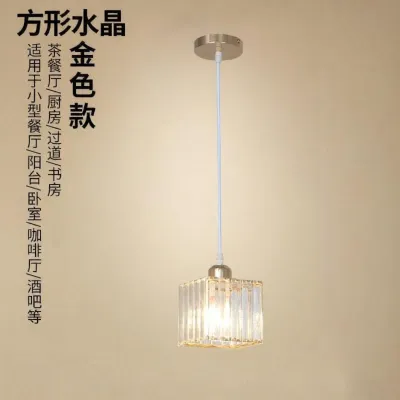
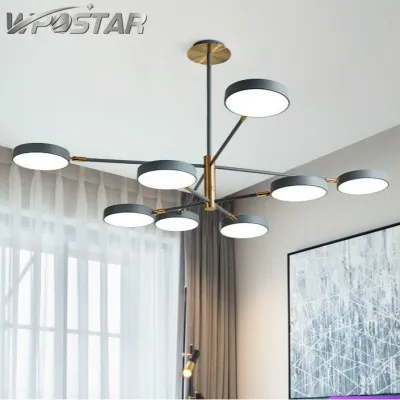
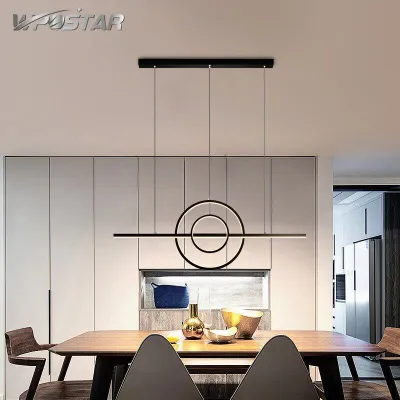
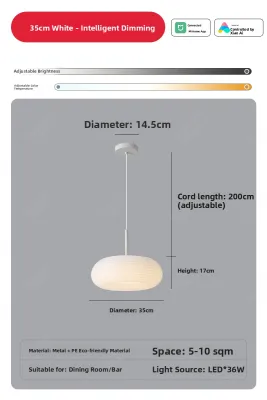
Prices are valid at publication and may change. Please refer to the product page for the latest price.
Beyond physical safety, excessive drop lengths cause severe visual compression. A large, low-hanging light fixture in a compact HDB dining zone dominates the vertical plane, making the entire room feel smaller and more enclosed. It disrupts the sightlines across the room, blocking views of family members seated opposite you and casting a heavy shadow over the dining area.
To maintain comfortable traffic flow and natural seating dynamics, the bottom of your dining ceiling light should ideally sit between 75 and 90 centimeters above the dining table surface. This height keeps the light source above the average seated eye level, preventing direct glare while ensuring that anyone standing up or moving around the table has ample clearance. In high-traffic multi-use dining spaces, keeping the fixture even higher—using a semi-flush mount—is often the most practical choice.
Core Dimensions for Choosing Low-Clearance Dining Lights
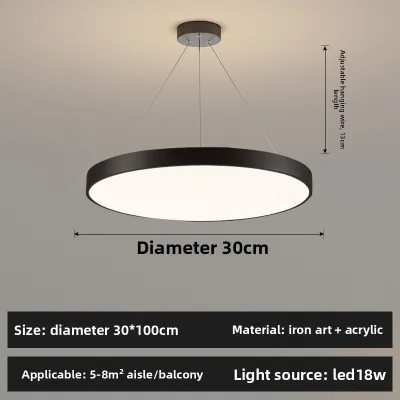
When shopping for a dining ceiling light, the first specification to verify is the total installation depth. For pendant lights, look for fixtures with adjustable cords or rods that allow a minimum drop length of 30 centimeters or less. For flush and semi-flush mounts, aim for a total depth of 15 to 25 centimeters. This ensures the fixture remains well above the head-strike zone while still providing a distinct design statement.

The scale of the light must match the scale of your dining table to prevent spatial crowding. A reliable rule of thumb is to choose a fixture with a diameter that is approximately one-half to two-thirds the width of your dining table. For example, if your dining table is 90 centimeters wide, your light fixture’s diameter should ideally range between 45 and 60 centimeters. Anything larger will overwhelm the table and make the dining alcove feel disproportionately cramped.
Because low-ceiling fixtures sit closer to the eye level of seated diners, glare control is critical. Avoid fixtures with exposed, bare bulbs that shine directly into your eyes. Instead, look for designs featuring frosted glass diffusers, fabric shades, or recessed LED light sources. Downward-focused light is excellent for task lighting, but it should be balanced with some upward or lateral light distribution to soften shadows and make the ceiling feel higher.
Traditional incandescent or high-wattage halogen bulbs generate significant heat, which can pool near a low ceiling and make the dining area uncomfortably warm. Integrated LED designs are highly beneficial for 2.6-meter ceilings because they generate minimal heat and allow for incredibly slim profiles. Because the light-emitting diodes are built directly into the fixture, manufacturers can eliminate bulky bulb sockets, resulting in sleek, low-profile designs that maximize overhead space.
Identifying Reliable Brands for Low-Clearance Dining Lights
When evaluating lighting brands, prioritize those that categorize their products by mounting type and offer dedicated semi-flush or low-ceiling collections. Reliable brands will clearly state the minimum and maximum drop lengths for their pendant lights, showing that they have engineered their products with adjustable suspension systems. Avoid brands that only offer fixed-rod pendants, as these cannot be easily modified for a 2.6-meter ceiling.
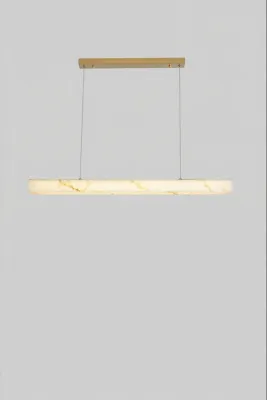
Look for brands that design specifically for high-density, urban living environments. These brands understand the spatial constraints of modern apartments and focus on minimalist, Scandinavian, or modern industrial aesthetics that emphasize clean lines and compact footprints. Their catalogs often feature multi-functional fixtures, such as linear pendant lights with ultra-thin profiles that distribute light evenly across a rectangular dining table without taking up vertical volume.
In Singapore, electrical safety is paramount. Ensure the brand you choose complies with local safety standards and carries the appropriate safety certifications, such as the Enterprise Singapore Safety Mark for power adapters and integrated drivers. Purchasing from brands with a physical presence or authorized local distributors ensures you have access to reliable after-sales support, warranty claims, and genuine replacement parts if a driver or LED module eventually fails.
Compare the level of technical detail provided by the brand. A reputable brand will provide detailed technical drawings, clear lumen output ratings, color rendering index values, and dimming compatibility charts. Be cautious of online-only brands on generic ecommerce platforms that offer vague descriptions or lack clear dimensional diagrams. Visiting a local physical showroom allows you to observe the actual light quality, build materials, and mounting mechanisms firsthand before making a decision.
Installation and Safety Checks for HDB Ceilings
Before purchasing a heavy glass, concrete, or metal dining ceiling light, you must verify the load-bearing capacity of your HDB ceiling. Standard concrete ceilings can support substantial weight, but they require the correct masonry expansion bolts or anchoring hooks. If you are mounting the fixture onto a false ceiling, the weight must be supported by the underlying metal framework or dedicated wooden support structures, rather than the plasterboard alone.
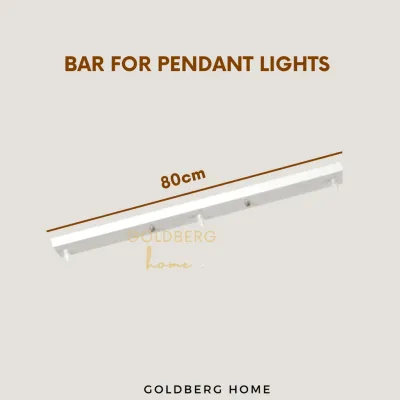
HDB flats often come with pre-installed electrical junction boxes that may not align perfectly with your planned dining table placement. Relocating a ceiling light point on a concrete ceiling typically requires surface-mounted casing or hacking the ceiling, which is subject to HDB renovation guidelines. Alternatively, you can look for brands that offer fixtures with offset mounting plates or adjustable canopy systems that allow the light to hang centered over the table even if the junction box is slightly off-center.
Working with electrical wiring carries inherent risks. For any fixed-wiring installation, false ceiling modifications, or work involving heavy fixtures at height, you must isolate the electrical supply at the main distribution board before starting. It is highly recommended to engage a licensed electrical worker or a qualified professional installer to ensure the wiring is safely connected, properly grounded, and compliant with local electrical codes.
Always cross-check the product labels on your chosen fixture against Singapore’s standard residential voltage of 230V at 50Hz. Additionally, verify the maximum wattage limit of the fixture’s sockets if you plan to use replaceable bulbs. Overloading a fixture with bulbs that exceed the rated wattage can lead to overheating, melting components, or electrical short circuits.
Frequently Asked Questions (FAQ)
Can I install a chandelier in a 2.6m HDB dining room?
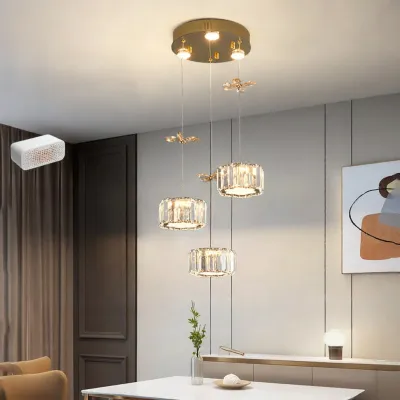
Yes, but you must avoid traditional, multi-tier crystal chandeliers that require significant vertical drop. Instead, look for modern flush-mount or semi-flush chandeliers, or linear branch-style chandeliers that spread horizontally rather than vertically. Ensure the total height of the fixture does not exceed 40 centimeters, leaving at least 2.2 meters of clear space from the floor to the bottom of the fixture in high-traffic areas, or a minimum of 75 centimeters above the dining table if positioned strictly over the seating zone.
How do I clean ceiling lights in a low-clearance dining area?
Before cleaning, always turn off the light switch and allow the bulbs or LED modules to cool completely to avoid thermal shock or burns. Use a sturdy, slip-resistant step ladder that allows you to reach the fixture comfortably without stretching. For low-hanging shades that accumulate dust easily, use a dry microfiber cloth or an anti-static duster. Avoid spraying liquid cleaners directly onto the fixture; instead, lightly dampen a cloth with water or a mild, manufacturer-approved cleaning solution to wipe down glass or metal surfaces, keeping moisture away from electrical connections.
Are smart ceiling lights suitable for low HDB ceilings?
Smart ceiling lights are highly suitable for low HDB dining rooms, provided you check the physical dimensions of the smart driver or wireless module. Some smart fixtures have slightly thicker bases to accommodate the receiver, so verify that the total depth remains within your headroom limits. Smart lights are excellent for dining spaces because they allow you to adjust the color temperature from warm white to cool daylight and dim the brightness to reduce glare at lower hanging heights. Ensure your home Wi-Fi or Zigbee network reaches the dining area reliably to maintain stable connectivity.
Community discussion
Share your experience or ask a question. Comments are reviewed before publication.