
Selecting the right entrance ceiling light for a standard 2.6-metre Housing & Development Board (HDB) flat requires balancing welcoming aesthetics with physical clearance. In these compact transition zones, bulky or low-hanging fixtures can easily interfere with daily movement, door swings, or tall household members. The most effective styles for this specific height constraint are ultra-thin LED panels, flush-mount fixtures, and highly compact semi-flush mounts that keep the total fixture drop to a minimum. By focusing on low-profile designs, you can ensure a bright, welcoming entry foyer that feels spacious and remains entirely safe to walk under.
Assessing Head Clearance and Spatial Constraints
To choose a safe entrance ceiling light, you must first calculate the available vertical space and establish a clear safety threshold. In residential walkways, a standard rule of thumb is to maintain a minimum head clearance of 2.1 to 2.3 metres from the finished floor to the lowest point of the light fixture. With a starting ceiling height of 2.6 metres, this leaves you with a maximum allowable fixture drop of 30 to 50 centimetres. Any light extending beyond this range risks becoming a physical hazard or creating an uncomfortable sense of visual crowding.
When calculating these dimensions, do not rely solely on the original structural blueprint of your HDB flat. You must measure the actual distance from the finished floor to the concrete ceiling slab. If you have recently installed thick floor tiles, vinyl overlays, or plan to place a high-profile entrance mat right at the doorway, these additions can reduce your vertical clearance by several centimetres.
Products mentioned in this guide
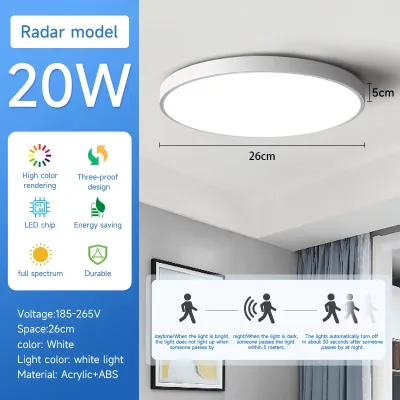
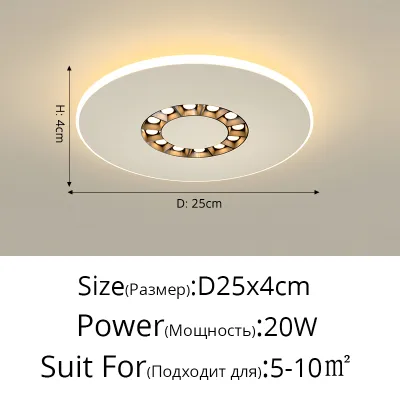
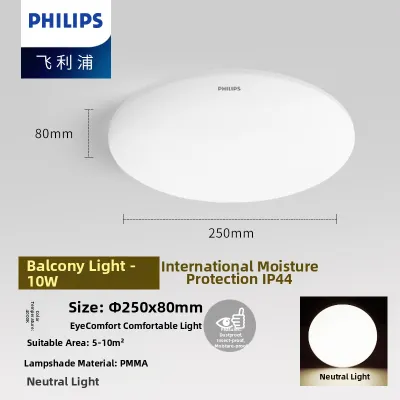
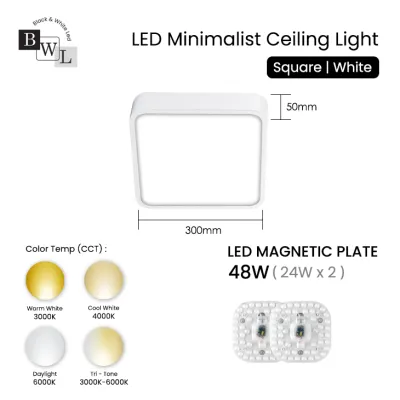
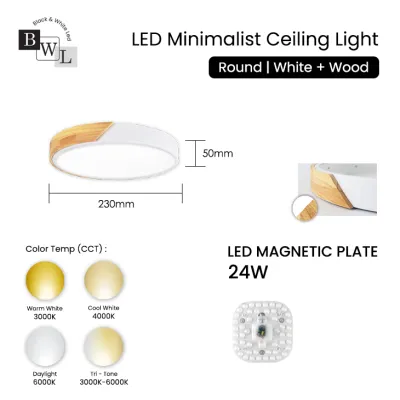
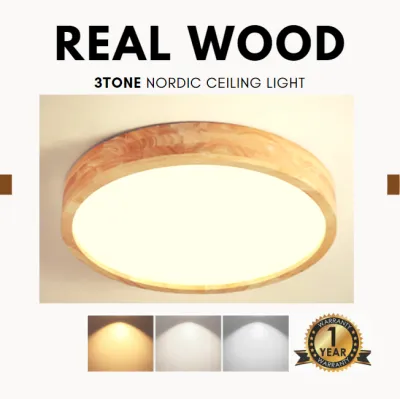
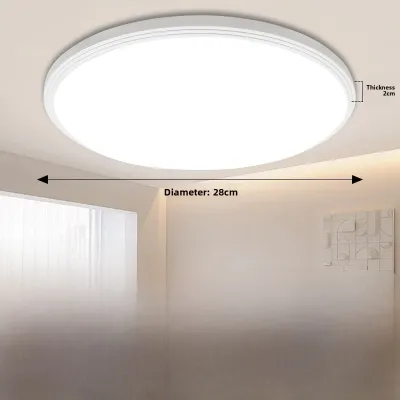
Prices are valid at publication and may change. Please refer to the product page for the latest price.
Beyond vertical clearance, evaluate the immediate spatial surroundings of your entrance foyer. Open your main door and any secondary security gate fully to trace their swing paths; a ceiling light mounted too close to the doorway can easily block or be struck by an inward-opening door. Additionally, take note of any built-in, full-height shoe cabinets. If these cabinets have doors that swing outward near the ceiling, your light fixture must be positioned far enough away or be slim enough to avoid blocking their movement.
Evaluating Ceiling Light Profiles for Low Clearances
When shopping for an entrance ceiling light, the profile of the fixture determines how much physical and visual space it occupies. Flush-mount lights are an exceptional choice for 2.6-metre ceilings because they mount directly against the ceiling surface with zero drop. This design maximizes head clearance and keeps the foyer looking clean. However, when selecting a flush-mount fixture, check the manufacturer’s specifications regarding heat dissipation, especially if the unit uses traditional bulbs inside an enclosed shade. Ensure there is adequate ventilation built into the fixture’s base, and verify how easily you can access the cover when a bulb needs replacement.

Semi-flush mount lights offer a compromise if you want to introduce more decorative depth to your entrance without the hazard of a full pendant. These fixtures hang from a short stem, leaving a small gap of a few centimetres between the ceiling and the light body. This gap allows some light to bounce off the ceiling, creating a soft, ambient glow that can make a small foyer feel taller. Before choosing a semi-flush design, verify that its total drop height stays well within your calculated safety threshold. If the fixture drops more than 30 centimetres, it is safer to opt for a flatter profile.
Slim LED panels represent the modern standard for low-clearance HDB entrances, offering ultra-thin profiles that often measure less than three centimetres in thickness. These panels distribute light uniformly across their entire surface, minimizing harsh glare and eliminating dark corners. Because many slim panels feature integrated LEDs rather than replaceable bulbs, check the rated lifespan of the light source and understand the replacement process. If an integrated LED panel fails, you typically have to replace the entire unit or access the external LED driver, which is often housed within the ceiling cavity.
Sizing and Positioning the Entrance Ceiling Light
Finding the right fixture size is just as important as choosing the correct profile. An oversized light can overwhelm a small HDB foyer, while an undersized one will fail to provide sufficient illumination. To find a proportional fixture diameter, measure the width and length of your entrance area. A helpful guideline is to add the width and length of the space in metres, then multiply that sum by ten to get a starting point for the fixture’s diameter in centimetres. For example, a small foyer measuring 1.2 metres by 1.5 metres would suit a fixture with a diameter of approximately 27 centimetres.
Placement of the light should prioritize functional visibility where you need it most. Centring the fixture in the middle of the foyer ceiling is the traditional approach, but an offset placement can sometimes be more practical. If your main door lock or shoe-changing bench is located to one side, positioning the light slightly closer to these functional zones prevents your body from casting a shadow over the lockset when you stand at the door.
To create a welcoming atmosphere, pay close attention to the beam angle and color temperature. A wide beam angle of 120 degrees or more is ideal for dispersing light evenly across the entire entrance. For color temperature, a warm white (3000K) or cool white (4000K) light is highly recommended. This range provides a comfortable, inviting transition from the bright corridor lighting of your HDB block into the cozy, private ambiance of your living room.
Electrical Compatibility and Installation Boundaries
Before purchasing your new entrance ceiling light, verify that it is fully compatible with your HDB flat’s existing electrical infrastructure. Check the weight limit and mounting hole pattern of the existing ceiling junction box. Standard HDB concrete ceilings feature embedded junction boxes designed to support typical lightweight fixtures. If you plan to install a heavier semi-flush mount, ensure the mounting bracket aligns with the existing screw holes in the junction box to avoid drilling new holes into the concrete slab.
Electrical safety is paramount when installing any lighting fixture. In Singapore, ensure that the light fixture and its driver are compatible with the local 220V-240V electrical supply. Look for recognized safety certifications, such as the local SAFETY Mark on the LED driver or fixture, which indicates the product has been tested and approved for safe domestic use. Avoid purchasing uncertified electrical products from unregulated online marketplaces, as they may lack proper insulation or short-circuit protection.
Finally, establish a clear boundary between simple DIY tasks and those requiring professional assistance. Always isolate the power at the main distribution board (DB box) before touching any wires, and use a reliable voltage tester to confirm the circuit is dead. If your project involves running new electrical conduits, modifying the fixed wiring, or routing a new light switch, you must hire a licensed electrical worker (LEW) or a qualified professional electrician.
Frequently Asked Questions (FAQ)
Can I use a pendant light in an HDB entrance with a 2.6m ceiling?
Using a standard pendant light in a 2.6-metre HDB entrance walkway is highly discouraged due to the severe risk of head injuries and spatial obstruction. Because a pendant light requires a suspension cord or chain, it typically drops too low, violating the minimum 2.1-metre head clearance threshold required for safe passage. If you want the aesthetic of a hanging light, limit its use to non-walkway zones, such as directly over a side console table or a built-in shoe cabinet where people cannot walk. Even in these areas, choose a mini-pendant with an adjustable cord so you can set the height precisely to avoid blocking cabinet doors.
How do I clean a flush-mount ceiling light without removing it?
To clean a flush-mount ceiling light safely, always start by turning off the power at the main wall switch and letting the fixture cool down completely to avoid burns or electrical hazards. For routine maintenance, use an extendable microfiber duster or a dry, lint-free cloth to gently wipe away dust and cobwebs from the exterior diffuser and the edges where the fixture meets the ceiling. If the cover has accumulated stubborn dirt or insects inside, refer to the manufacturer’s instructions to carefully unlatch or unscrew the diffuser. Wipe the removed cover with a slightly damp cloth, dry it thoroughly with a clean towel, and ensure no moisture remains before reattaching it.

Community discussion
Share your experience or ask a question. Comments are reviewed before publication.