
To ensure an outdoor floodlight led fixture survives Singapore’s intense tropical climate, the minimum rating you should look for is IP65 for semi-exposed areas and IP66 for fully exposed locations. Singapore’s weather is characterized by high humidity, intense heat, and sudden, heavy monsoon downpours. Wind-driven rain during monsoon seasons can strike outdoor walls and fixtures at high velocity and sharp angles, meaning basic splash protection is insufficient. Selecting the correct Ingress Protection (IP) rating is the single most important step to prevent premature failure, electrical short circuits, and safety hazards.
While water resistance is critical, an outdoor light must also withstand high ambient temperatures and persistent humidity. Understanding how to match the IP rating to your specific installation zone will save you from frequent replacements and costly electrical repairs.
Decoding IP Ratings for Outdoor Floodlight LED Fixtures
The Ingress Protection (IP) rating system is an international standard that classifies the degree of protection a fixture offers against solid objects and liquids. It is defined by two digits that follow the “IP” prefix. Relying on vague marketing terms like “waterproof” or “weather-resistant” can lead to purchasing errors, as these terms lack standardized technical definitions.
Products mentioned in this guide
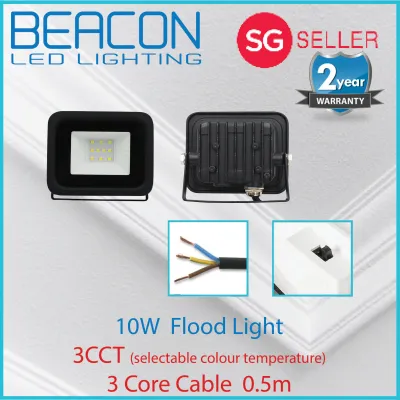
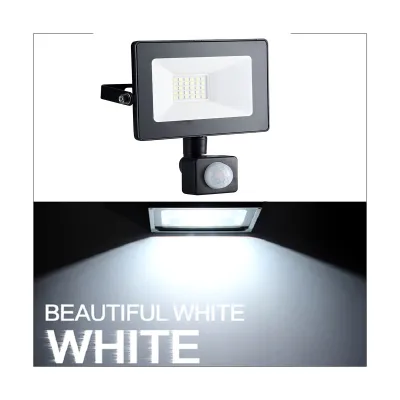
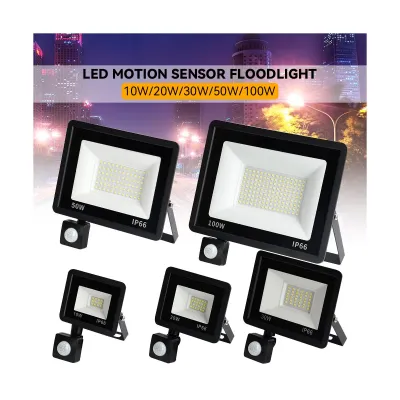
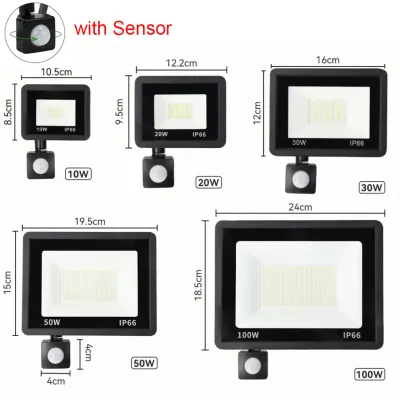
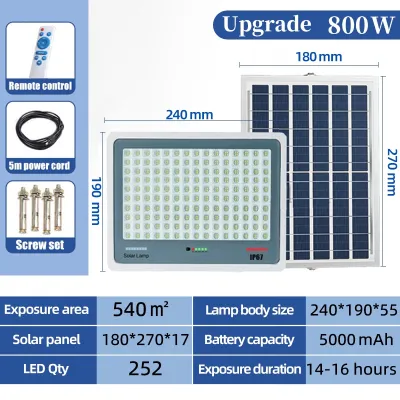
![[SG SELLER] 10W/20W/30W/50W/100W/150W Bright Light Led Rechargeable Flood Spotlight Emergency Waterproof Security Lights](https://img.lazcdn.com/g/p/53cd67203a45f9937f483759df2d4754.jpg_400x400q80.jpg_.webp)
Prices are valid at publication and may change. Please refer to the product page for the latest price.
The first digit in the IP code ranges from 0 to 6 and indicates protection against solid foreign objects, such as dust, dirt, and accidental contact. For any outdoor lighting application, a first digit of 6 is the industry standard. A rating of 6 means the fixture is completely dust-tight, preventing microscopic particles from entering the casing and settling on the internal electronics or LED chips.
The second digit ranges from 0 to 9 and measures protection against liquid ingress. For outdoor residential and commercial lighting, the most relevant liquid protection levels include:
- IP_4 (Splashing water): Protected against water splashing from any angle. This is suitable only for highly sheltered, covered areas.
- IP_5 (Water jets): Protected against low-pressure water jets projected by a nozzle from any direction.
- IP_6 (Powerful water jets): Protected against high-pressure, heavy water jets from any direction. This is the baseline standard for fully exposed outdoor installations.
- IP_7 (Temporary immersion): Protected against the effects of temporary immersion in water up to 1 meter deep for 30 minutes.
- IP_8 (Continuous immersion): Protected against complete, continuous submersion under pressure.
Matching IP Ratings to Your Installation Zone and the Monsoon
Singapore experiences two major monsoon seasons—the Northeast Monsoon and the Southwest Monsoon—which bring frequent, heavy, and often wind-driven downpours. The physical location of your floodlight led determines the level of water exposure it will face during these storms.

Fully Exposed Areas
For fixtures mounted on open garden posts, driveways, perimeter fences, or uncovered exterior walls, an IP66 rating is the recommended minimum. During severe storms, rain does not simply fall vertically; strong wind gusts drive water horizontally and upward at high velocity. An IP66-rated fixture is engineered to withstand these powerful jets of water, ensuring that moisture cannot force its way past the seals and compromise the internal circuitry.
Semi-Exposed or Sheltered Areas
For floodlights installed under roof eaves, covered patios, balconies, or deep porch awnings, an IP65 rating is generally sufficient. These structural features shield the fixture from direct, high-pressure rain, limiting its exposure to indirect splashing, ambient moisture, and occasional light spray. While some may consider IP44 fixtures for these zones, IP65 offers a much higher margin of safety against wind-driven mist and the high humidity levels typical of the local climate.
Ground-Level or Recessed Fixtures
If you are planning to install ground-level floodlights, uplights, or well lights recessed into pathways or garden soil, water accumulation becomes a primary concern. Singapore’s intense downpours can cause temporary localized pooling or flash flooding before drainage systems catch up. In these scenarios, fixtures must carry an IP67 or IP68 rating. These ratings ensure the light remains fully operational and safe even if it is temporarily submerged in standing water.
Beyond Water: Managing Heat, Humidity, and Corrosion
While preventing liquid water ingress is vital, Singapore’s tropical environment presents other severe challenges that can degrade outdoor lighting. Heat, humidity, and salt air can compromise a fixture’s integrity long before water does.
Heat Dissipation
LED floodlights generate significant internal heat at the semiconductor junction. When combined with Singapore’s high ambient temperatures, which frequently hover around 30°C to 34°C, this heat must be dissipated efficiently to prevent thermal degradation of the LED chips and driver. When choosing a fixture, prioritize housing materials made of die-cast aluminum with integrated cooling fins rather than basic plastics. Always verify the manufacturer’s specified operating temperature range on the product specification sheet.
Humidity and Internal Condensation
High relative humidity can cause moisture to penetrate microscopic gaps in the fixture’s housing. When the light is switched on, the air inside heats up and expands; when turned off, it cools rapidly, drawing humid external air through the seals. This process can lead to internal condensation, fogging the lens and risking electrical short circuits. Premium floodlights address this by using high-quality silicone or EPDM gaskets and pressure-equalizing vents that allow air pressure to balance without letting liquid water inside.
Corrosion Resistance
For homes located near coastal areas or in high-pollution urban zones, salt spray and atmospheric moisture accelerate the corrosion of metal components. Look for fixtures with durable powder-coated finishes, anodized aluminum housings, or marine-grade stainless steel hardware. Corroded screws and brackets can weaken over time, eventually compromising the tight seal of the waterproof gaskets.
Verifying Claims and Ensuring Electrical Safety
Before making a purchase, it is essential to verify the manufacturer’s technical specifications and ensure that the installation adheres to strict safety standards.
Verify Technical Specifications
Do not rely solely on product titles or promotional banners on online marketplaces. Always check the physical product label, packaging, or the official manufacturer specification sheet for the certified IP rating. Additionally, verify critical compatibility factors, including:
- Voltage and Electrical Certification: Ensure the fixture is compatible with Singapore's standard 230V AC supply and carries recognized safety certifications.
- Wattage Limit and Dimensions: Confirm the physical size and power consumption fit your installation space and electrical capacity.
- Dimming Method: If you plan to dim the floodlight, verify that the driver is compatible with your specific dimmer switch.
- Aesthetic Preferences: Treat decorative style, perceived color temperature (such as warm white versus daylight), and spatial lighting effects as conditional personal preferences rather than universal performance facts.
Inspect the Seals
Upon receiving your fixture, conduct a physical inspection before installation. Check that the rubber or silicone gaskets are intact, properly seated, and free of cracks or gaps. Ensure that the glass or polycarbonate lens is securely sealed to the housing.
Electrical Safety and Installation Boundaries
An IP-rated floodlight is only as safe as its electrical connection. The cable entry point and wire connections are the most common points of failure and water ingress.
- Always isolate the power supply at the main circuit breaker before attempting any installation, maintenance, or replacement work.
- Use proper weatherproof junction boxes (rated IP66 or higher) and outdoor-grade conduits to protect all wiring connections.
- Ensure the circuit is protected by a Residual Current Circuit Breaker (RCCB) or Earth Leakage Circuit Breaker (ELCB) to prevent shock hazards in wet conditions.
- Professional Installation: Because outdoor lighting involves fixed wiring, damp environments, and often work at heights, you must hire a licensed electrician to perform the installation. This ensures compliance with local electrical safety standards (such as SS 638) and prevents severe hazards.
Frequently Asked Questions (FAQ)
Can I use an IP44 light under a covered patio?
While an IP44-rated light is protected against splashing water, it is not designed to withstand heavy, wind-blown rain. In Singapore’s tropical climate, severe storms can drive rain horizontally, easily bypassing shallow patio covers. While an IP44 light might survive deep under a wide, fully enclosed porch, upgrading to an IP65 fixture is highly recommended to ensure long-term durability and safety against ambient moisture and wind-driven spray.
Does a higher IP rating guarantee a longer lifespan?
No. A higher IP rating only guarantees superior protection against dust and water ingress. It does not account for other critical factors such as thermal management, UV degradation of plastic lenses, or the quality of the internal LED driver. A well-constructed IP65 floodlight with a robust aluminum heatsink and high-quality electronic components will often outlast a poorly designed IP67 light that lacks proper heat dissipation or UV protection.
Community discussion
Share your experience or ask a question. Comments are reviewed before publication.