
An HDB kitchen with a 2.6-metre ceiling height requires a deliberate approach to lighting design. Because Singapore’s standard public housing units feature concrete ceilings with relatively low clearance, selecting an inappropriate fixture can quickly make the space feel cramped, dark, or physically hazardous. The ideal kitchen light ceiling solution for a 2.6m HDB kitchen is a low-profile flush mount or a highly compact semi-flush mount fixture with a profile depth of no more than 10 to 15 centimetres, and a diameter ranging from 30 to 60 centimetres depending on your kitchen’s specific layout. By selecting a fixture within these parameters, you ensure ample clearance for high-traffic pathways and cabinet doors while achieving optimal, shadow-free illumination across your countertops.
Understanding the Spatial Constraints of a 2.6m HDB Kitchen
A height of 2.6 metres is the standard vertical clearance for most modern Housing & Development Board (HDB) flats in Singapore. While this height is perfectly functional, it imposes strict physical boundaries when introducing overhead fixtures, especially in a task-heavy zone like the kitchen. In these compact culinary spaces, every centimetre of clearance counts toward maintaining a safe, comfortable, and visually open environment.
Visual weight plays a critical role in how we perceive spatial volume. A bulky or overly elaborate ceiling light acts as a visual anchor, drawing the eye upward and making the ceiling feel significantly lower. In contrast, a streamlined, low-profile fixture blends into the ceiling plane, preserving the illusion of vertical space and keeping the kitchen feeling airy.
Products mentioned in this guide
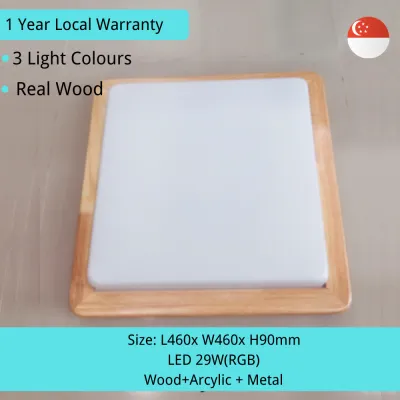
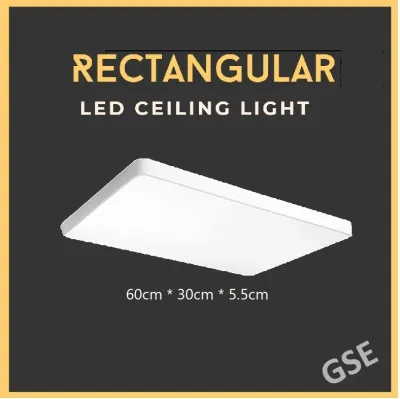
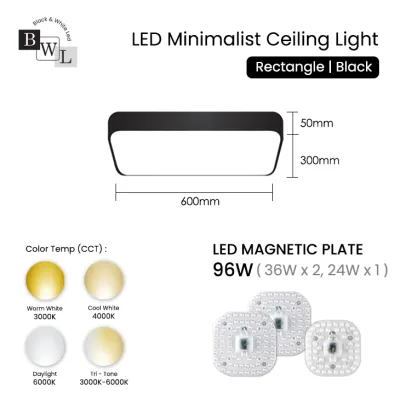
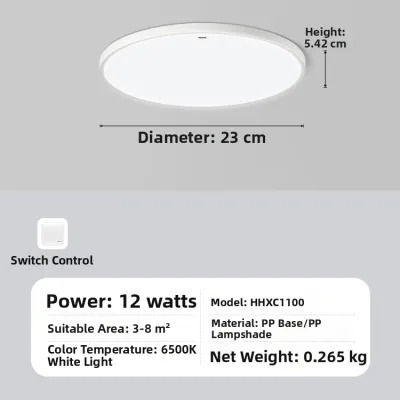
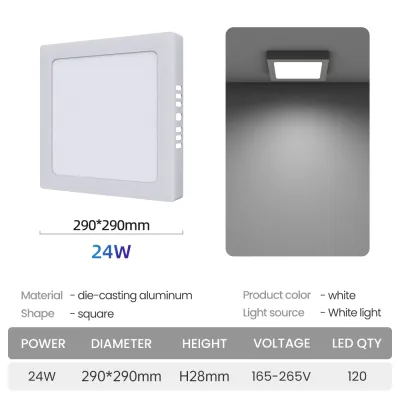
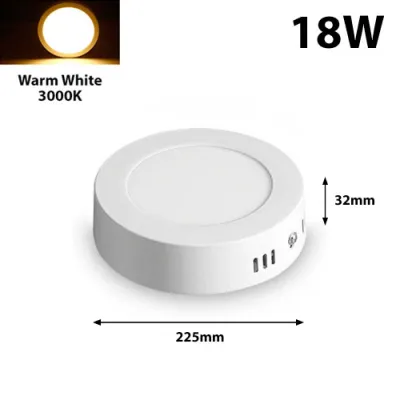
Prices are valid at publication and may change. Please refer to the product page for the latest price.
Beyond aesthetics, practical clearance is a safety necessity. Modern HDB kitchens are packed with wall-mounted storage cabinets, top-hung glass doors, range hoods, and overhead dish racks. If a ceiling light protrudes too far downward, it can physically obstruct cabinet doors from opening fully, or get struck during daily use. Furthermore, tall individuals navigating the kitchen need to move freely without the subconscious instinct to duck under a low-hanging light.
The primary objective when selecting a kitchen light ceiling fixture for a 2.6m height is to achieve a harmonious balance. You must secure a light source that delivers high-performance, even illumination across all prep zones while maintaining a physical footprint that remains entirely out of the way of daily operations.
Flush Mount vs. Semi-Flush Mount: Choosing the Right Kitchen Light Ceiling Profile
When shopping for a kitchen light ceiling fixture, homeowners generally choose between two primary low-ceiling profiles: flush mount and semi-flush mount. Understanding the structural differences and light distribution patterns of these two styles is essential for matching them to your kitchen’s specific architectural layout and daily workflow.

Flush Mount Lights for Maximum Headroom
Flush mount ceiling lights are designed to sit completely flat against the ceiling surface, leaving zero gap between the fixture housing and the concrete slab. This ultra-low-profile design is the ultimate space-saving solution for standard HDB kitchens, as the entire fixture typically protrudes no more than 5 to 10 centimetres downward.
By eliminating any downward drop, flush mount lights maximize physical headroom, making them exceptionally well-suited for high-traffic walkways where family members move frequently. They are also the safest choice for installation directly above kitchen islands, breakfast bars, or narrow galley pathways where space is at a premium.
However, homeowners should keep a few practical considerations in mind when choosing a flush mount. Because the fixture sits flush against the ceiling, the light distribution is almost entirely downward-facing, which can sometimes create a slightly starker contrast between the bright floor and a darker ceiling. Additionally, depending on the design, the top edges of the fixture can occasionally trap fine cooking grease and dust, requiring regular wipe-downs to maintain a clean appearance.
Semi-Flush Mount Lights for Better Light Spread
Semi-flush mount lights feature a small stem or collar that suspends the main light body slightly below the ceiling plane, typically creating a gap of about 10 to 15 centimetres. This minor drop allows the fixture to act as both a direct downlight and an indirect uplight.
The primary advantage of a semi-flush mount is its superior ability to bounce light off the white HDB ceiling. This reflected light fills the upper portion of the room, softening harsh shadows, reducing glare, and creating a more inviting, ambient glow throughout the kitchen. It effectively makes the entire room feel brighter and more spacious by illuminating the ceiling itself.
Because of the slight drop, semi-flush mounts are best positioned in the dead centre of the kitchen or over open floor areas where they will not interfere with tall wall cabinets, pantry doors, or the swing radius of a refrigerator door. They work beautifully in square or L-shaped HDB kitchens where the central ceiling space is relatively open and free from immediate physical obstructions.
How to Calculate the Ideal Kitchen Light Diameter and Length
Sizing a ceiling fixture for a 2.6m HDB kitchen requires a careful calculation of both the room’s physical dimensions and the layout of your built-in cabinetry. An oversized light will visually overpower the room, while an undersized light will fail to provide adequate illumination, leaving corners in deep shadow.
To determine the ideal fixture diameter using a metric-adapted rule of thumb, you can use the sum of your kitchen’s floor dimensions. Measure the length and width of your kitchen in metres, add those two numbers together, and then multiply the sum by 10 to get the recommended fixture diameter in centimetres. For example, if your HDB kitchen is 2 metres wide and 3 metres long, the sum is 5. Multiplying this by 10 gives you an ideal fixture diameter of approximately 50 centimetres.
The shape of your kitchen layout also dictates your sizing strategy:
- Galley Kitchens: These long, narrow layouts (often 1.5m to 2m wide) benefit far more from elongated linear ceiling lights or a series of multiple smaller, low-profile flush mounts spaced evenly along the central corridor. A single round fixture in a galley kitchen often leaves the far ends of the countertops in darkness.
- L-Shaped and U-Shaped Kitchens: These layouts typically feature a more open central floor area. A single, larger round or square flush mount (40cm to 60cm in diameter) placed in the physical centre of the space can serve as an excellent ambient light source, supplemented by under-cabinet LED strips for task lighting.
- Square Kitchens: A square layout is highly symmetrical and pairs beautifully with a central round or square flush mount fixture of 40cm to 50cm in diameter, which distributes light evenly to all four corners.
Instead of relying on one massive, high-wattage central fixture that can create intense glare and deep shadows, a highly effective strategy for low ceilings is to install multiple smaller, low-profile lights. For instance, spacing two or three 30cm flush mounts along the length of the kitchen ensures perfectly balanced light coverage across all prep areas without cluttering the ceiling.
Before making a purchase, always measure the “available ceiling void”—the actual open ceiling space left over after accounting for the depth of your upper cabinets, ceiling beams, and range hood chimneys. Ensure that your chosen light’s diameter fits comfortably within this void with at least 15 to 20 centimetres of clearance on all sides to prevent a cramped, crowded appearance.
Beyond Size: Brightness, Color Temperature, and Kitchen Ratings
While physical dimensions and mounting profiles are critical for spatial harmony, the functional performance of your kitchen light ceiling fixture depends heavily on its technical specifications. A kitchen is primarily a workspace where sharp knives, hot stoves, and active food preparation demand high-quality, reliable illumination.
When selecting a low-profile fixture, do not compromise on brightness. Look at the lumen output rather than just the wattage, as modern LED fixtures deliver significantly more light per watt. For a standard HDB kitchen, you should aim for a total light output of approximately 1,500 to 3,000 lumens, depending on the overall size of the room. If you opt for multiple smaller fixtures, divide this total lumen target among them to ensure the space is brightly lit without being blinding.
Color temperature is another crucial factor for kitchen safety and functionality. A color temperature of 4000K (neutral white) is highly recommended for kitchens. Unlike warm yellow light (2700K to 3000K), which can distort the true colors of food and make the space feel smaller, neutral white light provides excellent color rendering, making it easier to judge the freshness of ingredients and see fine details while cutting. Avoid extremely cool blue-white light (6000K to 6500K) for general lighting, as it can feel clinical and harsh in a compact HDB space.
Because the kitchen is a high-humidity environment prone to airborne grease, steam, and heat, verifying the fixture’s build quality is essential. Look for fixtures with an Ingress Protection (IP) rating. While a standard dry-rated fixture (IP20) is acceptable for general areas away from water sources, choosing a fixture with an IP44 rating or higher is highly recommended if the light is positioned near the sink or stove. An IP44 rating ensures the light is protected against water splashes and prevents steam and fine grease particles from penetrating the housing.
Additionally, opt for enclosed designs made from easy-to-clean materials such as high-grade acrylic, polycarbonate, or powder-coated aluminum. Avoid fixtures with fabric shades, exposed crystal elements, or intricate crevices, as these will rapidly accumulate cooking grease and dust, becoming incredibly difficult to clean and maintain over time.
Installation Clearances and Electrical Safety in Singapore
Installing a new ceiling light in a Singapore HDB flat requires strict adherence to local electrical safety standards and physical installation guidelines. Because HDB ceilings are constructed from solid reinforced concrete, mounting requirements differ significantly from drywall or plasterboard ceilings.
Before purchasing a new fixture, inspect your existing ceiling wiring box and the surrounding concrete slab. Ensure that the mounting bracket of the new light aligns with the existing screw holes or can be securely anchored into the concrete ceiling using appropriate masonry wall plugs. The ceiling structure must be fully capable of supporting the weight of the fixture, especially if you are opting for a slightly heavier semi-flush mount model.
Safety Warning: Always isolate the power supply at the main distribution board (DB box) by switching off the circuit breaker dedicated to the lighting circuit before conducting any inspection, maintenance, or installation work. Never rely solely on the wall switch to cut off electricity.
In Singapore, clear boundaries exist between simple DIY tasks and those requiring professional expertise. While replacing an identical light fixture on an existing point can be done by a competent homeowner, you must hire a licensed electrical worker (LEW) registered with the Energy Market Authority (EMA) for any of the following tasks:
- Installing completely new electrical wiring or running new conduits.
- Altering or extending existing electrical circuits.
- Installing heavy fixtures that require specialized structural anchors.
- Relocating light points to different areas of the ceiling.
Furthermore, always verify that any ceiling light you purchase is fully compatible with Singapore’s standard electrical supply of 230V at 50Hz. Ensure the product carries the Enterprise Singapore Safety Mark, which guarantees that the appliance has been tested and certified safe for use in local households.
Common Sizing and Placement Mistakes to Avoid
Avoiding common pitfalls during the planning phase can save you from costly returns, poor lighting performance, or physical hazards in your kitchen.
One of the most frequent mistakes is attempting to hang decorative pendant lights too low from a 2.6m ceiling. While pendants look beautiful in design magazines, they create immediate visual clutter and pose a physical head-strike hazard in a standard HDB kitchen walkway.
Another common error is ignoring the shadow-casting effect caused by upper wall cabinets. If you place a single central light fixture without considering the depth of your cabinets, your own body will block the light when you stand at the countertop to prep food, casting a deep shadow over your workspace.
Additionally, avoid choosing fixtures with overly ornate, bulky, or heavy metal frames. These designs visually shrink the room and trap grease far more easily. Always double-check the exact drop length and diameter of the fixture against your measured ceiling void before finalizing your purchase, ensuring a perfect physical and visual fit.
Frequently Asked Questions (FAQ)
Can I use pendant lights instead of ceiling lights in a 2.6m kitchen?
While pendant lights are generally not recommended for main walkways in a 2.6m HDB kitchen due to headroom limitations, they can be used effectively in specific, low-traffic zones. If you have a dedicated kitchen island or a dining peninsula where people do not walk under, you can install short-drop pendant lights. However, for the general ambient lighting of the kitchen, you should stick to low-profile flush or semi-flush ceiling mounts to keep pathways clear and safe.
What IP rating do I need for a kitchen ceiling light near the stove?
For general kitchen lighting located away from direct cooking zones, a standard IP20-rated fixture is perfectly sufficient. However, if your ceiling light is installed directly above or near the stove, range hood, or kitchen sink, it will be exposed to steam, rising grease, and potential water splashes. In these specific zones, it is highly recommended to choose a fixture with a minimum rating of IP44 to ensure long-term electrical safety and prevent moisture damage. Always refer to the manufacturer’s specific guidelines regarding wet or damp zone suitability.
Community discussion
Share your experience or ask a question. Comments are reviewed before publication.