
Selecting the right mirror stand style is one of the most effective ways to visually expand a compact room, transforming a cramped layout into an airy, open sanctuary. By strategically reflecting light and duplicating the room’s visual field, a well-chosen floor mirror breaks up solid wall boundaries and tricks the eye into perceiving greater depth. To achieve the maximum space-expanding effect, you should prioritize minimalist, thin-framed, or frameless designs with adjustable tilt mechanisms that can be angled to capture natural light and open pathways.
Understanding How Mirror Stands Expand Visual Space
The magic of a freestanding mirror lies in basic optical principles that manipulate how our brains process physical boundaries. When light enters a room, it strikes the flat, highly reflective surface of the mirror glass and bounces back into the space rather than being absorbed by a solid wall. This continuous bouncing of light brightens dark corners and evens out the overall illumination, making the entire room feel larger and more inviting.
Beyond light distribution, a mirror stand creates a powerful illusion of depth by duplicating the visual field directly opposite its surface. Instead of your gaze stopping abruptly at a drywall or concrete partition, the eye travels “through” the mirror, perceiving a secondary room that mirrors the actual layout. This visual extension effectively doubles the perceived length or width of the space, providing immediate relief from a boxed-in feeling.
Products mentioned in this guide
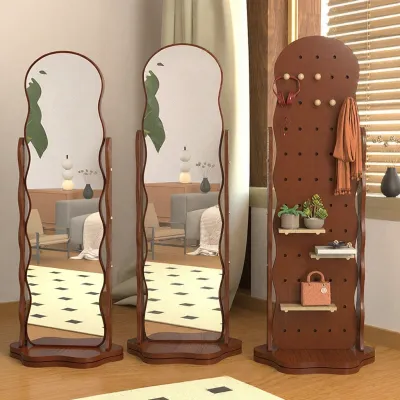
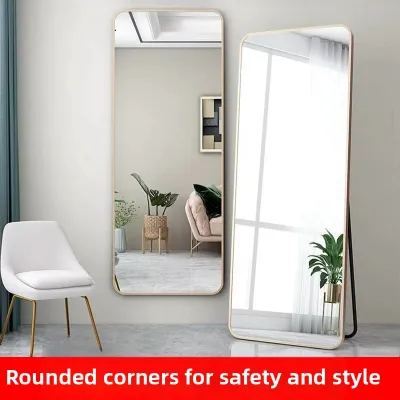

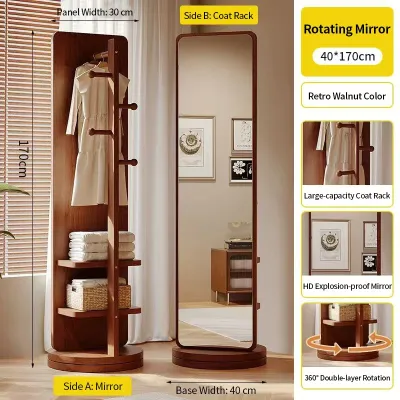
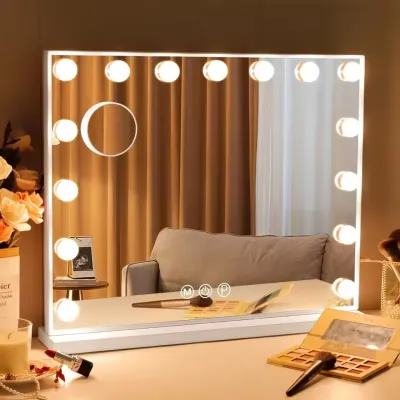
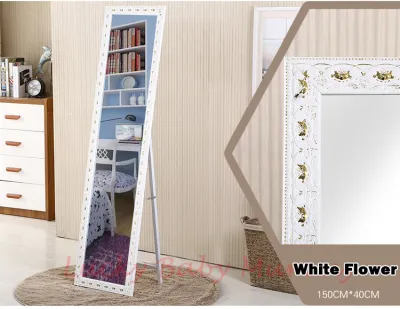

Prices are valid at publication and may change. Please refer to the product page for the latest price.
Furthermore, freestanding mirrors are highly effective at breaking up solid wall boundaries without requiring permanent structural changes. In compact urban apartments where knocking down walls is not an option, placing a tall mirror stand against a prominent wall softens the hard transition between the floor and the ceiling. This simple addition disrupts the rigid geometry of the room, creating a fluid transition that makes the physical limits of your living space feel far less restrictive.
Key Design Features That Maximize Reflection
To maximize the space-expanding potential of a mirror stand, you must carefully evaluate its physical design features, starting with the frame. Thick, dark, or heavily ornate frames tend to act as visual anchors, drawing the eye directly to the mirror’s physical borders and emphasizing the fact that the reflection is merely a contained image. In contrast, frameless designs or ultra-thin metal frames in light tones allow the reflection to blend seamlessly with the surrounding wall, creating a more convincing illusion of continuous space.

The overall size and proportions of the mirror stand also play a critical role in how spacious a room feels. A mirror that is too small will look like a misplaced window, whereas a tall, vertically oriented mirror that reaches close to the ceiling draws the gaze upward. This vertical emphasis highlights the height of the room, making low ceilings feel significantly loftier and giving the entire space a grander, more open atmosphere.
Glass clarity and edge finishing are equally important to ensure the reflected image is clear and convincing. Low-quality glass can suffer from subtle warping or distortion, which instantly breaks the illusion of depth and can cause visual fatigue. Opting for high-quality glass with a clean, flat surface is essential, while subtle edge beveling can catch and refract light beautifully, adding a touch of elegance without the need for a bulky frame.
Finally, the stand’s angle and tilt adjustability are vital features that dictate what the mirror actually reflects. A fixed, completely vertical mirror only shows what is directly in front of it at eye level, which may not always be the most flattering or spacious view. An adjustable easel stand or a leaning frame allows you to tilt the glass slightly upward, directing the reflection toward the ceiling and upper walls to capture more light and create a dramatic sense of overhead space.
Matching Mirror Stand Styles to Room Conditions
Not every room faces the same spatial challenges, meaning a mirror stand that works wonders in a narrow hallway might not have the same impact in a cluttered bedroom. To achieve the best results, you should match the specific design features of the mirror stand to the unique layout, lighting, and decorative conditions of your space.
Small or Narrow Rooms
In small or narrow rooms, such as compact entryways or tight corridors, the primary goal is to elongate the space without physically cluttering the floor. For these environments, tall and slender lean-to mirror stands are highly effective because they occupy minimal floor space while drawing the eye upward to emphasize vertical height. A sleek, minimalist metal frame in a neutral or metallic finish keeps the visual weight low, ensuring the mirror does not overwhelm the tight surroundings.
It is crucial to avoid wide, bulky bases or wide-set easel stands in narrow pathways, as these can easily become tripping hazards or disrupt the natural flow of foot traffic. Instead, look for slender frames with integrated, low-profile rear stands that can tuck closely against the wall, or secure lean-to models that rest flat against the vertical surface. By keeping the footprint compact, you preserve valuable floor space while enjoying the full visual benefits of a large, deep reflection.
Dark or Low-Light Spaces
Rooms that suffer from limited natural light, such as those with small windows or deep layouts, require a mirror stand designed to capture and amplify every available lumen. To achieve this, prioritize large, uninterrupted glass surfaces that offer the maximum possible surface area for light to bounce off. Avoid paneled or multi-light mirror designs, as the dividing frames break up the reflected light and reduce the overall brightening effect.
The finish of the mirror frame also plays a significant role in light amplification; dark wood or matte black frames tend to absorb light, whereas metallic finishes like polished brass, chrome, or brushed silver help reflect it back into the room. Positioning the mirror stand directly opposite or adjacent to a light source—such as a window, a balcony door, or a bright floor lamp—ensures that the glass catches the light directly, scattering it into the darkest corners of the room.
Cluttered or Highly Decorated Rooms
When dealing with a room that already features a lot of furniture, patterns, or decorative items, adding a mirror can sometimes backfire by reflecting and doubling the visual chaos. To prevent this, choose a highly streamlined, simple mirror stand with a clean, frameless edge or a very basic, solid-colored frame that blends into the wall. This minimalist approach ensures that the mirror acts as a calming, neutral element rather than competing with your existing decor.
Additionally, you must be highly selective about what the mirror stand is positioned to reflect in a busy room. Avoid placing the mirror directly opposite crowded bookshelves, open wardrobes, or busy gallery walls, as this will only make the room feel twice as cluttered. Instead, angle the mirror to reflect open pathways, a clean accent wall, or a view of the outdoors, which introduces a sense of calm and order to the space.
Placement Strategies for the Best Spatial Illusion
The physical design of your mirror stand is only half the equation; where and how you position it determines the ultimate success of the spatial illusion. One of the most effective placement strategies is to angle the mirror toward a natural light source, such as a large window or a glass balcony door. By catching the incoming daylight and bouncing it deep into the interior, the mirror not only brightens the room but also brings a refreshing view of the outdoors inside, effectively dissolving the boundary of the wall.
When natural light is limited, you can achieve a similar effect by angling the mirror toward primary room focal points, such as a beautiful piece of art, a statement light fixture, or an open doorway. Reflecting an open pathway or an adjacent room is particularly effective because it tricks the brain into believing there is an additional hallway or living area extending beyond the mirror. This simple adjustment can make a standard room layout feel interconnected and expansive.
While chasing the perfect reflection, you must also maintain safe clearance and ensure the mirror stand does not obstruct daily movement. In high-traffic areas like living rooms or hallways, place the stand in a corner or flush against a wall where it cannot be easily bumped by passing family members or guests. A mirror that blocks a natural walking path will quickly become a source of frustration, completely undermining the sense of ease and openness you are trying to create.
Finally, take advantage of the stand’s tilt mechanism to fine-tune what is visible in the reflection. Tilting the mirror slightly upward is generally preferred for space expansion, as it reflects the ceiling and upper walls, which are typically less cluttered than the floor. This upward angle also prevents the mirror from reflecting your feet or the lower legs of furniture, keeping the visual field clean, elevated, and focused on light and height.
What to Check Before Buying a Mirror Stand
Before purchasing a mirror stand, it is essential to perform several practical checks to ensure the piece is safe, stable, and perfectly suited to your home’s environment. First, verify the base footprint of the stand and assess any potential tip-over risks, especially if you have young children, active pets, or live in a high-traffic household. Look for stands with wide, weighted bases, or models that include wall-anchoring hardware to secure the top of the mirror while it rests on its stand.
Next, check the total weight of the mirror and stand against your floor load limits and consider the logistics of moving it into your home. Large floor mirrors can be incredibly heavy and awkward to handle, requiring careful planning to navigate narrow apartment lifts, tight stairwells, or winding corridors. Ensuring you have the physical help or professional delivery services lined up will prevent accidental damage to both the mirror and your walls during installation.
Safety should also extend to the construction of the mirror itself, so always confirm that the glass features a shatter-resistant backing. This protective film ensures that if the glass does break, the shards remain adhered to the backing rather than scattering across the floor, minimizing the risk of injury. Additionally, check that the edges of the glass are smoothly finished or fully encased in the frame to prevent any sharp, exposed edges.
Lastly, measure the exact dimensions of the planned placement area, keeping in mind both the height of your ceilings and the depth of the stand when fully extended. A stand that requires a deep rear leg may stick out too far into the room, consuming valuable floor space and defeating the purpose of a space-saving design. By measuring carefully beforehand, you can select a mirror stand that fits harmoniously into your layout, providing maximum visual expansion with a minimal physical footprint.
Frequently Asked Questions (FAQ)
Can a mirror stand make a room look bigger at night?
Yes, a mirror stand can maintain its space-expanding effect after dark by interacting with your room’s artificial lighting. To achieve this, position ambient light sources, such as floor lamps, warm sconces, or table lamps, so their light bounces off the mirror’s surface without shining directly into it. This indirect reflection scatters soft, warm light throughout the room, softening shadows and making the space feel cozy yet expansive. Avoid placing bright, unshaded bulbs directly opposite the mirror, as this will create harsh glare that disrupts the visual comfort of the room.
How do I clean a large mirror stand without streaking?
To maintain the optical clarity necessary for a convincing spatial illusion, clean your mirror using a high-quality microfiber cloth and a mild, streak-free cleaning solution. Spray the cleaner directly onto the cloth rather than the glass to prevent liquid from pooling at the bottom of the frame, which can damage the mirror’s silver backing over time. Wipe the glass in a consistent Z-shaped motion, starting from the top and working your way down. When cleaning the upper sections of a tall mirror stand, always ensure the stand is fully stabilized, or have someone hold the base to prevent any tipping.
Is it safe to place a heavy mirror stand on a rug?
Placing a heavy mirror stand on a rug requires careful evaluation, as soft or thick pile carpeting can cause the stand to settle unevenly, increasing the risk of tipping. If you must position the mirror on a rug, check the manufacturer’s guidelines regarding base stability on soft surfaces. To ensure a level and secure foundation, you can place a rigid, low-profile board beneath the stand’s feet, or use heavy-duty anti-slip pads to prevent sliding. For maximum safety, always use the included wall-tethering straps to anchor the top of the mirror to the wall behind it, regardless of the flooring type.
Community discussion
Share your experience or ask a question. Comments are reviewed before publication.