
Selecting the right ceiling light for a Housing & Development Board (HDB) flat requires balancing functional illumination with spatial constraints. With a standard ceiling height of 2.6 meters, HDB interiors can easily feel cramped if outfitted with bulky, low-hanging fixtures. Circular ceiling lights, particularly flush-mount LED models, offer a streamlined profile that hugs the ceiling, preserving precious vertical clearance while distributing light evenly across the room. Achieving the ideal balance involves evaluating how fixture thickness, light output, and diffusion technology interact with a lower ceiling height to maintain an open, airy atmosphere.
Assessing Lighting Needs for Standard HDB Rooms
To design an effective lighting layout for a 2.6m HDB ceiling, you must first calculate the required light output, measured in lumens, for each specific space. Standard lighting design relies on the concept of lux, which represents lumens per square meter. For instance, a standard HDB bedroom of approximately 10 square meters typically requires an ambient light level of 100 to 150 lux, translating to a total output of 1,000 to 1,500 lumens. In contrast, a living room of about 20 square meters used for reading, socializing, and entertainment may require 150 to 200 lux, demanding a total output of 3,000 to 4,000 lumens, which can be achieved through a combination of a central circular ceiling light and supplementary task lighting.
The 2.6m ceiling height significantly influences how light spreads throughout the room. When a light source is positioned closer to the floor, the cone of light emitted from the fixture has less vertical distance to expand. Consequently, a fixture with a narrow beam angle will project a concentrated pool of light directly beneath it, leaving the upper corners of the walls in shadow. This effect visually shrinks the room. To counteract this, circular ceiling lights for HDB flats should feature a wide beam angle—ideally 110 degrees or more—to ensure the light washes down the walls, reflecting off vertical surfaces to create an illusion of greater height and volume.
Products mentioned in this guide
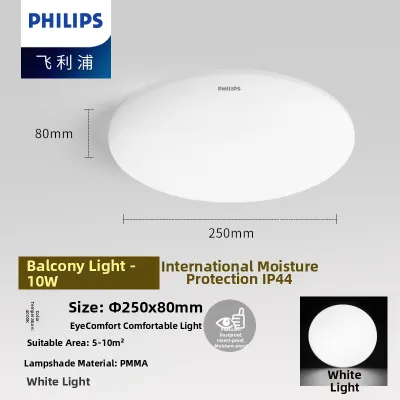
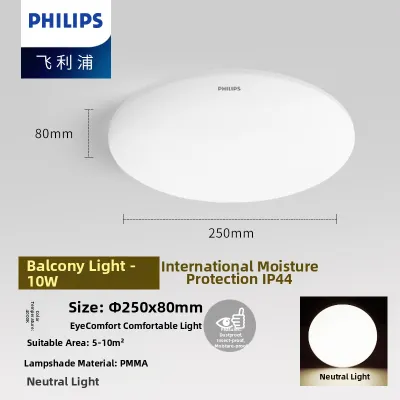
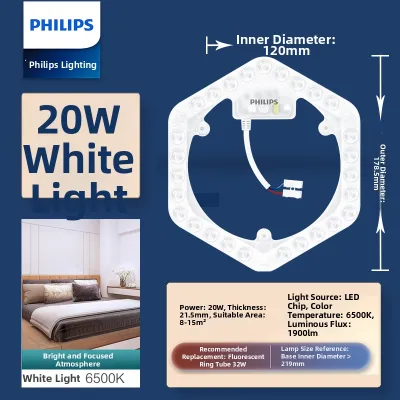
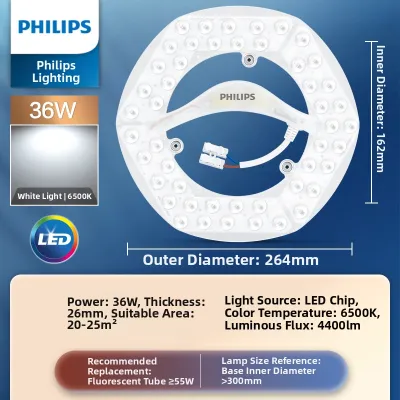
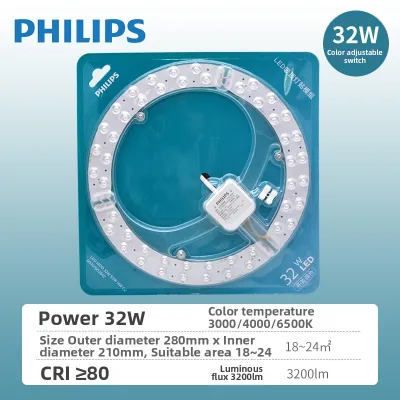
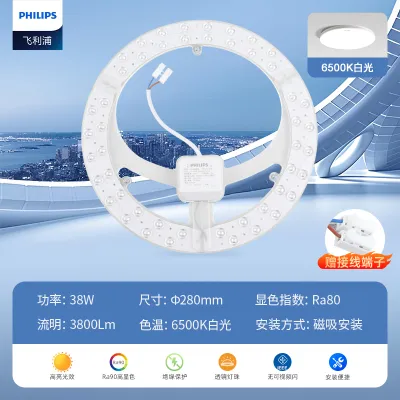
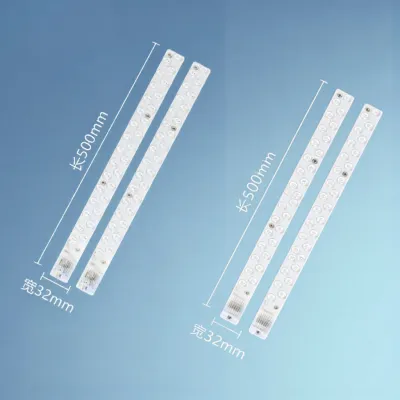
Prices are valid at publication and may change. Please refer to the product page for the latest price.
Balancing ambient and task lighting is crucial in typical HDB layouts. While a central circular ceiling light provides the foundational ambient illumination, relying solely on a single high-output fixture can lead to harsh shadows and glare. In kitchens and study areas, combining a moderate-lumen circular ceiling light with under-cabinet LED strips or desk lamps ensures that work surfaces are brightly lit without requiring an overly intense, blinding central light source.
Key Specifications to Prevent a Cramped Feel
When browsing circular ceiling lights, the physical profile of the fixture is the most critical factor in preventing a cramped feel. For a 2.6m ceiling, look for ultra-slim or low-profile flush-mount designs. Ideally, the total thickness of the fixture—the distance it protrudes from the ceiling surface—should not exceed 5 to 8 centimeters. Minimizing this protrusion preserves the visual line of the ceiling, making the room feel taller and more expansive.

The internal technology of the LED fixture dictates its thickness and light quality. Edge-lit LED technology utilizes LEDs arranged around the perimeter of the frame, directing light sideways into a light guide plate that disperses it downward. This configuration allows for incredibly thin profiles, often under 2 centimeters, making them excellent for low ceilings. Direct-lit LEDs, on the other hand, place the light sources directly behind the diffuser. While direct-lit fixtures are highly energy-efficient and can deliver higher lumen outputs, they require more physical depth to allow the light to mix and prevent individual hot spots from showing through the cover, resulting in a thicker fixture profile.
Color temperature and Color Rendering Index (CRI) also play vital roles in spatial perception. Color temperature, measured in Kelvin (K), ranges from warm white (2700K to 3000K) to cool white (4000K) and daylight (6500K). Warm white creates a cozy, intimate atmosphere suitable for bedrooms, but can sometimes make a small space feel enclosed if not balanced. Cool white offers a clean, crisp light that enhances the perception of space, making it a popular choice for HDB living rooms and kitchens. A high CRI of 80 or above is essential to ensure colors appear natural and vibrant, preventing the flat, greyish cast that low-quality light sources can cast over home decor.
Finally, glare control is paramount when the light source is closer to eye level. High-quality circular lights incorporate advanced diffusers made of frosted acrylic or micro-prismatic materials. These diffusers scatter the light evenly, eliminating harsh glare and reducing eye strain. When evaluating fixtures, check for specifications indicating uniform light distribution and glare-reduction technologies, which prevent the uncomfortable sensation of looking directly at a bright, unshielded bulb.
Evaluating Philips Circular Light Categories for Your Space
Philips offers several categories of circular ceiling lights that align well with the constraints of a 2.6m HDB ceiling. The Philips EyeComfort range is specifically engineered to address common lighting issues such as flicker, glare, and poor color rendering. These fixtures feature custom-designed diffusers that distribute light smoothly across the room, minimizing eye strain. For HDB bedrooms and study areas where visual comfort is a priority, the EyeComfort circular flush mounts provide a reliable, low-profile solution that delivers consistent illumination without harsh hotspots.
For homeowners seeking flexibility, smart and connected lighting options like Philips Hue or WiZ circular ceiling lights offer advanced control. These smart fixtures allow users to adjust both brightness and color temperature, transitioning from a bright cool white for daytime tasks to a soft warm white for evening relaxation. However, when selecting smart circular lights, it is important to verify their physical dimensions. Some smart models contain integrated wireless receivers and drivers that add to the fixture’s thickness. Homeowners should compare the depth specifications of these smart models against standard flush mounts to ensure they do not protrude excessively into the 2.6m clearance.
Standard LED flush mounts, such as the Philips Moire or basic functional circular lines, represent a practical choice for utility areas, corridors, and kitchens. These fixtures focus on high energy efficiency and straightforward design, often featuring very slim profiles that blend seamlessly into the ceiling. They provide a cost-effective way to achieve uniform ambient lighting in secondary spaces where advanced smart features are not required.
Before making a purchase, always verify the official product specifications rather than relying solely on marketing images. Check the exact diameter and height of the fixture, the rated lumen output, the beam angle, and whether the driver is integrated or external. This careful verification ensures the selected model fits the physical space and meets the specific lighting requirements of the room.
Electrical and Installation Compatibility Checks
Before installing any new circular ceiling light, you must verify the compatibility of your HDB flat’s electrical infrastructure. Standard HDB concrete ceilings require robust mounting solutions. Ensure that the existing ceiling junction box is securely anchored and capable of supporting the weight of the new fixture, although most modern LED flush mounts are lightweight. Inspect the condition of the existing wiring; older flats may have degraded insulation that requires replacement before a new light can be safely connected.
In Singapore, residential electrical systems operate at a nominal voltage of 230V AC at 50Hz. Ensure that any imported or locally purchased Philips fixture is rated for this voltage range and carries the appropriate local safety certifications, such as the Safety Mark, which indicates compliance with established safety standards. If the fixture requires an external LED driver or transformer, verify that there is sufficient space within the ceiling cavity or the fixture’s mounting base to house it safely without pinching wires or restricting airflow.
For any installation involving fixed electrical wiring, working at heights, or modifying the existing circuit, it is highly recommended to engage a licensed electrical worker (LEW) certified by the Energy Market Authority (EMA). A professional installer ensures that the wiring is correctly terminated, grounded, and compliant with Singapore’s electrical wiring standards (SS 638). This is particularly crucial when integrating smart switches or dimming modules, which require precise wiring configurations to function safely and prevent electrical hazards.
Lastly, consult the manufacturer’s installation manual to review clearance requirements. Although LED lights generate significantly less heat than traditional incandescent or halogen bulbs, they still require adequate heat dissipation to prevent the internal electronics from overheating. Ensure that the mounting location allows for sufficient air circulation around the fixture’s chassis, especially if installing the light in a semi-enclosed alcove or near ceiling beams.
Frequently Asked Questions (FAQ)
Can I install a dimmable Philips circular light on a standard HDB switch?
Standard wall switches in HDB flats operate on a simple on/off mechanism and do not support dimming. If you install a dimmable Philips circular light on a standard switch, it will operate at full brightness but cannot be dimmed. To enable dimming, you must install a compatible LED dimmer switch or choose a smart circular light (such as WiZ or Hue) that dims via a mobile app, remote control, or compatible smart wireless switch. Attempting to use a traditional analog dimmer switch with a non-compatible LED fixture can cause severe flickering, buzzing, and premature failure of the LED driver.
How do I clean a flush-mount Philips ceiling light without damaging the diffuser?
To clean your flush-mount ceiling light safely, first isolate the power supply at the main distribution board or turn off the wall switch and allow the fixture to cool completely. Use a sturdy step ladder to reach the fixture safely. Gently wipe the exterior of the diffuser with a dry, clean microfiber cloth to remove dust and cobwebs. For stubborn spots, slightly dampen the microfiber cloth with water or a highly diluted, mild soapy solution. Avoid using harsh chemical solvents, abrasive cleaners, or alcohol-based sprays, as these can degrade, yellow, or crack the acrylic or polycarbonate diffuser over time. Ensure the fixture is completely dry before restoring power.
Are smart Philips ceiling lights too thick for a 2.6m HDB ceiling?
While some smart ceiling lights are slightly thicker than basic LED flush mounts due to the inclusion of wireless receivers, drivers, and color-mixing components, many modern smart models are designed with low-profile aesthetics in mind. Many smart circular models feature a total thickness of under 8 centimeters, which is highly suitable for a 2.6m HDB ceiling. To ensure a spacious feel, always check the physical dimensions on the product specification sheet before purchasing, and opt for models that feature a slim, tapered edge, which visually minimizes the fixture’s profile against the ceiling.

Community discussion
Share your experience or ask a question. Comments are reviewed before publication.