
Selecting the right Philips LED ceiling light for a standard 2.6m HDB ceiling requires balancing fixture thickness and diameter to maintain comfortable headroom and visual balance. In Singapore’s typical flat layouts, choosing a flush-mount or ultra-slim profile prevents the ceiling from feeling low or oppressive. By matching the physical dimensions and light output of the fixture to each specific room’s footprint, you can create an open, well-lit environment that feels spacious and inviting.
Understanding Spatial Proportions for 2.6m Ceilings
A ceiling height of 2.6 meters is standard for most modern HDB flats, but it leaves limited vertical clearance for hanging fixtures. Installing low-hanging pendant lights or bulky, thick fixtures can make a room feel cramped and visually cluttered. To maintain an open and airy atmosphere, the physical height or thickness of your ceiling light should be kept to a minimum.
Flush-mount and ultra-slim LED profiles are highly effective at preserving vertical space. These fixtures sit close to or directly against the concrete ceiling slab, drawing the eye upward without obstructing your line of sight. This design choice maximizes the physical clearance beneath the light, which is especially important in high-traffic areas or rooms with taller occupants.
Products mentioned in this guide
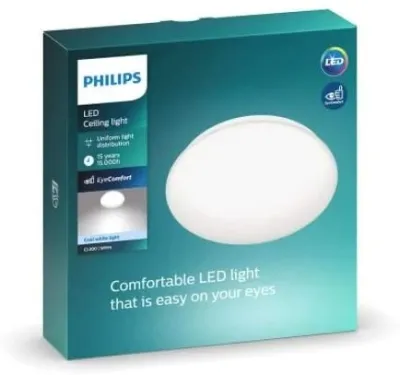
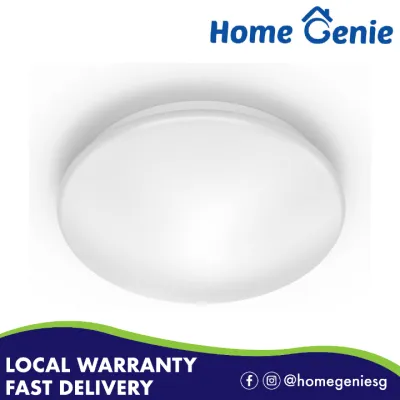
![[Climate Voucher] PHILIPS Apex 25W / 40W / 45W LED Ceiling Light 5700K Rectangle Long Slim Rectangular EyeComfort](https://img.lazcdn.com/g/p/028aeffe205f2e87c0b4e84645bb79dd.jpg_400x400q80.jpg_.webp)
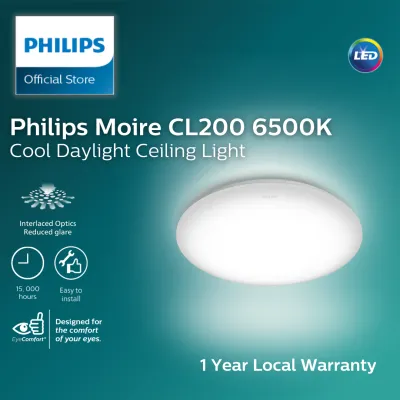
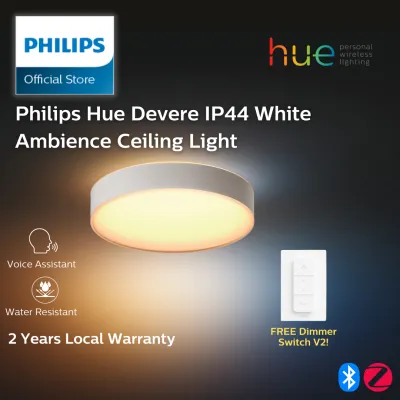
Prices are valid at publication and may change. Please refer to the product page for the latest price.
When planning your lighting layout, you must also consider the floor area of each room. A fixture with an excessively large diameter can overwhelm a small bedroom, while a tiny light will look lost in a spacious living room. Evaluating the room’s dimensions helps you determine a balanced fixture size that complements the space rather than dominating it.
Furthermore, the way natural light enters your HDB flat plays a role in how you perceive ceiling height. A low-profile ceiling light allows natural light from windows to bounce freely across the ceiling plane without casting harsh, unwanted shadows. This simple interaction between natural and artificial light sources helps make your living spaces feel larger and more cohesive throughout the day.
Selecting the Ideal Philips LED Ceiling Light Dimensions
To find the right fixture diameter, you can use a simple proportional guideline based on your room’s dimensions. For small spaces like HDB bathrooms, utility yards, or hallways, a compact fixture diameter of 30cm or less is generally appropriate. These smaller profiles provide sufficient illumination without crowding the narrow ceiling areas typical of service zones.

Medium-sized spaces, such as standard HDB bedrooms or kitchens, typically pair well with diameters between 35cm and 45cm. For a typical bedroom measuring roughly 3 meters by 3 meters, a 40cm fixture offers an ideal visual balance. It provides a clean, centered focal point that distributes light evenly to all four corners of the room.
For larger living and dining areas, fixtures ranging from 50cm to 60cm in diameter provide a balanced visual scale. If you have an open-plan living-dining layout, you might consider using two separate fixtures of matching styles but different sizes to define each functional zone. This approach maintains design continuity while respecting the unique spatial proportions of each area.
Thickness is equally critical when dealing with a 2.6m ceiling height. To preserve comfortable headroom, look for slim-profile LED ceiling lights with a thickness of 8cm or less. Many modern integrated LED models feature profiles as thin as 2cm to 5cm, which blend seamlessly into the ceiling plane and offer a clean, modern aesthetic.
The shape of the fixture also influences how space is perceived in different HDB layouts. Round profiles are highly versatile, softening the sharp angles of square rooms and distributing light evenly in all directions. Square or rectangular profiles, on the other hand, align well with linear spaces like corridors, galley kitchens, or defined dining areas, reinforcing the architectural lines of your home.
Matching Light Output and Style to Your HDB Rooms
Selecting the right brightness level involves checking the lumen output on the product packaging rather than relying solely on wattage. For functional areas like kitchens and study rooms, higher light output is necessary to facilitate tasks and reduce eye strain. In contrast, bedrooms and living areas benefit from softer, ambient lighting that promotes relaxation.
Color temperature significantly affects the mood and functionality of each space. Warm white light (around 2700K to 3000K) is ideal for bedrooms and living rooms, creating a cozy and welcoming atmosphere. Cool white (around 4000K) offers a balanced, neutral light suitable for kitchens and bathrooms, while daylight (6500K) is excellent for task-oriented areas like home offices where high visibility is required.
The material of the light diffuser also impacts visual comfort in rooms with 2.6m ceilings. High-quality synthetic diffusers, such as PMMA, help distribute light evenly and minimize glare. Because the light source sits relatively close to eye level in a standard HDB flat, a well-designed diffuser prevents harsh hotspots and ensures a soft, comfortable glow throughout the room.
To complement typical HDB interior themes, such as Scandinavian, minimalist, or industrial designs, choose fixtures with clean lines and neutral finishes. White, black, or slim metallic borders integrate easily with various color palettes. Opting for minimalist designs ensures that the ceiling light serves as a functional, elegant element rather than a distracting focal point.
Installation Checks and Safety Boundaries for HDB Ceilings
Before purchasing or mounting any ceiling fixture, you must verify the electrical and structural conditions of your HDB flat. Inspect the existing ceiling junction box and wiring to ensure they are in good condition and compatible with the new fixture’s mounting bracket. In Singapore, residential electrical systems operate at a standard voltage of 230V, so verify that your chosen light is rated for this voltage and carries the appropriate safety certifications, such as the Safety Mark.
Always prioritize safety by isolating the power supply at the main distribution board (DB box) before attempting any electrical inspection or installation. Concrete ceilings in HDB flats provide a solid mounting surface, but you must use the correct masonry drill bits and wall plugs specified in the product manual to secure the mounting bracket safely. Never exceed the weight limits of the mounting hardware or the ceiling structure.
It is also important to check the alignment of the mounting holes on your new fixture against the existing ceiling outlet. Older HDB flats may feature circular junction boxes or specific hook brackets that do not align perfectly with modern rectangular mounting plates. In such cases, using compatible adapter plates or carefully drilling new mounting holes into the concrete slab is necessary to ensure a secure fit.
For complex installations, new wiring runs, or if you are uncomfortable working at heights, always engage a licensed electrician. In Singapore, electrical wiring work must be performed by an Energy Market Authority (EMA) licensed electrical worker. A professional ensures that the fixture is safely wired, properly grounded, and securely anchored to prevent electrical hazards or falling risks.
Frequently Asked Questions (FAQ)
Can I install a Philips LED ceiling light on a false ceiling in my HDB?
Yes, you can install these fixtures on a false ceiling, but you must verify the weight of the light and the load-bearing capacity of the false ceiling board. Lightweight fixtures can often be secured using specialized hollow-wall anchors or butterfly toggles. For heavier models, the mounting bracket must be anchored directly through the false ceiling into the concrete slab above or secured to the underlying metal support runners. Always consult the product installation manual for specific weight thresholds and mounting instructions.
Are Philips LED ceiling lights dimmable with standard HDB wall switches?
Standard wall switches in HDB flats are simple on/off switches and do not support dimming functionality. If you want to dim your ceiling light, you must choose a model specifically labeled as dimmable or compatible with smart lighting systems. Some models feature step-dimming technology that allows you to adjust brightness levels simply by toggling your existing wall switch quickly, while smart models require a compatible wireless remote, smartphone app, or smart home hub to adjust brightness and color temperature.
Community discussion
Share your experience or ask a question. Comments are reviewed before publication.