
Standard Housing Development Board (HDB) flats in Singapore present a unique architectural environment, particularly regarding vertical space. With a standard ceiling height of 2.6 meters, selecting the right light fixture requires a careful balance between physical dimensions and optical performance. Bulky, low-hanging fixtures can make a room feel cramped and visually cluttered, while poorly chosen lights can cast harsh shadows or fail to illuminate the space adequately.
To optimize these standard-height ceilings, low-profile surface-mounted LED lights are highly effective. These fixtures sit close to the concrete slab, preserving precious headroom while distributing light evenly across the room. Philips offers a wide range of surface-mounted luminaires designed to address these specific spatial constraints. By understanding how to evaluate these fixtures based on profile depth, light output, and installation requirements, you can select a model that enhances both the functionality and aesthetic appeal of your home.
Assessing the 2.6m Ceiling Constraint in HDB Flats
A ceiling height of 2.6 meters leaves little room for vertical error when it comes to interior design. Every centimeter a light fixture protrudes downward directly impacts the perceived volume of the room. Deep-profile fixtures or suspended pendant lights draw the eye downward, effectively lowering the visual ceiling plane and making standard HDB rooms feel smaller than they actually are. Choosing an ultra-slim or low-profile surface light helps maintain an unobstructed view across the ceiling, creating an illusion of greater height and openness.
Products mentioned in this guide
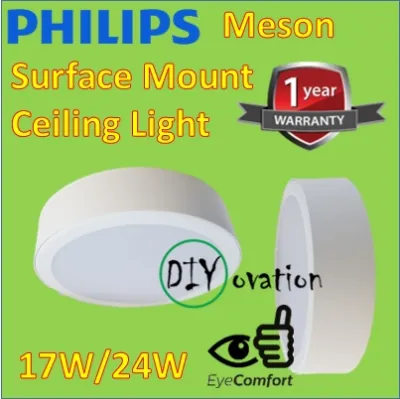
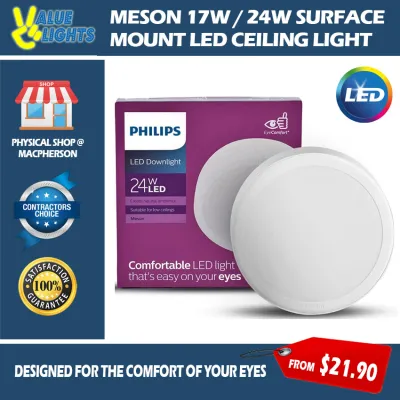
![[3yrs warranty] Philips Eridani surface mounting ceiling light/ Led light for bto/ hdb](https://img.lazcdn.com/g/p/169090b5f7a1417aa77a912bd44dba4a.png_400x400q80.png_.webp)
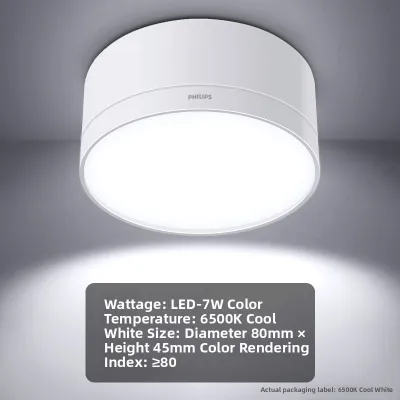
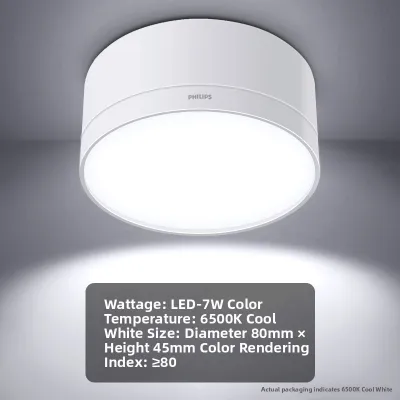
Prices are valid at publication and may change. Please refer to the product page for the latest price.
Beyond physical clearance, ceiling height significantly influences how light behaves within a room. When a light source is positioned close to the ceiling, the angle at which the light spreads must be wide enough to cover the floor area without creating a spotlight effect. Narrow-beam fixtures installed at 2.6 meters can result in intense pools of light directly underneath, leaving the corners of the room in deep shadow. A high-quality surface light with a wide beam angle ensures that light bounces off the walls and floor, softening shadows and creating a more balanced, inviting environment.
Spatial perception also depends heavily on matching the diameter of the light fixture to the overall floor area of the room. A fixture that is too small will look lost and underpowered, while an oversized unit can visually dominate the space, making the ceiling feel heavy. For standard HDB bedrooms, a fixture diameter of 300 to 400 millimeters generally provides a balanced look. In larger living rooms, broader panels or modular arrangements with a diameter of 500 to 600 millimeters can be used to distribute light effectively without overwhelming the ceiling plane.
Key Selection Criteria for Philips Surface Lights
When browsing the extensive catalog of Philips surface lights, the first specification to verify is the physical profile depth. For a 2.6m ceiling, look for fixtures with a thickness of 50 millimeters or less, with ultra-slim models down to 20 millimeters being highly desirable. These dimensions are always listed on the manufacturer’s specification sheet under product dimensions. Minimizing the distance the fixture protrudes from the concrete slab ensures that the light integrates seamlessly into the ceiling architecture.

Another critical factor is glare control, which is directly related to how the light source is diffused. Because the ceiling is relatively low, the light fixture is closer to your natural line of sight when standing or reclining. Philips addresses this by utilizing advanced diffuser materials, such as high-grade polycarbonate or PMMA, which scatter the light from individual LED chips. Look for models featuring frosted covers or recessed panel designs that distribute light evenly across the entire surface of the fixture, preventing harsh glare and reducing eye strain during daily activities.
Dimmability and control options should also guide your selection process, depending on the functionality of each room. Standard HDB electrical setups typically feature simple on/off wall switches, which may not support traditional analog dimming without rewiring. Fortunately, many Philips surface lights feature integrated smart technologies or step-dimming capabilities, such as SceneSwitch technology. This allows you to cycle through different brightness levels and color temperatures simply by toggling your existing wall switch, eliminating the need for expensive dimmer installations or dedicated smart hubs.
Evaluating Brightness and Light Quality for Your Rooms
Selecting the correct brightness level is essential for ensuring that your Philips surface light performs well in different HDB spaces. Rather than relying on wattage, which only measures electrical power consumption, you must evaluate the lumen output of the fixture. As a general guideline, living rooms and kitchens require higher overall illumination levels, typically around 300 to 400 lumens per square meter. For a standard HDB living room of approximately 15 square meters, a total light output of 4,500 to 6,000 lumens, which can be achieved through a single large fixture or multiple smaller units, is recommended.
Color temperature, measured in Kelvin (K), plays a pivotal role in setting the mood and functionality of each room. Warm white light (2700K to 3000K) emits a cozy, relaxing glow that is ideal for bedrooms and living areas during the evening. Cool white light (4000K) offers a neutral, balanced illumination that works well for kitchens, bathrooms, and study areas where task clarity is important. Daylight (6500K) mimics natural midday light and is highly effective for utility areas or workspaces, though it can feel overly clinical if used as the primary light source in relaxation areas.
To ensure that the colors of your furniture, wall paint, and decor appear natural and vibrant, pay close attention to the Color Rendering Index (CRI) of the fixture. The CRI is a quantitative measure of a light source’s ability to reveal the colors of various objects faithfully in comparison with a natural light source. For residential interiors, a CRI rating of 80 or higher (often specified as Ra >= 80) is the standard requirement. Philips surface lights consistently meet or exceed this standard, ensuring that your living spaces look warm, natural, and visually appealing under artificial illumination.
Installation, Safety, and Electrical Compatibility Checks
Before purchasing or installing any new ceiling fixture, prioritizing electrical safety is paramount. Always isolate the electrical circuit at the main distribution board (DB box) by switching off the corresponding circuit breaker before removing an old fixture or handling wiring. Do not rely solely on the wall switch to cut the power, as improper wiring configurations can leave live currents running to the ceiling point. Use a reliable non-contact voltage tester to confirm that the wires are completely dead before proceeding with any work.
Mounting a surface light on a standard HDB concrete ceiling requires proper structural preparation. Unlike false ceilings, concrete slabs do not have hollow cavities to hide excess wiring or bulky driver units, meaning all components must fit neatly within the fixture’s shallow base. You will need to drill precise holes into the concrete slab to secure the mounting bracket using appropriate masonry drill bits and heavy-duty wall plugs. Ensure that you do not drill into existing electrical conduits or structural steel reinforcement bars embedded within the concrete.
While replacing a basic light fixture is a common task, it is important to recognize when to call a professional. In Singapore, complex electrical works, including running new wiring conduits, modifying circuits, or installing heavy fixtures, should be carried out by a licensed electrical worker (LEW). If you encounter outdated wiring, damaged insulation, or if your ceiling lacks a proper grounding (earth) wire, stop immediately and consult a professional electrician. This ensures that your installation complies with local safety standards and prevents potential electrical hazards.
Where to Buy and How to Verify Product Specifications
To ensure you are purchasing genuine Philips lighting products that are fully compatible with Singapore’s electrical standards, always buy from authorized retail channels. These include official Philips brand stores, established local lighting showrooms, and verified online marketplaces. Purchasing from unauthorized parallel importers may result in receiving products designed for different voltages or frequencies, which can lead to premature fixture failure, flickering, or safety hazards.
Before finalizing your purchase, carefully cross-reference the product specifications on the official manufacturer’s datasheet. Verify that the operating voltage is rated for Singapore’s standard electrical grid, which operates at 230V and 50Hz. Additionally, check the physical dimensions, mounting hole configurations, and total wattage to ensure the fixture is compatible with your existing ceiling setup and electrical load limits. Taking the time to verify these details beforehand prevents the inconvenience of returning incompatible items.
Finally, consider the pricing, warranty coverage, and return policies associated with your chosen retailer. High-quality Philips surface lights in Singapore generally range from S$30 for basic utility models to over S$200 for advanced smart fixtures. Ensure that your purchase is backed by a valid local warranty, which typically ranges from one to two years. A local warranty provides peace of mind and ensures that you can easily obtain a replacement or professional support in the unlikely event of a manufacturing defect.
Frequently Asked Questions (FAQ)
Can I install a surface light if my ceiling only has a downlight hole?
If your HDB flat has an existing false ceiling with downlight cutouts, installing a surface-mounted light requires careful structural assessment. A standard surface light cannot be screwed directly into thin plasterboard, as it lacks the structural strength to support the fixture’s weight. To mount a surface light safely, you must locate the underlying metal support runners or install a specialized conversion plate that bridges the cutout. Alternatively, you may need to engage a professional plasterer to patch the hole and reinforce the ceiling before mounting the new fixture.
How do I clean a surface-mounted ceiling light without damaging the diffuser?
To clean your surface-mounted light safely, always begin by turning off the wall switch and allowing the fixture to cool completely to avoid thermal shock or electrical hazards. Use a clean, dry microfiber cloth to gently wipe away accumulated dust, cobwebs, and insects from the exterior of the diffuser. For more stubborn dirt or grease, particularly in kitchen areas, you can wipe the acrylic or polycarbonate cover with a slightly damp cloth using a mild, diluted dishwashing liquid. Avoid using harsh chemical solvents, alcohol, or abrasive scrubbing pads, as these can degrade the plastic, causing it to become brittle or yellow over time.

Community discussion
Share your experience or ask a question. Comments are reviewed before publication.