
Selecting the ideal Philips torchlight for your Housing & Development Board (HDB) flat involves balancing immediate accessibility, beam characteristics, and long-term battery reliability. In a sudden power outage, a dependable light source prevents accidents and helps you locate your home’s distribution board (DB box) safely. Rather than purchasing the brightest tactical light available, the most effective approach is to match the torchlight’s specifications to your specific flat layout, storage habits, and maintenance preferences to ensure your household is always prepared.
While Singapore’s electrical grid is exceptionally reliable, localized power trips within individual units or block-wide maintenance outages do occur. Having a dedicated, high-quality flashlight prevents the panic of searching in the dark and preserves your smartphone’s battery for essential communication. By understanding what to look for in the Philips lighting range, you can secure a tool that remains fully functional even after months of sitting idle in a drawer.
Understanding HDB Emergency Lighting Needs
Every HDB flat has a unique layout that dictates your emergency lighting requirements. A compact 2-room or 3-room flat has shorter line-of-sight distances, meaning a highly focused, long-range beam is rarely necessary. In these smaller spaces, an overly intense spotlight can bounce off light-colored walls and create blinding glare, making it harder to see. For smaller flats, a torchlight that prioritizes a wide, diffused flood beam is much more practical for illuminating entire rooms comfortably.
Products mentioned in this guide
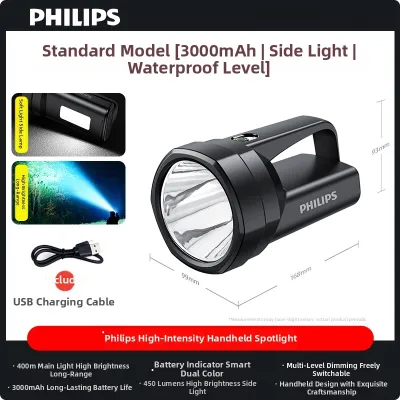
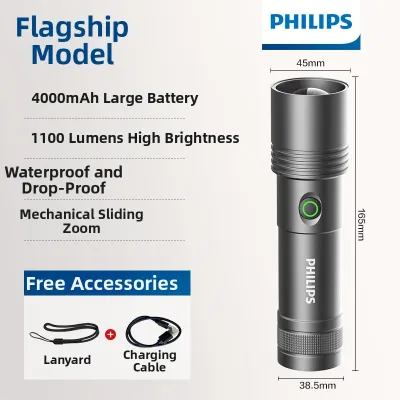
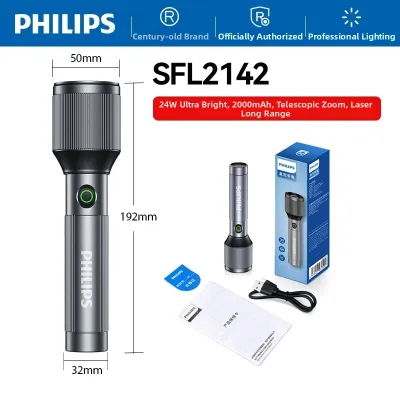
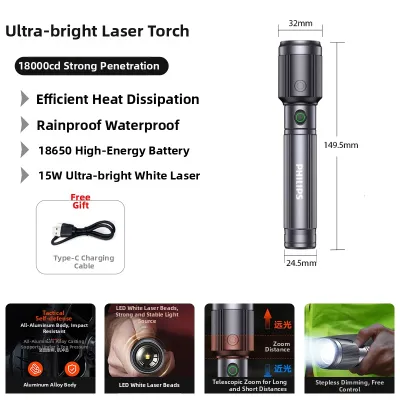
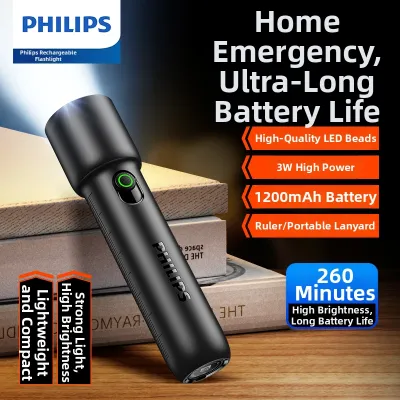
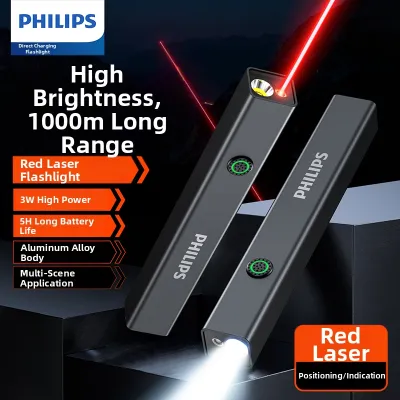
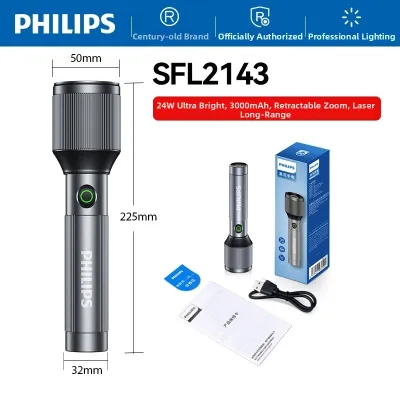
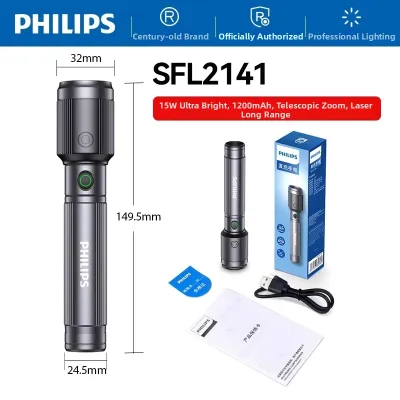
Prices are valid at publication and may change. Please refer to the product page for the latest price.
Larger homes, such as 5-room flats, 3-generation (3Gen) units, or Executive Maisonettes, present different challenges. These layouts often feature long corridors, recessed utility areas, or multiple levels that require a torchlight with a longer beam throw. If you need to navigate a dark hallway or locate family members in distant rooms, a torchlight that can transition between a focused spotlight and a wide floodlight offers the greatest versatility.
Your primary emergency tasks should also guide your selection. The immediate priority during a blackout is navigating safely to your flat’s DB box, which is typically located near the entrance, foyer, or inside a household shelter. This task requires a small, lightweight light that can be grabbed instantly. Other tasks, such as checking on appliances, preparing food, or navigating common corridors during a building-wide evacuation, require hands-free functionality or a broader light spread.
Storage locations play a critical role in how quickly you can react to a sudden blackout. Storing your only torchlight in a cluttered utility room cabinet or at the back of a deep closet defeats its purpose. Consider placing smaller, accessible lights on bedroom nightstands or in a dedicated living room drawer. For larger flats, keeping a secondary, high-capacity light near the DB box or inside the household shelter ensures you always have illumination exactly where critical decisions are made.
Key Specifications to Check in Philips Torchlights
When browsing the Philips torchlight range, understanding how to read the technical specifications on the packaging will help you avoid unsuitable models. Lumens measure the total amount of visible light emitted by the source. For indoor HDB emergency use, a torchlight offering between 100 and 300 lumens is generally the sweet spot. This range provides ample brightness to navigate dark rooms and read small labels on circuit breakers without causing eye strain from excessive reflection.

Beam distance, which is closely linked to the torchlight’s reflector design, indicates how far the light will travel before diminishing. For indoor residential spaces, a beam distance of 15 to 50 meters is more than adequate. Look for Philips models that feature adjustable beam focus or multiple brightness modes. This allows you to drop the lumen output to a low setting when reading a document up close, conserving battery life, or boost it to maximum when searching a dark storage loft.
Ingress Protection (IP) ratings indicate how well the torchlight’s casing seals against dust and moisture. Singapore’s tropical climate features high ambient humidity, which can gradually degrade internal electronic components and battery contacts. A rating of IPX4 indicates splash resistance, which is sufficient for general indoor storage. If you plan to store a backup light in a humid service yard, kitchen, or bathroom cabinet, look for a model with an IP54 or higher rating to ensure long-term protection against dust and moisture ingress.
Finally, evaluate the power source type. Philips torchlights generally fall into two categories: built-in rechargeable lithium-ion models and those powered by replaceable dry-cell batteries (such as AA or AAA alkaline batteries). Rechargeable models are highly convenient and cost-effective for regular use, but they require a disciplined charging routine. Replaceable battery models are excellent for long-term emergency kits because they can sit idle for years, provided you store the batteries outside the device to prevent chemical leaks.
Matching Philips Torchlight Categories to Emergency Scenarios
Philips offers several categories of portable lighting, each suited to different roles during an HDB power emergency. Compact and pocket-sized models are designed for maximum portability and quick access. These torches are lightweight, often measuring less than 15 centimeters in length, making them easy to store in a bedside drawer or carry in a pocket. Their simple, intuitive interfaces allow any family member, including children or elderly relatives, to operate them instantly to find their way to the main living area.
For situations where a power outage lasts for several hours, high-lumen and heavy-duty Philips models become invaluable. These torches feature larger battery capacities and robust aluminum or high-impact polymer casings. While they are heavier, their extended runtime ensures you will not be left in the dark during prolonged repairs. You can also use these powerful torches to create indirect ambient light by pointing the beam directly at a white ceiling, reflecting a soft, even glow across the entire room.
Multi-functional and lantern-style models are specifically engineered for hands-free utility. Many of these designs feature flat bases that allow them to stand vertically on a dining table, built-in hooks for hanging from a door frame, or magnetic backings that stick to metal surfaces like the DB box door. A lantern-style light provides 360-degree illumination, making it the ideal centerpiece for a family gathering in the living room, allowing everyone to eat, play board games, or read comfortably without having to hold a flashlight.
Battery Management and Long-Term Readiness
An emergency torchlight is only useful if it powers on when the electricity fails. For rechargeable Philips models, managing battery degradation is crucial. Lithium-ion and nickel-metal hydride (NiMH) batteries naturally self-discharge over time, even when the torch is turned off. If a rechargeable battery is left completely depleted for several months, it can suffer permanent capacity loss. To prevent this, establish a recurring reminder to recharge your emergency lights every three to six months, aiming to keep them stored at roughly 50% to 80% capacity.
Storage conditions in Singapore flats can significantly impact battery health. High ambient temperatures, such as those found in unventilated storage cabinets adjacent to sunny balconies or near heat-generating kitchen appliances, accelerate battery self-discharge and chemical aging. Store your torchlights in cool, dry, and shaded locations. Avoid keeping batteries inside replaceable-battery torches during long-term storage; alkaline batteries can leak corrosive acid over time, permanently ruining the torchlight’s internal contacts.
Establish a simple quarterly maintenance routine to verify your emergency gear’s readiness. Take each torchlight out of its storage spot, turn it on, and cycle through all the lighting modes to ensure the switch operates smoothly. Check the physical condition of the casing for any cracks, sticky rubber grips, or loose seals. For rechargeable models, plug them into a charger briefly to verify that the charging port is clean, free of lint, and accepting power correctly.
Purchasing Channels and Pre-Purchase Verification
To ensure you receive a genuine Philips product that meets strict electrical safety standards, purchase your torchlight from reputable sources. Authorized physical hardware stores, major department stores, and official brand storefronts on established online marketplaces are the safest options. Be cautious of generic listings on third-party ecommerce platforms that offer suspiciously low prices, as counterfeit portable lighting products often lack essential battery protection circuits, posing a fire hazard during charging.
When your torchlight arrives or when selecting one off a retail shelf, perform a quick pre-purchase verification. Check the packaging for official safety marks and holographic brand labels that indicate authenticity. Verify the warranty terms; reputable Philips distributors typically offer a clear warranty period that protects against manufacturing defects. Ensure all advertised accessories, such as USB charging cables, lanyards, or spare O-rings, are included in the box.
If you are purchasing from a physical retail store, inspect the packaging for any signs of water damage, crushing, or prolonged exposure to sunlight, which can indicate poor storage conditions. If visible, check the manufacturing date or batch code. Avoid buying stock that has sat on a retail shelf for several years, as the pre-installed rechargeable batteries may have already undergone significant capacity degradation before you even unbox the device.
Frequently Asked Questions (FAQ)
Can I leave my rechargeable Philips torchlight plugged in all the time?
While many modern Philips rechargeable torchlights are equipped with smart charging circuits that automatically stop drawing power once the battery is full, it is generally not recommended to leave them permanently plugged into a wall outlet. Continuous exposure to high voltage and trickle charging can generate minor heat, which accelerates the chemical aging of lithium-ion cells over time. For optimal battery lifespan and safety, unplug the charging cable once the indicator light signals that the battery has reached full capacity.
What is the best way to store a torchlight in a humid HDB kitchen?
To protect your torchlight from the high humidity, steam, and airborne grease common in HDB kitchens, store the device inside a sealed, airtight plastic container or a heavy-duty zip-lock bag. Placing a small packet of silica gel desiccant inside the container will absorb any trapped moisture and prevent contact corrosion. Ensure the container is placed in a lower drawer or pantry shelf that is situated far away from heat sources like stoves, ovens, or the back of the refrigerator.
Community discussion
Share your experience or ask a question. Comments are reviewed before publication.