
Selecting the right square light for a standard Housing & Development Board (HDB) flat requires balancing physical dimensions with the spatial constraints of a 2.6m ceiling. Because a 2.6m ceiling height is relatively low, choosing a fixture that is too large or too thick can make a room feel cramped and visually cluttered. Conversely, an undersized fixture may fail to distribute light evenly, leaving corners in shadow.
To achieve a balanced look and optimal illumination, homeowners should focus on both the side length and the profile thickness of the square light. For most HDB spaces, square ceiling lights ranging from 30cm to 60cm in width offer the best proportion. By matching the fixture’s dimensions to the specific room size and ensuring a slim profile, you can maintain comfortable headroom while creating a bright, open atmosphere.
Understanding Room Proportions and Light Dimensions
When planning your lighting layout, it is helpful to understand how a square light interacts with the geometry of a room. Unlike round fixtures, square lights have sharp corners that extend further into the ceiling space. This geometric difference means a square light occupies approximately 27% more visual area than a round light of the same nominal width. Consequently, a square fixture often appears larger and heavier on a ceiling than its round counterpart, making precise sizing essential.
Products mentioned in this guide
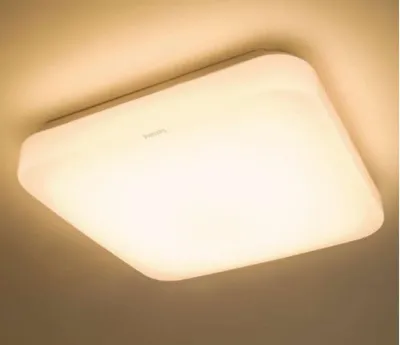
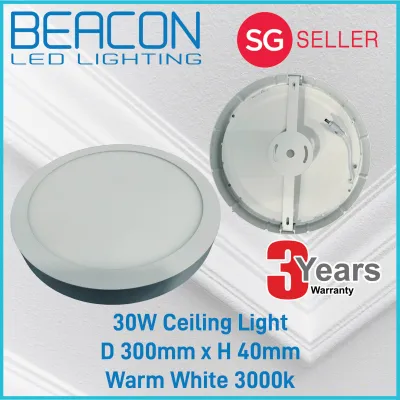
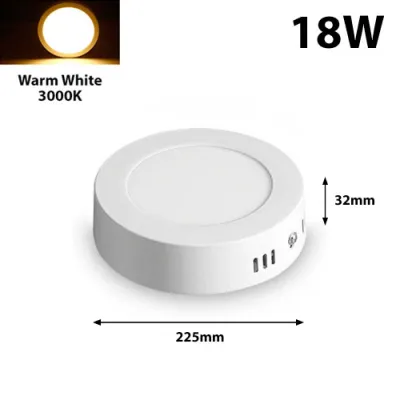
![[Local Seller] LED Ceiling Surface Mounted Downlight LED Panel Light Square Round](https://img.lazcdn.com/g/ff/kf/Sdd11b528478549189cb70a967ccae3d2t.jpg_400x400q80.jpg_.webp)
Prices are valid at publication and may change. Please refer to the product page for the latest price.
The standard 2.6m ceiling height in HDB flats imposes strict limits on the visual weight and physical depth of any ceiling-mounted fixture. If a light protrudes too far downward, it breaks the plane of the ceiling and draws the eye down, which visually shrinks the room. To prevent this cramped sensation, flush-mounted square lights with a slim profile are highly recommended. A fixture that sits close to the ceiling helps maintain an uninterrupted overhead plane, making the entire room feel taller and more spacious.
Another critical factor is the distinction between the physical frame size of the fixture and its actual illuminated surface area. Many square lights feature decorative borders made of wood, metal, or opaque plastic. While these frames can complement your interior design, they reduce the active light-emitting surface. When evaluating a fixture, consider how much of the square footprint actually produces light; a wide, dark frame may require you to select a slightly larger physical size to achieve the desired brightness, though this must be balanced against the added visual bulk.
Calculating the Ideal Square Light Size for Your Room
Determining the correct side length for a square light involves analyzing the dimensions of your room. A practical starting point is to use a basic ratio method that relates the fixture’s size to the room’s perimeter. For a standard square or rectangular HDB room, you can sum the length and width of the room in metres and use that number to guide your fixture size in centimetres. For example, a bedroom measuring 3m by 3m has a sum of 6, which translates to a recommended square light size of approximately 40cm to 50cm. For a larger living room measuring 4m by 5m, a larger fixture of 60cm or a combination of multiple lights is more appropriate.

The primary function of the room also dictates how you should adjust these measurements. Task-heavy areas like kitchens and study rooms require bright, highly focused illumination, which may call for a slightly larger fixture or one with a wider beam angle to prevent shadows on work surfaces. In contrast, bedrooms and dining areas often benefit from softer, more localized lighting, allowing you to opt for a slightly smaller square light that serves as a subtle design accent rather than a dominant light source.
Rather than relying solely on physical dimensions or wattage to estimate brightness, always check the manufacturer’s specifications for the recommended coverage area and luminous flux, measured in lumens. Modern LED square lights are highly efficient, meaning a physically smaller fixture can often produce a high volume of light. Reviewing the beam angle and light distribution curves provided by the manufacturer will help you verify whether a specific square light can adequately cover your room without requiring an oversized frame.
Visual Clearance and Installation Constraints
Maintaining adequate headroom is a primary safety and comfort consideration in any home with a 2.6m ceiling. To ensure that tall residents and guests can move freely without feeling obstructed, the physical thickness of the square light should ideally be kept under 8cm, with ultra-thin profiles of 2cm to 5cm being the preferred choice. Minimizing the downward protrusion of the light ensures that the fixture remains well out of the line of sight and reduces the risk of accidental contact during daily activities.
Before purchasing a new square light, it is essential to inspect the existing ceiling junction box and mounting environment. HDB ceilings are typically constructed of solid concrete, which requires specific masonry anchors and mounting brackets to secure fixtures safely. You must verify that the base plate of the new square light aligns with the existing screw holes or that there is sufficient space on the concrete surface to drill new mounting points without interfering with embedded electrical conduits. Additionally, check that the fixture’s weight is fully supported by the ceiling structure and that the electrical interface matches your home’s voltage and wiring system.
Working with electrical installations carries inherent risks, especially when dealing with fixed wiring or working at heights. Always isolate the power at the main distribution board before attempting to inspect or install any lighting fixture. If the installation requires modifying the existing wiring, extending circuits, drilling into concrete ceilings, or mounting heavy fixtures, stop immediately and consult a licensed electrician. Professional installation ensures compliance with local electrical safety standards and guarantees that the fixture is securely anchored to the concrete ceiling.
Common Sizing Mistakes to Avoid
One of the most frequent errors homeowners make is selecting a square light based entirely on its wattage. While wattage indicates power consumption, it does not reflect how effectively the fixture distributes light across a room. A small square light with high wattage can create an uncomfortable hotspot of intense glare directly underneath, while leaving the corners of the room dark and uninviting. It is far better to choose a fixture with a larger physical diffuser that spreads a moderate amount of light evenly.
Another common mistake is installing a single, centrally located square light in an elongated or L-shaped room. In a long living-dining area, a single fixture in the center will inevitably leave the far ends of the space in deep shadow. For these layouts, relying on a single light source is rarely sufficient, regardless of how large the fixture is. Instead, the space should be zoned with multiple coordinated fixtures to ensure balanced illumination throughout.
Finally, many homeowners overlook the visual bulk of thick, heavily recessed, or dropped-frame square designs. While these fixtures may look appealing in showrooms with high ceilings, they can appear remarkably heavy and oppressive when installed on a 2.6m HDB ceiling. Avoiding overly ornate or deep-set frames helps maintain the clean, minimalist aesthetic that works best in standard-height apartments.
Frequently Asked Questions (FAQ)
Can I use multiple smaller square lights instead of one large fixture?
Using multiple smaller square lights is an excellent way to achieve uniform light distribution, particularly in elongated or open-plan HDB spaces. A grid or linear arrangement of two or three smaller fixtures (such as 30cm square lights) can illuminate a room more evenly than a single large 60cm fixture. However, this approach requires multiple ceiling wiring points. If your HDB flat currently has only one central junction box, adding more points will require installing surface-mounted plastic trunking or constructing a false ceiling. Keep in mind that a false ceiling will lower your overall headroom below the standard 2.6m, so this trade-off must be carefully evaluated.
How do I measure my existing ceiling light to ensure the new square one fits?
To ensure a seamless replacement, start by measuring the outer dimensions of your existing fixture’s base plate. When transitioning from a round light to a square light, the new square base must be large enough to completely cover any paint discoloration, dust outlines, or old screw holes left on the concrete ceiling. Additionally, measure the available flat surface area around the junction box to ensure the square frame can sit perfectly flush against the ceiling without hitting any structural beams or decorative cornices. If you are planning to install a recessed square light, you must also measure the depth of the ceiling cavity to verify that there is sufficient clearance for the fixture’s housing and driver.

Community discussion
Share your experience or ask a question. Comments are reviewed before publication.