
Selecting the ideal square LED ceiling light for a Housing & Development Board (HDB) flat with a standard 2.6-meter ceiling height requires balancing physical dimensions and light output. Because a 2.6-meter ceiling is relatively low, a bulky or overly bright fixture can make the room feel cramped and cause uncomfortable glare. Conversely, an undersized fixture leaves corners in shadow, making the space feel smaller. For most standard HDB bedrooms, a square fixture measuring 40cm to 50cm wide provides a balanced visual footprint, while larger living rooms can accommodate fixtures up to 60cm. Keeping the fixture’s profile slim—ideally under 6cm in thickness—helps maintain an open, airy feel overhead.
Determining the Ideal Physical Dimensions for Your Room
A square shape has sharp, clean lines that draw the eye. On a 2.6m ceiling, vertical clearance is at a premium. A thick, protruding light fixture acts as a visual obstacle, lowering the perceived height of the room. To prevent this, prioritize ultra-slim or flush-mount square LED designs. Leaving sufficient “negative space”—the empty ceiling area surrounding the fixture—is crucial. As a general rule, the width of the ceiling light should not exceed one-eighth to one-tenth of the room’s shortest wall length. For example, in a bedroom measuring 3 meters by 3 meters, a square light between 30cm and 40cm maintains excellent visual proportions.
Most reputable LED ceiling light manufacturers print recommended room coverage areas (usually in square meters) directly on the packaging. When shopping, cross-reference these recommendations with your actual room floor area. However, keep in mind that these estimates often assume a standard ceiling height. For a 2.6m HDB ceiling, you can follow these guidelines closely, but err on the side of a slimmer physical profile if you are on the boundary between two sizes.
Products mentioned in this guide
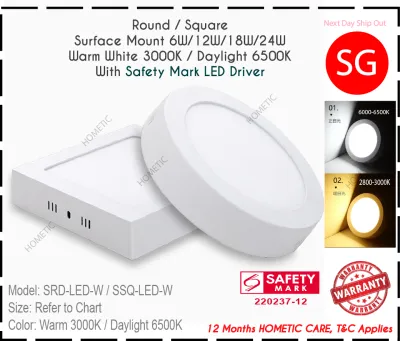
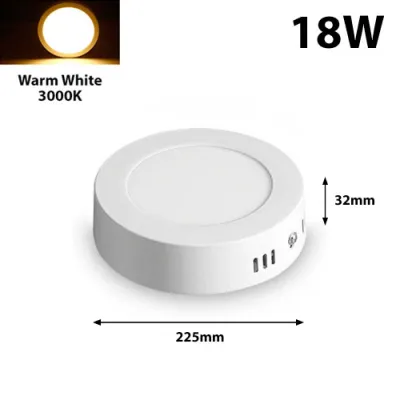
![[Local Seller] LED Ceiling Surface Mounted Downlight LED Panel Light Square Round](https://img.lazcdn.com/g/ff/kf/Sdd11b528478549189cb70a967ccae3d2t.jpg_400x400q80.jpg_.webp)
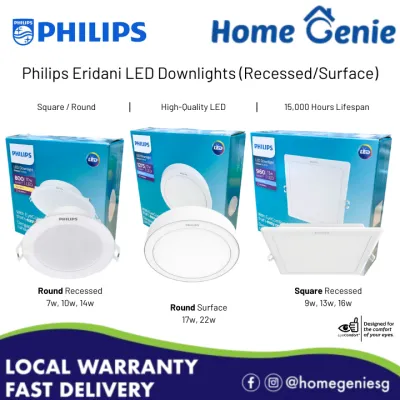
![[Local Set] [3 Year Warranty] Philips Meson LED Downlight Ceiling Light 9W/13W Round/Square [Bundle Deal Available]](https://img.lazcdn.com/g/p/d8d02051d9b113c0010c4b1a40161081.png_400x400q80.png_.webp)
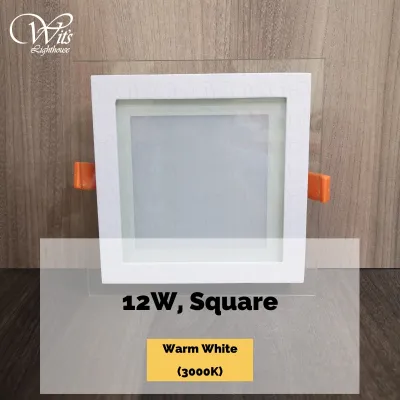
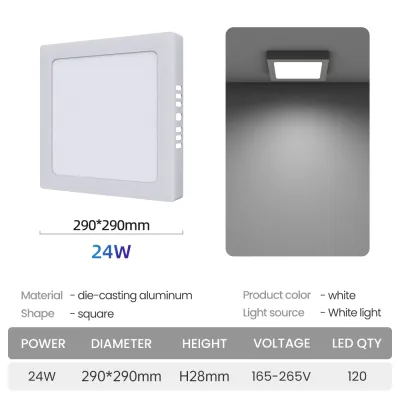
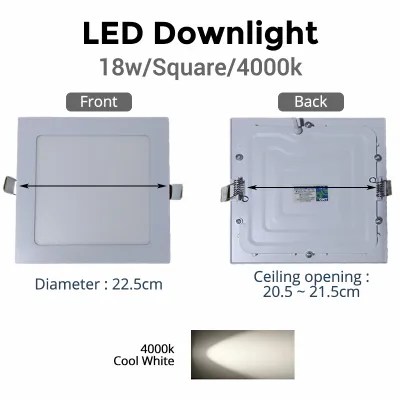
Prices are valid at publication and may change. Please refer to the product page for the latest price.
Narrow corridors, household shelters, and utility rooms require a different approach than open-plan living areas. In a narrow hallway, a large square fixture looks highly restrictive and blocks access to high cabinets. A compact square light of 20cm to 30cm is far more appropriate here. For open-plan HDB layouts, such as combined living and dining rooms, using a single massive square light can look awkward and fail to distribute light evenly. Instead, consider zoning the space with two medium-sized square fixtures (e.g., 50cm each) or combining one central square fixture with complementary recessed downlights or track lighting along the perimeter.
Calculating the Right Brightness and Color Temperature
Historically, homeowners associated wattage with brightness. With modern LED technology, wattage only measures electrical power consumption, while lumens (lm) measure the actual light output. A highly efficient LED ceiling light can produce a high lumen output while consuming very little power. When evaluating square LED ceiling lights, always look at the lumen rating on the product label rather than the wattage. For a 2.6m ceiling, a light that is too bright bounces harsh glare off light-colored tiled or vinyl floors, while a light that is too dim causes eye strain.

Different rooms in an HDB flat demand different levels of illumination. Task-oriented spaces like kitchens and study rooms require higher brightness levels to facilitate safe food preparation or reading. For these areas, aim for a higher lumen output, typically around 3,000 to 4,000 lumens depending on the room size. For bedrooms and living rooms where relaxation is the priority, a softer ambient light of 1,800 to 2,800 lumens is usually sufficient. If you use your living room for multiple activities, such as working from home and watching television, look for fixtures with adjustable brightness levels.
Color temperature, measured in Kelvin (K), significantly influences the mood of a room. Warm white (around 2700K to 3000K) creates a cozy, inviting atmosphere perfect for bedrooms and dining areas. Cool white (around 4000K) offers a neutral, clean light that works exceptionally well in living rooms and studies, enhancing focus without feeling clinical. Daylight (6000K to 6500K) mimics natural midday sun and is highly suited for kitchens and bathrooms where high visibility is essential. Many modern square LED ceiling lights feature “tri-tone” or CCT (Correlated Color Temperature) switching, allowing you to toggle between warm, cool, and daylight settings using your standard wall switch or a remote control, providing maximum flexibility for a multi-purpose HDB space.
Essential Electrical and Structural Checks Before Installation
Before purchasing or mounting a new square LED ceiling light, you must inspect the existing ceiling infrastructure. HDB flats typically feature concrete ceilings with embedded junction boxes. Ensure the junction box is securely anchored and free of cracks or rust. The wiring inside must be in good condition, with no exposed copper or brittle insulation. While square LED fixtures are generally lightweight due to their acrylic and aluminum construction, larger models can still exert pull force on the mounting screws. Verify that the mounting bracket supplied with the light aligns safely with your ceiling’s fixing points.
Electrical safety is paramount. In Singapore, look for the Consumer Product Safety Authority’s Safety Mark on the LED driver and the product packaging. This certification ensures the fixture has undergone rigorous testing for electrical safety, insulation, and fire resistance under local voltage conditions (230V, 50Hz). Avoid unbranded or uncertified fixtures sourced from unregulated online platforms, as low-quality LED drivers are a common cause of electrical shorts, flickering, and premature failure.
Always isolate the electrical power before attempting any inspection or installation. This means turning off the main circuit breaker at your home’s consumer unit (DB box), not just flipping the wall switch. Use a reliable voltage tester to confirm the wires are completely dead before touching them. If your HDB flat has older wiring, if you need to relocate the light point, or if you feel unsure about handling electrical connections, stop immediately and hire a licensed electrical worker (LEW) certified by the Energy Market Authority (EMA). Working at heights on a ladder to install a flush-mount fixture also carries physical risks, making professional installation a highly sensible choice.
Common Sizing and Layout Mistakes to Avoid
A frequent mistake is choosing a massive square fixture under the assumption that “bigger is always better.” In a room with a 2.6m ceiling, an oversized square light creates an oppressive visual weight, making the ceiling feel lower than it is. Furthermore, the intense, concentrated light output from a large fixture can create harsh, deep shadows in the corners of the room and cause uncomfortable glare when you look up, leading to eye fatigue over time.
Flush-mounting a square LED ceiling light requires a flat, unobstructed surface. Homeowners often overlook ceiling features such as surface-mounted electrical trunking, structural beams, air conditioning copper pipes, or uneven plastering. Because square lights have straight, rigid edges, any misalignment with nearby walls or ceiling trunking will be highly visible. Measure the clearance around your light point carefully to ensure the square frame can sit perfectly flush against the concrete ceiling without hitting any obstructions.
Relying solely on one central square ceiling light to illuminate an entire room is a common design pitfall. While a central fixture provides excellent general ambient light, it cannot prevent shadows when you stand with your back to it—such as when working at a desk, cooking at the kitchen counter, or looking into a wardrobe. To create a comfortable and functional environment, layer your lighting. Combine your central square LED ceiling light with task lighting (like under-cabinet LED strips in the kitchen or a desk lamp in the study) and accent lighting (such as warm track lights or wall sconces) to distribute light evenly and add depth to the room.
Frequently Asked Questions (FAQ)
Can I use a dimmable square LED light in a standard HDB room?
Yes, but you must verify compatibility before purchasing. Standard HDB wall switches are simple on/off toggle switches and do not support dimming. To use a dimmable square LED light, you must ensure that the fixture’s built-in LED driver is explicitly rated as dimmable. You will also need to replace your standard wall switch with a compatible dimmer switch (such as a trailing-edge or leading-edge dimmer, depending on the driver’s specifications) or opt for a smart LED ceiling light that dims via a wireless remote control, mobile app, or smart home hub. Installing an incompatible switch-and-driver combination will result in severe flickering, buzzing, and potential damage to the LED components.
How do I clean and maintain a square LED ceiling light?
Maintaining a square LED ceiling light is straightforward but requires safety precautions. Always turn off the power at the wall switch and allow the fixture to cool completely before cleaning. Because most modern square ceiling lights use an acrylic or polycarbonate diffuser cover, avoid using harsh chemical cleaners, alcohol-based sprays, or abrasive scrubbing pads, which can scratch or permanently cloud the plastic. Instead, gently wipe the exterior of the diffuser with a dry or slightly damp microfiber cloth to remove dust and insect debris. If dust has accumulated inside the cover, carefully release the side clips or twist the diffuser to remove it, wipe the interior clean, and ensure it is completely dry before reattaching it to the base.

Community discussion
Share your experience or ask a question. Comments are reviewed before publication.