
Selecting the ideal lighting for your Singapore home involves more than just picking a fixture that fits your ceiling. To create a comfortable, functional, and visually appealing environment in an HDB flat or condominium, you must match the technical specifications of your light sources to the unique demands of each living space. Sunshine LED downlights offer a versatile range of options, but finding the right match requires understanding how specifications like lumens, color temperature, and beam angles translate to real-world performance in your rooms.
A successful home lighting strategy relies on layering different types of illumination rather than relying on a single, uniform overhead source. By evaluating the specific activities that occur in each room, you can determine where you need bright, focused task lighting, soft ambient glow, or dramatic accent lighting. Before purchasing any fixtures, taking the time to assess your ceiling structure, existing cut-out dimensions, and daily habits will ensure you select downlights that enhance both the utility and beauty of your home.
Understanding Your Room-by-Room Lighting Needs
Modern Singapore homes often feature open-plan layouts or multi-functional spaces where a single room serves multiple purposes throughout the day. To light these areas effectively, you must first distinguish between ambient, task, and accent lighting. Ambient lighting provides the general illumination necessary for moving safely around a room, while task lighting delivers focused, brighter light to areas where specific activities like cooking, reading, or working take place. Accent lighting, on the other hand, adds depth and drama by drawing attention to architectural features, artwork, or decorative elements.
Products mentioned in this guide
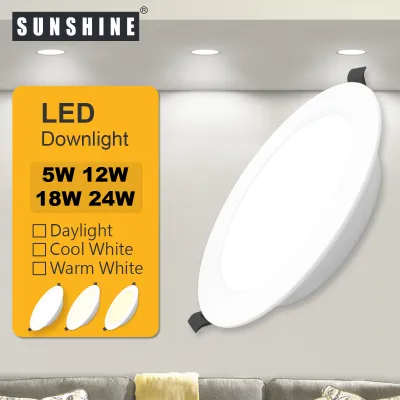
Prices are valid at publication and may change. Please refer to the product page for the latest price.
Color temperature, measured in Kelvin (K), plays a fundamental role in defining the mood and functionality of a room. Lower color temperatures, such as 2700K to 3000K, produce a warm, golden light that promotes relaxation and coziness, making them ideal for areas dedicated to rest. Mid-range temperatures around 4000K, often called cool white, offer a balanced, neutral light that mimics natural daylight, which is excellent for active spaces. Higher temperatures of 6000K to 6500K emit a crisp, bluish-white daylight that maximizes alertness and visibility, though it can feel clinical if used excessively in living areas.
Beam angles and glare control are equally critical factors in ensuring visual comfort. The beam angle determines how widely the light spreads from the fixture; a narrow beam (under 30 degrees) concentrates light into a tight spotlight, whereas a wide beam (over 50 degrees) disperses light broadly across the space. In homes with standard ceiling heights, wide beam angles help prevent dark spots and shadows. However, to avoid uncomfortable glare when looking toward the ceiling, it is wise to select downlights with recessed light sources or integrated diffusers that soften the light before it reaches your eyes.
Key Specifications to Check on Sunshine LED Downlight Packaging
When shopping for Sunshine LED downlights, the product packaging serves as your primary guide to ensuring compatibility and safety. The first physical specification to verify is the cut-out dimension, which represents the exact diameter of the hole required in your false ceiling. Because downlight sizes are standardized, measuring your existing ceiling holes before purchasing is essential to avoid the frustration of buying fixtures that are either too small to stay secure or too large to fit.

Electrical compatibility is another vital parameter that must be verified on the packaging. In Singapore, the standard residential electrical supply operates at 230V and 50Hz, so you must confirm that the downlight driver is rated for this voltage range. Additionally, look for recognized safety marks and international certification labels on the box. These markings indicate that the product has undergone rigorous testing for electrical safety, insulation quality, and fire resistance, providing peace of mind for long-term residential use.
For installations in areas exposed to moisture, you must check the Ingress Protection (IP) rating printed on the packaging. An IP rating consists of two numbers: the first measures protection against solid objects like dust, while the second measures resistance to liquids. While a standard IP20 rating is perfectly adequate for dry areas like corridors and living rooms, any downlight destined for a bathroom or service yard requires a higher rating, such as IP44, to protect the internal electronics from steam and water splashes.
Finally, if you plan to control your lighting levels, you must verify the dimming compatibility and wattage limits. Not all LED downlights are designed to work with dimmer switches, and installing a non-dimmable model on a dimming circuit can cause persistent flickering, buzzing, or permanent damage to the LED driver. Check the packaging for an explicit “dimmable” label, and ensure the total wattage of the connected downlights does not exceed the maximum load capacity of your dimmer switch or home circuit breaker.
Matching Sunshine Downlight Features to Specific Spaces
Achieving a balanced and comfortable lighting scheme throughout your home requires matching the observable features of Sunshine LED downlights to the functional demands of each room. By focusing on key performance indicators like lumen output, color rendering, and physical design, you can select the ideal fixtures for every zone.
Living and Dining Areas
The living and dining rooms are the primary social hubs of a Singapore home, hosting activities that range from hosting lively dinner parties to winding down with a movie. To accommodate these shifting needs, look for Sunshine LED downlights that feature warm white color temperatures, around 3000K, which enhance the natural warmth of wooden furniture and create an inviting, hospitable atmosphere. Opting for dimmable downlights in these areas allows you to easily transition the environment from bright and functional to soft and intimate.
When planning the layout, select downlights with a medium to wide beam angle to ensure even, shadow-free illumination across the main seating and dining zones. To add visual interest, you can pair these with a few narrow-beam downlights positioned to highlight artwork, a feature wall, or the center of the dining table. Ensure these accent fixtures are positioned carefully to prevent direct glare from reflecting off television screens or polished tabletops.
Kitchens and Utility Zones
Kitchens and utility areas are high-activity workspaces where safety and precision are paramount. For these zones, prioritize Sunshine LED downlights with a high lumen output to ensure that countertops, sinks, and cooking surfaces are brightly illuminated. A cool white color temperature of 4000K is highly recommended for kitchens, as it provides a clean, energetic light that improves focus and makes it easier to spot dirt, spills, or cooking progress.
Accurate color representation is also crucial when preparing food, as it helps you judge the freshness and quality of ingredients. Check the downlight packaging for the Color Rendering Index (CRI) rating, and select fixtures with a CRI of 80 or higher to ensure colors appear natural and true to life. To prevent shadows while working, position the downlights directly above the front edges of your countertops rather than in the center of the ceiling walkway.
Bedrooms and Rest Areas
Bedrooms are personal sanctuaries designed for rest and relaxation, meaning the lighting must support your body’s natural circadian rhythm. To create a soothing environment that helps you wind down in the evening, select Sunshine LED downlights with a warm color temperature, ideally between 2700K and 3000K. This soft, low-intensity light mimics the natural progression of sunset, signaling to your brain that it is time to prepare for sleep.
Because you will spend time looking upward while lying in bed, minimizing glare is essential for physical comfort. Look for deep-recessed downlight designs where the LED chip is positioned further back inside the housing, or choose fixtures equipped with high-quality frosted diffusers that scatter the light gently. Combining these low-glare fixtures with a compatible dimmer switch allows you to adjust the brightness to a minimal level for late-night reading or early-morning waking.
Installation Boundaries and Safety Checks
Whether you are replacing a single faulty fixture or installing an entirely new lighting layout, electrical safety must always be your top priority. Before touching any wiring or removing an existing downlight, you must isolate the power supply. Turn off the corresponding circuit breaker at your home’s main consumer unit, and use a reliable voltage tester at the ceiling wires to verify that the circuit is completely dead before beginning any physical work.
Proper heat management is also critical to ensuring the safety and longevity of your LED downlights. Although LEDs run much cooler than traditional halogen bulbs, their drivers and internal components still generate heat that must be dissipated. Always refer to the manufacturer’s installation manual included with your Sunshine LED downlights to confirm the required clearance space behind the fixture. Never cover a downlight or its external driver with ceiling insulation material unless the product packaging explicitly states it is rated for direct insulation contact.
Finally, it is vital to recognize when a project exceeds safe DIY boundaries and requires professional expertise. In Singapore, any work involving modifications to fixed electrical wiring, the creation of new ceiling cut-outs, or installations in wet zones like bathrooms must be performed by a licensed electrician. Hiring a qualified professional ensures that your installation complies with local building codes, guarantees secure and insulated wiring connections, and protects your home from potential electrical hazards or fire risks.
Frequently Asked Questions (FAQ)
Can I install Sunshine LED downlights in my bathroom?
Yes, you can install Sunshine LED downlights in a bathroom, but you must select fixtures that are specifically rated for wet or damp environments. Bathrooms generate significant amounts of steam and moisture, which can easily penetrate standard indoor light fixtures and cause short circuits, corrosion, or premature failure. Check the Sunshine LED packaging to ensure the downlight has an Ingress Protection rating of IP44 or higher, which certifies that the fixture is protected against splashing water from any direction. Additionally, ensure that any installation in a bathroom is carried out by a qualified professional to guarantee compliance with local electrical safety standards for wet zones.
Do Sunshine LED downlights work with my existing dimmer switches?
Sunshine LED downlights will only function correctly with your existing dimmer switches if the specific model you purchase is explicitly labeled as dimmable on its packaging. Attempting to use a standard, non-dimmable LED downlight on a dimming circuit will typically result in rapid flickering, audible buzzing, or complete driver failure. Even when using a dimmable model, compatibility can vary depending on the age and technology of your existing dimmer switch. To ensure smooth, flicker-free dimming, cross-reference the downlight’s technical specifications with your dimmer’s minimum and maximum load requirements, or consult a licensed electrician to install an LED-compatible trailing-edge dimmer.
Community discussion
Share your experience or ask a question. Comments are reviewed before publication.