
Finding the ideal toilet ceiling light for a Housing & Development Board (HDB) flat requires a careful balance of physical dimensions, moisture protection, and electrical safety. In Singapore, standard HDB toilet ceilings sit at a height of approximately 2.6 meters, which can feel even lower if you have installed a false ceiling to conceal piping or instant water heaters. This limited vertical clearance means that bulky, hanging, or highly decorative fixtures are impractical and potentially hazardous. Instead, homeowners must focus on low-profile, highly sealed fixtures that can withstand the daily steam and splashing of a compact bathroom environment.
To make an informed purchase, you must look beyond aesthetic appeal and evaluate lighting brands based on their technical specifications, local safety certifications, and warranty terms. Because a bathroom is classified as a wet area, installing an unsuitable fixture can lead to premature driver failure, corrosion, or even electrical short circuits that trip your home’s residual current circuit breaker (RCCB). By understanding how to read product labels, verify safety marks, and assess your bathroom’s structural limits, you can select a reliable ceiling light that provides bright, safe, and long-lasting illumination.
Essential Fixture Specifications for 2.6m Ceilings and Damp Environments
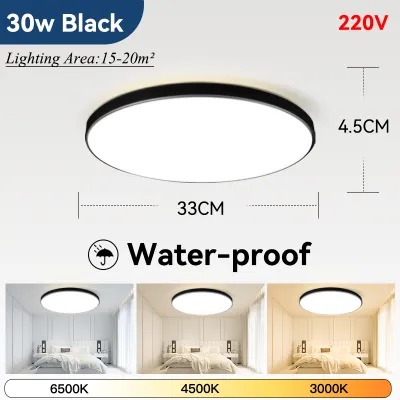
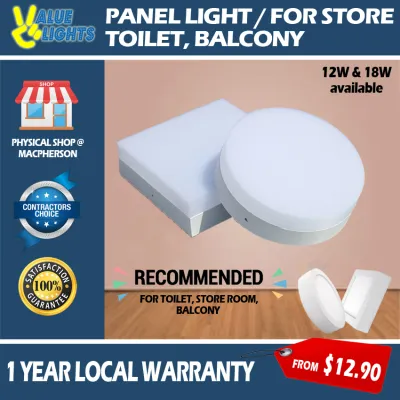
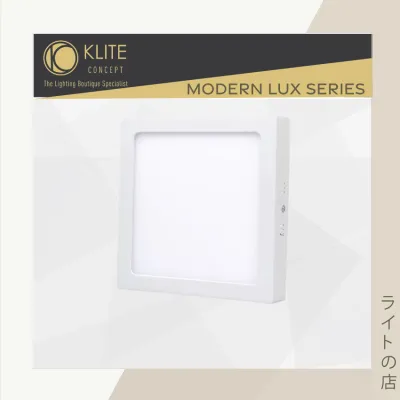
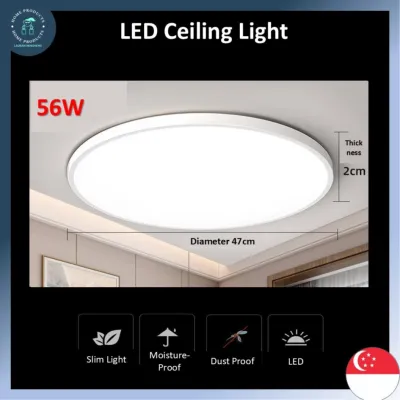
When shopping for a toilet ceiling light, the physical profile of the fixture is your first major consideration. With a ceiling height of 2.6 meters, any light that protrudes significantly into the space will make the bathroom feel cramped and may interfere with shower screens, cabinet doors, or tall occupants. Flush-mount or ultra-slim LED ceiling lights are the industry standard for these spaces. These fixtures typically feature a depth of less than 5 centimeters, allowing them to sit tight against the ceiling slab or false ceiling panel. This low-profile design maximizes headroom, distributes light evenly across the small footprint of an HDB toilet, and minimizes the risk of accidental physical contact.
Products mentioned in this guide
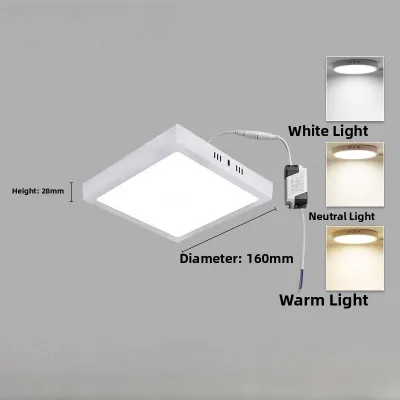
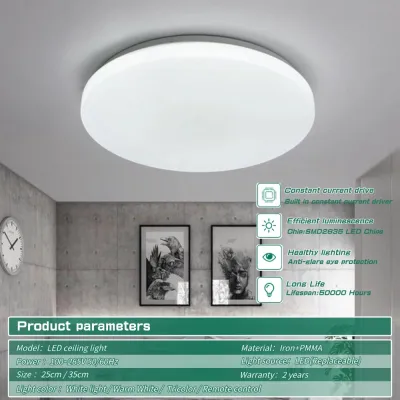
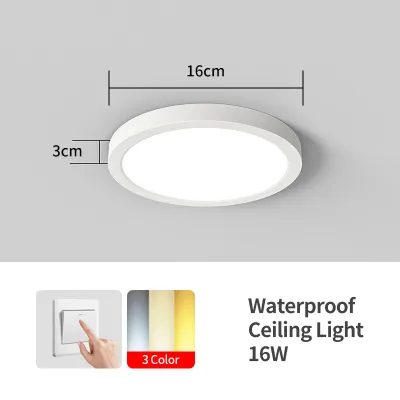
Prices are valid at publication and may change. Please refer to the product page for the latest price.
Moisture resistance is the single most critical safety factor for any bathroom light. To determine if a fixture can handle the high humidity of a shower area, you must check its Ingress Protection (IP) rating. An IP rating consists of two digits: the first measures protection against solid objects, and the second measures protection against liquids. For general HDB toilet installations, a minimum rating of IP44 is highly recommended. An IP44 rating indicates that the fixture is protected against solid objects larger than 1 millimeter and, more importantly, protected against water splashing from any direction. If the light is to be installed directly inside a shower cubicle or close to a high-pressure shower head, upgrading to an IP65-rated fixture—which is dust-tight and protected against water jets—provides an extra layer of safety.
Illumination needs in a compact, often windowless HDB toilet require a careful balance of brightness and visual comfort. Because bathroom walls are frequently finished with reflective ceramic or porcelain tiles, an overly bright or poorly diffused light can cause harsh glare and eye strain. For a standard HDB toilet (typically measuring between 3 to 5 square meters), a light output of 800 to 1,200 lumens is generally sufficient for daily grooming tasks. Look for fixtures equipped with a high-quality frosted polycarbonate diffuser, which softens the light output and eliminates harsh shadows. Additionally, consider the color temperature: a cool white (4000K) light offers a clean, natural balance that is excellent for grooming, while a warm white (3000K) light creates a softer, more relaxing atmosphere.
Evaluating Lighting Brands for HDB Bathroom Compatibility
Navigating the crowded lighting market requires a structured approach to verify which brands offer genuine, high-quality products suitable for Singapore’s electrical standards and tropical climate. The most critical step in this evaluation is checking for safety compliance. In Singapore, controlled electrical goods must carry the Safety Mark issued by Enterprise Singapore. This mark indicates that the product has undergone rigorous testing by an accredited certification body to ensure it complies with local safety standards, including insulation resistance, thermal safety, and protection against electrical shock. When researching brands, always verify that the specific model you intend to buy is registered and carries the Safety Mark on its packaging or driver unit.

Warranty terms and after-sales support are excellent indicators of a brand’s confidence in its product durability. High humidity and heat can accelerate the degradation of electronic components, particularly the LED driver, which regulates power to the light-emitting diodes. When comparing brands, read the warranty fine print to ensure that coverage remains valid when the fixture is installed in a bathroom. Some budget brands offer warranties that are voided by “use in high-humidity or corrosive environments.” A reputable brand should offer a local warranty of at least one to three years, backed by a clear claim process through an authorized local distributor or service center, ensuring you can easily obtain a replacement if the driver fails prematurely.
Furthermore, look for brands that maintain dedicated bathroom or damp-location product lines rather than those that simply market generic dry-room fixtures for toilet use. Brands with dedicated bathroom ranges design their products from the ground up to resist moisture. This includes using rust-resistant mounting brackets (such as high-grade aluminum or treated stainless steel), silicone gaskets that seal the housing against steam, and sealed driver compartments that prevent humid air from contacting live electrical connections. Choosing a brand with a proven track record in damp-environment engineering significantly reduces the likelihood of moisture-induced failures over time.
Pre-Installation Checks and Electrical Safety Boundaries
Before purchasing your new toilet ceiling light, you must conduct a thorough inspection of your existing bathroom infrastructure. Start by isolating the electrical power at your home’s main distribution board (DB box) by switching off the circuit breaker dedicated to the lighting route. Once the power is safely cut, remove your existing fixture to inspect the ceiling rose and the condition of the wiring. Look closely for any signs of moisture damage, such as green copper corrosion (oxidation) on exposed wires, brittle or cracked wire insulation, or water stains around the junction box. If you detect any of these issues, the wiring must be repaired or replaced before a new fixture is mounted.
Next, evaluate the structural limits of your bathroom ceiling. HDB toilets generally feature either a solid concrete ceiling slab or a suspended false ceiling made of calcium silicate, PVC, or aluminum panels. If you are mounting the light directly to a concrete slab, ensure you use appropriate masonry wall plugs and screws to secure the mounting bracket. If you have a false ceiling, you must verify its weight-bearing capacity. Lightweight plastic or aluminum panels can sag or warp under the weight of heavy fixtures. For false ceilings, choose ultra-lightweight LED panels (typically weighing under 1 kilogram) or ensure that the mounting screws pass through the panel and secure directly into the metal support framework or the concrete slab above.
It is vital to recognize the boundaries of do-it-yourself electrical work. While replacing a simple, like-for-like light fixture on an existing point is manageable for many homeowners, complex tasks strictly require the expertise of a licensed electrical worker (LEW). You must engage a professional if you need to run new electrical wiring, relocate the light point to a different part of the ceiling, install a new wall switch, or upgrade your bathroom’s electrical circuit. Working with electricity in a damp environment carries a high risk of severe shock or fire if connections are not perfectly sealed and grounded. A licensed professional will ensure that all installations comply with the Singapore Standard SS 638 (Code of Practice for Electrical Installations).
Maintaining Ceiling Fixtures in High-Humidity Toilets
To maximize the lifespan of your toilet ceiling light and prevent electrical hazards, establish a routine maintenance schedule. Every three to six months, perform a quick visual inspection of the fixture. Look for any signs of moisture ingress, such as water droplets or condensation pooling inside the plastic diffuser lens. Check the outer edges of the light for rust, discoloration, or peeling paint, which can indicate that steam is escaping past the seals. Additionally, inspect the silicone or rubber gasket that runs along the rim of the fixture; if the gasket appears cracked, dry, or misaligned, it may no longer provide an effective barrier against humidity.
When cleaning your ceiling light, safety must always come first. Always turn off the wall switch and allow the fixture to cool down completely before touching it. Use a dry or slightly damp, soft microfiber cloth to wipe away dust, lint, and water spots from the exterior housing and diffuser. Never spray water or cleaning solutions directly onto the fixture, as liquid can seep through small gaps or ventilation holes. Avoid using harsh chemical cleaners, bleach, alcohol, or abrasive scrubbing pads, as these substances can degrade the protective UV coating on plastic diffusers and accelerate the breakdown of rubber moisture seals.
Finally, learn to recognize the warning signs that indicate your fixture requires immediate professional attention. If your toilet light begins to flicker persistently, emits a buzzing or humming sound, or takes an unusually long time to turn on, these are common symptoms of a failing LED driver or moisture accumulation inside the electrical housing. If you observe any of these issues, or if you spot visible condensation trapped inside the sealed lens, immediately turn off the power switch and isolate the circuit at your DB box. Do not attempt to dismantle the fixture yourself while it is connected to the mains; instead, contact a qualified electrician to inspect, dry, or replace the unit.
Frequently Asked Questions (FAQ)
Is a dedicated bathroom light necessary, or can I use a standard bedroom ceiling light?
Using a standard bedroom ceiling light in an HDB toilet is highly discouraged and can pose significant safety risks. Standard indoor lights are typically rated IP20, meaning they offer no protection against moisture, steam, or water splashes. Over time, the high humidity of a bathroom will cause steam to penetrate the unsealed housing of a standard light, leading to rapid corrosion of the internal wiring, rusting of metal components, and premature failure of the LED driver. More importantly, moisture accumulation inside an unrated fixture can cause electrical short circuits, potentially tripping your home’s safety switches or creating a shock hazard. For any bathroom installation, always choose a fixture with a verified rating of at least IP44.
Will a flush-mount light provide enough brightness for a windowless HDB toilet?
Yes, a high-quality flush-mount LED light can easily provide more than enough brightness for a windowless HDB toilet, provided you select a model with the correct lumen output. Because windowless bathrooms lack natural daylight, you should aim for a fixture that delivers between 1,000 and 1,500 lumens to ensure the space feels bright and open. To maximize the efficiency of the light, leverage the reflective surfaces in your bathroom; light-colored wall tiles, large mirrors, and white ceilings will help bounce and distribute the light evenly, eliminating dark corners. Choosing a model with a wide beam angle (120 degrees or more) and a high-quality frosted diffuser will ensure the entire room is illuminated without creating harsh glare or shadows.

Community discussion
Share your experience or ask a question. Comments are reviewed before publication.