
Installing low-voltage 12V spot and track lights requires matching your fixtures with the correct transformer or LED driver to ensure safe, stable, and flicker-free illumination. To choose the right power supply, you must determine whether your lights require an AC transformer or a DC driver, calculate the total wattage load of your fixtures, and apply a safety margin to prevent overloading. Additionally, you must verify that your dimming system is fully compatible with your chosen driver and place the unit in a well-ventilated area that complies with local safety regulations.
Why 12V Lights Need a Transformer in Singapore
Standard mains electricity in Singapore is supplied at a nominal voltage of 230V AC at a frequency of 50Hz. Connecting a 12V spot or track light directly to this high-voltage supply would instantly destroy the fixture’s internal components, create a short circuit, and present a severe fire or electrocution hazard. To bridge this gap, a transformer or LED driver acts as an intermediary electrical step-down device, converting the high-voltage 230V mains current into a stable, low-voltage 12V supply.
Using a 12V low-voltage system offers several practical advantages for residential and commercial spaces. The lower voltage significantly reduces the risk of electrical shock, making it a safer option for adjustable track heads that are frequently handled or repositioned. Furthermore, 12V systems can utilize thinner, more flexible wiring within the track or fixture arm, which allows designers to create sleeker, more minimalist lighting profiles that would be difficult to achieve with bulky 230V wiring.
Products mentioned in this guide
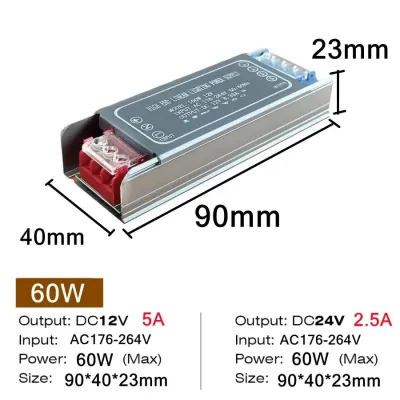
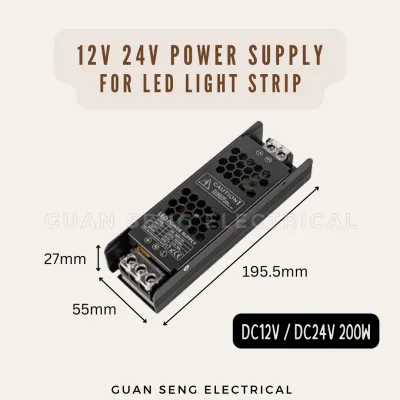
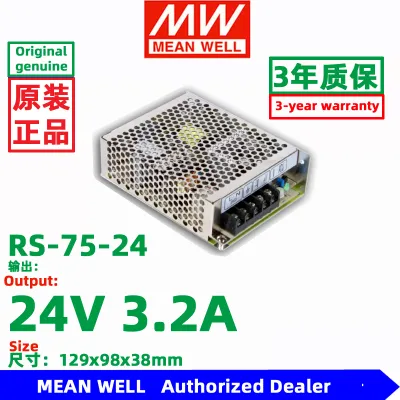
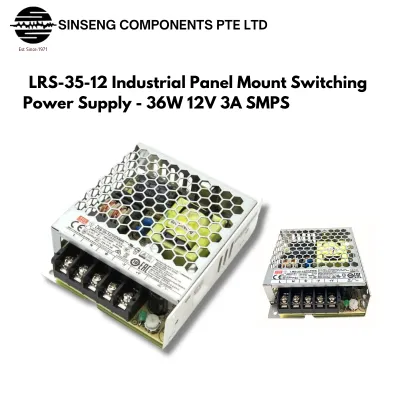
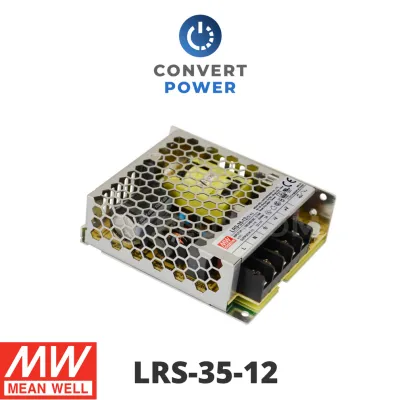
Prices are valid at publication and may change. Please refer to the product page for the latest price.
How to Calculate the Right Transformer Wattage
Selecting an underpowered transformer will cause your lights to flicker, dim, or fail prematurely, while an oversized transformer can be an unnecessary expense. Finding the correct capacity requires a straightforward two-step calculation based on your total fixture load and a standard safety buffer.

Calculating Total Fixture Wattage
To size your transformer correctly, you must first determine the total electrical load of the lighting circuit. Begin by locating the manufacturer’s label on each spotlight or track head to find its rated wattage. If you are installing multiple fixtures on a single track run, add the individual wattages together to calculate the combined load.
When working with fixtures that feature interchangeable bulbs, such as MR16 or GU5.3 spotlights, you must base your calculations on the maximum wattage rating of the fixture itself rather than the wattage of the bulb currently installed. For instance, if you install a 5W LED bulb into a fixture rated for a maximum of 20W, use the 20W limit for your calculations. This safeguard ensures that if someone later replaces the bulb with a higher-wattage alternative, the transformer will not be overloaded.
Applying the 20% Safety Headroom
An electrical power supply should never be operated at its absolute maximum capacity for extended periods. Continuous operation at 100% load generates excessive heat, accelerates the degradation of internal components, and often leads to premature driver failure. To prevent this, apply the industry-standard “80% rule,” which dictates that a transformer or driver should only be loaded to a maximum of 80% of its rated output capacity.
To calculate the minimum required capacity for your transformer, multiply your total fixture wattage by 1.25 (which is the mathematical equivalent of reserving 20% headroom). For example, if you are installing five 12V LED spotlights rated at 6W each, your total fixture wattage is 30W. Multiplying 30W by 1.25 yields 37.5W, meaning you must select a transformer rated for at least 37.5W. In this scenario, a standard 40W or 50W driver would be the appropriate choice to ensure reliable, long-term performance.
LED Drivers vs. Traditional Transformers: Which Do You Need?
While the terms “transformer” and “driver” are sometimes used interchangeably, they refer to different technologies designed for specific types of light sources. Using the wrong power supply type can lead to poor performance and damage your fixtures.
Constant Voltage LED Drivers for Modern Fixtures
Most modern 12V spot and track lights utilize LED technology, which requires a highly regulated, direct current (DC) power supply known as a Constant Voltage (CV) LED driver. Unlike traditional incandescent or halogen bulbs, LEDs are highly sensitive to voltage fluctuations and require a stable 12V DC output to prevent damage to their delicate semiconductor junctions.
Before purchasing a driver, carefully check your lighting fixture’s product specifications to confirm whether it requires a 12V DC or 12V AC input. While the vast majority of modern LED fixtures operate on DC, some retrofit LED bulbs are designed to run on 12V AC to maintain compatibility with older systems. Choosing a dedicated Constant Voltage LED driver generally provides a more compact, lightweight, and energy-efficient solution than relying on older magnetic transformers.
Why Halogen Transformers Fail with LEDs
When upgrading an existing 12V halogen track system to energy-efficient LEDs, homeowners often attempt to reuse the existing halogen transformer. This mismatch frequently leads to immediate performance issues, including rapid flickering, loud buzzing, or a complete failure of the lights to turn on. These issues occur because older electronic and magnetic transformers designed for halogen lamps require a high “minimum load” (often 20W to 50W) to operate stably.
Because a typical LED spotlight draws only 5W to 8W, a small group of LED fixtures may fail to reach the old transformer’s minimum load threshold. The transformer responds by outputting unstable voltage, which degrades the LED chips and causes visible strobing. To protect your investment and ensure stable, flicker-free performance, always replace legacy halogen transformers with dedicated, low-minimum-load LED drivers.
Matching Your Dimmer to the Driver for Flicker-Free Control
Achieving smooth, flicker-free dimming on a 12V lighting circuit requires strict compatibility across three distinct components: the wall dimmer switch, the 12V driver, and the light fixture itself. If any of these components are mismatched, you are likely to experience issues such as a limited dimming range, sudden drop-offs, or audible buzzing.
The most common dimming protocol used in Singaporean residential electrical setups is TRIAC (phase-cut) dimming, which is divided into leading-edge and trailing-edge technologies. When planning your installation, you must ensure that your 12V driver is explicitly labeled as dimmable and matches the specific type of dimmer switch you intend to install. For modern LED setups, trailing-edge dimmers are generally preferred as they provide smoother control and reduce electrical stress on the driver.
Before committing to a large-scale installation, it is highly recommended to purchase a single driver, dimmer, and fixture combination to test the circuit’s performance. Furthermore, if you plan to integrate your 12V track lights with smart home switches or automation systems, consult the driver manufacturer’s approved compatibility list to verify that the smart dimmer’s minimum load and signaling protocol align perfectly with the driver’s specifications.
Safe Placement, Ventilation, and Installation Rules
All electrical transformers and drivers generate heat during operation as they convert high-voltage electricity down to 12V. To prevent overheating, these devices must be installed in locations with adequate ventilation and airflow. Avoid wrapping a driver in thermal ceiling insulation, stuffing it into tight, unventilated cavities, or enclosing it in airtight junction boxes, as trapped heat will drastically shorten the unit’s lifespan and create a fire hazard.
When choosing a mounting location, consider the environmental conditions of the space. While standard indoor dry areas like living rooms or corridors do not require specialized ingress protection, damp environments demand careful planning. If you are installing 12V spot lights in a bathroom, kitchen, or covered balcony, you must house the driver in an appropriately rated weatherproof enclosure or purchase a driver with an IP65 or higher rating to protect the internal circuitry from moisture and dust.
In Singapore, strict electrical safety regulations govern residential and commercial wiring. While handling the low-voltage (12V) side of the system might seem straightforward, all fixed wiring, mains power connections (230V side), and circuit integrations must comply with local safety standards, such as SS 638. For your safety and to maintain your property’s insurance coverage, always isolate the power supply at the main distribution board before commencing any work, and hire a licensed electrical worker (LEW) to perform the installation.
Frequently Asked Questions (FAQ)
Can I use one large transformer for an entire track lighting system?
Yes, you can use a single high-capacity transformer to power multiple track lights, but you must account for voltage drop. As low-voltage 12V electricity travels along a long run of track or copper wiring, the electrical resistance causes the voltage to decrease gradually. This voltage drop can result in fixtures at the far end of the track appearing visibly dimmer than those closest to the power source. To prevent this, limit your track runs to reasonable lengths, use thicker gauge wire, distribute multiple smaller drivers along the track, or feed power into both ends of the track loop.
Do 12V track lights need a special transformer if they have built-in LEDs?
No, if a track light fixture features integrated LEDs and is explicitly rated for a standard 230V input, it does not require an external transformer. These integrated fixtures feature a built-in driver housed directly within the track head or canopy that handles the voltage conversion internally. You only need to purchase and install an external transformer or driver if the product specifications explicitly state that the fixture operates on a 12V input.
Community discussion
Share your experience or ask a question. Comments are reviewed before publication.