
Selecting the right Wiz downlight for a standard 2.6m HDB ceiling requires balancing lumen output, choosing wide beam angles to prevent harsh spotlights, and verifying physical recess depth against the false ceiling clearance. Because a 2.6m ceiling height places light sources closer to eye level, careful planning is essential to avoid glare while ensuring even, comfortable illumination throughout your home. By matching the technical specifications of Wiz fixtures to the unique structural constraints of Singapore flats, you can create a highly functional and customizable smart lighting setup.
Understanding Lighting Dynamics in 2.6m HDB Ceilings
A ceiling height of 2.6 meters is standard across most modern Housing & Development Board (HDB) flats in Singapore. This relatively low clearance changes how light travels from the ceiling to your living surfaces. Because the light source sits closer to eye level, the risk of direct glare increases significantly if the wrong fixtures are selected.
In compact spaces, narrow beam angles create intense, localized pools of light on the floor. These concentrated beams leave the surrounding areas in deep shadow, creating high-contrast environments that strain the eyes. For general ambient lighting in an HDB flat, wider beam angles are necessary to distribute illumination evenly across the room.
Products mentioned in this guide
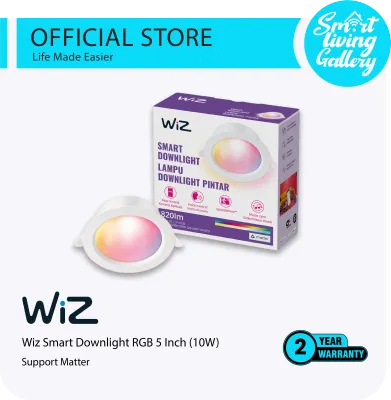
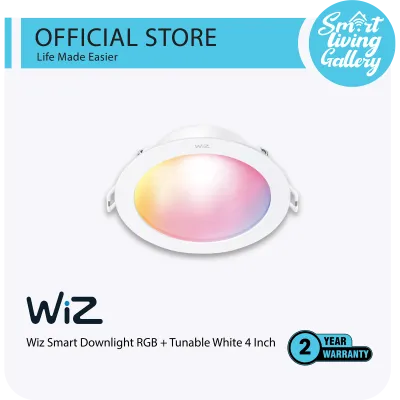
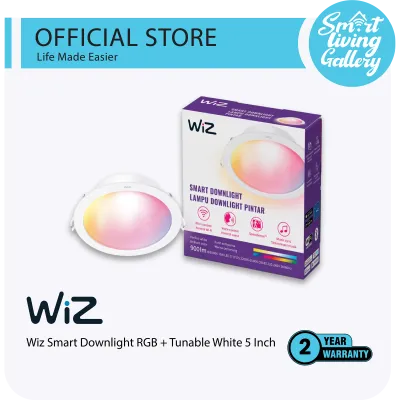
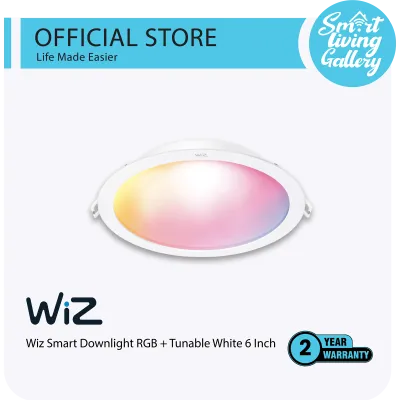
Prices are valid at publication and may change. Please refer to the product page for the latest price.
At a 2.6m height, a downlight with a wide beam angle of 100 to 110 degrees allows the light cone to spread broadly before reaching the floor. This wide distribution ensures that the light paths of adjacent fixtures overlap seamlessly. Overlapping light cones are essential for eliminating harsh shadows and creating a soft, continuous wash of light across the living space.
Over-illumination is another common issue when retrofitting smart lighting in low-ceiling homes. Installing high-lumen commercial-grade fixtures in a 2.6m space often results in a harsh, clinical atmosphere. To maintain visual comfort, homeowners must balance the total light output with the room’s physical volume, ensuring the light diffuses softly before reaching eye level.
Decoding Wiz Downlight Specifications for Low Ceilings
When browsing Wiz downlight options, focusing solely on wattage can be misleading. Smart LED technology is highly efficient, meaning wattage does not directly correlate with brightness. Instead, look at the lumen rating on the product packaging to determine the actual light output. For a 2.6m ceiling, a lower lumen output per fixture is generally preferred when multiple lights are installed in a grid pattern.

Beam angle selection is critical for achieving the desired lighting effect. For general ambient lighting in living rooms and bedrooms, downlights with a wide beam angle of 100 degrees or more help blend the light paths of adjacent fixtures. For task-oriented areas, such as study desks or kitchen countertops, a medium beam angle can provide targeted illumination without spilling excess light into resting zones.
Color temperature flexibility is a core benefit of smart downlights. Wiz fixtures typically offer tunable white ranges, allowing users to transition from cool daylight for daytime focus to warm white for evening relaxation. Matching these color temperatures to your daily routine helps support natural circadian rhythms within the compact HDB layout.
Additionally, you must verify the dimming compatibility of these smart fixtures. Wiz downlights utilize integrated digital dimming, which is controlled directly via the smart app, voice assistants, or compatible wireless switches. They must never be connected to traditional wall-mounted analog dimmer switches, as the voltage fluctuations from analog dimmers will damage the internal smart driver and cause persistent flickering.
Verifying Form Factors and Installation Clearances
Before purchasing any Wiz downlight, physical dimensions must be verified against your flat’s existing ceiling structure. If you are replacing older fixtures, measure the diameter of the existing ceiling cut-out. Wiz downlights come in various standard cut-out sizes, and choosing an incorrect size will require messy plasterboard modifications.
False ceiling depth is another critical constraint in HDB flats. Because false ceilings are often built as low as possible to maximize headroom, the vertical space behind the plasterboard may be extremely limited. Measure the available depth from the underside of the concrete slab to the plasterboard face, and compare this with the overall height of the downlight housing.
Adequate thermal clearance is essential for the safe operation and longevity of smart LED drivers. Even energy-efficient LEDs generate heat that must dissipate from the rear heat sink. Ensure there is sufficient empty space around the fixture as specified by the manufacturer, and never cover the downlight with thermal insulation unless the model is explicitly rated for contact.
Safety is paramount during any electrical installation. Ensure that the fixtures you purchase carry the appropriate local electrical safety certifications, such as the Safety Mark in Singapore, which verifies compliance with local voltage standards (230V). Before attempting any installation or replacement, always isolate the power by switching off the main circuit breaker at your home’s distribution board. If you are uncomfortable working at heights or handling fixed wiring, always engage a qualified licensed electrician.
Room-by-Room Lighting Strategy for HDB Layouts
Living Areas
In the main living room, the goal is to create a flexible environment for hosting, watching television, and relaxing. A grid of wide-beam Wiz downlights provides excellent ambient coverage across the 2.6m height. To add depth, combine these ambient fixtures with localized task lighting, such as smart floor lamps or track lights aimed at specific features, ensuring the space does not feel flat or overly bright. Spacing the downlights approximately 1 to 1.2 meters apart will ensure even coverage without creating dark spots.
Bedrooms
For HDB bedrooms, visual comfort is the absolute priority. Position downlights away from the area directly above the bed headboard to prevent glare when lying down. Opt for lower lumen outputs and program the smart system to transition to warm, dim tones in the evening, which helps prepare the body for sleep. Utilizing the app’s scheduling feature allows you to automate this transition seamlessly.
Kitchens and Bathrooms
Kitchens require high-visibility lighting for safe food preparation. Space the downlights closer together over countertops to eliminate shadows, and select a higher lumen output to ensure clear visibility. Cool white light is highly effective here as it enhances focus and clarity while working with kitchen tools.
For bathrooms and damp kitchen zones, always verify the Ingress Protection (IP) rating of the Wiz downlight. Standard indoor models are not designed for high-humidity environments where steam rises directly to the ceiling. Look for fixtures with appropriate IP ratings, such as IP44 or higher, to protect the internal electronics from moisture and prevent premature driver failure.
Frequently Asked Questions (FAQ)
Can I install Wiz downlights without a false ceiling?
Recessed Wiz downlights require a cavity, such as a false ceiling, to house the fixture body and wiring. If your HDB flat has bare concrete ceilings, you cannot install recessed models directly. Instead, look for surface-mounted smart ceiling lights or track light alternatives from the brand. If you wish to run exposed conduit to surface-mounted fixtures, consult a licensed electrician to ensure safe wiring concealment and compliance with local electrical standards.
Do Wiz downlights require a specific smart hub for HDB setups?
Wiz downlights operate on direct Wi-Fi and Bluetooth protocols, meaning they do not require a proprietary smart hub to function. They connect directly to your home router. However, you must ensure your home Wi-Fi network operates on a compatible frequency (typically 2.4 GHz) and has sufficient range to reach every room in your HDB flat. Thick concrete walls common in Singaporean homes can degrade wireless signals, so a mesh Wi-Fi system may be beneficial for larger layouts.
How do I prevent glare in a low-ceiling HDB bedroom?
To minimize glare in a bedroom with a 2.6m ceiling, avoid placing downlights directly over the bed where they shine into your eyes. Utilize the dimming features within the companion smart app to lower the brightness levels during evening hours. You can also set automated schedules that gradually reduce light intensity and shift the color temperature to a warm amber hue as bedtime approaches, ensuring a comfortable transition.

Community discussion
Share your experience or ask a question. Comments are reviewed before publication.