
Standard HDB flats in Singapore typically feature a floor-to-ceiling height of 2.6 metres, which requires careful consideration when selecting ceiling lights. To maintain an open, airy feel and prevent the space from feeling cramped, the ideal Yeelight ceiling light models are those with an ultra-slim profile—ideally under 8 centimetres in thickness—and a wide beam angle that distributes light evenly without casting harsh shadows. By focusing on flush-mount designs and verifying key specifications like lumen output and smart ecosystem compatibility, you can achieve a seamless, modern look that complements your flat’s layout.
Selecting the right smart lighting involves more than just picking an attractive fixture. You must evaluate your flat’s physical dimensions, existing electrical setup, and the specific functional needs of each room. This guide provides a practical framework to help you measure, select, and safely install Yeelight ceiling lights that are perfectly proportioned for a standard 2.6m ceiling height.
Understanding HDB Ceiling Constraints and Yeelight Compatibility
Before purchasing any lighting fixture, you must assess the actual clear height of your rooms. While standard HDB concrete slabs sit at 2.6 metres, renovations can alter this measurement. If you have installed false ceilings to conceal air-conditioning trunking, electrical wiring, or water pipes, your clear height may drop to 2.4 metres or lower. Structural beams projecting from the ceiling also create localized low-clearance zones that affect where you can safely mount a light.
Products mentioned in this guide
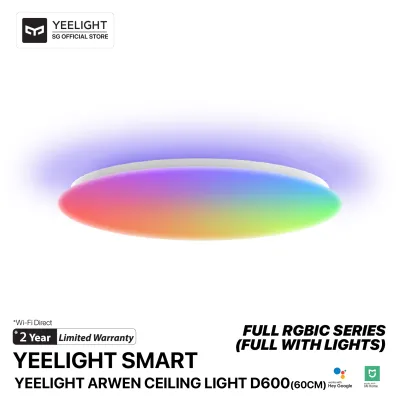
Prices are valid at publication and may change. Please refer to the product page for the latest price.
Existing ceiling fixtures and fans must also be factored into your layout. If you plan to retain a ceiling fan, any nearby ceiling light must be low-profile and positioned far enough away to prevent the fan blades from strobing across the light beam. Take precise measurements from the finished floor to the lowest point of your ceiling, and map out any structural obstructions before choosing your fixture.
Next, inspect the existing ceiling rose and mounting conditions in your flat. Standard HDB ceiling points often feature a circular plastic ceiling rose or a simple terminal block. Yeelight fixtures typically utilize a proprietary quick-install base plate or a standard metal mounting bracket. You must verify if the mounting hole patterns on the fixture’s base align with your existing ceiling screw holes, or if new holes must be drilled into the concrete slab.
Electrical compatibility is another critical step. Singapore’s residential power grid operates at 230V AC at 50Hz. You must check the manufacturer label on the Yeelight packaging to confirm the voltage range (typically 220-240V) is compatible. Because smart lights require a constant electrical current to remain connected to your home network, you must also evaluate your wall switches and wiring configuration to ensure they support smart functionality.
Key Selection Criteria for 2.6m Ceilings
Profile height is the most critical physical dimension when selecting a ceiling light for a 2.6m clearance. A fixture that protrudes too far downward reduces valuable headroom and makes a room feel visually cluttered. For standard HDB flats, prioritize ultra-slim or flush-mount designs that keep the profile under 8 centimetres. This ensures the light sits close to the ceiling plane, preserving a sense of spaciousness and preventing accidental contact when changing bedsheets or moving tall furniture.

Light distribution plays a major role in how spacious a room feels. Low ceilings are highly susceptible to the “cave effect,” where light is directed strictly downward, leaving the ceiling and upper walls in deep shadow. To avoid this, look for Yeelight models with wide-beam angles of 120 degrees or more, or those featuring translucent backplates that cast a soft glow upward. This ambient backlighting bounces light off the ceiling, visually elevating the space and reducing harsh glare.
Calculating the required brightness and selecting the right color temperature ensures your rooms are both functional and comfortable. As a general guideline, living areas require approximately 300 to 400 lumens per square metre, while bedrooms can comfortable operate with 200 to 300 lumens. For a standard 10-square-metre HDB bedroom, a fixture capable of delivering 2,000 to 3,000 lumens is ideal. Opt for models with tunable white technology (ranging from 2700K to 6500K) so you can adjust the color temperature from cool daylight for daytime tasks to warm white for evening relaxation.
Room-by-Room Yeelight Ceiling Light Selection Guide
Different rooms in an HDB flat serve distinct functional and aesthetic purposes. Matching the right Yeelight fixture type to each space requires evaluating room dimensions, moisture exposure, and daily activities.
Living and Dining Areas
Living and dining rooms are the primary communal spaces in an HDB flat, requiring versatile lighting that can adapt to various activities. For these larger areas, which typically range from 15 to 25 square metres, select a larger diameter flush-mount fixture (such as 450mm to 550mm). A larger diameter allows the light source to cover a wider area without requiring a deeper, bulkier profile, keeping the visual plane clean and high.
To enhance the flexibility of your living space, look for Yeelight models that feature dual-zone lighting. These fixtures combine a main downlight with an independent, customizable ambient backlight. This setup allows you to use bright, cool white light for family dinners or reading, and transition to a dim, warm backlight for movie nights or quiet evenings.
Before installing larger smart fixtures, always verify the structural condition of your ceiling. While standard concrete slabs easily support these lights, you must ensure the mounting anchors are rated for the fixture’s weight. If you are mounting the light onto a false ceiling, you must verify that the plasterboard is reinforced with timber or metal support runners to prevent sagging or structural failure over time.
Bedrooms and Study Rooms
Bedrooms require comfortable, glare-free lighting that supports both rest and daily routines. When selecting a Yeelight fixture for a bedroom, prioritize models with a high Color Rendering Index (CRI) of Ra 90 or above. A high CRI ensures that clothing colors, skin tones, and decor look natural and vibrant under artificial light. Additionally, look for models that offer an ultra-low brightness setting, often referred to as “moonlight mode,” which provides a soft, non-disruptive glow for night-time navigation.
In study rooms or home offices, even illumination is essential to prevent eye strain. Position the ceiling light to minimize shadows cast by your head or shoulders onto your desk surface. Ensure the fixture’s diffuser is designed to distribute light evenly, reducing harsh reflections and screen glare on laptops, tablets, and monitors.
Smart control compatibility is a key feature for bedrooms and study areas. Verify that your chosen Yeelight model integrates seamlessly with your preferred control methods. This might include wireless Bluetooth dimmer switches mounted by your bedside, voice control via smart assistants, or automated schedules that gradually dim the lights in the evening to signal bedtime.
Bathrooms and Utility Spaces
Bathrooms and service yards present unique environmental challenges due to high humidity, steam, and potential water splashes. When selecting ceiling lights for these areas, you must check the Ingress Protection (IP) rating on the product label. For damp bathroom zones, select a fixture with an IP54 rating or higher, which indicates protection against dust ingress and water splashes from any direction.
For kitchens and utility rooms, sealed designs are highly beneficial. Cooking grease, steam, and airborne dust can easily accumulate inside open fixtures, leading to unsightly shadows and difficult maintenance. A completely sealed Yeelight fixture prevents insects and grease from entering the cover, ensuring the light remains clean and requiring only a simple wipe-down of the exterior surface during routine cleaning.
Safety must always be your top priority in wet or humid environments. If you are unsure about the proximity of your ceiling light point to water sources, or if you need to install a fixture in a high-moisture zone, stop and consult a qualified professional. A licensed electrician can ensure your installation complies with local electrical safety standards and building codes.
Installation, Safety, and Smart Home Integration Checks
Integrating smart ceiling lights into your home requires a stable network foundation. Most Yeelight smart fixtures connect directly via 2.4GHz Wi-Fi or Bluetooth Low Energy (BLE). Before finalizing your purchase, verify that your home router broadcasts a strong, stable 2.4GHz signal to the exact ceiling locations where the lights will be installed. Check the product manual to confirm compatibility with your existing smart home ecosystem, whether you use Apple Home, Google Home, Samsung SmartThings, or the Mi Home app.
While some Yeelight models feature user-friendly quick-change bases that simplify the physical mounting process, electrical safety boundaries must be strictly respected. In Singapore, any modification to fixed electrical wiring must comply with local regulations. If your HDB flat features concealed wiring, lacks an earth wire (which is common in older resale flats), or if you are installing a heavy fixture, you should hire a licensed electrical worker (LEW) to perform the installation safely.
If you are performing a straightforward replacement of an existing fixture on a standard concrete ceiling, always follow safe installation practices. Begin by isolating the power at your home’s main distribution board (DB box) by switching off the relevant circuit breaker. Use a reliable voltage tester to verify that the ceiling wires are completely dead before touching them. Ensure the ceiling load limits are respected, and use appropriate masonry wall plugs and screws to secure the mounting plate firmly to the concrete slab.
Frequently Asked Questions (FAQ)
Do Yeelight ceiling lights require a neutral wire for HDB installation?
Yes, most smart ceiling lights, including Yeelight models, require a constant power supply to maintain their wireless connection (Wi-Fi or Bluetooth) even when the light is turned off. This constant connection requires both a live and a neutral wire at the ceiling point. In standard HDB flats, a neutral wire is almost always present at the ceiling rose or terminal block, even if it is absent behind your wall switch plates. You should visually inspect your ceiling point or consult a qualified electrician to verify your wiring before purchasing.
Can I install a Yeelight ceiling light on an HDB false ceiling?
Yes, you can install a Yeelight ceiling light on an HDB false ceiling, but you must take specific structural precautions. Standard gypsum or calcium silicate plasterboards used in false ceilings cannot support the weight of a heavy smart fixture on their own. You must ensure the mounting screws are anchored directly into the metal support runners behind the plasterboard, or use heavy-duty toggle bolts designed for hollow walls. For larger or heavier models, it is highly recommended to install a timber support bracket or anchor the fixture directly to the concrete slab above the false ceiling.

Community discussion
Share your experience or ask a question. Comments are reviewed before publication.