
Finding the right bed reading light is essential for creating a comfortable evening routine without straining your eyes or disrupting your sleep cycle. The ideal choice depends on your physical bed frame, the availability of bedside furniture, and whether you share your sleeping space. While some readers require a highly focused beam that keeps the rest of the room dark, others benefit from a broader, adjustable glow that illuminates a larger area.
By evaluating the physical characteristics of your headboard, the layout of your bedroom, and your preferred reading posture, you can select a light type that integrates seamlessly into your nightly routine. Clip-on lights, gooseneck lamps, and wearable headbands each offer distinct advantages and limitations depending on these environmental factors.
Assessing Your Bed Setup and Reading Posture
Before purchasing any lighting fixture, take a close look at your immediate sleeping environment. The design of your headboard is the first major factor to consider. A solid wooden or metal headboard with a clear, exposed edge is highly compatible with clamp-on fixtures, whereas an upholstered, tufted, or extra-thick headboard may lack the necessary grip points. If your bed frame lacks a headboard entirely, or if it is pushed flush against a wall, you will need to look at alternative mounting or placement options.
Products mentioned in this guide
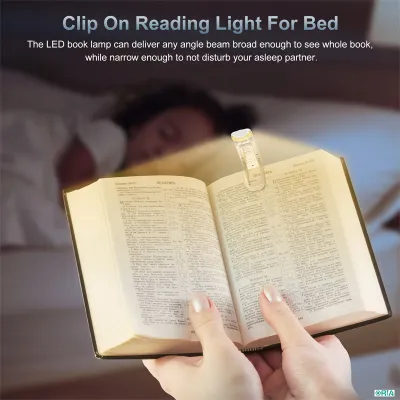
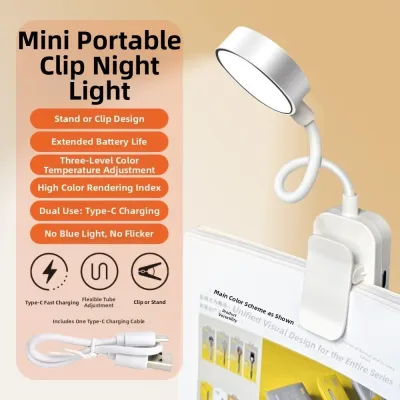
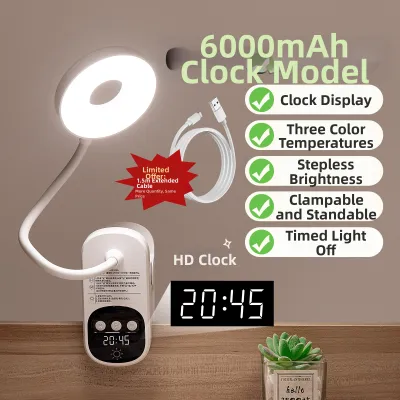
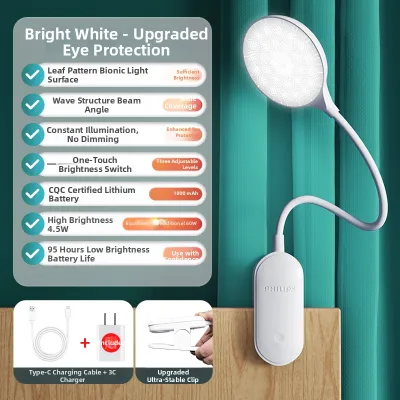
Prices are valid at publication and may change. Please refer to the product page for the latest price.
Next, evaluate your bedside furniture. If you have a stable nightstand or bedside table within arm’s reach, a freestanding lamp or a table-mounted gooseneck light is a practical option. However, in compact bedrooms or modern apartment layouts where space is limited, bedside tables are often small or entirely absent. In these scenarios, utilizing vertical wall space or choosing a zero-footprint wearable light becomes necessary to keep your sleeping area uncluttered.
Your typical reading posture also dictates the type of illumination you need. If you sit upright supported by pillows, you require a light source positioned high enough to cast light downward onto your book without creating shadows from your head or shoulders. If you prefer lying on your side or flat on your back, a highly flexible light source that can be angled close to the page is more effective. Furthermore, if you share a bed, controlling the beam spread is crucial to avoid casting unwanted glare onto a sleeping partner.
Clip-On Lights: Evaluating Headboard and Bunk Bed Compatibility
Clip-on reading lights are highly valued for their space-saving design and portability. These compact fixtures attach directly to your headboard, bed frame, or even the book itself, making them an excellent choice for bunk beds, loft beds, or minimalist bedroom setups. However, compatibility depends heavily on the physical dimensions of the clamp.

When shopping for a clip-on light, always verify the maximum jaw width of the clamp against the thickness of your headboard. Many standard clips only open to a width of 3 to 5 centimeters, which may not fit thicker wooden or upholstered headboards. Additionally, check the clamp’s inner lining. Look for models equipped with thick rubber, silicone, or foam padding to protect delicate wood finishes, paint, or fabric from scratches and pressure marks.
The flexibility of the neck or hinge mechanism is another critical factor. A rigid or short neck limits your ability to direct the light, which can lead to awkward reading angles or direct glare in your eyes. Opt for models with a flexible silicone neck or a multi-axis hinge that allows you to position the light head precisely over your reading material.
Finally, consider the power source and cable management. Plug-in clip-on lights provide continuous power but require a nearby wall outlet, which can result in unsightly cords hanging down your headboard. If you choose a USB-rechargeable model, verify the battery capacity and the location of the charging port. Ensure the port remains accessible when the light is clamped in place, and confirm that the charging cable is long enough to reach your nearest outlet when a recharge is needed.
Gooseneck and Freestanding Lights: Maximizing Side Table Space
Gooseneck and freestanding bedside lamps are excellent for readers who have dedicated bedside tables and prefer a permanent, highly adjustable lighting fixture. The primary advantage of a gooseneck lamp is its long, flexible arm, which allows you to position the light source exactly where you need it and then push it out of the way when not in use.
To ensure safety and stability, measure your bedside table’s surface area and consider the weight of the lamp’s base. A stable freestanding lamp requires a heavy, balanced base to prevent it from tipping over when the flexible arm is fully extended. If your nightstand is small or crowded with other essentials like a phone charger, water glass, or alarm clock, look for a lamp with a compact base footprint or a model that clamps directly to the edge of the table.
The quality of the gooseneck arm itself is vital for long-term satisfaction. A poorly constructed gooseneck will droop or sag under the weight of the lamp head over time, requiring constant readjustment. Look for arms constructed with high-quality metal coils or reinforced silicone sleeves that offer firm resistance when bent and hold their shape reliably.
Cord management is also an important safety consideration for table-mounted lights. Ensure the power cord is routed safely behind your furniture to prevent accidental snags or tripping hazards, especially when reaching for items in the dark. If you live in Singapore or another region with specific electrical safety standards, verify that the plug-in adapter carries the appropriate local safety certification, such as the Safety Mark, to ensure safe continuous operation.
Headband and Wearable Lights: Solutions for Shared Beds and Zero Space
Wearable reading lights, including headbands and neck-worn lights, offer a unique, zero-footprint solution for readers who have no mounting surfaces or bedside tables. These devices are particularly useful for those who travel frequently, read in unconventional positions, or share a bed with a partner who is highly sensitive to light.
When evaluating a headband light, comfort is the most critical factor. Because the device rests directly on your head, look for models with adjustable, elasticized straps made from breathable materials to prevent sweating or pressure points during extended reading sessions. Pay close attention to the weight distribution; models with a heavy battery pack located at the front can cause neck strain, while those with a bulky pack at the back can be uncomfortable when resting your head against a pillow.
The beam angle and brightness levels of wearable lights must be carefully verified. Because the light source is positioned close to your eyes, a wide beam can cause distracting peripheral glare or reflect harshly off white pages. Look for lights that offer a narrow, focused beam (often referred to as a spot beam) and multiple dimming levels. This allows you to lower the brightness to a comfortable level that illuminates only your book, keeping the surrounding room completely dark.
Maintenance of built-in rechargeable batteries is another practical consideration. Wearable lights rely almost exclusively on rechargeable lithium-ion batteries. Verify the manufacturer’s estimated battery life per charge and ensure the charging port is a standard type, such as USB-C, for convenience. If you find headbands uncomfortable or restrictive, consider a neck-worn reading light, which rests gently around your collarbone and directs dual beams downward onto your book without touching your head or face.
Specification Checklist and Feature Verification
To make an informed decision, it is helpful to compare the technical specifications of different light types against your physical bedroom setup. Rather than relying on vague marketing claims, focus on verifiable measurements and features.
First, evaluate the power options. USB-rechargeable models offer maximum placement flexibility and eliminate cord clutter, but they require regular recharging and have a finite battery lifespan. Plug-in models provide consistent, uninterrupted power but limit placement to areas near electrical outlets. Disposable battery-operated models are highly portable but incur ongoing replacement costs and environmental waste.
Second, verify the light quality by checking the color temperature and brightness settings on the product packaging or manufacturer specification sheet. For evening reading, look for warm light options (between 1600K and 2700K). Warm, amber-toned light minimizes blue light exposure, which helps preserve your natural sleep cycle. Avoid cool white light (above 4000K) in the bedroom, as it can interfere with melatonin production and disrupt your sleep.
Use the following verification checklist to map your bed dimensions and preferences against the physical constraints of your chosen reading light:
| Bed Setup Dimension | Light Specification to Verify | Verification Method |
|---|---|---|
| Headboard Thickness | Clamp Jaw Max Opening | Measure headboard edge with a ruler; check product specs for maximum clamp width. |
| Headboard Material | Clamp Padding Material | Inspect product photos for rubber, silicone, or foam protective pads. |
| Bedside Table Surface | Lamp Base Diameter / Weight | Measure available table space; verify lamp base weight to ensure stability. |
| Distance to Reading Area | Gooseneck / Arm Length | Measure distance from mounting point to book; check arm length specifications. |
| Shared Bed Setup | Beam Angle / Light Spread | Look for narrow-angle lenses (under 30 degrees) or adjustable brightness levels. |
Decision Framework: Matching the Light to Your Setup
To choose the right bed reading light, match your physical environment and reading habits to the following condition-based guidelines:
- Choose a clip-on light if you have a sturdy, compatible headboard (such as a wooden slat or metal frame), want to keep your bedside table completely clear, and prefer a lightweight, semi-portable fixture.
- Choose a gooseneck or freestanding light if you have a stable bedside table, prefer a permanent fixture with consistent power, and need a wider, highly adjustable illumination radius that can be easily repositioned.
- Choose a headband or neck-worn light if you share a bed with a light sleeper, read in varied postures (such as lying flat or on your side), or have no headboard or bedside table space available.
Before making a final purchase, always verify if your headboard material is fragile or upholstered, as heavy clamps can leave permanent indentations. Additionally, if your reading setup involves specialized ergonomic equipment, such as adjustable bed bases or medical devices, ensure the light’s mounting mechanism or power cords do not interfere with their operation.
Frequently Asked Questions (FAQ)
Can I use a standard desk lamp as a bed reading light?
While a standard desk lamp can function as a bedside light, it often has a larger footprint and a wider beam spread designed for task work rather than targeted reading. This can cause significant glare when you are lying down, as the light source is positioned closer to your eye level. Additionally, standard desk lamps lack the precise directional control of a gooseneck or clip-on light, making it difficult to keep light from spilling across the entire bed.
How do I clean and maintain the flexible neck of a gooseneck light?
Always check the manufacturer’s care instructions before cleaning your light. To maintain a gooseneck arm, use a dry microfiber cloth to remove dust from the ridges of the flexible neck. Avoid using liquid cleaners, sprays, or excessive moisture, which can seep into the joints and damage the internal wiring or cause electrical hazards. When adjusting the light, bend the neck gently using both hands rather than pulling or twisting it sharply beyond its designed articulation limits to prevent internal wire fatigue.
Community discussion
Share your experience or ask a question. Comments are reviewed before publication.