
Finding the perfect balance between spiritual devotion and modern urban living is a common challenge for HDB flat owners in Singapore. A space-efficient hindu prayer altar cabinet allows you to maintain a sacred space for daily prayers without compromising your home’s layout or traffic flow. Given the compact footprints of modern BTO (Build-To-Order) and resale flats, choosing an altar requires careful spatial planning, material selection, and safety considerations. The ideal cabinet must not only fit your available square footage but also safely accommodate your specific deities, oil lamps, and puja accessories.
Assessing Your HDB Space: Measurements and Layout Constraints
Before purchasing any furniture, you must accurately evaluate the physical boundaries of your designated prayer area. Start by measuring the floor area using a standard steel measuring tape. Note the exact width, depth, and height of the space, paying close attention to adjacent furniture pieces. If you plan to place the cabinet in a multi-purpose zone like the living or dining room, map out the walking paths to ensure the unit does not obstruct household traffic.
One frequently overlooked factor is the clearance required for functional parts of the cabinet. You must account for the door swing radius and the extension depth of any pull-out drawers or thali trays. A cabinet that fits perfectly when closed might block a major walkway or collide with a dining chair when its doors are fully opened during a morning prayer session. Ensure there is at least 60 to 80 centimetres of clear space in front of the cabinet to allow you to stand or kneel comfortably during prayers.
Products mentioned in this guide
![[HOMIEST] ORATE 2FT Altar Cabinet Prayer Cabinet Religious Worship Natural/Walnut](https://img.lazcdn.com/g/p/cfaa0a6f73682165358fbd07edf06f9b.jpg_400x400q80.jpg_.webp)
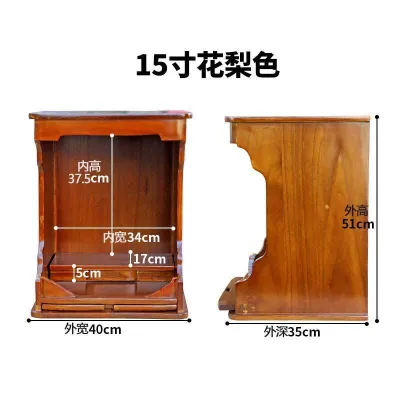
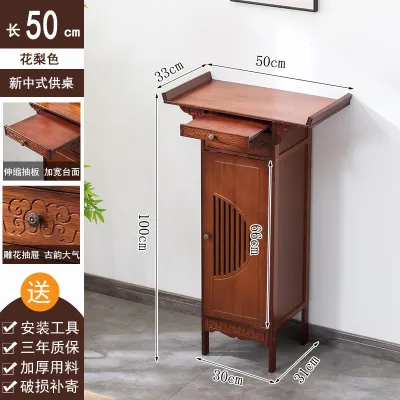
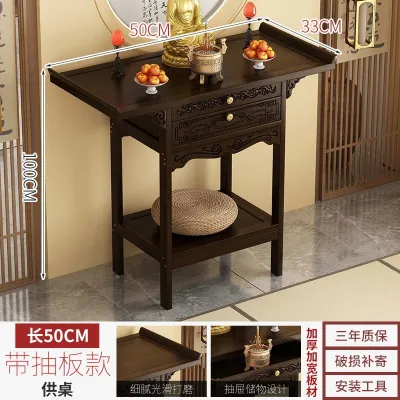
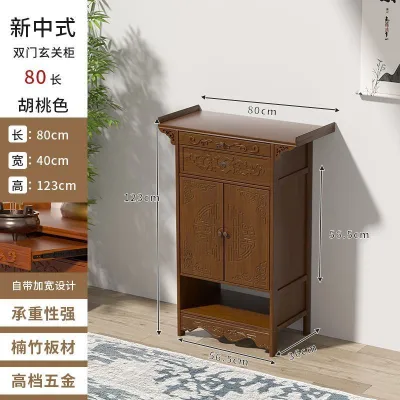
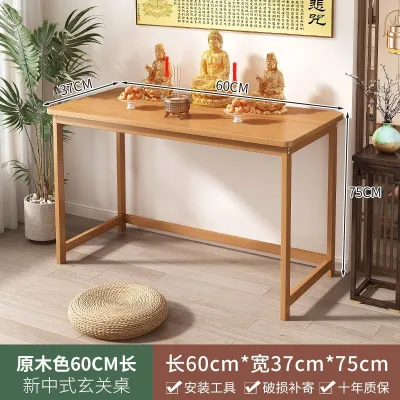
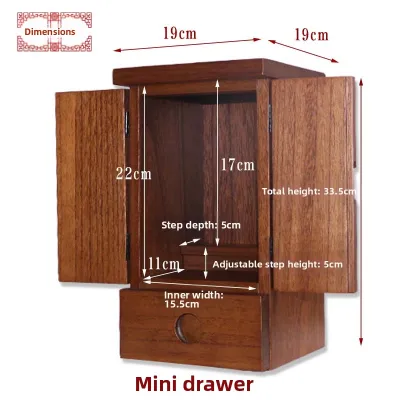
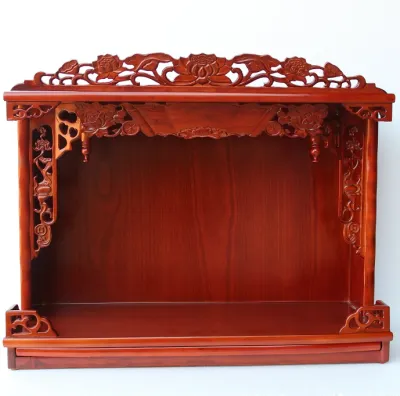
Prices are valid at publication and may change. Please refer to the product page for the latest price.
For those considering pre-assembled, floor-standing cabinets, the journey from the delivery truck to your living room is a critical bottleneck. Measure the width and height of your HDB flat’s main entrance, as well as the internal dimensions and door clearance of your building’s lift. Many older HDB lifts or tight corridor corners cannot accommodate bulky, non-demountable wooden structures. Verifying these dimensions beforehand prevents costly delivery failures and returns.
HDB layouts often present unique spatial challenges, such as narrow hallways, structural pillars, or underutilized nooks near household shelters. Identifying these dead zones can free up prime living space. A recessed wall nook or a small corner between a window and a TV console can serve as an excellent spot for a compact altar, provided it meets your spiritual placement preferences and practical safety requirements.
Selecting a Hindu Prayer Altar Cabinet: Wall-Mounted vs. Corner Designs
To maximize floor space in a compact flat, you must choose a structural configuration that aligns with your room’s architecture. The two most effective space-saving configurations are wall-mounted floating units and corner-specific floor cabinets. Each option has distinct structural requirements and spatial benefits.

Wall-Mounted and Floating Mandirs
Floating cabinets are highly favored in modern HDB interior design because they completely free up floor space. This makes floor cleaning much easier and creates a lighter, more spacious visual effect in tight living areas. By elevating the altar, you also naturally place the deities at an appropriate eye level for standing prayers, without needing a tall, bulky piece of furniture.
However, wall mounting introduces critical structural responsibilities. You must check your HDB floor plan to identify the wall type before attempting installation.
- Structural Walls: Indicated on floor plans by thick black lines, these are made of solid reinforced concrete and can support heavy loads when fitted with proper masonry anchors.
- Non-Structural Partition Walls: Shown as thin or hollow lines, these are often made of lightweight concrete blocks or drywall. They have strict weight limits and cannot safely support a heavy solid wood cabinet filled with metal murtis and brass prayer vessels.
For any heavy wall-mounted cabinet, professional installation is strongly recommended. A qualified contractor will use the correct heavy-duty sleeve anchors or toggle bolts based on the specific wall material. If you are uncertain about your wall’s load-bearing capacity, always consult a licensed contractor before mounting. Additionally, if your floating cabinet features integrated LED strip lights, you must plan your cable management. Running wires through neat conduits or behind a false wall panel prevents unsightly cords from hanging down and maintains a clean, respectful aesthetic.
Corner and Multi-Tiered Floor Cabinets
If wall mounting is not feasible, corner-specific cabinets offer an excellent alternative. These units feature a triangular or L-shaped footprint designed to fit snugly into a 90-degree corner. By utilizing these often-wasted corner spaces, you preserve the central floor area of your living or dining room.
To accommodate multiple deities and ceremonial items without expanding the cabinet’s physical footprint, look for multi-tiered vertical designs. Building upwards rather than outwards allows you to organize your sacred space systematically. Traditionally, the highest tier is reserved for the primary deities, while lower shelves hold secondary pictures, prayer books, and daily ritual items.
When selecting a tall, narrow vertical cabinet, you must check your ceiling height and leave adequate clearance at the top. This clearance is essential for visual proportion and, more importantly, for heat dissipation if you burn incense or oil lamps. Furthermore, tall and narrow floor cabinets present a tipping hazard. You must avoid overloading the upper shelves with heavy brass or stone idols. Keep the heaviest items on the bottom shelves to maintain a low center of gravity, and secure the cabinet to the wall using an anti-tip kit.
Matching Internal Capacity to Your Daily Puja Needs
A compact exterior does not mean you have to compromise on the functionality of your sacred space. To choose the right internal layout, start by taking a detailed inventory of your essential worship items. Measure the height of your tallest Murti (deity statue) and the diameter of your largest thali (prayer plate). Your cabinet must comfortably accommodate these items without crowding, which can detract from the serene environment of the altar.
Adjustable shelving is a highly valuable feature in a compact cabinet. It allows you to customize the vertical spacing as your collection of sacred items changes over time. For instance, you can create a taller central bay for your primary deity while keeping lower shelves compact for storing matchboxes, incense packets, and cotton wicks.
A common sizing mistake is failing to account for the physical dynamics of active worship. If you plan to light a diya (oil lamp) or burn camphor inside the cabinet, you must ensure there is sufficient vertical clearance above the flame. Heat and smoke rise rapidly; a flame placed too close to a wooden ceiling will scorch, discolor, or even ignite the material. As a general safety rule, maintain a minimum clearance of 30 to 40 centimetres between the top of an open flame and the cabinet ceiling, or ensure the cabinet has an open top or heat-resistant metal lining.
Additionally, check the depth of the cabinet relative to your daily items. The cabinet doors must be able to close fully and securely when the altar is not in use. If the shelves are too shallow, larger prayer plates or extended deity bases may prevent the doors from latching, or worse, cause you to accidentally knock over water vessels or oil lamps when attempting to close the cabinet.
Material Selection and Upkeep in High-Humidity Environments
Singapore’s tropical climate features high relative humidity and consistent warmth, which can severely impact wooden furniture. When choosing your prayer cabinet, you must look beyond aesthetic appeal and carefully verify the manufacturer’s material specifications for moisture resistance.
- Solid Wood: Traditional choices like teak, sheesham, or rosewood are highly durable and naturally resistant to pests and decay due to their dense grain and natural oils. However, solid wood is susceptible to minor warping, expanding, or contracting in response to seasonal humidity shifts or air-conditioning usage. Solid wood requires periodic polishing with specialized wood oils to maintain its protective barrier and rich finish.
- Engineered Wood: Materials such as high-grade plywood or Medium-Density Fibreboard (MDF) finished with high-pressure laminates (HPL) offer excellent structural stability. They do not warp or crack under humidity fluctuations as easily as solid wood. However, lower-quality MDF can swell and disintegrate if exposed to direct water contact. If choosing engineered wood, ensure all edges are professionally banded and sealed to prevent moisture ingress.
To prevent mold and mildew growth, which thrive in humid, stagnant air, ensure the room where your cabinet is placed is well-ventilated. Avoid placing the cabinet directly flush against damp exterior walls; leave a gap of at least 2 to 3 centimetres to allow air to circulate behind the unit.
You must also protect the cabinet’s finish from environmental stressors. Direct sunlight streaming through HDB windows can cause wood finishes to fade, crack, or peel over time. Position the cabinet away from direct sunlight paths, or use UV-filtering window films. Similarly, avoid placing the cabinet directly under or adjacent to air-conditioning vents, as the rapid temperature changes and dry air currents can dry out wood prematurely, leading to structural cracks.
Safety Clearances and Installation Boundaries
Integrating a prayer altar into a compact home requires strict adherence to fire and electrical safety protocols. Because traditional Hindu worship involves open flames, incense, and hot embers, safety must be your primary design consideration.
When burning diyas, camphor, or incense, you must keep the cabinet doors fully open to prevent heat buildup and smoke accumulation. Ensure that no combustible materials—such as paper prayers, artificial garlands, or cotton curtains—are within 50 centimetres of an active flame. If your cabinet is semi-enclosed, consider lining the ceiling of the burning chamber with a thin sheet of polished brass or stainless steel to act as a heat shield and prevent scorching.
Many modern cabinets feature integrated low-voltage LED lighting to illuminate the deities. While warm white or golden LED backlighting can enhance the spiritual ambiance, treat these color temperatures as conditional personal preferences rather than functional requirements. You must verify that all electrical components, including adapters, wires, and switches, are safety-certified. Ensure that all wiring is neatly routed and secured away from areas where water or ritual oils are handled. Water spillage onto live electrical connections poses a severe short-circuit and shock hazard. If fixed wiring is required, always isolate the power source before installation or hire a licensed electrician.
For all tall, freestanding floor cabinets, installing anti-tip restraints is a non-negotiable safety step. These simple kits anchor the back of the cabinet securely to the wall, preventing it from tipping forward if a child climbs on it or during accidental bumps.
Finally, always respect the boundaries of your DIY capabilities. If the manufacturer’s installation instructions conflict with your home’s physical setup, or if you are unsure whether your wall can support the combined weight of the cabinet and your heavy brass murtis, stop immediately. Consult a qualified professional contractor to complete the installation safely.
Frequently Asked Questions (FAQ)
Can I mount a heavy prayer cabinet on an HDB partition wall?
No, you should avoid mounting heavy wooden prayer cabinets directly onto standard HDB partition walls without proper structural reinforcement. Partition walls, typically made of gypsum drywall or lightweight concrete blocks, are designed as internal room dividers and lack the structural integrity to support heavy, cantilevered loads. A fully loaded cabinet containing metal deities, heavy brass oil lamps, and books can easily tear out of drywall anchors, causing severe damage or injury. Always consult your HDB floor plan to locate structural concrete walls, or hire a licensed contractor to install specialized framing or heavy-duty toggles if a partition wall is your only option.
How should I handle ventilation when burning incense inside a cabinet?
Burning incense or oil lamps inside a closed or poorly ventilated cabinet creates a high concentration of smoke, soot, and heat, which can damage the cabinet’s interior and degrade indoor air quality. To manage this safely, always keep the cabinet doors wide open during active prayers. Ensure the room has active cross-ventilation by opening nearby windows or running a ceiling fan. If you prefer to keep the doors closed most of the time, choose a cabinet design that features built-in brass ventilation grilles, carved jali (lattice) work, or an open-back structure to allow smoke and heat to escape naturally.
Community discussion
Share your experience or ask a question. Comments are reviewed before publication.