
Quick Answer: Identifying the Most Efficient B22 LED Bulb
Finding the most energy-efficient B22 LED light bulb in Singapore does not come down to a single, universally superior brand. Instead, the most efficient option depends entirely on verified performance metrics and your specific household usage conditions. To identify the true energy-saving leader among the brands on the shelf, you must look past marketing buzzwords and compare the luminous efficacy—measured in lumens per watt (lm/W)—alongside local energy rating labels.
To start your comparison immediately, locate the technical specifications on the product packaging or the manufacturer’s official datasheet. Look for the total light output (lumens) and divide it by the power consumption (watts). The brand that delivers the highest lumens-per-watt ratio while carrying recognized local energy certifications will provide the greatest electricity savings for your specific space.
Key Specifications to Compare for True Energy Savings
To achieve genuine energy savings, you must understand how to read and compare the technical specifications of different B22 LED light bulb brands. Many consumers make the mistake of comparing bulbs solely by their wattage. However, wattage only measures the amount of electricity a bulb consumes, not the amount of light it produces. The true measure of efficiency is luminous efficacy, which represents the light output relative to power consumption.
Products mentioned in this guide
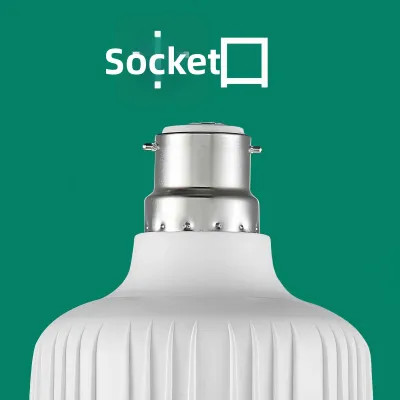
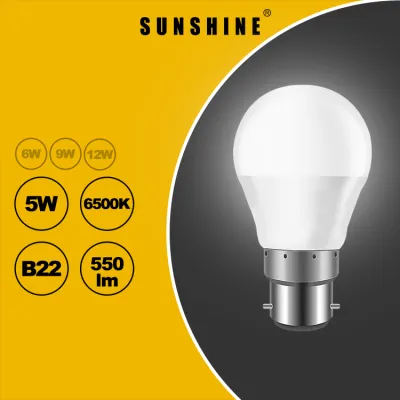
Prices are valid at publication and may change. Please refer to the product page for the latest price.

To calculate this, use the simple formula: Efficacy = Lumens (lm) / Wattage (W). For example, if a B22 bulb produces 800 lumens and consumes 8 watts, its efficacy is 100 lm/W. When comparing brands, a bulb with a higher lm/W rating will always deliver more brightness for every unit of electricity consumed. Look for brands that consistently offer high efficacy ratings across their product lines.
Beyond manual calculations, recognized energy certification labels provide an independent guarantee of a bulb’s efficiency. In Singapore, look for the mandatory energy labels displayed on the packaging. These labels use a tick rating system to indicate relative energy efficiency. A higher number of ticks guarantees that the bulb has undergone standardized testing to verify its low power consumption, allowing you to compare different brands quickly and reliably.
It is also essential to consider how color temperature and beam angle influence your actual energy needs. Color temperature, measured in Kelvin (K), ranges from warm yellow (typically 2700K to 3000K) to cool daylight (6500K). While color temperature is a matter of personal preference and does not directly change the electrical efficiency of the LED chip, cooler daylight bulbs often appear brighter to the human eye than warm white bulbs of the same wattage. Similarly, a narrow beam angle concentrates light in a specific spot, which may allow you to use a lower-wattage bulb for task lighting compared to a wide beam angle that disperses light across a whole room. Matching these specifications to your spatial needs prevents you from over-specifying wattage and wasting energy.
Evaluating Long-Term Value Beyond the Initial Price
While energy efficiency reduces your monthly utility bills, the true cost of ownership also includes the initial purchase price, the bulb’s lifespan, and its overall durability. A cheap, low-efficiency B22 bulb that requires frequent replacement will quickly become more expensive than a premium, highly efficient alternative.
To evaluate long-term value, start by comparing the manufacturer’s rated lifetime, usually expressed in hours (such as 15,000 or 25,000 hours). Additionally, check the rated switching cycles, which indicate how many times the bulb can be turned on and off before the internal driver components begin to degrade. Because these figures are tested under controlled laboratory conditions, you should also look at the manufacturer’s warranty period. A longer warranty—such as two to five years—serves as a reliable proxy for a brand’s confidence in its product’s real-world longevity.
To calculate the estimated annual operating cost and find the break-even point between a cheaper bulb and a more expensive, highly efficient one, you can use a straightforward framework. First, determine your daily usage hours and the local electricity tariff in S$ per kilowatt-hour (kWh). Then, apply the following formula:
Annual Operating Cost = (Bulb Wattage / 1000) Daily Operating Hours 365 Days * Electricity Tariff (S$/kWh)
By calculating this cost for two competing B22 LED light bulb brands, you can determine the annual savings of the more efficient model. Divide the difference in their retail purchase prices by these annual savings to find the exact break-even point in years. If the more efficient bulb pays for itself well within its warranty period, it represents the superior long-term value.
Decision Framework: Matching Brand Tiers to Your Lighting Needs
Choosing the right B22 LED light bulb brand requires matching the product’s performance tier to the specific demands of your home or commercial space. Not every fixture requires the most expensive, high-efficacy bulb, but cutting corners in high-use areas will lead to higher costs over time.
For high-traffic areas such as living rooms, kitchens, and corridors—or for fixtures that are difficult to reach, such as high ceilings—you should prioritize premium, high-efficacy brands. These brands typically invest in superior thermal management and high-quality LED drivers, ensuring the bulbs maintain their brightness and efficiency over tens of thousands of hours. The higher upfront cost is quickly offset by the significant energy savings and the avoidance of frequent, inconvenient bulb replacements.
Conversely, standard or budget-friendly brands are highly suitable for low-usage areas where lights are only turned on occasionally. Spaces like guest bedrooms, storerooms, or utility closets do not accumulate enough operating hours to justify the premium price of top-tier efficiency. In these scenarios, a standard B22 LED bulb provides excellent value without unnecessary expense.
Before finalizing your choice, you must verify several critical compatibility factors. First, determine if your fixture is connected to a dimmer switch. Standard LED bulbs will flicker, buzz, or fail prematurely if used on a dimming circuit; you must select a brand that explicitly labels its B22 bulbs as dimmable. Second, if you plan to integrate the lighting into a smart home system, ensure the bulb supports your preferred wireless protocol without requiring an expensive proprietary hub. Finally, check if the bulb will be installed in an enclosed fixture. Enclosed spaces trap heat, which can rapidly degrade standard LED drivers. If your fixture is enclosed, look for brands that certify their bulbs for enclosed-space operation.
Installation Conditions That Affect Bulb Efficiency and Lifespan
Even the most efficient B22 LED light bulb can suffer from reduced lifespan and wasted energy if the physical and electrical installation conditions are poor. LEDs are highly sensitive to heat, and improper installation can negate any theoretical brand advantages.
The primary enemy of LED efficiency is heat buildup. Unlike traditional incandescent bulbs that radiate heat forward, LEDs pull heat away from the light source and dissipate it through a heat sink at the base of the bulb. If a B22 bulb is installed in a tightly enclosed or recessed fixture without adequate ventilation, the trapped heat will raise the temperature of the internal driver components. This thermal stress reduces the light output (luminous flux) and can cause premature component failure. Always ensure there is sufficient clearance around the bulb for natural air circulation.
Electrical compatibility is another critical factor. In Singapore, the standard residential voltage is 230V at a frequency of 50Hz. Ensure that any B22 bulb you purchase is rated for this voltage range. Using a bulb designed for a different voltage can cause immediate failure or severe flickering. Furthermore, if you are replacing older halogen or incandescent bulbs on a dimmable circuit, verify that your existing dimmer switch is compatible with LED technology. Older leading-edge dimmers often have high minimum wattage requirements that low-power LEDs cannot meet, leading to power waste and unstable light output.
When installing or replacing a B22 bayonet bulb, safety must always come first. The B22 interface uses a push-and-twist mechanism that requires physical force. Before touching any fixture, isolate the power by switching off the main circuit breaker or the dedicated wall switch. Never rely solely on a wall switch, as some older wiring configurations may still leave the socket live. Allow the old bulb to cool completely before removal. If you encounter stiff sockets, damaged wiring, or corroded contacts, do not attempt to force the installation. Stop immediately and consult a qualified electrician to inspect and repair the fixture.
Frequently Asked Questions (FAQ)
Do smart B22 LED bulbs use more electricity than standard ones?
Yes, smart B22 LED bulbs consume a small amount of electricity even when they are turned off. This is known as standby power draw, which keeps the bulb’s internal wireless receiver active so it can respond to app commands or voice assistants. Typically, standby power ranges from 0.2 to 0.5 watts. To minimize this impact, check the manufacturer’s specifications for standby wattage before purchasing. In most cases, the ability to set automated schedules, dim the lights, or turn them off remotely more than offsets this minor baseline power use by preventing lights from being left on accidentally.
Can I use a B22 to E27 adapter without losing energy efficiency?
Using a B22 to E27 adapter does not directly reduce the electrical efficiency of the LED bulb itself, but it does introduce potential safety and performance risks. Every mechanical connection point creates a small amount of electrical resistance, which can generate localized heat if the adapter is poorly manufactured. This heat buildup can shorten the lifespan of the LED driver. If you must use an adapter, ensure it fits snugly, is made of flame-retardant materials, and carries recognized safety certifications. Always verify that the maximum wattage rating of the adapter exceeds the wattage of your LED bulb, and avoid using adapters in damp environments or enclosed fixtures where heat cannot escape.
Community discussion
Share your experience or ask a question. Comments are reviewed before publication.