
Installing a bladeless fan light LED in a standard Singapore Housing & Development Board (HDB) flat requires a careful balance of spatial planning, electrical safety, and functional design. With a typical HDB ceiling height of 2.6 meters, homeowners must navigate strict vertical limits to ensure the fixture provides adequate cooling and illumination without creating a safety hazard or making the room feel cramped. While many brands in the local market advertise low-profile or flush-mount bladeless fan lights as the ultimate space-saving solution, choosing the right model involves looking past marketing claims and systematically comparing physical dimensions, mounting mechanisms, and electrical requirements. By focusing on verifiable specifications, you can select a fixture that fits your home safely and performs reliably over the long term.
Understanding HDB Ceiling Constraints for Bladeless Fans
Standard HDB flats built in recent decades feature a floor-to-ceiling height of approximately 2.6 meters. To maintain a safe living environment, safety guidelines generally recommend that the lowest point of any ceiling fan remain at least 2.3 meters above the floor. This leaves a maximum allowable drop length of only 300 millimeters (30 centimeters) for the entire fixture, including the mounting bracket, motor housing, and light casing. Traditional bladed fans often exceed this limit or place spinning blades dangerously close to bunk beds, tall wardrobes, or raised hands. Bladeless fan lights present a compelling alternative because their moving parts are enclosed within a central ring or drum, significantly reducing the risk of accidental contact.
The internal mechanics of a bladeless fan—which rely on a high-speed motor and a centrifugal impeller to draw air upward and force it out through narrow perimeter slits—require a certain amount of physical volume. This means that even “bladeless” models have a distinct vertical profile that can range from 150 millimeters to over 400 millimeters in depth. If a unit is too deep, it will hang below the safe 2.3-meter threshold, posing a hazard to taller occupants and disrupting the visual flow of the room.
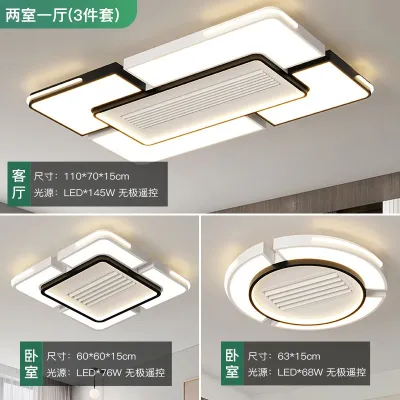
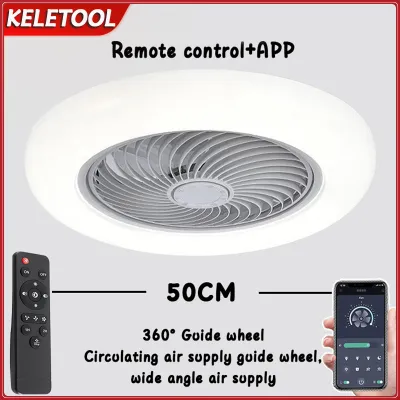
Products mentioned in this guide
![[SG Stock]Ceiling Fan With Light (Bladeless Fan) New Style Ceiling Fan φ58cm LED Light Chandelier](https://img.lazcdn.com/g/p/06d2bf4b14705ef5ce13c22c524fe703.png_400x400q80.png_.webp)
Prices are valid at publication and may change. Please refer to the product page for the latest price.
Additionally, HDB ceilings are constructed from solid precast concrete slabs. Mounting any heavy, motorized fixture requires anchoring directly into this structural concrete rather than relying on lightweight plasterboard or decorative false ceilings. Homeowners must also consider the location of existing ceiling hook points and electrical junction boxes, as modifying these structural elements or drilling too close to embedded reinforcement bars requires strict adherence to HDB renovation guidelines.
Key Comparison Dimensions for Low-Profile Models
When comparing different bladeless fan light LED brands, the most critical specification to verify is the total drop length, often listed as the “overall height” or “mounting depth” on manufacturer specification sheets. True low-profile or flush-mount models are designed to sit directly against the concrete ceiling, eliminating the need for a downrod. You should look for units with a total depth of 250 millimeters or less to maximize headroom in a 2.6-meter room. Be cautious of models that list a compact body size but require a minimum downrod length of 100 to 150 millimeters for air intake, as this will quickly push the fixture past your safety limits.

Unit weight and build materials are equally important comparison points. Many compact bladeless fans utilize high-grade ABS plastic for the outer ring and casing, which keeps the overall weight low—often between 3 to 6 kilograms. A lighter fixture places less stress on the ceiling anchors and is generally easier to install. However, you must verify that the internal mounting bracket is made of heavy-duty, rust-resistant steel. In Singapore’s humid tropical climate, inferior metals can corrode over time, compromising the structural integrity of the mount.
Noise and vibration dampening should also guide your comparison. Because bladeless fans rely on compact, high-RPM (revolutions per minute) motors to generate sufficient airflow, they can produce a higher-pitched hum or wind noise compared to the low-frequency sweep of large, traditional blades. When evaluating different brands, check the manufacturer’s decibel (dB) ratings for each speed setting. Look for models that feature brushless DC (BLDC) motors, which are generally quieter, more energy-efficient, and offer smoother speed transitions than older AC motor designs.
Evaluating Light Output and Airflow in Compact Designs
A major advantage of a bladeless fan light is its dual-purpose design, but combining a high-output LED panel with an air-moving impeller in a single compact housing requires some trade-offs. The LED panel is typically positioned at the center or around the perimeter of the air outlet ring. When comparing brands, look closely at how the light is diffused. If the LED chips are poorly shielded or lack a high-quality polycarbonate diffuser, the light can create harsh glare or cast distracting shadows as the air-directing louvers rotate.
Airflow mechanics in bladeless models differ fundamentally from traditional fans. Instead of chopping the air and pushing it downward in a wide cone, a bladeless fan draws air from the surrounding room, accelerates it through an internal chamber, and projects a focused stream of air downward. While this creates a highly concentrated breeze directly beneath the unit, the lateral airflow coverage is often narrower. You should verify the manufacturer’s stated effective coverage area (usually measured in square meters) and compare it to your room’s layout. A model that works perfectly over a study desk or a queen-sized bed may not distribute air effectively to the corners of a larger living room.
Furthermore, you must evaluate the electrical specifications of the integrated LED light kit. Ensure the driver supports tri-color switching (typically warm white, cool white, and daylight) to accommodate different activities, and check if the dimming method is compatible with your existing wall switches or smart home systems. Many modern units rely on proprietary remote controls or mobile applications for dimming; attempting to connect these to standard wall-mounted dimmer switches can damage the LED driver or cause persistent flickering.
Installation Requirements and Safety Checks
Before purchasing any bladeless fan light LED, you must verify its electrical compatibility with Singapore’s standard residential power supply, which operates at 220V-240V and 50Hz. Ensure the product carries the appropriate local safety certifications, such as the Enterprise Singapore Safety Mark, which indicates the appliance has been tested and approved for safe domestic use. This certification is particularly important for motorized appliances that combine high-voltage electrical wiring with moving mechanical parts.
The installation process for a ceiling-mounted fan light involves working at height and handling fixed electrical wiring, both of which carry inherent risks. Before beginning any work, the main power supply at the distribution board (DB box) must be completely isolated. Standard HDB installations typically feature a concrete ceiling rose or a simple terminal block. If the new bladeless fan light includes advanced smart features, a dedicated remote receiver, or a high-wattage LED driver, it may require a neutral wire at the switch point. You must check your existing wiring configuration before purchasing, as retrofitting a neutral wire through concrete walls can be costly and disruptive.
Mounting the fixture securely requires using the correct hardware. Never use plastic wall plugs or standard drywall anchors to secure a motorized ceiling fixture to an HDB concrete ceiling. Instead, use heavy-duty steel expansion bolts (sleeve anchors) that expand inside the drilled concrete hole to provide a high load-bearing capacity. Because of the risks associated with improper mounting, electrical short circuits, and working at height, it is highly recommended to engage a licensed electrical worker (LEW) or a professional installer certified by the manufacturer to complete the installation.
Decision Framework: Matching Options to Your Room Needs
To make the final purchasing decision, you should map the specifications of the available models against the specific physical conditions of your HDB flat. If your ceiling is exactly 2.6 meters high and the fan will be installed in a high-traffic area like a walkway or living room, prioritize an ultra-flush model with a total drop length of 200 millimeters or less. This ensures that even taller family members or guests can walk beneath the fixture without any risk of head contact.
If you are installing the unit directly over a bed, desk, or dining table, vertical clearance is slightly less critical because occupants will rarely stand directly beneath the fixture. In these scenarios, you can consider models with a slightly deeper profile or a very short downrod (under 100 millimeters), which can sometimes improve air intake efficiency and provide a more balanced distribution of air across the surface below.
Finally, prioritize brands that offer a robust local warranty and readily available replacement parts. Because the LED driver and the motor are integrated into a single compact unit, a failure in one component can render the entire fixture useless. Choosing a brand with a local service center in Singapore ensures you can easily source replacement LED panels, drivers, or remote controls without having to replace the entire fan assembly. Always verify the warranty terms, specifically checking the coverage duration for both the motor and the electronic components.
Frequently Asked Questions (FAQ)
Can I install a bladeless fan light on a false ceiling in an HDB flat?
You should never mount a motorized ceiling fan, including a lightweight bladeless model, directly onto the plasterboard or gypsum panels of a false ceiling. False ceilings are not designed to support the dynamic load and continuous vibrations generated by a spinning motor. To install a fan light in a room with a false ceiling, the installer must use extended threaded rods or a specialized metal bracket that bypasses the false ceiling entirely, anchoring securely into the structural concrete slab above. A professional structural assessment should always be conducted before proceeding with this type of installation.
How do I clean the air intake vents on a bladeless fan light?
To maintain optimal airflow and prevent dust buildup, the air intake vents of your bladeless fan light should be cleaned regularly. Before performing any maintenance, always turn off the power at the wall switch and, ideally, isolate the circuit at the main distribution board. Use a vacuum cleaner with a soft brush attachment to gently remove dust from the intake grilles and the outer ring. For deeper cleaning, consult the manufacturer’s instruction manual to see if the outer casing or diffuser can be safely removed; never spray water or liquid cleaners directly into the motor vents or electrical compartments.

Community discussion
Share your experience or ask a question. Comments are reviewed before publication.