
Direct Answer: Identifying the Most Energy-Efficient COB LED Strips
When shopping for a cob led light strip in Singapore, there is no single brand that holds a universal monopoly on the highest energy efficiency. Instead, real-world energy efficiency is determined by two critical technical parameters: the luminous efficacy of the specific strip model (measured in lumens per watt, or lm/W) and the conversion efficiency of the paired power driver.
Professional-grade lighting brands consistently deliver superior long-term energy savings because they publish verified photometric data and utilize high-quality LED chips that resist thermal degradation. These manufacturers invest in premium components that maintain their light output over thousands of hours, ensuring that your initial energy savings do not fade over time.
For a successful, energy-efficient installation, you should prioritize manufacturers that transparently list their lm/W ratings, supply third-party test reports (such as LM-79 and LM-80), and provide certified high-efficiency power drivers. Relying on verified technical specifications will yield far greater electricity savings than purchasing a product based solely on brand name recognition or unverified wattage claims.
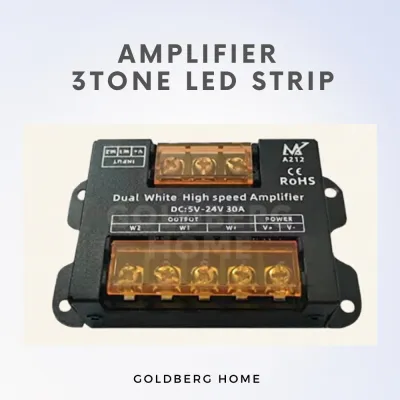
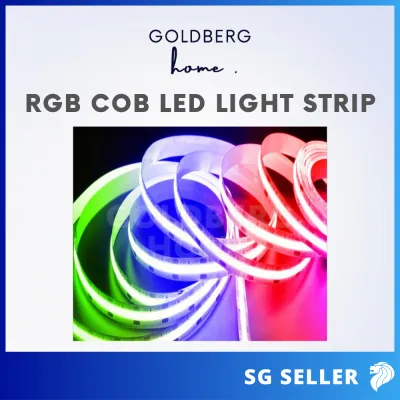
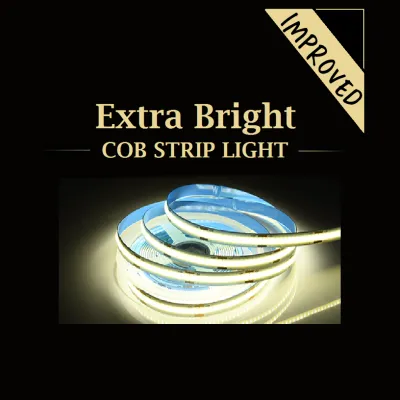
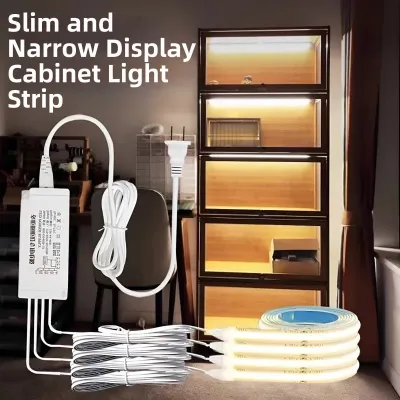
Products mentioned in this guide
![[SG seller] Premium COB LED Light Strip 5M 12V Cove light | Goldberg Home](https://img.lazcdn.com/g/p/5ff63324e2c6835fa2ed4000e285da60.png_400x400q80.png_.webp)
![[SG Seller] 24V COB LED Striplight Strip Light 5meters Extra Bright Improved Version GSE 8mm 5mm](https://img.lazcdn.com/g/p/6a7f93e1548fffd8ade77d6231563d9d.png_400x400q80.png_.webp)
Prices are valid at publication and may change. Please refer to the product page for the latest price.
Core Metrics for Comparing COB LED Energy Efficiency
Luminous Efficacy (lm/W) vs. Total Wattage
To evaluate the true energy efficiency of any cob led light strip, you must look past the total wattage listed on the product packaging. Wattage measures only the electrical power consumed by the system, not the actual amount of light produced. The correct metric to analyze is luminous efficacy, which is expressed as lumens per watt (lm/W).

This ratio tells you exactly how much visible light (lumens) the strip generates for every single watt of electricity it draws from your home’s electrical grid. A common purchasing mistake is comparing strips based solely on their watts per meter (W/m). A lower-quality strip drawing 15W/m might only produce 900 lumens per meter, resulting in a poor efficacy of 60 lm/W.
Conversely, a high-efficiency strip drawing only 10W/m can produce 1,100 lumens per meter, yielding an impressive efficacy of 110 lm/W. By choosing the latter, you obtain a brighter visual result while reducing your electricity consumption by 33%. Always locate the manufacturer’s official technical specification sheet to divide the total rated lumen output by the total wattage before making your purchase.
The CRI and Color Temperature Trade-off
Selecting the right light quality involves an inherent trade-off with energy efficiency that every homeowner should understand. The Color Rendering Index (CRI) measures how accurately a light source reveals the true colors of objects compared to natural daylight. Achieving a high CRI (CRI >90) requires a thicker, more complex phosphor coating over the blue LED diodes on the strip.
This dense phosphor layer absorbs and filters more light, which naturally reduces the overall luminous efficacy of the strip compared to standard options with a lower CRI (such as CRI 80). If your priority is absolute energy savings, a lower CRI strip will technically deliver more lumens per watt, though the light quality may feel less vibrant.
Color temperature also plays a subtle role in energy consumption. Warm color temperatures, such as 2700K, require heavier phosphor mixtures to shift the blue light into warm yellow tones, slightly decreasing efficacy. Cooler temperatures, like 4000K or 5000K, generally achieve higher lm/W ratings because they require less phosphor conversion. When planning your layout, balance your aesthetic requirements—such as high-CRI rendering for kitchen prep areas—against your strict energy-saving targets for general ambient lighting.
Power Supply (Driver) Efficiency
A cob led light strip cannot operate directly on Singapore’s 230V AC mains power; it requires an external driver to convert this high-voltage alternating current into low-voltage direct current (typically 12V or 24V DC). The efficiency of this driver is just as critical to your overall energy bill as the efficiency of the strip itself.
An inefficient driver will waste a significant percentage of input power as ambient heat during the conversion process, forcing the entire system to draw more total power than the LED strip actually consumes. When purchasing your system, always check the technical specifications of the power supply for its efficiency rating, which should ideally be above 85%, and preferably exceed 90% for premium systems.
Professional lighting brands typically package their strips with high-grade, certified drivers or recommend specific compatible models. In contrast, cheap, generic power supplies found on online marketplaces often operate at efficiencies below 70%. This poor performance completely negates any energy savings achieved by using a high-efficacy LED strip.
Evaluating Brand Transparency and Specifications
Professional Lighting Brands vs. General E-commerce Brands
The Singapore market features a wide spectrum of lighting products, broadly split between professional lighting brands and general e-commerce brands. Professional brands, including specialized local architectural lighting suppliers and established global manufacturers, provide comprehensive technical documentation. This documentation typically includes IES (Illuminating Engineering Society) files for lighting design software, detailed lm/W specifications, and strict color binning.
Consistent color binning ensures that multiple strips purchased together maintain identical color temperatures and brightness levels across your entire home. In contrast, generic brands sold on online marketplaces often rely on sensationalized marketing claims like “ultra-saving” or “super bright” without providing any verifiable photometric data.
These generic products frequently suffer from inconsistent manufacturing quality, meaning two strips from the same batch may display noticeable differences in color and power draw. While professional brands carry a higher upfront cost, the investment is usually offset by verified energy savings, reliable performance, and a significantly longer product lifespan.
Verifying Claims and Local Certifications
To ensure that a brand’s energy efficiency and safety claims are accurate, you must look for local regulatory compliance. In Singapore, any external power adapter or LED driver is classified as a Controlled Goods item under the Consumer Protection (Safety Requirements) Registration Scheme. This means it must carry the Singapore Safety Mark, complete with a unique 8-digit registration number that can be verified on the Enterprise Singapore database.
The presence of the Safety Mark indicates that the driver has undergone rigorous testing for electrical safety and thermal stability. This certification strongly correlates with high-quality internal components and stable electrical conversion efficiency, protecting your home from electrical hazards.
Before committing to a bulk purchase for a home renovation or commercial space, ask local distributors for official LM-79 or LM-80 test reports. An LM-79 report provides third-party verification of the strip’s total luminous flux, electrical power, and efficacy under standardized laboratory conditions. If a brand or supplier cannot provide these test reports or does not offer drivers with a valid Safety Mark, their energy efficiency claims should be treated with caution.
Installation Factors That Impact Long-Term Efficiency
Heat Dissipation and Aluminum Profiles
The structural design of a cob led light strip places hundreds of tiny LED diodes closely together on a single flexible circuit board. While this dense arrangement creates a beautiful, seamless line of light without any visible dark spots, it also concentrates thermal energy in a very small surface area.
If this heat is not properly managed, the LED chips will experience a phenomenon known as thermal droop. This occurs when the semiconductor’s light-emitting efficiency drops as its temperature rises, causing the strip to produce fewer lumens while continuing to draw the same amount of electrical wattage.
To prevent thermal droop and preserve the rated energy efficiency of your lighting system, you must mount the strip inside an aluminum extrusion profile. The aluminum acts as a dedicated heat sink, rapidly drawing thermal energy away from the delicate LED diodes and dissipating it into the surrounding air. For any COB strip operating above a low-wattage decorative threshold (typically anything over 5W/m), skipping the aluminum profile will lead to rapid lumen depreciation and premature diode failure.
Voltage Drop and Run Length Limits
Voltage drop is a natural electrical phenomenon that occurs when direct current (DC) flows through the copper traces of an LED strip. As the distance from the power driver increases, the electrical resistance of the thin copper traces causes the voltage to gradually decrease.
This results in the far end of the strip running dimmer than the end closest to the power source. The electrical energy lost to resistance is wasted as heat within the strip’s circuitry, reducing the overall efficiency of your lighting setup.
To minimize energy waste and maintain uniform brightness across your entire installation, you should select 24V DC systems rather than 12V DC systems for longer runs. Higher voltage systems carry current more efficiently with less resistance loss. Always adhere strictly to the manufacturer’s specified maximum run length—typically 5 meters for standard low-voltage strips—and implement dual-end feeding or parallel wiring with multiple power injection points for longer runs.
Singapore-Specific Considerations (Humidity and Voltage)
Designing an efficient lighting system in Singapore requires accounting for the local climate and electrical grid characteristics. Singapore’s electrical grid delivers power at 230V AC at a frequency of 50Hz. Your chosen LED driver must be specifically rated for this input voltage to operate at peak efficiency and handle occasional grid fluctuations.
Furthermore, Singapore’s high year-round relative humidity poses a serious threat to exposed electrical circuits. If you install non-waterproof (IP20) COB strips in humid environments like bathrooms, kitchens, or semi-outdoor covered balconies, moisture can accumulate on the circuit board. This moisture can cause micro-shorts and current leakage, which draw excess power without producing light.
For fixed wiring, installations in damp areas, or work at height, always isolate the electrical power supply before beginning. Follow the manufacturer’s provided installation instructions carefully, and hire a qualified, licensed electrical professional to ensure compliance with local electrical safety standards. For any damp or humid installation zone, ensure you specify strips with at least an IP65 or IP67 rating and house them in sealed aluminum profiles.
Decision Framework: Choosing the Right Brand for Your Project
Selecting the ideal brand for your project requires balancing your budget, performance expectations, and installation environment. Because no single manufacturer fits every scenario, you can use the following condition-based framework to guide your purchasing decision:
- Choose Professional and Specialist Brands if:
- You are installing lighting in primary living spaces, such as the living room, kitchen, or master bedroom, where high-quality ambient or task lighting is required daily.
- Your design demands a high Color Rendering Index (CRI >90) to accurately display interior finishes without suffering from a severe drop in luminous efficacy.
- You require a long-term manufacturer warranty (typically 3 to 5 years) and want guaranteed Singapore Safety Mark compliance for all power drivers.
- You are planning a large-scale installation where consistent color binning across multiple production runs is critical to avoiding visible color mismatches.
- Choose General E-commerce Brands if:
- The project is a temporary, low-budget decorative setup, such as backlighting a computer monitor, highlighting a display shelf, or adding under-bed night lighting.
- Absolute maximum luminous efficacy (lm/W) and precise color rendering are secondary to minimizing your initial upfront purchasing costs.
- The total length of the installation is short enough that minor voltage drops or slight color variances between strips will not be visually noticeable.
- Verify First if:
- You plan to integrate your COB LED light strips with smart home dimming protocols, such as Zigbee, DALI, or TRIAC wall dimmers. Incompatible drivers will cause persistent flickering, audible buzzing, and severe electrical inefficiency when dimmed, requiring you to verify driver compatibility with both the strip manufacturer and your smart home system integrator before installation.
Frequently Asked Questions (FAQ)
Do COB LED strips consume more power than SMD strips?
While COB LED strips are highly regarded for providing a seamless, dot-free line of light, their luminous efficacy is historically slightly lower or roughly equal to high-quality SMD (Surface-Mounted Device) strips. This is because the continuous phosphor coating applied over the dense array of diodes in a COB strip absorbs slightly more light than the individual lenses of SMD diodes.
However, modern manufacturing advancements have narrowed this gap significantly. Your choice between the two technologies should be based on your design requirements—using COB for visible, direct installations where hot spots must be avoided, and SMD for indirect cove lighting—rather than expecting a massive difference in energy consumption.
How do I calculate the running cost of a COB LED strip in Singapore?
To estimate the annual electricity cost of operating your COB LED light strips in Singapore, you can use a straightforward mathematical formula. First, determine the total wattage of your strip by multiplying the wattage per meter by the total length installed, then add approximately 10% to 15% to account for driver power loss. Use this formula to calculate your annual kilowatt-hour (kWh) consumption:
$$\text{Annual Consumption (kWh)} = \frac{\text{Total System Wattage (W)} \times \text{Daily Operating Hours} \times 365\text{ Days}}{1000}$$
Once you have calculated your annual kWh, multiply that figure by the current residential electricity tariff (expressed in cents per kWh) published quarterly by SP Group, or the rate specified in your contract with an open electricity market retailer. This will give you an accurate projection of your annual running costs, allowing you to see exactly how much money a higher-efficacy strip will save you over its operating lifespan.
Community discussion
Share your experience or ask a question. Comments are reviewed before publication.