
Because cross-brand testing data for specific E12 models fluctuates and is rarely standardized, no single brand can be universally declared the most energy-efficient. Furthermore, in Singapore’s 230V electrical system, the standard small screw base is E14; E12 (candelabra base) is typically a 120V North American standard used only in specific imported, low-voltage, or specialty decorative fixtures. Identifying the most efficient E12 LED bulb requires verifying your fixture’s exact voltage and base requirements, then comparing the Lumens per Watt (lm/W) ratio and thermal design of available options rather than relying on brand marketing alone.
To make an informed purchase, consumers must look past promotional claims and focus on verifiable technical specifications. By understanding how to calculate actual luminous efficacy and assess physical build quality, you can find a bulb that minimizes electricity consumption while ensuring safe operation within your home’s electrical setup.
Verify Base Size and Voltage Compatibility First
Before comparing brand efficiency, you must ensure the bulb will physically fit and operate safely. The E12 base measures exactly 12mm in diameter, whereas the standard Singaporean small screw base, E14, measures 14mm. While they look similar, attempting to force an E12 bulb into an E14 socket—or vice versa—will damage the fixture and create an immediate electrical hazard. Use digital calipers or refer to your fixture’s original manual to confirm the exact socket size.
Products mentioned in this guide
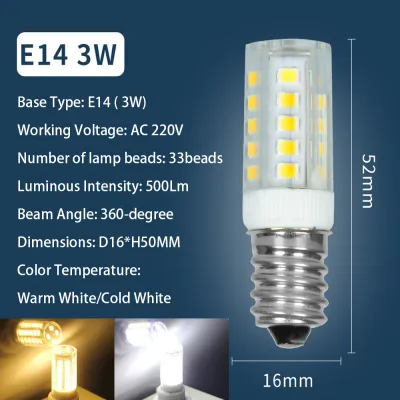
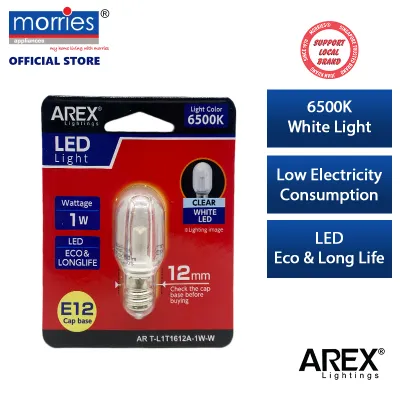
![UnihomSG [ReadyStock] KTY Mini Light Bulb C7E12 Red/White [Bundle of 10] |Mini LED Light Bulb E12 Red/White| 220V-240V](https://img.lazcdn.com/g/p/2e492fd3ee9b87f1ec479aed4230c451.jpg_400x400q80.jpg_.webp)
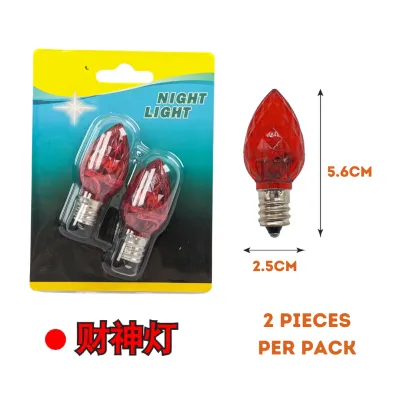
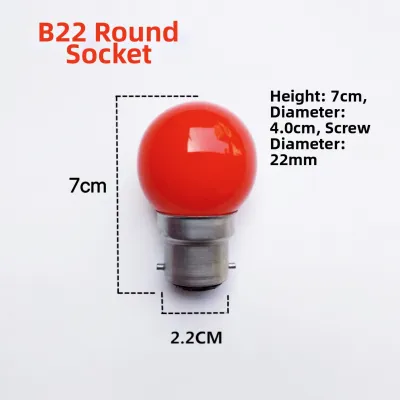
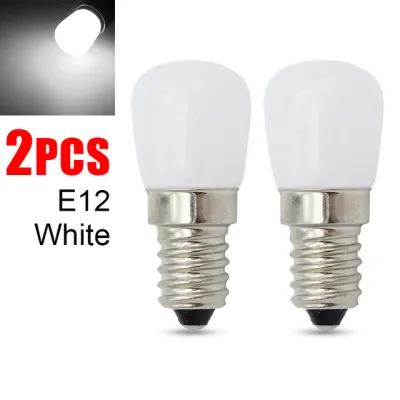
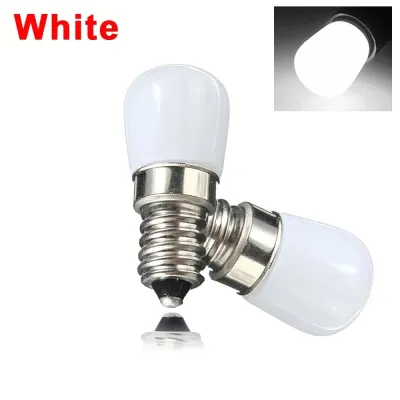
Prices are valid at publication and may change. Please refer to the product page for the latest price.
Voltage compatibility is the next critical safety gate. Because Singapore’s mains power is 230V, importing a standard North American 120V E12 LED bulb and plugging it directly into a 230V circuit will cause the bulb to fail instantly, potentially causing a short circuit, blown fuses, or a fire hazard.
Some decorative fixtures imported to Singapore feature built-in step-down transformers that reduce the voltage to 12V, 24V, or 120V. Other fixtures might be wired directly to 230V but fitted with rare 230V-rated E12 sockets. Always check the electrical rating label on the fixture itself.
If the label, transformer output, or bulb voltage ratings are unclear or mismatched, stop immediately. Do not attempt to install any bulb. Consult a qualified licensed electrician or contact the fixture manufacturer to verify the safe operating parameters.
How to Evaluate Energy Efficiency Across Brands
Energy efficiency in LED lighting is not determined by brand reputation, but by verifiable engineering metrics. The primary metric for efficiency is luminous efficacy, measured in Lumens per Watt (lm/W). You can calculate this by dividing the total light output (lumens) by the actual power consumption (watts), both of which must be printed on the product packaging.

For example, a bulb delivering 400 lumens while drawing 4 watts has an efficacy of 100 lm/W. Comparing this ratio across available brands allows you to identify which bulb converts electricity into visible light most effectively. Avoid relying solely on “wattage equivalence” labels, which are often generalized and do not reflect actual energy performance.
Look for recognized energy efficiency labels and safety certifications. While Singapore’s Mandatory Energy Labelling Scheme (MELS) covers standard household lamps, specialty imported E12 bulbs may not always carry these local labels. In such cases, look for equivalent international certifications such as CE, RoHS, or UL, which verify that the bulb meets strict safety and efficiency standards.
Thermal management is a critical, often overlooked factor in E12 LED efficiency. Because the candelabra base is exceptionally small, heat builds up rapidly within the tiny housing. High temperatures degrade the LED chips and the internal driver, leading to a rapid drop in light output and a shortened lifespan.
When comparing brands, examine the construction of the bulb’s base. Brands that utilize ceramic or highly conductive aluminum-plastic composite housings generally manage heat better than those using cheap, thin plastics. Efficient heat dissipation ensures the bulb maintains its rated lm/W efficiency over years of continuous use.
Brand Positioning and Design Trade-offs in E12 LEDs
Different market tiers approach the engineering challenges of the compact E12 base with distinct design trade-offs. Premium lighting brands typically prioritize light quality alongside energy efficiency. They invest in high-quality internal drivers that minimize flicker and maintain a high Color Rendering Index (CRI), which measures how accurately colors appear under the light.
Achieving a high CRI (such as 90+) while maintaining high lm/W requires advanced phosphor coatings and premium LED chips. This increases the initial purchase price but delivers superior, stable performance. These brands also tend to offer more reliable dimming compatibility and longer warranties.
Value-oriented and online marketplace brands often focus on maximizing raw brightness at a lower price point. While they may advertise high wattage equivalents, they sometimes compromise on driver quality, leading to visible flickering or rapid thermal degradation. When evaluating these budget options, carefully verify the actual lumen output on the spec sheet rather than relying on vague marketing claims.
Smart E12 LED bulbs introduce another layer of energy consumption: standby power. Because smart bulbs must remain connected to a wireless network (such as Zigbee, Wi-Fi, or Bluetooth) even when turned off, they continuously draw a small amount of electricity.
If you plan to install multiple smart E12 bulbs in a large chandelier, this cumulative standby power draw can offset some of the energy savings gained from the LED technology. For fixtures controlled by a simple wall switch, standard non-smart LEDs remain the most energy-efficient choice.
Decision Framework for Your Candelabra Fixtures
Selecting the right E12 bulb requires matching the bulb’s design to the specific fixture and room environment. For enclosed fixtures, such as tight glass globes or flush-mount ceiling lights, heat accumulation is a major concern. In these setups, prioritize standard, high-efficacy (high lm/W) LEDs with robust heat sinks. These bulbs will deliver maximum brightness while generating minimal heat, protecting both the bulb and the fixture from thermal damage.
For open fixtures where the bulb is highly visible, such as classic crystal chandeliers, aesthetics are just as important as efficiency. In these cases, choose lower-wattage, high-CRI decorative filament LEDs. While these bulbs may have a slightly lower lm/W ratio than industrial-looking utility bulbs, they provide a warm, inviting glow that enhances the room’s decor without consuming excessive energy.
Before purchasing any E12 LED bulb, verify whether your fixture is connected to a dimmer switch. Standard LEDs will flicker, buzz, or fail prematurely if used with a dimmer. Ensure the bulb packaging explicitly states “dimmable” and check that the bulb is compatible with your specific type of dimmer (such as trailing-edge or leading-edge dimmers) to ensure smooth operation and long-term efficiency.
Frequently Asked Questions (FAQ)
Can I use an E14 to E12 adapter to access more efficient local bulbs?
While physical adapters that convert an E14 socket to accept an E12 bulb (or vice versa) are widely available, they introduce several practical and safety limitations. An adapter adds physical length and weight to the bulb assembly, which often prevents the bulb from fitting inside tight decorative shades, glass sleeves, or compact candelabra enclosures.
Furthermore, every mechanical connection point introduces electrical resistance, which can generate localized heat. In enclosed or delicate fixtures, this extra heat can accelerate the degradation of the LED driver. If you must use an adapter, strictly verify that the total wattage of the bulb does not exceed the adapter’s rated safety threshold, and ensure there is adequate ventilation around the fixture to prevent heat buildup.
Do clear filament-style E12 LEDs consume less energy than frosted ones?
The glass finish of an E12 LED bulb—whether clear, frosted, or amber-tinted—primarily affects light diffusion and glare rather than the fundamental energy efficiency of the internal LED chips. Clear filament bulbs allow light to pass through unobstructed, providing a sharp, bright light that mimics traditional incandescent filaments. Frosted bulbs diffuse the light to reduce harsh shadows and glare, which slightly reduces the perceived brightness but does not increase the actual power draw.
However, some decorative filament bulbs are engineered specifically for vintage aesthetics, utilizing warmer color temperatures (such as 2200K) and lower lumen outputs. These aesthetic-focused bulbs may have a lower lm/W ratio compared to standard frosted utility bulbs. Always check the specific lumen output and wattage ratings on the packaging to compare actual efficiency rather than assuming one style is inherently more efficient than another.
Community discussion
Share your experience or ask a question. Comments are reviewed before publication.