
When shopping for E27 LED bulbs in Singapore, consumers frequently search for a single brand that guarantees the highest energy efficiency. However, the practical reality is that no single manufacturer holds a permanent monopoly on energy efficiency across all product categories. Instead, efficiency is determined by specific model engineering, driver design, and product lines rather than the brand name printed on the box.
Major lighting brands offer various tiers of E27 bulbs, ranging from budget-conscious options to premium, ultra-efficient flagship lines. To identify the most efficient bulb for your home or office, you must look past brand marketing and evaluate the luminous efficacy, measured in lumens-per-watt (lm/W), alongside local energy certification ticks on a per-bulb basis.
Understanding Lumens-Per-Watt (lm/W) in E27 LEDs
To make an informed decision, it is essential to understand the technical relationship between light output and power consumption. Luminous efficacy, expressed as lumens-per-watt (lm/W), is the universal metric used to evaluate the efficiency of any light source. Lumens represent the total amount of visible light emitted by a bulb, while watts measure the electrical power the bulb draws from your electrical grid. By dividing the total lumen output by the wattage consumed, you obtain the lm/W ratio, which tells you exactly how much light you receive for every watt of electricity paid for.
Products mentioned in this guide
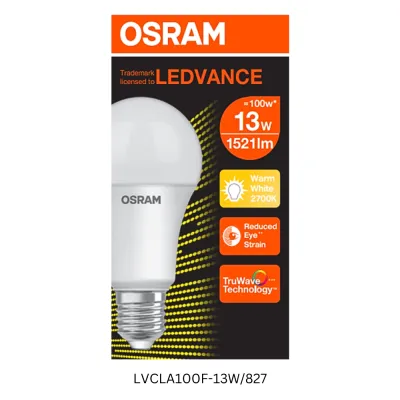
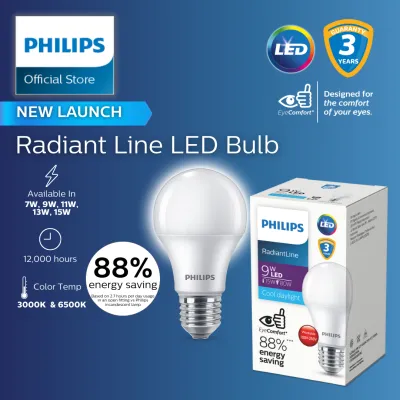
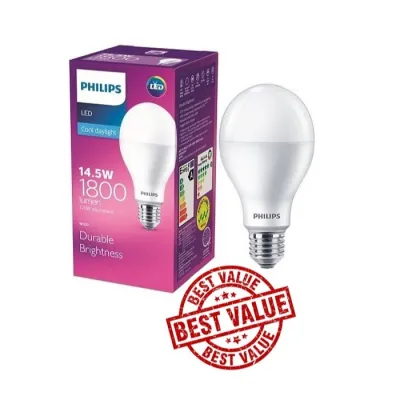
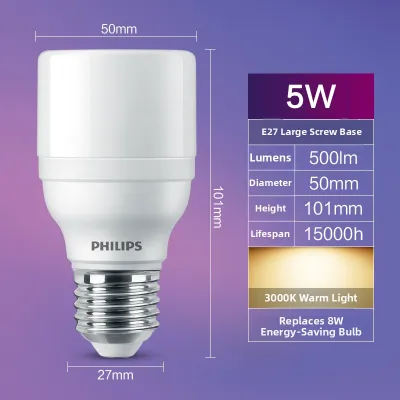
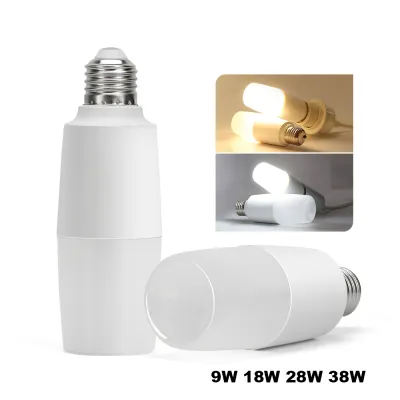
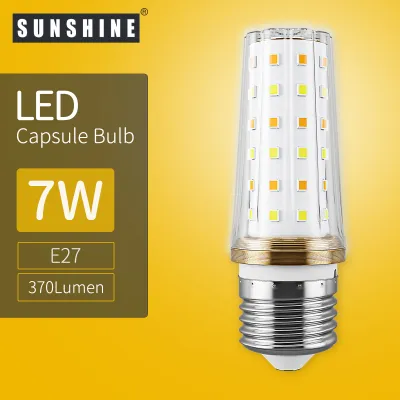
Prices are valid at publication and may change. Please refer to the product page for the latest price.
Historically, consumers relied on wattage as a direct indicator of brightness—a habit formed during the era of incandescent bulbs, where a 60-watt bulb was universally understood to be brighter than a 40-watt bulb. In the modern LED landscape, this association is entirely obsolete. LEDs operate on semiconductor technology where driver efficiency and phosphor quality vary significantly. An inefficiently engineered E27 LED bulb might require 10 watts of power to produce 800 lumens, resulting in an efficacy of 80 lm/W. Conversely, a premium, highly engineered E27 LED might produce the exact same 800 lumens while drawing only 5.5 watts, achieving an outstanding efficacy of approximately 145 lm/W.
The practical impact of this difference on your household utility bills is substantial, particularly under Singapore’s regulated electricity tariff structures. Because lighting often accounts for a continuous, multi-hour draw on your home’s electrical system, choosing bulbs with a higher lm/W ratio ensures you achieve your desired room illumination while drawing the absolute minimum amount of electricity. Standard E27 LED bulbs typically occupy a baseline spectrum of 80 to 100 lm/W, whereas premium high-efficiency models can exceed 120 to 150 lm/W, representing a massive reduction in long-term operational costs.
Core Dimensions for Comparing E27 LED Brands
Evaluating different E27 LED brands requires a structured approach that looks at local standards, physical light properties, and modern smart functionalities.

Local Energy Labeling and Tick Ratings
In Singapore, the National Environment Agency (NEA) administers the Mandatory Energy Labelling Scheme (MELS) to help consumers easily identify energy-efficient appliances and lamps, including E27 LED bulbs. Under this scheme, registered lamps must display an energy label that features a “tick” rating system. The more ticks displayed on the label, the more energy-efficient the bulb is relative to established baseline standards.
Checking for the maximum tick rating is the most reliable shortcut for identifying top-tier efficient E27 bulbs, regardless of the brand. These localized labels are valuable because they are based on standardized testing protocols tailored to Singapore’s specific electrical environment, which operates on a nominal voltage of 230V at a frequency of 50Hz. This makes local certifications far more relevant and trustworthy than generic, imported efficiency claims or unverified marketing slogans printed on packaging designed for foreign markets. Additionally, when purchasing E27 bulbs locally, always look for the Enterprise Singapore Safety Mark, which ensures the bulb’s internal driver is certified to handle local voltage fluctuations safely without posing an electrical hazard.
Color Temperature and Perceived Brightness
The choice of color temperature—ranging from warm white (typically 2700K to 3000K) to cool white (around 4000K) and cool daylight (5000K to 6500K)—plays a significant role in how we perceive light and, consequently, how we manage energy consumption. From a technical standpoint, the physical construction of the LED chips differs across these temperatures. Cool daylight bulbs often exhibit a slightly higher raw luminous efficacy than warm white bulbs because they require different formulations of yellow and red phosphors over the blue LED die, resulting in less light absorption within the bulb itself.
Beyond physical efficacy, there is a powerful psychological and visual effect to consider: the human eye naturally perceives cooler color temperatures as brighter and crisper than warmer light of the exact same lumen output. This heightened sensitivity to the blue-enriched spectrum of cool daylight can be leveraged to optimize energy use. In task-oriented spaces such as study rooms, home offices, kitchens, and laundry yards, you can often select a lower-wattage, highly efficient cool daylight E27 bulb and still achieve the same perceived visual clarity as a higher-wattage warm white bulb. This visual adjustment allows you to reduce your overall lighting power density without sacrificing functional visibility.
Smart Features and Standby Power
The rise of smart home technology has introduced a new comparison dimension: standard E27 LED bulbs versus smart, connected variants that utilize Wi-Fi, Bluetooth, or Zigbee protocols. Smart bulbs offer convenience, but they introduce a continuous energy trade-off known as standby power draw. Because a smart bulb must remain connected to your home network to receive wireless commands, its internal receiver draws a small amount of electricity (typically between 0.2 and 0.5 watts) even when the light is programmatically turned “off.”
While this standby power draw is minor, it runs 24 hours a day. However, this continuous draw can be easily offset by the intelligent energy-saving features that smart E27 bulbs enable. For instance, you can configure automated schedules to ensure lights are never left running in empty rooms, utilize motion sensors to activate lighting only when needed, or dim the bulbs to lower wattages when full brightness is unnecessary. Dimming a smart bulb directly reduces its active power consumption. The efficiency trade-off is highly justified in high-traffic areas, children’s bedrooms, or outdoor corridors where lights are frequently left on accidentally. Conversely, in low-use areas like guest rooms or storage closets, a standard, high-efficiency non-smart E27 bulb remains the more energy-efficient and cost-effective choice.
How to Read Packaging and Verify Efficiency Claims
When shopping for E27 LED bulbs in Singapore retail stores or on online marketplaces, you must know how to cut through marketing claims and locate the actual performance data. The key is to ignore prominent front-of-pack slogans and locate the technical specification table, which is usually printed on the side or back of the packaging, or detailed in the online product listing.
To verify a bulb’s true efficiency, locate two specific figures: the total luminous flux, measured in lumens (lm), and the power consumption, measured in watts (W). Once you have these numbers, perform a simple calculation: divide the total lumens by the wattage. For example, if you are comparing two E27 bulbs and Bulb A offers 806 lumens at 7.5 watts, its efficacy is approximately 107.5 lm/W. If Bulb B offers 800 lumens but draws 9.5 watts, its efficacy drops to 84.2 lm/W. Despite both bulbs offering virtually identical brightness, Bulb A is over 27% more energy-efficient than Bulb B.
Be highly skeptical of common marketing red flags. Manufacturers frequently highlight “incandescent equivalent” claims, such as “replaces a 60W bulb,” in large fonts. These comparisons are highly generalized and often based on outdated, inefficient baselines that do not reflect modern LED performance standards. Always rely on the raw lumen-to-watt calculation rather than equivalent wattage claims.
Furthermore, inspect the packaging for notes on thermal management and heat dissipation. LED chips are highly sensitive to operating temperatures; excessive heat buildup in the bulb’s base can degrade the semiconductor material and the phosphor coating over time. This degradation leads to rapid lumen depreciation—meaning the bulb will lose its brightness much faster than advertised—and a decline in operating efficiency. High-quality brands design their E27 bulbs with robust internal heat sinks and advanced thermal management circuits to maintain peak efficiency throughout the bulb’s lifespan.
Decision Framework: Which E27 LED Should You Choose?
Selecting the ideal E27 LED bulb requires balancing your specific spatial requirements, usage habits, and fixture limitations. Use the following structured guidelines to make the most efficient decision for your space:
- Choose high lm/W standard LEDs if: You are outfitting high-usage areas, such as living rooms, kitchens, or home offices, where lights remain on for several hours daily. In these environments, maximizing raw luminous efficacy (seeking bulbs with 100 lm/W or higher) and minimizing upfront purchase costs are the top priorities. Standard, non-smart LEDs deliver the highest continuous efficiency without any standby power overhead.
- Choose smart/dimmable E27 LEDs if: You require flexible lighting control, want to integrate your lighting with home automation systems, or frequently forget to turn off lights. By utilizing automated scheduling, geofencing, and dimming features, you can easily offset the minor standby power draw and achieve substantial behavioral energy savings.
- Choose specific color temperatures if: You want to optimize perceived brightness in task-oriented spaces. Opting for cool daylight (6500K) or cool white (4000K) bulbs in workspaces, study areas, and kitchens allows you to use lower-wattage models while maintaining excellent visual clarity, effectively lowering your energy consumption.
- Verify first if: Your E27 fixtures are fully enclosed or recessed. Trapped heat is the primary enemy of LED efficiency and longevity. Standard E27 bulbs rely on ambient air circulation to dissipate heat from their base-mounted drivers. If installed in an enclosed fixture, the trapped heat will severely degrade the driver components and the LED chips. Always check the brand's specifications or packaging warnings to ensure the bulb is explicitly rated for enclosed-fixture compatibility before purchasing.
Before undertaking any bulb replacement, safety must be your absolute priority. Always isolate the power supply at the main circuit breaker or wall switch before removing or installing an E27 bulb. Ensure the replacement bulb matches the voltage requirements of Singapore’s electrical grid (230V) and does not exceed the maximum wattage rating specified on your light fixture. For installations involving fixed wiring, recessed downlight canisters, high ceilings requiring work at height, or damp environments like bathrooms and outdoor balconies, always refer to the manufacturer’s detailed installation instructions or engage a licensed electrical worker (LEW) to perform the work safely and preserve your product warranties.
Frequently Asked Questions (FAQ)
Does a higher wattage E27 LED always mean it is brighter?
No, a higher wattage does not guarantee a brighter light. Wattage only measures the amount of electrical power the bulb consumes, not the amount of light it emits. Brightness is measured in lumens. Due to differences in engineering, driver quality, and chip efficiency, a highly efficient 9W E27 LED bulb can easily produce more lumens (and thus appear brighter) than an older or poorly designed 12W LED bulb. Always compare the total lumen output and the lumens-per-watt (lm/W) ratio rather than relying on wattage alone to determine brightness.
Do E27 LED bulbs lose their energy efficiency over time?
Yes, E27 LED bulbs experience a gradual decline in both brightness and efficiency over their operating lifespan, a process known as lumen depreciation. This is typically measured by the L70 rating, which indicates the number of operating hours it takes for the bulb’s light output to drop to 70% of its original brightness. While the bulb’s wattage draw remains relatively constant throughout its life, the reduction in lumen output means its practical lumens-per-watt (lm/W) ratio slowly decreases over thousands of hours of use. High-quality thermal management helps slow this degradation.
Are smart E27 bulbs less energy-efficient than standard ones?
In terms of raw, continuous electrical draw, smart E27 bulbs are slightly less efficient than standard bulbs because they consume standby power (typically 0.2W to 0.5W) even when turned off. However, when evaluated as part of a complete lighting system, smart bulbs can lead to greater overall energy savings. By enabling features such as automated off-timers, motion-activated control, and dimming (which directly reduces active wattage), smart bulbs prevent energy waste from lights being left on accidentally, making them highly efficient in practice when managed correctly.
Community discussion
Share your experience or ask a question. Comments are reviewed before publication.