
Quick Answer: Is There a Single Most Energy-Efficient Brand?
No single brand holds an absolute monopoly on energy efficiency across all E27 LED lamp categories. Instead, energy efficiency is highly dependent on the specific product line, such as standard utility bulbs, smart bulbs, or decorative filament lamps. A brand that excels in producing ultra-efficient standard bulbs may not offer the same level of efficiency in its smart lighting or decorative vintage ranges.
The true measure of energy efficiency is not the brand name on the box, but the luminous efficacy, which is measured as the lumen-per-watt (lm/W) ratio. While leading global manufacturers like Philips, Ledvance (formerly Osram), and Megaman consistently produce high-efficiency lines, the best choice for your home requires evaluating the specific performance metrics of individual models.
In Singapore, the National Environment Agency (NEA) simplifies this evaluation through its mandatory energy labeling scheme. To find the most efficient bulb, you must verify the specific model’s packaging, look for the NEA energy label, and check the certified lumen-per-watt performance. This guide provides the technical framework and practical steps to help you evaluate these metrics and select the most efficient E27 LED lamps for your household.
Products mentioned in this guide
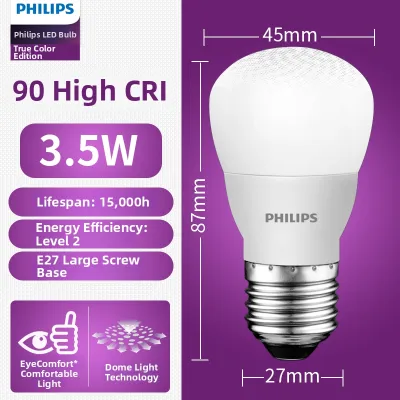
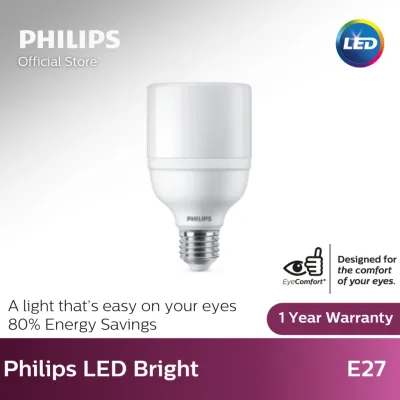
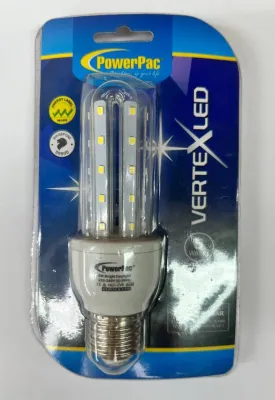
![[SG SELLER] LED Bulb E27 screw LED Flying Saucer Light High Brightness Energy-Saving Bulb for Household and Outdoor Use](https://img.lazcdn.com/g/p/29c242051805f539a812f8d2409e9ab4.png_400x400q80.png_.webp)
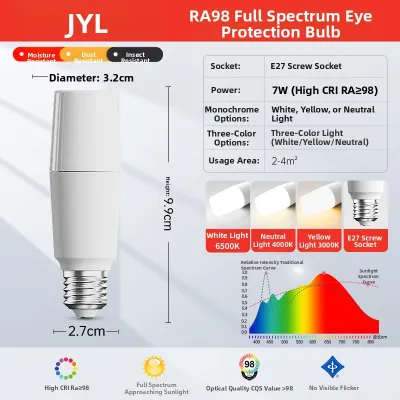
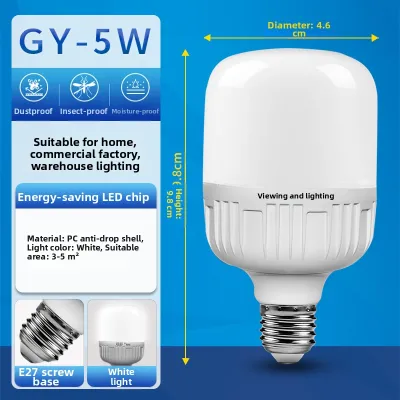
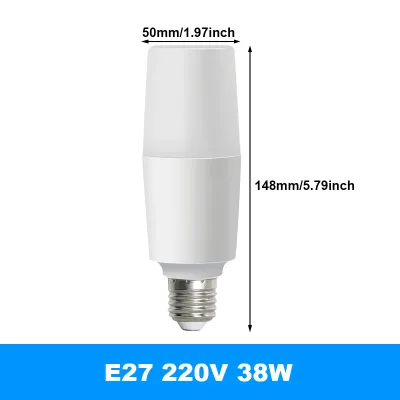
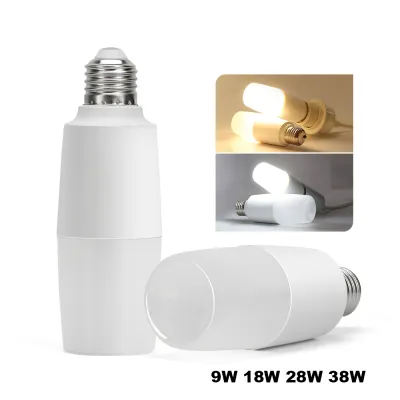
Prices are valid at publication and may change. Please refer to the product page for the latest price.
Understanding Energy Efficiency Metrics for E27 LEDs
To make an informed decision when purchasing E27 LED lamps, you must move away from the traditional mindset of using wattage as a measure of brightness. In the era of incandescent and halogen lighting, higher wattage directly correlated with a brighter room. With LED technology, wattage represents only the electrical power consumed, while the actual light output is measured in lumens.

Lumens vs. Watts
Lumens indicate the total amount of visible light emitted by a source. When comparing LED bulbs, your primary goal is to find a bulb that delivers your desired lumen output while drawing the lowest possible wattage. For example, a high-efficiency 6-watt LED bulb can produce the same 806 lumens of brightness as an older, less efficient 10-watt LED bulb. By focusing on lumens rather than watts, you ensure that you do not compromise on brightness while actively reducing your electricity consumption.
The Lumen-per-Watt (lm/W) Ratio
The ultimate mathematical metric for lighting efficiency is the lumen-per-watt (lm/W) ratio, also known as luminous efficacy. You can easily calculate this by dividing the total lumen output of a bulb by its power consumption in watts.
$$\text{Luminous Efficacy (lm/W)} = \frac{\text{Total Lumens (lm)}}{\text{Power Consumption (W)}}$$
In the current Singapore retail market, standard E27 LED bulbs typically achieve an efficacy of 80 lm/W to 100 lm/W. Mid-range efficient options hover between 100 lm/W and 120 lm/W. Premium, ultra-efficient product lines utilize advanced chip designs and high-efficiency drivers to exceed 150 lm/W. When comparing two bulbs of equivalent brightness, the bulb with the higher lm/W ratio will always cost less to run over its lifespan.
NEA Energy Labels in Singapore
To protect consumers and promote sustainability, Singapore’s National Environment Agency (NEA) implements the Mandatory Energy Labeling Scheme (MELS) for lamps. Registered E27 LED lamps sold in local retail stores must display an energy label featuring a tick rating system.
The NEA tick rating system allows you to quickly compare the efficiency of different bulbs at a glance. A higher number of ticks indicates a more energy-efficient product that meets stricter environmental standards. These standardized labels are highly reliable because they are based on independent laboratory testing required for local registration, helping you bypass marketing jargon and estimate long-term electricity costs accurately.
Key Dimensions for Comparing E27 LED Brands
When comparing E27 LED brands, evaluating energy efficiency requires looking beyond the raw numbers on the packaging. Real-world performance, longevity, and operational efficiency are influenced by several technical design factors.
Lumen Output and Wattage Efficiency
Premium lighting brands invest heavily in high-quality LED chips and advanced driver circuits. The driver is the component that converts alternating current (AC) from your home’s wall outlet into the direct current (DC) required by the LED chips. Efficient drivers minimize energy loss during this conversion process, ensuring that more electricity is converted into light rather than wasted as heat.
Furthermore, premium brands tend to maintain consistent lm/W efficiency across different color temperatures. Producing warm white light (2700K to 3000K) requires a thicker layer of red and yellow phosphors over the blue LED chip, which naturally absorbs some light and reduces efficiency. Cool white (4000K) and daylight (6500K) options require thinner phosphor coatings and are inherently more efficient. High-end brands engineer their phosphor blends to minimize this efficiency loss, whereas budget brands often sacrifice color quality, resulting in a low Color Rendering Index (CRI) to keep their lumen ratings high.
Thermal Management and Tropical Climate Impact
Singapore’s hot and humid tropical climate presents a unique challenge for solid-state lighting. LEDs are highly sensitive to heat. When an LED bulb operates, the junction temperature inside the chip rises. If this heat is not dissipated effectively, the light output drops, the energy efficiency degrades, and the internal electronic components degrade prematurely.
Reputable brands address this issue by using robust thermal management systems. They design bulbs with aluminum cores, ceramic bases, or high-grade thermal conductive plastics that draw heat away from the sensitive LED chips. Budget brands often cut costs by using thin, basic plastic housings that trap heat inside the bulb.
In Singapore’s high ambient temperatures, especially when bulbs are installed in enclosed ceiling fixtures or tight downlight cans in HDB flats and condominiums, poor heat dissipation leads to rapid lumen decay. This means the bulb will lose its brightness long before its rated lifespan is reached, forcing you to replace it sooner and eliminating any initial cost savings.
Standard vs. Smart E27 LEDs
The rise of smart home automation has introduced a new variable to the energy efficiency equation. Standard E27 LED bulbs draw zero power when the physical wall switch is turned off. In contrast, smart E27 LED bulbs (utilizing Wi-Fi, Bluetooth, or Zigbee protocols) must remain continuously connected to your home network to receive wireless commands.
This continuous connection results in standby power consumption, often referred to as “vampire draw.” A typical smart E27 bulb consumes between 0.2 watts and 0.5 watts of electricity even when the light is programmatically turned off. While a fraction of a watt seems negligible, multiplying this standby draw across fifteen or twenty smart bulbs throughout a home over 24 hours a day, 365 days a year, adds a noticeable baseline to your utility bill.
If your priority is absolute energy efficiency, standard LED bulbs are the superior choice. However, if you utilize smart bulb features like automated scheduling, motion-sensor integration, and dimming, you can offset some of the standby power consumption by ensuring lights are never left running in unoccupied rooms.
Evaluating Brands and Models Available in Singapore
When shopping for E27 LED lamps in Singapore, you must ensure that the products you choose are safe, physically compatible with your fixtures, and legally compliant with local regulations.
Voltage and Frequency Compatibility
Singapore’s domestic electrical grid operates at a nominal voltage of 230V AC with a frequency of 50Hz. When purchasing E27 LED lamps, especially from cross-border online marketplaces, you must verify that the driver is rated for this specific voltage range.
Bulbs designed for 110V grids (such as those from North America) will fail instantly and can pose a severe electrical fire hazard if connected to a Singaporean socket. Always look for the Enterprise Singapore Safety Mark on the product packaging, which certifies that the electrical item has been tested and approved for safe use under local grid conditions.
Fixture and Dimmer Compatibility
Physical compatibility is another crucial factor. High-efficiency E27 bulbs that feature advanced thermal management systems or high lumen outputs often require larger heat sinks. This can make the bulb physically larger than a standard A60 globe shape, resulting in an A65 or A70 profile. Before purchasing, measure the physical clearance inside your downlight cans, pendant shades, or decorative fixtures to ensure the bulb will fit.
If your home utilizes wall dimmer switches, you must verify that the E27 LED bulb is explicitly labeled as “Dimmable.” Installing a standard, non-dimmable LED bulb on a dimming circuit will cause persistent flickering, buzzing noises, and excessive heat buildup. This heat will rapidly destroy the driver circuit, creating a safety hazard and voiding the manufacturer’s warranty.
Verification Channels
To protect yourself from counterfeit products and exaggerated performance claims, purchase your lighting from authorized retail stores, official brand outlets, or verified online distributors. Unbranded or generic bulbs sold on online marketplaces often advertise unrealistic luminous efficacies (e.g., claiming 150 lm/W at an impossibly low price point) that have not undergone independent safety or performance testing.
You can verify the legitimacy of any lamp sold in Singapore by searching the NEA’s public database of registered energy-efficient appliances. This database provides verified data regarding the actual power consumption, lumen output, and tick rating of registered models, allowing you to make an objective, data-backed decision.
Decision Framework: Choosing the Right E27 LED
To select the ideal E27 LED lamp for your specific living space, use this conditional decision framework to balance energy efficiency, functionality, and cost.
Choose Premium High-Efficiency Lines If:
- High-Usage Areas: You are outfitting rooms where the lights remain switched on for more than four hours daily, such as the living room, kitchen, or home study.
- Enclosed Fixtures: The bulbs will be installed in semi-enclosed or flush-mount ceiling fixtures where heat buildup is a concern, requiring superior thermal management to prevent premature failure.
- Long-Term Savings: You want to minimize your monthly SP Group utility bill over a multi-year period, justifying a higher initial purchase price with lower operating costs.
Choose Smart Lighting Ecosystems If:
- Smart Home Integration: You prioritize lifestyle conveniences, such as voice control, automated routines, remote scheduling, and color-temperature tuning.
- Dimming Capabilities: You want to dim your lights without installing specialized wall dimmers, using instead a smartphone app or wireless remote.
- Mitigated Standby Cost: You are willing to accept the minor, continuous standby power draw (0.2W to 0.5W per bulb) in exchange for automated energy savings, such as lights that automatically turn off when sensors detect an empty room.
Choose Standard Value Lines If:
- Low-Usage Areas: You are installing bulbs in spaces that are rarely occupied or only used for short periods, such as bomb shelters, storerooms, guest bathrooms, or utility yards.
- Budget Constraints: You need to outfit a large number of sockets simultaneously on a tight upfront budget, where the long-term energy savings of a premium bulb would take many years to offset the initial price difference.
Verify First Checklist:
Before finalizing any purchase, run through this safety and compatibility checklist:
- Safety Mark: Confirm the presence of the Enterprise Singapore Safety Mark on the bulb or packaging.
- Voltage: Ensure the input rating is compatible with 230V/50Hz.
- Dimensions: Measure the height and diameter of the bulb to ensure it fits comfortably within your light fixture.
- Dimming: If using a dimmer switch, verify that the bulb is explicitly marked as dimmable; if not, ensure the wall switch is a standard on/off toggle.
- Enclosure Rating: If installing inside a fully enclosed glass or plastic dome, check the manufacturer's instructions to ensure the bulb is rated for enclosed fixtures.
Frequently Asked Questions (FAQ)
Do higher wattage E27 LEDs always consume more electricity?
Yes, wattage is the direct metric of electrical power consumption, so a higher wattage bulb will always draw more electricity from your grid. However, a higher wattage does not guarantee a brighter light. An inefficient 11-watt LED bulb may produce the same light output (lumens) as an ultra-efficient 7-watt LED bulb. To maximize energy savings, always compare the lumen output and select the bulb that delivers your desired brightness with the lowest possible wattage.
Can I use a standard E27 LED bulb in an enclosed ceiling fixture?
No, you should not use a standard E27 LED bulb in a fully enclosed fixture unless the bulb is explicitly rated for enclosed environments by the manufacturer. Enclosed fixtures trap the heat generated by the LED driver and chips. Without adequate airflow, the ambient temperature inside the fixture rises rapidly, which degrades the LED components, drastically reduces energy efficiency, causes flickering, and can lead to premature driver failure or melting, posing a safety hazard.
Community discussion
Share your experience or ask a question. Comments are reviewed before publication.