
Quick Answer: Finding the Most Efficient LED Brand for Your Bedroom
Selecting the right bedroom LED bulb in Singapore involves balancing raw electrical efficiency with behavioral energy savings. No single brand universally dominates every bedroom scenario because “efficiency” is split into two distinct categories: how much light a bulb produces per watt of electricity, and how effectively you control that light to prevent wasted energy.
For standard, non-smart setups, traditional lighting giants offer the highest raw efficacy. These bulbs convert electricity to light with minimal waste and frequently achieve the highest ratings on the Singapore National Environment Agency (NEA) Energy Label. If you prefer simple wall-switch operation, choosing a traditional brand with a high NEA Tick rating is the most direct path to lowering your utility bills.
For modern bedrooms where lights are frequently left on or where customized dimming is desired, smart lighting specialists often deliver better practical efficiency. While these bulbs draw a tiny amount of standby power to remain connected to your home network, their ability to automate schedules, dim to low levels, and turn off automatically when you leave the room results in significant behavioral energy savings. Your choice should depend on whether you want to optimize the hardware’s raw performance or automate your daily lighting habits.
Products mentioned in this guide
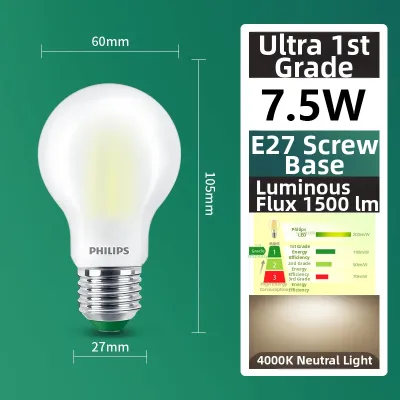
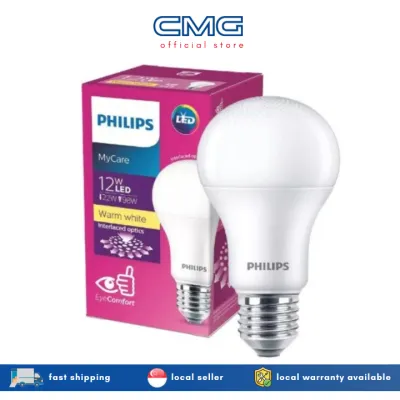
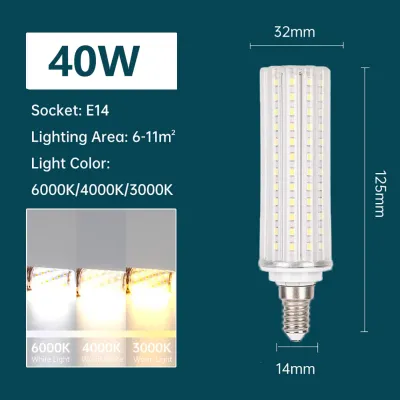
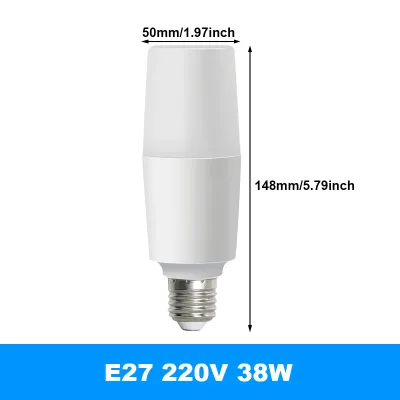
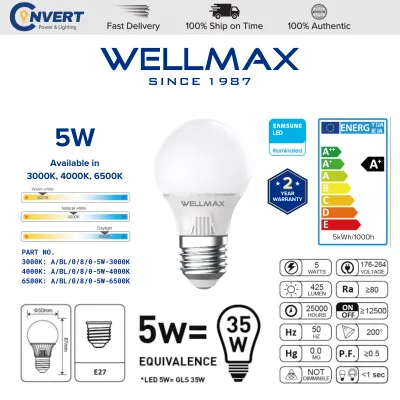
Prices are valid at publication and may change. Please refer to the product page for the latest price.
Key Metrics for Comparing Bedroom LED Bulb Energy Efficiency
To accurately compare the efficiency of different LED brands in Singapore, you must look beyond the basic wattage listed on the front of the packaging. Wattage only measures how much electricity a bulb consumes, not how much light it produces. Evaluating several technical metrics will help you identify which brand truly delivers the most light for your money.

Lumens per Watt (lm/W)
Lumens per Watt is the ultimate measure of a bulb’s luminous efficacy. You can calculate this by dividing the total light output (measured in lumens) by the power consumed (measured in watts). For example, a bulb that produces 800 lumens while consuming 8 watts has an efficacy of 100 lm/W, whereas a less efficient bulb might require 10 watts to produce the same 800 lumens, resulting in an efficacy of 80 lm/W. When browsing local retail shelves or online listings, prioritize brands that explicitly state high lumen-to-watt ratios on their specification sheets.
The Singapore NEA Energy Label
Under the National Environment Agency’s Mandatory Energy Labelling Scheme (MELS), registered lamps sold in Singapore must display an Energy Label. This label features a Tick rating system, where more ticks indicate a higher level of energy efficiency. A 3-tick or 4-tick rating means the bulb meets stringent local efficiency standards, allowing you to quickly compare different brands at a glance. Always verify that the physical packaging or online product listing displays this official label before making a purchase.
Power Factor and Standby Power
Power factor measures how effectively a bulb converts incoming alternating current (AC) into usable power. A power factor closer to 1.0 means the bulb uses current highly efficiently, reducing strain on your home’s electrical wiring. For smart LED bulbs, you must also consider standby power, which is the “phantom draw” consumed when the light is turned off via an app or voice command but remains connected to Wi-Fi or Zigbee. High-quality brands keep standby power below 0.5 watts, whereas unbranded alternatives can draw significantly more, quietly inflating your monthly electricity bill.
Lumen Depreciation and Thermal Management
All LED bulbs gradually lose brightness over time, a process known as lumen depreciation. The efficiency of an LED is closely tied to its operating temperature; excessive heat degrades the LED chips and the internal driver, causing the bulb to dim prematurely and consume more energy relative to its light output. Premium brands invest in robust internal heat sinks and advanced thermal management materials to ensure the bulb maintains its rated efficacy throughout its lifespan, which typically ranges from 15,000 to 25,000 hours.
Electrical Safety and Certification
In Singapore, household electrical appliances must comply with safety standards managed by Enterprise Singapore. When shopping for LED bulbs, look for the Safety Mark on the packaging. This mark ensures the bulb has been tested and certified safe for use with Singapore’s standard 230V, 50Hz electrical grid. Using uncertified bulbs poses a risk of electrical shorts, overheating, and premature failure, which negates any potential energy savings.
Bedroom-Specific Factors That Influence Energy Use
A bedroom has unique lighting requirements compared to a kitchen or living room. Because the bedroom is a space dedicated to rest, relaxation, and transitionary hours, how you use light directly affects how much energy your bulbs consume.
Color Temperature vs. Efficacy
Color temperature, measured in Kelvin (K), dictates the color appearance of the light. Warm white light (2700K to 3000K) is highly recommended for bedrooms because it minimizes blue light exposure, helping your body produce melatonin for better sleep. However, due to the physics of light-emitting diodes, warmer phosphors are slightly less efficient at converting electricity into visible light than cool daylight phosphors (6000K or higher). While a cool daylight bulb might boast a slightly higher raw lm/W rating, the comfort and sleep benefits of warm white light make it the superior choice for a bedroom environment.
Dimming Compatibility and Energy Savings
Dimming your lights is an excellent way to save energy because reducing the brightness level directly lowers the wattage consumed by the bulb. If you plan to use dimmable LEDs, you must ensure compatibility between the bulb’s driver and your wall switch. Standard LED bulbs cannot be dimmed on traditional circuits, and pairing an incompatible dimmable bulb with a legacy phase-cut wall dimmer can cause persistent flickering, buzzing, or high idle power consumption. To avoid wasting energy and damaging the bulb, verify whether your wall dimmer uses leading-edge or trailing-edge technology, and select a bulb that explicitly matches that standard.
Smart Automation vs. Standard LEDs
Standard LED bulbs are highly efficient when active, but they rely entirely on manual operation. If family members frequently forget to switch off bedroom lights when leaving for work or school, those wasted hours of illumination quickly add up. Smart LED bulbs allow you to establish automated schedules, integrate motion sensors, or use geofencing to turn off lights when no one is home. Even though smart bulbs draw a continuous fraction of a watt in standby mode, the ability to eliminate hours of accidental runtime usually results in a net reduction in overall energy consumption.
Enclosed Fixtures and Heat Dissipation
Many bedrooms in Singapore HDB flats and condominiums utilize flush-mount ceiling dome fixtures or recessed downlight cans. These enclosed or semi-enclosed fixtures trap heat around the bulb. If you install an LED bulb with poor thermal design in an enclosed fixture, the trapped heat will rapidly degrade the internal driver, leading to flickering, reduced efficiency, and early failure. When choosing a bulb for an enclosed ceiling light, always check the manufacturer’s guidelines to ensure the bulb is rated for enclosed environments.
Evaluating Major LED Brand Categories in Singapore
Navigating the Singapore lighting market reveals several distinct categories of LED brands. Understanding the strengths and trade-offs of each category will help you narrow down your options based on your bedroom’s specific layout and your budget.
Traditional Lighting Giants
Established global brands like Philips (Signify) and Ledvance (OSRAM) represent the benchmark for raw hardware efficiency. These companies invest heavily in research and development, resulting in bulbs that consistently achieve 3-tick or 4-tick NEA ratings.
- Efficacy: Excellent raw lm/W ratings, often exceeding 100 lm/W for standard warm white bulbs.
- Build Quality: High-grade plastic and aluminum construction with reliable thermal dissipation.
- Compatibility: Broad compatibility with standard fixtures (E27, B22, GU10) and traditional trailing-edge dimmers.
- Lifespan: Highly reliable lifespans backed by multi-year manufacturer warranties, making them a safe long-term investment.
Smart Lighting Specialists
Brands such as Philips Hue, WiZ, Yeelight, and Nanoleaf focus on connected lighting ecosystems. These brands are ideal if you want to integrate your bedroom lighting with smart assistants like Google Home, Apple Home, or Amazon Alexa.
- Behavioral Savings: Exceptional dimming ranges (down to 1% brightness) and robust automation schedules that minimize active runtime.
- Standby Draw: Consumes a small standby current (typically 0.15W to 0.4W) to maintain wireless connectivity.
- Color Tuning: Allows you to transition from cool white light in the morning to warm, dim amber tones in the evening, supporting natural circadian rhythms.
- Cost: Higher upfront cost per bulb, which must be weighed against the convenience and long-term behavioral savings.
Value and Hardware Store Brands
Local hardware stores and online marketplaces in Singapore offer a wide variety of budget-friendly house brands and generic options. These bulbs are highly accessible and cost-effective upfront.
- Affordability: Low initial purchase price, often costing a fraction of premium or smart alternatives.
- Efficiency Verification: Efficacy claims can be inconsistent; it is crucial to manually verify the NEA Energy Label and ensure the Enterprise Singapore Safety Mark is present.
- Thermal Management: Often feature basic plastic housings with minimal heat sinking, which can lead to faster lumen depreciation in warm tropical climates.
- Warranty: Shorter or non-existent warranty periods, meaning you may need to replace them more frequently.
- Best Use: Suitable for low-use areas like guest bedrooms, closets, or secondary bedside lamps where lights are rarely left on for extended periods.
Ecosystem Lock-in and Long-Term Costs
When choosing a smart LED brand, consider the long-term implications of ecosystem lock-in. Some smart brands require a proprietary hub connected to your home router, while others connect directly via Wi-Fi or Bluetooth. Opting for a hub-based system (such as Zigbee) can be more energy-efficient for large setups because the hub handles the network traffic, allowing individual bulbs to operate with lower standby power than direct Wi-Fi bulbs. Additionally, sticking to a single brand ecosystem simplifies smart home automation and ensures consistent dimming behavior across all bedroom fixtures.
Decision Framework: Choosing the Right Brand for Your Bedroom
To make your final decision, evaluate your bedroom’s existing fixtures, your daily habits, and your budget against these clear, condition-based guidelines.
Choose Traditional Premium Brands if:
- You want the highest possible raw electrical efficiency and the maximum number of NEA Ticks.
- Your bedroom relies on standard manual wall switches and you do not want to manage mobile apps or wireless networks.
- You want a highly reliable, long-lasting bulb with a robust manufacturer warranty and excellent heat dissipation for enclosed ceiling fixtures.
Choose Smart Lighting Brands if:
- You or your family members frequently forget to turn off bedroom lights, making automated schedules and remote control highly beneficial.
- You want to dim your bedroom lights or adjust the color temperature throughout the day without rewiring your walls.
- You already use a smart home ecosystem and want to integrate your bedroom lighting into existing routines.
Choose Value Brands if:
- You are outfitting multiple secondary fixtures on a strict budget and the lights will only be used occasionally.
- You are diligent about manually turning off lights and do not require advanced features like dimming or smart automation.
- You have verified that the specific bulb carries the Enterprise Singapore Safety Mark and a reputable NEA Tick rating.
Important Pre-Purchase Verification Steps
Before purchasing any LED bulb, always verify the physical compatibility with your bedroom fixtures. Check the base type (such as E27 screw or B22 bayonet), the physical dimensions of the bulb to ensure it fits inside your fixture, and the maximum wattage limit of your lamp socket. If you are replacing bulbs in a fixed ceiling installation or working at heights, always isolate the power at the main circuit breaker before starting. For complex dimming installations or fixed wiring modifications in your Singapore home, always consult a licensed electrical worker (LEW) to ensure compliance with local electrical safety regulations.
Frequently Asked Questions (FAQ)
Do smart LED bulbs use more electricity than standard LEDs?
Yes, smart LED bulbs consume a tiny amount of electricity even when turned off, which is known as standby power or phantom draw. This power (usually between 0.15 and 0.5 watts) is required to keep the bulb’s internal wireless receiver connected to your Wi-Fi or Zigbee network. However, because smart bulbs allow you to set automatic timers, dim the brightness, and turn off lights remotely, the behavioral energy savings they provide usually far outweigh the minor cost of their standby power draw.
How do I check if an LED bulb is energy-efficient in Singapore?
To verify the energy efficiency of an LED bulb in Singapore, look for the official NEA Energy Label on the product packaging. This label displays a Tick rating; bulbs with more ticks are more efficient. Additionally, you can calculate the bulb’s exact luminous efficacy by dividing the total lumens by the wattage listed on the box. You can also cross-reference the model number on the National Environment Agency’s online MELS registry to verify its certified efficiency ratings.
Does a higher wattage LED always mean a brighter bedroom?
No, a higher wattage does not guarantee a brighter light. Wattage simply measures the amount of electrical power the bulb consumes, while lumens measure the actual brightness of the light emitted. A highly efficient LED bulb from a premium brand can produce the same amount of light (lumens) as a lower-quality bulb while using significantly fewer watts. When shopping for bedroom lighting, always compare the lumen output rather than the wattage to ensure you get the brightness you need at the lowest possible energy cost.
Community discussion
Share your experience or ask a question. Comments are reviewed before publication.