
Determining which GU10 LED 3000K bulb offers the best energy efficiency and brightness in Singapore relies on verifying specific packaging metrics rather than relying on brand names alone. Because different manufacturers design bulbs for distinct purposes, the ideal option is always the one whose technical specifications match your specific room layout and existing electrical setup. To find the right balance of brightness, energy savings, and long-term value, you must evaluate key metrics such as luminous efficacy, beam angle, and thermal management.
The search for the perfect bulb is highly conditional. A bulb that performs exceptionally well as a focused spotlight in a gallery setting may be entirely unsuitable for general ambient lighting in a spacious living room. By understanding how to interpret technical labels and match bulb profiles to your specific spatial requirements, you can make an informed decision that optimizes both visual comfort and electricity consumption.
How to Read Labels for Efficiency and Brightness
To make an accurate comparison between different GU10 LED 3000K options, you must first understand how to read and interpret their technical specifications. Historically, consumers relied on wattage to estimate the brightness of incandescent or halogen bulbs. With modern LED technology, wattage only indicates the amount of electrical power the bulb consumes, not the amount of light it emits.
Products mentioned in this guide
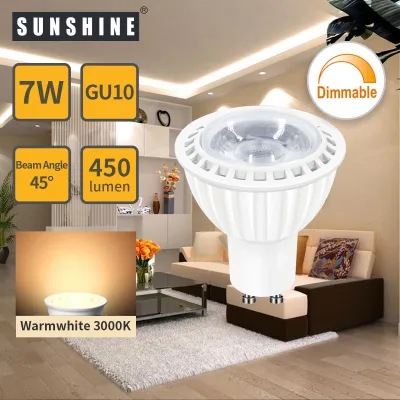
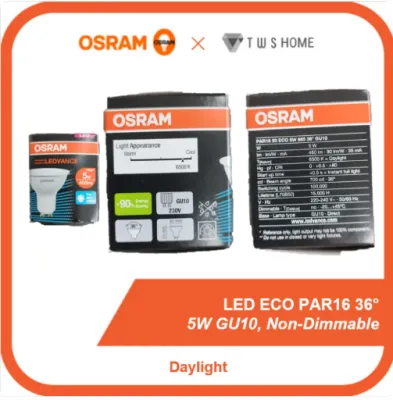
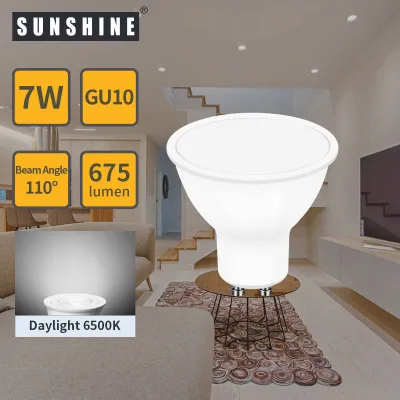
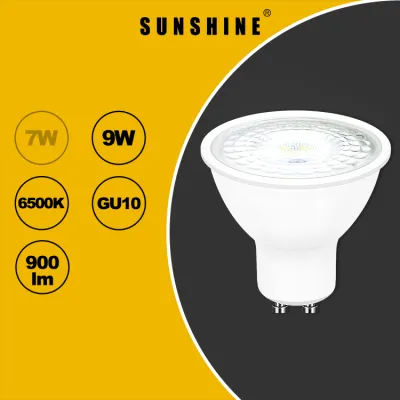
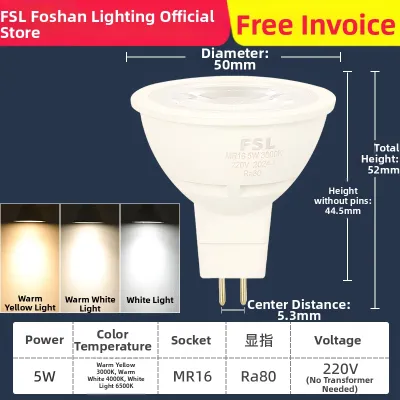
Prices are valid at publication and may change. Please refer to the product page for the latest price.
To determine actual brightness, you must look at the lumen (lm) rating on the packaging. Lumens measure the total amount of visible light emitted by a source. When comparing GU10 LED bulbs, a higher lumen rating means a brighter light. For instance, a bulb emitting 450 lumens will be noticeably brighter than one emitting 350 lumens, regardless of the wattage consumed by either bulb.
Luminous efficacy is the true measure of a bulb’s energy efficiency. You can calculate this by dividing the total lumen output by the wattage consumed (lumens per watt, or lm/W). For example, if a GU10 bulb produces 400 lumens while consuming 5 watts of electricity, its luminous efficacy is 80 lm/W. When comparing brands on retail shelves or online marketplaces, always perform this quick calculation. The bulb with the higher lm/W ratio will deliver more light for every dollar spent on your monthly electricity bill.
Color temperature is another critical factor to verify on the label. A 3000K rating indicates a warm white light, which is highly favored for residential spaces due to its cozy and inviting appearance. However, because different manufacturers use varying quality control and binning processes, the actual color appearance can differ slightly between brands. To ensure consistency across your home, verify that the packaging explicitly states “3000K” rather than a generic “warm white” description, which can sometimes encompass a broader range from 2700K to 3200K.
Secondary Specifications That Affect Real-World Performance
Beyond basic brightness and efficiency, several secondary specifications dictate how a GU10 LED bulb behaves in a physical living space. One of the most important of these is the beam angle. Because GU10 bulbs are directional spotlights by design, they project light in a defined cone. A narrow beam angle, typically between 24 and 36 degrees, concentrates the light into a tight spot, making it ideal for accent lighting, highlighting artwork, or illuminating specific work surfaces.

Conversely, a wide beam angle of 60 degrees or more distributes the light over a larger area. Wide-beam GU10 bulbs are better suited for general ambient illumination, as they help prevent harsh shadows and create a more even wash of light across the room. When choosing a beam angle, consider your ceiling height; higher ceilings generally require narrower beam angles to project sufficient light down to the floor level, while standard residential ceilings benefit from wider angles for general use.
The Color Rendering Index (CRI) is another vital metric that affects visual quality. Rated on a scale from 0 to 100, CRI measures how accurately a light source reveals the true colors of objects, surfaces, and skin tones compared to natural daylight. For general living areas, a CRI of Ra 80 or higher is standard and sufficient. However, for spaces where color accuracy is paramount—such as kitchens, vanity mirrors, or art displays—look for bulbs with a CRI of Ra 90 or higher to ensure colors appear vibrant and true to life.
Dimmability and electrical compatibility must also be carefully verified. Not all GU10 LED bulbs are designed to be dimmed. Attempting to dim a non-dimmable bulb can lead to severe flickering, audible buzzing, and premature driver failure. If you plan to use dimming controls, ensure the bulb packaging explicitly features a “dimmable” label. Additionally, verify that the bulb is compatible with your specific dimmer switch type, as modern LEDs typically require trailing-edge (electronic) dimmers rather than older leading-edge dimmers designed for halogen bulbs.
Finally, physical dimensions and safety certifications are crucial for a successful installation. In Singapore, electrical products must comply with local safety standards. Look for the Safety Mark on the packaging, which indicates the bulb has been tested and certified for safe use on the local 220V-240V electrical grid. Additionally, measure the physical height and diameter of the bulb. Some high-output or smart GU10 bulbs feature larger heat sinks or longer bodies that may not fit inside standard recessed downlight canisters.
Calculating True Value and Long-Term Ownership Costs
When evaluating different GU10 LED 3000K brands, looking solely at the initial retail price can be misleading. A cheaper bulb with lower luminous efficacy or a shorter operational lifespan can ultimately cost more over time due to higher energy consumption and frequent replacement costs. To calculate the true value of a bulb, you must weigh the upfront purchase price against the projected long-term operating costs.
Consider the rated lifespan of the bulb, which is typically expressed in hours of use. High-quality GU10 LEDs are often rated for 15,000 to 25,000 hours or more. If a bulb is operated for an average of four hours per day, a 15,000-hour bulb can theoretically last for over ten years. When comparing options, check the manufacturer’s warranty terms. A longer warranty period—such as two to three years—indicates the manufacturer’s confidence in the bulb’s durability and provides peace of mind.
The purchasing channel you choose also plays a significant role in determining long-term value. Buying from official brand stores or authorized local distributors in Singapore ensures that you receive genuine products that comply with local safety regulations. Official channels also make it much easier to claim warranty replacements if a bulb fails prematurely. While purchasing unbranded or parallel-imported bulbs from general online marketplaces may offer lower upfront costs, these products often lack local warranty support and may not carry the necessary safety certifications, posing a potential risk to your home’s electrical system.
Decision Framework: Matching Bulb Profiles to Your Space
To select the right GU10 LED 3000K bulb for your home, use a structured decision framework based on your specific spatial needs and existing electrical infrastructure.
First, define the primary purpose of the lighting in each room. If you require general, energy-efficient illumination for a living room, dining area, or bedroom, prioritize high-efficacy bulbs (ideally 80 lm/W or higher) with a wide beam angle of 60 degrees or more. This combination ensures a bright, even distribution of warm white light while keeping your energy consumption to a minimum.
Second, if your goal is to highlight specific architectural features, textures, or artwork, select high-CRI (Ra 90 or higher) bulbs with a narrow beam angle of 24 to 36 degrees. This setup provides a focused, high-quality beam that brings out the true colors and details of your decor without spilling excess light into surrounding areas.
Third, always verify your dimming requirements and electrical setup before making a purchase. If you are installing bulbs in a room with existing dimmer switches, confirm that the bulbs are explicitly labeled as dimmable and match the technical specifications of your dimmer unit. If you experience flickering or buzzing after installation, you may need to upgrade your dimmer switch to an LED-compatible trailing-edge model.
Lastly, prioritize safety during installation. For any task involving fixed electrical wiring, working at heights, or installing fixtures in damp environments like bathrooms, always isolate the power at the main distribution board before handling the bulbs or fixtures. If you are installing new lighting tracks, recessed downlight cans, or modifying your home’s electrical wiring, always engage a licensed electrical worker (LEW) in Singapore to perform the work safely and in compliance with local regulations.
Frequently Asked Questions (FAQ)
Can I mix different GU10 LED brands in the same room?
Mixing different GU10 LED brands in the same room is generally not recommended due to potential visual and operational inconsistencies. Even if multiple brands label their bulbs as 3000K warm white, slight variations in their manufacturing and color binning processes can result in noticeable differences in color temperature, with some appearing slightly warmer or cooler than others. Additionally, different brands may feature distinct beam patterns, light distribution characteristics, and dimming behaviors. Mixing them on the same dimmer circuit can lead to uneven dimming rates or flickering. For a cohesive and visually harmonious look, it is best to install the exact same brand and model of bulb within a single room or lighting zone.
Do GU10 LED bulbs get hot?
Yes, GU10 LED bulbs do generate heat, although they run significantly cooler than traditional halogen bulbs. While halogens project heat forward in the light beam, LEDs generate heat internally at the diode and driver level, which is then directed backward into the bulb’s heat sink. Proper heat dissipation is critical for maintaining the efficiency and lifespan of the LED. If a GU10 LED is installed in a tightly enclosed or poorly ventilated fixture, the trapped heat can cause the internal temperature to rise rapidly. This thermal stress can degrade the LED chips, reduce brightness over time, and cause premature failure of the electronic driver. To maximize the lifespan of your bulbs, always ensure that your light fixtures provide adequate ventilation and space for heat dissipation.

Community discussion
Share your experience or ask a question. Comments are reviewed before publication.